FW
Source Fashion’s UK manufacturers set to become second-largest country presence at July show
The upcoming July 2026 edition of Source Fashion at ExCeL London marks a decisive realignment in the global textile landscape. In a strategic move to insulate supply chains against volatile freight costs and geopolitical instability, UK-based manufacturers are set to become the second-largest presence at the event, trailing only China. This expansion, featuring approximately 45 domestic firms, responds to an urgent call for proximity-based production.
Industry analysts note, as global shipping lead times fluctuate, the ability to secure design-led, agile production within the British Isles has become a critical competitive advantage for retailers looking to minimize inventory risk and carbon footprints.
Innovation in the face of industrial headwinds
The British Pavilion’s prominence comes at a vital juncture, as the UK textile sector fights back against the loss of 71,000 jobs over the last six years. To counter this attrition, Source Fashion has introduced bursary-backed initiatives to remove barriers for specialists like Knitster and The T-shirt Factory, the latter of which focuses on the high-growth ‘remanufacturing’ of deadstock fabrics. We are stepping into the void to support domestic businesses before their specialized expertise is lost, states Suzanne Ellingham, Event Director. This movement toward ‘textile-to-textile’ circularity and low-impact finishing, led by exhibitors like LaundRE, positions the UK not just as a heritage hub, but as a leader in technical and sustainable garment engineering.
Commercial implications of the proximity model
For the visiting buying community, the enhanced British presence offers a commercially viable alternative to long-haul procurement. By integrating Scottish excellence from KC Manufacturing and Leicester’s deep-rooted jersey expertise, the show enables a ‘blended sourcing’ strategy.
This allows brands to balance high-volume international orders with responsive, short-lead domestic batches. As the UK sustainable fashion market heads toward a projected $1.7 billion valuation by 2033, the integration of audited, transparent UK partners is no longer an ethical preference but a core operational requirement for navigating an increasingly regulated and fast-moving global fashion market.
Source Fashion is Europe’s premier gateway for retail and manufacturing, connecting global buyers with audited, sustainable suppliers across the textile and apparel sectors. Operating from London, the show serves as a critical link between international manufacturing hubs and the UK’s £50 billion fashion retail market.Leveraging data-driven visitor feedback, Source Fashion has rapidly scaled its domestic Pavilion, aiming to revitalize UK manufacturing through commercial visibility and bursary-backed participation.
Epic Group commissions $100 million net-zero apparel hub in Odisha
The operationalization of Epic Group’s $100 million Trimetro Manufacturing Campus in Odisha represents a fundamental shift in the commercial viability of sustainable apparel production.
Secured through a sustainability-linked financial structure from the IFC, this investment addresses the escalating ‘green premium’ required by global Tier-1 retailers. As the European Union’s Carbon Border Adjustment Mechanism (CBAM) begins to influence sourcing economics, the facility’s net-zero carbon and water status provides a critical safeguard for Indian exports. By utilizing biomass and advanced battery storage, the campus mitigates the volatility of conventional energy costs, ensuring that high-volume production remains cost-competitive while satisfying rigorous international ESG mandates.
Strategic realignment of the global sourcing mix
Odisha is rapidly emerging as a primary node in the ‘China+1’ diversification strategy, supported by a state investment pipeline that exceeded Rs 7,800 crore at the recent Odisha TEX 2025 summit. The Trimetro site, with its 20-million-garment annual capacity, leverages Eastern India’s logistical connectivity and competitive labor arbitrage to de-risk supply chains. This 40-acre industrial footprint is engineered for high-spec efficiency, integrating robotics and digitized quality control. This technical sophistication allows the group to maintain superior margins even as India’s ready-made garment exports navigate a complex 3 per cent recovery phase, positioning the region as a formidable alternative to traditional manufacturing clusters.
Social capital and regional industrialization
Beyond environmental metrics, the project serves as a case study in large-scale social engineering within the apparel sector. The commitment to a workforce that is 80 per cent female not only aligns with global diversity targets but also stabilizes the local industrial ecosystem through 10,000 direct employment opportunities. As the group targets a fully net-zero global operational profile by 2030, the Odisha hub functions as a blueprint for the future of vertically integrated manufacturing. By combining port proximity with industry-leading water positive protocols, Epic Group is effectively future-proofing its capacity against both regulatory shifts and the increasing scarcity of natural resources.
A global apparel leader producing 400 million garments annually for major retail conglomerates like Walmart and Gap. With 17 global sites, the firm is aggressively expanding its Indian presence via Odisha and Gujarat to secure the premium, sustainable export segment. Founded as a textile trader, the company now targets carbon neutrality by 2030, supported by record-high investment and robust 2026 revenue projections.
Adidas launches new market study in JV with LCF and Stephen Lawrence Day Foundation
The collaborative release of ‘The Market’ marks a sophisticated evolution in the partnership between Adidas, the London College of Fashion (LCF), and the Stephen Lawrence Day Foundation. By moving beyond traditional financial aid, the second year of this scholarship initiative has materialized into a live-market case study on community-centric retail.
Led by recipients Ezra Alexander Pusey and Emmanuel Danquah, the project utilizes the ‘market’ as a symbolic and commercial intersection to explore cultural belonging. This interdisciplinary approach allows the global sportswear leader to integrate grassroots narratives into its brand equity while providing underrepresented talent with a high-stakes platform for professional visibility.
Design logic and narrative commerce
At the heart of the capsule collection is a technical exercise in circularity and character-driven apparel. Designer Lucian Blanchard has repurposed existing Adidas stock into a series of functional garments that reflect the foundation’s visual identity - orange, black, and grey. Rather than focusing on high-performance athletics, the silhouettes are engineered for everyday urban archetypes, such as local vendors and commuters. This shift toward ‘lifestyle storytelling’ aligns with current retail trends where consumers increasingly prioritize social purpose over mere functionality. Market analysts suggest, such purpose-led collaborations are vital for heritage brands to maintain relevance among Gen Z demographics, who now account for nearly 40 per cent of global retail influence.
Closing the industry access gap
The partnership addresses a critical structural bottleneck in the UK creative economy: the transition from academic study to industry leadership for diverse talent. By supporting students across creative direction, marketing, and design, Adidas is effectively building a diversified pipeline that mirrors its global consumer base. This model serves as a blueprint for fashion education, demonstrating how brand partnerships can facilitate ‘interdisciplinary teamwork’ that carries genuine cultural weight. As the project gains traction, it highlights the potential for large-scale retailers to act as catalysts for social mobility, ensuring the next generation of creative directors is as inclusive as the communities they serve.
Equitable creative development
The Adidas x LCF scholarship program provides tuition support and industry mentorship to talented creatives from underrepresented backgrounds. Primarily serving the UK fashion sector, the initiative honors Stephen Lawrence’s legacy by fostering professional opportunities in design and marketing. Currently in its second year, the partnership continues to expand its interdisciplinary reach, strengthening Adidas's commitment to diverse leadership in global retail.
UKFT hosts Textile Innovation Showcase targeting critical bottleneck in British textiles
In collaboration with HSBC Innovation Banking, the UK Fashion & Textile Association (UKFT) hosted a landmark Textile Innovation Showcase in London on April 27, 2026. This strategic intervention targeted a critical bottleneck in the British textile value chain: the transition from laboratory breakthroughs to commercial-grade manufacturing. With the UK sustainable fashion market projected to grow to over $1.7 billion by 2033 at a CAGR of 23.6 per cent, the focus has shifted from experimental science to industrial scalability. The event prioritized climate-positive solutions, including biomaterials and chemical recycling technologies capable of processing complex fiber blends - the final hurdle for a truly circular production model.
Strategic alignment of capital and capacity
A central theme of the 2026 showcase was the ‘risk appetite’ of major brands and the necessity of aligning investor timelines with the capital-intensive nature of textile machinery. While UK fashion retailing revenue is expected to reach £50 billion this year, manufacturers face high energy costs and a logistics landscape where freight volatility remains a constant threat. To mitigate these pressures, the UKFT-HSBC partnership is promoting localized ‘smart factories’ that utilize predictive analytics and on-demand production. By reducing reliance on long, high-carbon global supply chains, these initiatives aim to rebuild the UK’s manufacturing skills, particularly in regional hubs like Manchester, which are re-emerging as centers for low-carbon garment construction.
Data-driven resilience and regulatory readiness
The roadmap to 2030 requires a doubling down on transparency and digital integration. Industry leaders at the showcase highlighted the increasing role of the UKFT Regulation Summit in preparing firms for the stringent circularity standards appearing across the EU and US. Businesses are now integrating AI for automated defect detection and predictive quality control to minimize waste. This shift toward ‘textile-to-textile’ recycling is no longer a niche sustainability goal but a core operational requirement. As the industry integrates these technologies, the focus remains on ensuring that UK-made textiles are defined by engineering precision and ethical traceability, securing a competitive edge in an increasingly regulated global market.
Industrial textile leadership
UKFT is the primary trade body for the UK fashion and textile industry, providing a unified voice for designers, manufacturers, and retailers. It supports domestic production and international exports, representing thousands of businesses across apparel, technical textiles, and luxury footwear. Founded through the merger of multiple trade associations, UKFT now leads national innovation projects and sustainability advocacy to secure the sector's future.
Crystal International hits 2025 Green targets, eliminates coal across global units
Crystal International Group has finalized its 2025 sustainability benchmarks, marking a significant transition toward its ‘Sustainability Vision 2030.’ The Group has successfully eliminated coal-fired units across all wholly-owned facilities, replacing traditional energy sources with a robust solar PV infrastructure boasting a 23 MW capacity. This shift now fuels approximately 15 per cent of total electricity requirements for solar-equipped sites. By aligning disclosures with IFRS S2 and ESRS standards, the Group is navigating the ‘green premium’ by integrating 125 distinct energy efficiency measures. These operational refinements have secured the Group’s position on the CDP A-list for the third consecutive year, reinforcing its status as a preferred partner for global brands facing tightening carbon border regulations.
Digital intelligence and circular economy scaling
The Group’s smart manufacturing expansion - specifically the Flap and Flock models - has moved from pilot phases to industrial-scale implementation. In Vietnam, the integration of Intelligent Production Lines and Smart AGV Systems is driving a ‘textile-to-textile’ circularity pilot, significantly reducing pre-consumer waste. This technical sophistication is complemented by ‘Inno:D,’ an AI-integrated denim design process that synchronizes market insights with low-impact manufacturing. By ensuring that 80 per cent of utilized chemistries conform to ZDHC MRSL Level 3, Crystal is neutralizing chemical risk while simultaneously scaling its CirClimate biodegradable collection. This dual focus on high-def quality and regenerative nature addresses the dual demands of margin protection and environmental stewardship.
Strategic human capital and community resilience
A critical component of the Group’s 2026 outlook is the mitigation of climate-induced labor stress. To protect its workforce against escalating regional temperatures, the Group has implemented energy-efficient air-conditioning across its manufacturing floors. Furthermore, the CARE empowerment program has reached 77,000 women, fostering a resilient professional pipeline through initiatives like the Assistant Supervisor Programme in Vietnam. Beyond the factory gate, the Group’s commitment to planting 525,000 trees and rebuilding infrastructure destroyed by extreme weather in Sri Lanka demonstrates a holistic approach to supply chain stability. These efforts ensure that Crystal International remains a leader in an era where social equity and technical innovation are inseparable.
Global apparel manufacturing leadership
Crystal International is a vertically integrated apparel powerhouse producing lifestyle wear, denim, and sportswear for premier global brands from over 20 facilities. Headquartered in Hong Kong, the Group operates across five countries, targeting Net Zero by 2050 through its differentiated ‘Co-creation’ business model.
Founded in 1970, the Group leverages a multi-country platform to achieve industry-leading profitability and advanced manufacturing excellence.
Polyester volatility redraws India’s textile industry competitive map across Asia
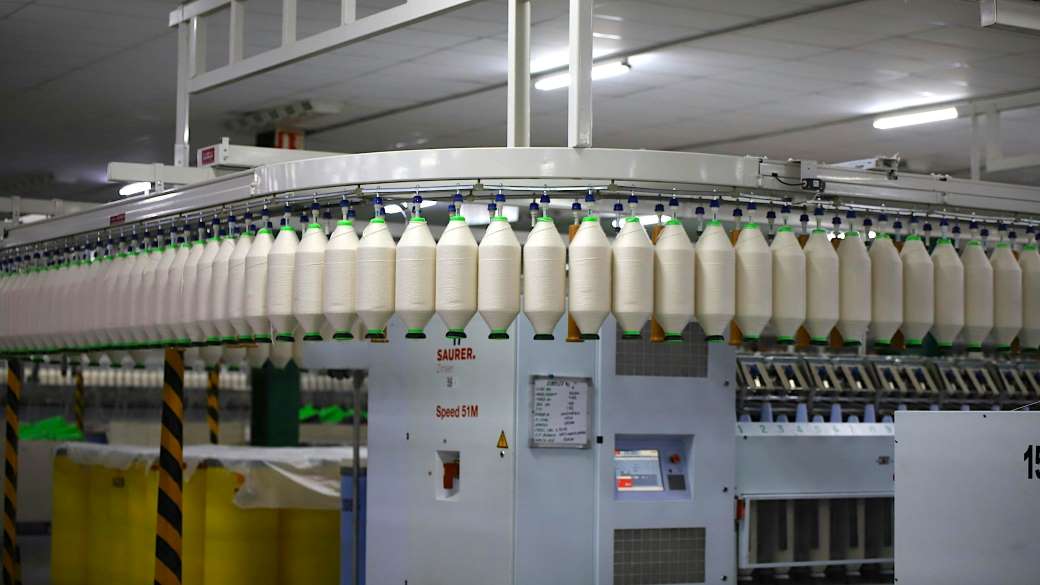
India’s synthetic textile industry has entered a phase of cost instability as polyester staple fibre (PSF) prices rise across domestic and global markets. What was once a relatively predictable input cost has transformed into a volatile pricing corridor shaped by crude oil fluctuations, disrupted maritime logistics, and tightening feedstock availability.
At the centre of this disruption is virgin PSF, which recently peaked at nearly $1.45/kg in India before settling closer to $1.30/kg. This correction, however, does not signal stability. Instead, it reflects a broader global re-pricing cycle where manufacturers are recalibrating rates almost weekly in response to upstream pressure from Purified Terephthalic Acid (PTA), Monoethylene Glycol (MEG), and energy markets. India’s position in this volatility spectrum is particularly exposed, as domestic manufacturers operate within tighter margins compared to global peers and face stronger transmission of raw material shocks into finished yarn pricing.
Feedstock inflation and India’s competitive disadvantage
The underlying driver of the current PSF rally is upstream petrochemical inputs. PTA prices in India have increased by 7-9 per cent over the last quarter alone, while MEG costs have tracked similar upward momentum due to energy inflation and supply chain friction. This has created a disadvantage for Indian spinners compared to China, where PSF prices remain relatively stable at around $1.20/kg. Pakistan, on the other hand, is experiencing even sharper inflationary pressure, with PSF trending toward $1.50/kg, signalling regional supply tightness across South Asia. The widening and narrowing of these price bands across geographies is best understood through the following comparative snapshot.
Table: Regional polyester pricing
|
Region |
Virgin PSF (US$/kg) |
Recycled PSF (US$/kg) |
Price delta |
|
India |
$1.30 - $1.45 |
$1.20 |
$0.10 - $0.25 |
|
China |
$1.20 |
$0.92 |
$0.28 |
|
Pakistan |
$1.50 |
$1.15 |
$0.35 |
This table highlights three dynamics. First, India sits in a mid-volatility corridor where prices are higher than China but lower than Pakistan, creating asymmetric competitive pressure on exports. Second, recycled polyester pricing is moving up across all markets. Third, the narrowing delta between virgin and recycled fibre in India signals a shift rather than a cyclical movement.
The R-PET Paradox: Sustainability meets cost convergence
One of the most significant changes in the current market is the convergence between virgin polyester and recycled polyester (R-PET). So far, recycled fibres traded at a 20-30 per cent discount to virgin PSF, but that gap has now narrowed sharply in India, with R-PET reaching nearly $1.20/kg.
This convergence is not purely cost-driven. It reflects two simultaneous pressures. The first is a supply constraint in high-quality PET bottle scrap, which has not expanded at the same pace as recycling capacity in Gujarat and Maharashtra. The second is demand-side acceleration from global apparel brands enforcing sustainability mandates across sourcing chains.
As a result, R-PET pricing is increasingly decoupled from crude oil and instead anchored to sustainability premiums. This has altered procurement logic for Indian exporters, who are no longer evaluating recycled fibre solely on cost efficiency but also on compliance, market access, and brand alignment.
Micro evidence of macro stress
The real-world transmission of polyester volatility is most visible in Surat, India’s largest synthetic weaving hub. Powerloom units in the region, particularly those producing polyester Georgette fabrics, have reported production cost increases of up to 12 per cent within a 45-day cycle. This rapid escalation has forced structural adjustments in procurement behaviour. Spinning mills that previously operated on predictable monthly contracts are shifting toward shorter spot-based purchasing cycles to reduce exposure to PSF price swings.
Experts say, this transition as a shift from structured procurement to reactive buying cycles, where price discovery has become continuous rather than periodic. In one documented case, a mid-scale Surat weaving unit introduced a surcharge mechanism on fabric pricing for the first time in years. This reflects a deeper structural stress: downstream inability to absorb input inflation without passing it to the consumer. The result is an emerging inflationary transmission into apparel pricing, particularly in mass-market fashion segments.
Logistics risk, the hidden cost layer
Beyond raw materials, logistics has emerged as a parallel source of cost increase. Freight rates from Indian ports to Europe and the US have fluctuated sharply due to geopolitical tensions and Red Sea disruptions, adding what industry participants describe as a risk premium to landed costs. This hidden cost layer compounds the pressure from PSF inflation and reduces India’s competitiveness against alternative sourcing hubs such as Vietnam and Bangladesh. The combined effect of input inflation and logistics volatility is captured in the following input analysis.
Table: Input cost drivers in synthetic textile manufacturing
|
Input factor |
Trend (last 6 months) |
Impact level |
|
Crude Oil (Brent) |
Upward Volatility |
High |
|
PTA / MEG |
8% Average Increase |
Critical |
|
PET Bottle Scrap |
Scarcity Driven Spike |
High (for Recycled) |
|
Container Freight |
2x - 3x Increase |
Moderate to High |
This table illustrates how inflation is no longer isolated to a single input but is instead multi-layered across petrochemicals, waste feedstock systems, and logistics networks. The compounding effect significantly elevates base manufacturing costs.
Downstream stress and emerging consolidation
The impact of rising PSF costs is particularly severe in clusters such as Bhiwandi and Erode, where small and medium powerloom operators struggle to pass through 10-15 per cent yarn cost increases to fabric buyers. As a result, capacity utilisation has softened marginally in certain pockets, reflecting a wait-and-watch approach to pricing stability. However, this volatility is simultaneously creating an advantage for integrated players. Large spinning units with backward integration into chip production or long-term feedstock contracts are better insulated from price shocks. These players are increasingly capturing market share during periods of stress.
This dynamic is expected to boost consolidation within India’s synthetic textile market over the next fiscal cycle. Smaller units without scale advantages or recycled fibre capabilities may find themselves structurally disadvantaged.
From commodity cycles to strategic fibre positioning
India’s synthetic textile sector is not in a cyclical downturn but in a structural reconfiguration phase. The traditional model of cost-driven polyester production is gradually giving way to a more complex framework where sustainability compliance, feedstock security, and logistics resilience determine competitiveness. The sector’s long-term strength remains intact, supported by planned R-PET capacity expansion of nearly 30 per cent by 2027 and a strong chemical processing base. However, the near-term environment will likely remain volatile, with pricing power shifting frequently between upstream producers and downstream converters.
Ultimately, the current PSF surge is not merely a price event. It represents a recalibration of how synthetic textile value chains operate in an era defined by energy volatility, environmental compliance, and fragmented global supply networks.
KHY shifts to ‘Everyday Luxury’ with Los Angeles-made collection
The fashion label founded by Kylie Jenner, KHY has executed a significant brand recalibration with the launch of its ‘Born in LA’ collection on April 28, 2026. This move marks a deliberate departure from the brand’s initial collaboration-heavy model -which featured limited drops with designers like Namilia and Dilara Fındıkoğlu - toward a permanent, in-house aesthetic. The technical focus has shifted to ‘everyday luxury basics,’ prioritizing material quality and domestic production. By anchoring the supply chain in Los Angeles, KHY is addressing the growing consumer demand for localized manufacturing and ‘intentional’ wardrobe staples that offer repeat-wear value over viral, single-use trends.
Financial performance and market positioning
Since its November 2023 inception, KHY has demonstrated remarkable commercial velocity, netting over $1 million in sales within its inaugural hour. Current market estimates place the brand’s monthly revenue at approximately $4.5 million, positioning it among the fastest-growing celebrity-led fashion entities. The refreshed pricing strategy - ranging from $70 to $490 - targets the ‘attainable cool’ segment, competing directly with established contemporary labels. With sizing from XXS to 4X, the brand is leveraging inclusive scaling as a mechanical necessity to capture a broader share of the projected $112 billion Indian fashion market and the $700 billion global apparel segment by 2030.
Operational independence and future scaling
A critical component of this refresh is Jenner’s transition to full creative and operational leadership, following the initial incubation period with Jens and Emma Grede. This collection is a recalibration of business intent, noted industry analysts, highlighting that the brand has updated its digital infrastructure and social channels to reflect a product-led rather than personality-led identity. As Jenner integrates lessons from her decade-long tenure at Kylie Cosmetics, KHY is exploring physical retail expansion to lower customer acquisition costs. This transition aims to move the label beyond the celebrity ‘hype cycle’ into a legacy brand with sustained seasonal relevance.
KHY brand profile and strategic outlook
KHY is an independent fashion label specializing in elevated basics, including premium denim, fleece, and jersey separates. Primarily a digital-first platform shipping to over 50 countries, the brand is currently pivoting toward domestic U.S. production and seasonal, in-house collections. Under Kylie Jenner’s full leadership, KHY aims for long-term equity through inclusive sizing and high-quality craftsmanship.
Adidas reports 14% rise in revenue in Q1, FY26
Adidas AG has reported a robust start to FY26, delivering a 14 per cent increase in currency-neutral revenue to €6.6 billion, effectively outpacing market expectations. Despite a ‘very volatile’ global retail environment characterized by aggressive discounting in lifestyle segments, the German sportswear giant improved its operating profit by 16 per cent to €705 million.
This financial resilience is attributed to a structural shift toward full-price sales and a highly successful diversification of its product mix. While footwear growth moderated to 4 per cent, the apparel division emerged as a primary growth engine, with revenues jumping 31 per cent on the back of locally relevant collections and high-performance training gear.
Momentum from elite sports and global events
The brand’s technical authority was reinforced by a historic milestone in distance running, where Kenyan athlete Sabastian Sawe utilized the Adizero Adios Pro Evo 3 to record the first-ever sub-two-hour marathon in an official race. This achievement has catalyzed a 29 per cent growth in performance-category revenues. Additionally, the company has successfully front-loaded its supply chain for the FIFA World Cup 2026, mitigating potential transportation disruptions in the Middle East. High demand for national team kits and the official ‘Trionda’ match ball is expected to sustain this momentum into the second quarter, even as the firm navigates a €400 million headwind from unfavorable exchange rates and U.S. tariffs.
Direct-to-consumer strength and regional outperformance
The transition to a premium, direct-to-consumer (DTC) model remains a mechanical necessity for margin protection, with DTC sales rising 22 per cent globally. E-commerce specifically grew by 25 per cent, reflecting a successful pivot toward digital engagement. Regionally, Latin America led with a 26 per cent expansion, followed by 17 per cent growth in Greater China. The discipline of not overselling into retailers is currently crucial, stated Bjørn Gulden, CEO, emphasizing, 90 per cent of current inventory is now positioned for future seasons. Consequently, Adidas has maintained its full-year guidance, projecting an operating profit of approximately €2.3 billion for 2026.
Adidas is the world’s second-largest athletic footwear and apparel manufacturer, operating across 160 countries. The company focuses on performance innovation and "Terrace" lifestyle classics like the Samba and Gazelle. Following a strong Q1 FY26, Adidas aims for high-single-digit sales growth, leveraging its 3,000-store global network and a renewed focus on technical running and football.
Odisha emerges as global hub for carbon-neutral apparel production
The formal commissioning of Epic Group’s US $100 million Trimetro Manufacturing Campus in Khordha signifies a structural shift in India’s garment export capabilities. By achieving an absolute net-zero status for both carbon and water, the 40-acre facility addresses the tightening environmental mandates of the EU’s Strategy for Sustainable and Circular Textiles. The integration of onsite solar arrays, biomass energy, and advanced battery storage systems allows the plant to decouple industrial growth from carbon emissions, setting a high technical benchmark for the domestic textile sector.
Export capacity and regional economic impact
This facility is engineered to deliver 20 million garments annually, significantly boosting India’s share in high-value global supply chains. Backed by a $100 million sustainability-linked loan from the International Finance Corporation (IFC), the project underscores a growing trend where capital access is directly tied to ESG performance. Beyond technical innovation, the campus serves as a major socio-economic engine, projected to employ 10,000 workers. With an 80 per cent female workforce, the initiative aligns with regional industrial policies aimed at formalizing women’s participation in the manufacturing value chain.
Strategic resilience in global supply chains
As global retailers prioritize ‘China Plus One’ sourcing strategies, Odisha’s competitive land costs and utility infrastructure are attracting heavyweights like Epic Group. The Trimetro campus is a blueprint for the future of global manufacturing, proving that large-scale production can coexist with environmental stewardship, stated Ranjan Mahtani, Founder and Chairman. This investment not only enhances Epic’s regional footprint - complementing its substantial operations in Bangladesh - but also positions India as a preferred destination for zero-liquid discharge (ZLD) and energy-efficient apparel assembly.
A premier global garment manufacturer, Epic Group specializes in high-quality woven and knit apparel for major international retailers. Operating across key hubs in Asia, the company is currently expanding its high-tech footprint in India to meet net-zero targets. Having evolved from a textile trading entity into a manufacturing powerhouse, Epic maintains a strong financial outlook driven by sustainable innovation.
Bangladesh eyes Chinese tech for MMF transition
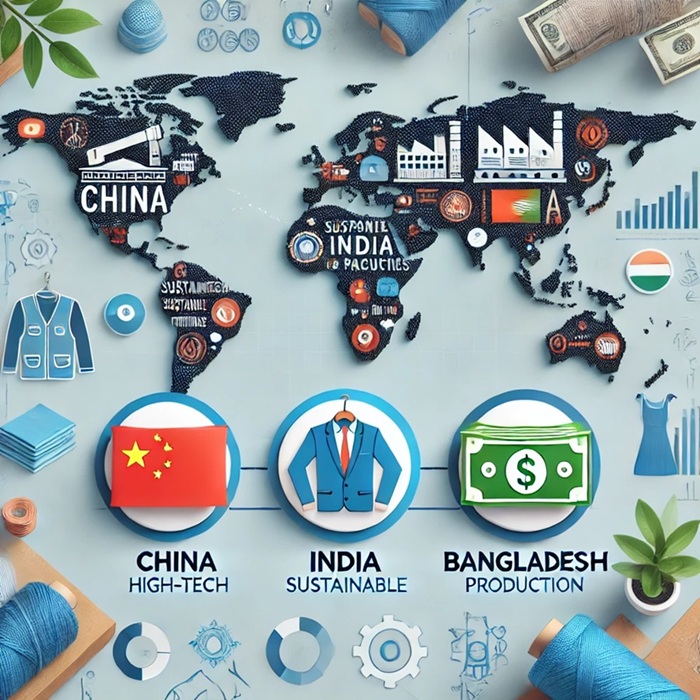
The Bangladesh Garment Manufacturers and Exporters Association (BGMEA) is intensifying its pursuit of Chinese capital and technical expertise to overhaul the nation’s apparel landscape. During a strategic assembly on April 26, 2026, a 20-member delegation from the China Dyeing and Printing Association (CDPA) and the China National Textile and Apparel Council (CNTAC) explored integration opportunities aimed at moving Bangladesh beyond its traditional cotton-heavy exports. With global demand shifting, industry leaders identify Man-Made Fiber (MMF) and technical textiles as the primary frontiers for the next decade of growth.
Leveraging strategic trade arcs
A critical incentive for this collaboration is the newly signed Bangladesh-Japan Economic Partnership Agreement (EPA), effective since February 2026. Under this pact, Chinese-invested facilities in Bangladesh can leverage ‘single-stage transformation’ rules to export apparel to Japan with 100 per cent duty-free access. This arrangement mitigates the tariff risks associated with Bangladesh’s graduation from Least Developed Country (LDC) status. Currently, Bangladesh imports roughly $9 billion in woven fabrics annually from China; Mahmud Hasan Khan, President, BGMEA, emphasized, converting these imports into local production through joint ventures could save billions in foreign exchange while slashing lead times.
Scaling through technical integration
The partnership focuses heavily on bridging the ‘digital gap’ in finishing processes. The Chinese delegation, comprising heads of top-tier chemical and dyeing firms, is currently auditing local facilities to assess the feasibility of large-scale technology transfers in digital printing and eco-friendly finishing. While the industry targets a $100 billion export goal by 2035, mid-tier factories face significant margin compression due to an 11 per cent rise in interest rates and persistent energy shortages. Integrating Chinese high-speed machinery and synthetic fabric expertise is viewed as the most commercially viable path to maintaining a competitive edge against regional rivals like Vietnam.
Sector leadership and strategic outlook
The BGMEA represents over 4,500 garment manufacturers, steering an industry that contributes approximately 83 per cent of Bangladesh’s total export earnings. Established in 1983, the association now prioritizes high-value synthetic apparel and sustainable manufacturing. With a market size projected to reach $41.76 billion in 2026, the organization is focused on expanding its footprint in Japan and the EU while transitioning 40 per cent of its production to MMF by 2030 to ensure long-term financial resilience.