FW
Brands sign up with Pakistan accord
PVH, H&M, Inditex, C&A and Bestseller are among the brands who have signed up for the Pakistan accord on health and safety in the textile and garment industry.
Other signatories to the accord are German e-commerce giant Otto and the retailer Tchibo. This is a legally binding agreement on workplace safety in Pakistan between global union federations, garment brands and retailers for an interim term of three years starting in 2023. The accord aims at protecting the health and safety of workers while helping the industry achieve sustainable growth in exports.
Bands renew their commitment to a long-term sourcing relationship with Pakistan and to work in close collaboration with their suppliers in Pakistan and other stakeholders. Suppliers will be supported in meeting the highest safety standards. This includes efforts to establish local governance structures that ensure industry and local brand and union participation in decision-making in every phase of the program.The accord provides an opportunity both to increase the visibility of the efforts already made by many manufacturers to invest in fire and building safety measures in recent years and deepen and expand them throughout Pakistan’s garment and textile sector, making it an increasingly attractive option for buyers across the globe.
Abuses widespread in Myanmar garment factories
Workers in Myanmar’s garment sector are badly treated.
So says the Business and Human Rights Resource Center. Big fashion brands, says the group, have failed to protect workers in their supply chains from widespread labour rights abuses. These abuses range from inhuman working conditions and wage theft to the use of violence, arbitrary arrest and killings. The most common allegations of abuse are reduced wages and wage theftfollowed by unfair dismissal. The picture includes pathetic work rates, forced overtime accounts, gender-based violence and harassment, denial of leave, unsafe working conditions and arbitrary arrests and detention. Apparel brands sourcing from the country are continuing to show a concerning lack of action in ensuring respect for the rights of workers who make their clothes.
In many instances, factory owners are the perpetrators of this abuse. Fashion brands sourcing from these factories have in turn failed to conduct adequate human rights due diligence in the country as they often have to rely on factory owners or a third party to investigate conditions for workers on the ground. The Business and Human Rights Resource Center is an international NGO that tracks the human rights impacts (positive and negative) of more than 10,000 companies across nearly 200 countries.
Azerbaijan presents scope for Indian exports
India has a huge scope for diversifying its economic engagement with Azerbaijan especially in textiles and garments.
Indian apparel and readymade garments are already well known in Azerbaijan both through sale by local entrepreneurs and other global franchises.India and Azerbaijan enjoy close friendly relations based on historical links and growing bilateral cooperation. The two countries have increasing business and commercial cooperation in the fields of energy, pharmaceuticals, agriculture, tourism, IT, science and technology, textile and garments, education, to name a few. Total bilateral trade between India and Azerbaijan has reached around 463 million dollars.
The two countries have growing cooperation in capacity building under the Indian Technical and Economic Cooperation program, which provides fully paid training programs for Azerbaijani professionals and students in Indian institutions. A trade show Best of India was held in Azerbaijan in 2019.Some 75 companies from India showcased high quality products and services including electrical and electronics, bicycles, rice, tea, spices, packaging, pharmaceuticals, gifts and handicrafts, stationery, home furnishings, textiles and garments, jewelry and cosmetics. Apart from business and commerce the event focused on portraying the rich Indian cultural heritage through cultural events, food and festivals etc. all adding to the best of India experience.
Kingpins fosters denim ties with Colombia
Kingpins held an event in Colombia on January 24, 2023.
Called Noche de Experiencia, the event included a panel-style conversation with several key denim suppliers discussing Kingpins’ role as a trade show and networking platform. The in-depth conversation focused on Kingpins’ ethos and its efforts to foster a more responsible denim industry and how Latin America can be part of this mission.Attendees could explore installations of several Kingpins initiatives, including Kingpins Trend, Most Sustainable Product, One Denim; and the Taste of Kingpins shop offering mostly indigo merchandise.
The Circle Book #3 was also presented.The show also featured live music, as well as videos from recent Kingpins shows in Amsterdam and New York. The hope was to foster connections with South American denim lovers and jeans suppliers who share Kingpins’ values. Latin America is increasingly the focus of denim industry initiatives as the sourcing map shifts away from China.Kingpins’ goal is to connect the global denim community and inspire everyone to continually pioneer best practices for people and the planet. Kingpins had had a long-held dream to expand its reach to Latin America, explore new business opportunities, and Kingpins Noche de Experiencia was a significant step in that direction.
Pure London launches sustainability toolkit for retailers
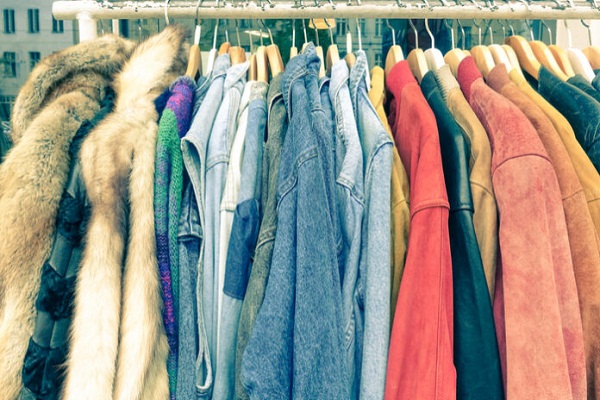
Pure London has come up with a toolkit for independent fashion retailers in the UK. With nearly 14,000 independent fashion retailers in the UK, the toolkit is an invaluable resource that provides step-by-step guide with tangible and practical information on everything from reducing carbon footprint and energy consumption to sustainable packaging, to help them embrace sustainability in their business.
It has been designed to explore key areas all fashion retailers need to address to move towards a more sustainable way of working. Five comprehensive but easy to digest chapters cover mapping their impact and creating a strategy, operating stores in a eco-conscious way, sourcing mindfully, embracing circularity, and how to communicate with customers.
Focus on retail’s sustainability needs
The toolkit also presents two insightful and informative independent retailer case studies. It explains what circular fashion is and what the term means; why degrowth is better than green growth; explains circular business models and includes examples that can easily be implemented as a test for small businesses. The toolkit explains the climate crisis, what is happening in the world because of it, how it is affecting business and the huge part that fashion has to play in the crisis.
A video looks at how to approach sustainability properly with customers, avoid greenwashing and manage consumer expectations. From the language used to the level of communication with specific consumers, many tricky parts on sustainability is explained and ways of how to overcome them. Pure London fully understands the importance of reducing the environmental impact within the fashion industry and is determined to use its global platform to spread knowledge on this critical topic and provide unrivalled advice. The toolkit is a must for any fashion business, it is entirely free, saving businesses costly consultancy fees. Pure London feels every agent in the fashion industry should work towards reducing their environmental footprint and reduce inequalities along the value chain to give everyone a fair chance at combatting the challenges ahead. Independent stores may not have the big teams or budget that chain stores do, but Pure London believes they have many other qualities that put them in a unique position to influence the industry towards sustainable change.
About Pure London
Pure London, the global fashion buying platform for women’s wear, accessories, jewellery and footwear, will take place in the UK, February 12 to 14, 2023. Bringing together the brightest industry minds twice a year, the latest trends and forecasting expertise, exclusive business insight, and important international connections, Pure London provides an inspirational platform to buy globally in the fashion capital.
Bangladesh RMG exports to Russia drops as shipments, payments get affected
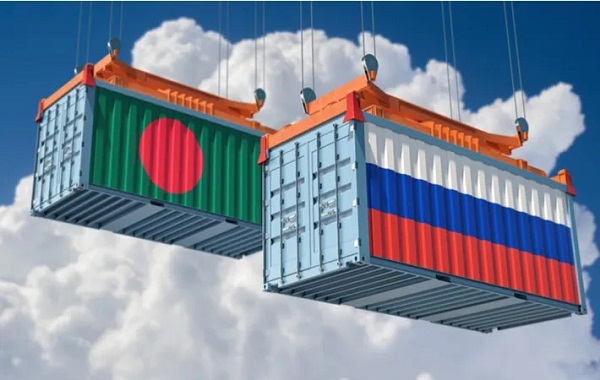
Shipment of garments from Bangladesh to Russia dropped 47 per cent year on year in the July to December 2022 period of the current fiscal year. Before the war, Russian buyers used to place work orders in big volumes. Ever since the war with Ukraine, Russian buyers have delayed payments. Before the war, nearly 600 garment exporters in Bangladesh used to send apparel items to the Russian markets as they were paid better prices.
Russia was an emerging market for Bangladesh as exports had been growing rapidly because of high demand for clothing items at competitive prices. Export receipts from garment shipments to Russia registered a 35 per cent year on year growth from July to February period of the last fiscal year.
In fact, growth in export receipt was showing a positive trend despite the fallout of the war because payments of previous work orders were being made. In the early days of the war, garment exports faced no major disruption since shipments were being made via alternative routes such as China and Hong Kong and suppliers were receiving payments from China in Chinese currency. Indeed shipments of garments continued through alternative routes for a few months against work orders placed prior to the conflict.
Collapse due to ban by SWIFT
The real detrimental effects of the war started to materialize from the middle of the last year. Now, garment exporters are facing trouble in shipments to Russian markets. Almost all major retailers and brands have left the Russian market and Western countries have put a ban on the use of SWIFT (Society for Worldwide Interbank Financial Telecommunication) by Russian banks. This has made engaging in transactions with Russia difficult. There is uncertainty over receiving payments and sending goods through alternative routes as the traditional ones have turned dysfunctional because of the war.
Some exporters are still sending goods to Russia through alternative routes and receiving payments from Turkey and in Chinese currency but the number and amount is still little.
Need to find alternatives
Exporters feel Bangladesh and Russia should arrange a special mechanism such as a barter system, creating alternative routes for shipping goods and introducing alternative currencies for payments instead of the dollar, such as the Chinese yen.
US supports cashmere company in Kyrgyz Republic
With American help, a company in Kyrgyzstan has opened a new facility. Up to 80 tons of high quality cashmere fiber will be produced annually by Kyrgyz Cashmere.
The new facility will process Kyrgyz yak, camel, and cashmere fiber. Kyrgyz Cashmere collects cashmere fiber from farmers in remote areas of Kyrgyzstan.
As a result of this partnership with the US, Kyrgyz Cashmere will increase the incomes of hundreds of families as it expands wool collection to the Batken, Jalal-Abad, Naryn, Osh, and Issyk-Kul regions.
The company’s production will create economic opportunities for more families and in the long term the facility plans to expand further to source fiber from the broader Central Asian region. The company maintains high-quality processing to increase the competitiveness of Kyrgyz cashmere and yak fiber on the international market.
In addition, Kyrgyz Cashmere plans to train shepherds and introduce innovative best practices to increase the Kyrgyz Republic’s exports to high-end clothing manufacturers in Europe.
Kyrgyz Cashmere is one of the many businesses that the United States supports across the Kyrgyz Republic. In the last four years, this has helped over 120 Kyrgyz businesses to grow, increase their sales, access new markets, and create over 18,000 new permanent and seasonal jobs.
Textile fair on in Colombia
Colombiatex is being held in Colombia, January 24 to 26, 2023. This is a Latin American fair focused on the textile segment.
Colombiatex is considered the main business center in Latin America focused on the textile, machinery and chemical products segment. The event has national and international visitors. It has been held annually since 1988 and is attended by visitors, wholesalers, distributors, retailers, representatives of textile and clothing.
It is meant for textile producers and distributors for garments, footwear and fine leather as well as companies who base their activities on technical and industrial applications, equipment, machinery and supplies for the fashion, home and footwear and fine leather industry.
Colombiatex not only establishes the business agenda for the American continent but also brings together supply and demand from every segment of the industry and every fashion category. It is the scenario where national and international brands can begin their journey of distribution throughout Latin America
. Close to 41 per cent of the investments are directed towards textile purchases, 23 per cent for machinery and equipment, ten per cent for trims and fittings, seven per cent for chemical products, seven per cent for threads and yarns and 12 per cent register for other categories.
Indian states TN, UP take lead to boost trade with Australia
The Economic Cooperation and Trade Agreement (ECTA) is expected to increase bilateral trade between India and Australia in the next five years.
This is the first free trade agreement between India and a developed country in a decade. It was signed in April 2022 and came into force from December 29, 2022.
Among Indian states Tamil Nadu and Uttar Pradesh have already taken the lead in terms of their engagements to take advantage of this free trade agreement. The free trade agreement has set the framework and a conducive environment for businesses to operate in.
Australia is the seventeenth largest trading partner to India and India is Australia’s ninth largest trading partner.India’s exports to Australia grew 135 per cent between 2019 and 2021 and primarily comprise finished products such as textiles and apparels, engineering products, leather, footwear, gems and jewellery, and sportswear.
India’s imports from Australia consist largely of raw materials, minerals, and intermediate goods. Following the implementation of the ECTA, a significant growth is expected in finished products from India’s labour-intensive sectors such as textiles and apparel, gems and jewellery, leather and footwear, furniture, and engineering goods. These items had a four per cent to five per cent tariff in Australia pre-ECTA.
Bangla exporters protest new gas price
The gas price hike in Bangladesh should be withdrawn. So says the Bangladesh Garment Accessories and Packaging Manufacturers and Exporters Association (BGAPMEA).
BGAPMEA is a platform of around 2,000 small and medium accessories makers. It maintains the hike in gas price would squeeze the competitiveness of the industry, which is already faced with multiple challenges, while adding such an unusual hike would make the current situation even more complex for accessory makers.
BGAPMEA further says that the decision should be reviewed and the previous rate should be reinstated. Bangladesh’s export-oriented apparel sector has been hit by a power crisis.Production in many readymade garment factories has dropped by at least 40 per cent after the gas and electricity supply situation deteriorated sharply in recent weeks. Exporters are facing trouble producing the existing orders due to the shortage of electricity. They fear that if Bangladesh cannot produce and deliver the current orders on time, the confidence of international buyers will also decline amid a falling demand for textile products in the global market.
Bangladesh’s garment exports fell seven per cent in September 2022 for the first time in 13 months. In the midst of the slide in foreign currency reserves, both export earnings and remittance inflows decreased significantly in September 2022.