FW
Textile Executives Visit U.S. Cotton Belt
More than 30 textile manufacturing executives from 15 countries will visit the U.S. Cotton Belt September 30-October 7 on the 42nd COTTON USA Orientation Tour. The tour, sponsored by Cotton Council International (CCI), is designed to increase U.S. cotton customers' awareness of the types/qualities of U.S. cotton, help them gain a better understanding of U.S. marketing practices, and enhance their relationships with U.S. exporters.
This year's tour participants will visit a Mid-South cotton farm and gin, tour a farm and cotton warehouse in Texas, tour a Pima cotton farm in California, observe cotton research in North Carolina and Mississippi, and tour the USDA cotton classing office in Bartlett, Tennessee. They will also meet with U.S. cotton exporters and get briefings from CCI, the National Cotton Council (NCC), Cotton Incorporated, ACSA, the Texas Cotton Association, the Lubbock Cotton Exchange, Amcot, the American Cotton Producers, the Delta Council, Plains Cotton Growers, Inc., the Western Cotton Shippers Association, and Supima.
The COTTON USA Orientation Tour is a vital event for the U.S. cotton industry. For over half a century, this event has enabled the industry to showcase its high-quality U.S. cotton fiber to important international spinners and build and strengthen relationships with these customers.
Renewable Materials Conference 2024: A Unique Event to Showcase Renewable Materials
The Renewable Materials Conference (RMC) is a leading event that showcases all renewable materials at one place. The conference will be held in Siegburg/Cologne, Germany, from June 11-13, 2024.
The RMC is a unique event that brings together industry, academia, and politics to discuss the latest innovations and implementations in renewable materials. The conference will feature over 80 presentations, 20 panel discussions, and several workshops.
The RMC is a must-attend event for anyone interested in the future of the chemicals and materials industry. The conference is a great opportunity to learn about the latest trends in renewable materials, meet with industry leaders, and network with other professionals.
Call for Abstracts and Innovations
Producers and inventors of innovative technologies and applications based on biomass, CO2, or advanced recycling are invited to submit their innovations for the Innovation Award “Renewable Material of the Year 2024”. The deadline for submission is February 28, 2024.
INDIA: Textile and Clothing Sectors Need Comprehensive Strategy to Capitalize on Global Market Opportunities
Industry officials emphasized the need for a comprehensive, forward-thinking strategy to capitalize on global market opportunities for the textile and clothing sectors, which play a significant role in India's economy.
The sectors contribute Rs 30,000 crore in GST revenue and generate USD 44 billion in foreign exchange earnings, but have faced challenges in recent times, including structural issues related to raw materials, high production costs, and operational scale.
SIMA highlighted these concerns as obstacles to their continued growth and success.
Successful conclusion of Gartex Texprocess India, New Delhi edition
Gartex Texprocess India, the premier event in the garment and textile industry, recently wrapped up its New Delhi edition with resounding success. The trade fair, which showcased advanced innovations in textiles and garments, attracted a substantial number of visitors, highlighting the industry's growth.
Record breaking footfall
The event drew 14,895 trade visitors from 384 Indian cities, 28 Indian states, 7 Union Territories, and 27 countries, affirming its international significance. Renowned brands like Jaysynth, Epson, and Brother showcased their cutting-edge products, contributing to the event's success.
Positive industry response
Morgan Technica's Country Manager, Mr. Prakhar, expressed satisfaction with the show's response, particularly for their cutting room solutions. Colorjet's Vice President, Mr. Arun Varshney, also noted a good response from customers.
Engaging displays and sustainability focus
Live demonstrations and engaging displays at the Surat Pavilion, Screen-Print India, and Fabrics & Trims zones left visitors impressed. The Denim Show, in partnership with the Denim Manufacturers Association, highlighted sustainability with artistic installations.
Industry insights
Sessions at the event focused on sustainability in textile manufacturing and technological advancements in the industry. Industry experts discussed schemes and initiatives to promote sustainability, emphasizing the need for awareness and community involvement.
Optimistic outlook
Gartex Texprocess India's success has ignited optimism in the industry. Gaurav Juneja, Director of MEX Exhibitions Pvt Ltd, praised the event's potential and government initiatives. Raj Manek, Executive Director of Messe Frankfurt Asia Holdings Pvt Ltd, expressed pleasure in the event's success and looked forward to the next edition.
Future endeavors
The next edition of Gartex Texprocess India is scheduled for February 1-3, 2024, at the Jio World Convention Centre, BKC, Mumbai, promising to continue showcasing high-end innovations in the textile and garment sector.
Apparel imports continues to slag in Western markets, India’s exports suffer: Wazir Report
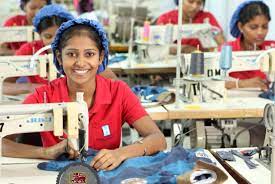
Wazir Advisors September 2023 report spanning June and July 2023 reveal not much has changed since August in terms of Western import of apparels and India’s exports. Comparing the stats in August and the soon-to-be-published report, shows no newsworthy changes but more affirmation that apparel imports are currently low in Western markets and a stagnation in Japan, having experienced a rise only in June – the stagnation started in July and continued into August 2023. Indian exports continue to lose ground, which may lead to speculation about 2024 being the year of a big comeback.
Indian apparel exporters continue underperforming
The report shows, the total value of Indian apparel export in 2022 was at $15 billion and between January and August 2023 only $10.2 billion has been achieved. In August 2023, India’s apparel exports were estimated at $1.1 billion, 22 per cent lower than in August 2022. On a year-to-date basis, that reads 14 per cent lower than exports achieved in 2022 but an improvement of 1 per cent based on August 2023 stats.
Overall, some interesting picture emerges. In 2022, India’s export to the US was at 35 per cent but between January and July this year, it stands at 33 per cent only. It is by the end of the year, it will be known if India managed to retain, gain or lose US orders. UK, UAE and France remain the same and Germany has dropped by 1 per cent in the months January to July 2023 compared to the entire year of 2022 and there is a possibility of recovery during upcoming winter festivities.
Readymade garment imports remain depressed in the West
In July 2023, US apparel imports were $7.7 billion, which is 17 per cent lower than July 2022. On year-to-date (YTD) basis, imports were 21 per cent lower than in 2022. It seems, Bangladesh was gaining China’s market share in the US but it too lost 3 per cent since 2021. The EU’s apparel imports in June 2023 were $7 billion which is 10 per cent lower than June 2022. On YTD basis, the imports were 4 per cent lower than in 2022 but there may be a spike during the upcoming festive season to shorten the deficit. The UK’s apparel imports in July 2023 were $1.5 billion, 21 per cent lower than in July 2022. On YTD basis, the imports were 15 per cent lower than in 2022. In July 2023, Japan’s apparel imports were $1.9 billion, similar to that in July 2022. On YTD basis also, the imports have not changed.
Domestic retail faring better than imports in UK, US
In the UK, Q2 2023 saw online sales of clothing registering a growth of 10 per cent over Q2 2022. In the same period, it was a different story in the US as it witnessed a negligible 1 per cent growth in Q2 2023 over Q2 2022. In July 2023, UK’s monthly apparel store sales were £3.7 billion which is 3 per cent higher than in July 2022. On YTD basis, sales were 9 per cent higher than in 2022. In the UK, e-commerce continues to grow more than purchases in physical retail outlets as a key factor being higher fuel costs hindering commuting.
In August 2023, US monthly apparel store sales were estimated at $19.2 billion, 8 per cent more than in August 2022. On YTD basis, sales in 2023 are 5 per cent higher than in 2022. In the US, surprisingly defying global trends, sales of home furnishing are dropping steadily. August 2023’s home furnishing store sales were estimated at $4.6 billion which is 16 per cent lower than in August 2022. On YTD basis, sales are 3 per cent lower than in 2022.
Prashant Mohota elected Indian Spinners Association President
In a significant development during the Annual General Meeting on September 22, 2023, Prashant Mohota, the Managing Director of Gimatex Industries Ltd., has assumed the Presidency of the Indian Spinners Association. Gimatex Industries, renowned for its integrated textile plants in Hinganghat near Nagpur and Ahmedabad, boasting 225,000 spindles, sees Mohota's election as a testament to his industry leadership.
Furthermore, Prakash Maheshwari, the Chief Executive of Corporate Affairs at RSWM Ltd., has been elected Vice President. RSWM Ltd., a major player in the sector, operates a substantial 578,126 spindles for synthetic blended and cotton/melange yarn production, alongside impressive Denim Fabric and synthetic/cotton knitted fabric output.
In an additional development, M.L. Jhunjhunwala, former President of RSWM Ltd., has been appointed as the Executive Director. The Indian Spinners Association's role in uniting spinning mills focused on man-made and synthetic fibers under one umbrella signifies its dedication to fostering growth and collaboration within the industry.
Coloreel inks $2M deal with Asian manufacturer
Coloreel celebrates a major achievement with a $2 million deal alongside a leading Asian manufacturer, supplying renowned global brands. This marks a pivotal moment for Coloreel and its groundbreaking embroidery innovation. The Swedish company's technology revolutionizes thread dyeing, offering an endless color spectrum in real-time while boosting production efficiency through digital automation and slashing water usage by 97%.
This partnership underscores Coloreel's ability to address the surging demand for sustainable solutions in the manufacturing and brand sectors worldwide. Initial deliveries of the digital thread-dyeing units are scheduled for October, with the bulk arriving in 2024.
Torbjörn Bäck, Coloreel's CEO, exclaims, "We're thrilled about this partnership and eager to collaborate, showcasing our patented technology's role in enhancing fashion's sustainability while fueling design creativity."
FASHION WORLD TOKYO
Japan's largest international fashion trade show with 1,150 exhibitors from all over the world!
Highlights of the 2023 October show:
Showcase the latest sustainable products/materials, apparel, bags, shoes, accessories, fabrics/materials/textile accessories, fashion digital technologies, and eyewear.
Welcome 27,000 buyers from all over the world to source brands, the fabrics and materials, and order fashion sourcing/OEM/ODM services and more.
Dates: October 10 (Tue) – 12 (Thur), 2023 Venue: Tokyo Big Sight, JAPAN
FASHION WORLD TOKYO is the business platform for companies from all over the world to showcase the latest fashion trends and innovations. The October show will gather SS collections and welcome 27,000 buyers from all over the world to source brands, the fabrics and materials, and order fashion sourcing/OEM/ODM services and more.
If you are interested in the latest fashion trends and innovations, or if you are looking to source fashion products, FASHION WORLD TOKYO is the must-attend event for you.
Global Sportswear Brands Failing Cambodian Garment Workers, Report Finds
A new report has found that global sportswear brands are failing Cambodian garment workers, who are living in poverty despite working long hours.
The report, titled "Stitched under Strain: Long term wage loss across the Cambodian garment industry," was released by global women's rights organization ActionAid and Cambodian labor rights organization the Center for Alliance of Labor and Human Rights (CENTRAL).
The report found that workers, including at factories that produce for major brands Nike and Adidas, have experienced systemic wage loss alongside a massive reduction in working hours since the pandemic.
As a result, workers are unable to meet their basic needs, with 85 percent of surveyed workers reporting that their salary is insufficient to support them until the end of the month, and almost 50% of surveyed workers are going to work without eating enough.
The report calls on international brands to ensure Cambodian garment workers in their supply chain are earning a fair wage that keeps them out of poverty.
"No one making clothes for the world's most popular brands should be living in working poverty," said Khun Tharo, Program Manager at CENTRAL.
Pontetorto to unveil next-gen sports fabric Super Tecnostretch at Performance Days and Ispo Munich
Pontetorto is ready to present to all sports customers the brand new Super Tecnostretch line, the fabric designed to take comfort and elasticity to a higher level than the previous range of Tecnostretch proposals.
Super Tecnostretch features an even more compact structure, thus greater resistance to pilling and abrasion, excellent elasticity in all four directions for optimal comfort, and excellent thermal insulation and high breathability. It is also lightweight and compact, making it a perfect travel companion.
Suitable for every environment and in every occasion, such as outdoor or travelwear up to athleisure, Super Tecnostretch is perfect as a second layer and in some cases also as a base layer.
Pontetorto general manager Marco Toccafondi says, "The idea was born to meet the needs of a market increasingly competitive for performance technology, which leads us to push research in the direction of total comfort and elasticity.
Super Tecnostretch is the result of an in-depth study we have been carrying out for months and represents the natural evolution of the Tecnostretch range that has been so successful in recent seasons."