FW
Survival of Indian cotton mills depends on government initiatives

Much has been discussed in Indian media about the domestic cotton scenario spanning farming, spinning, textiles and apparel. The clear picture that emerges when one cuts through the media chatter is that the sector has become rather vulnerable due to global scenarios much beyond their control. From climate change that lowers natural yield and increases crop diseases to economics that dampens demand for non-essential items such as apparel and home furnishing to sustainability activism that accuses cotton farming of reckless consumption of water and soil infertility. In this context, one of the biggest setbacks has been for cotton mills manufacturing yarn and textiles and the industry wants the government to take necessary actions including import duty cuts for raw cotton.
Duty removal tops sector agenda
India’s domestic textile industry has urged the government to exempt cotton from 11 per cent import duty. When the government introduced the tax three years ago, Indian cotton was cheaper than imported cotton and therefore, the levy would make manufacturers source locally and decrease the carbon footprint of importing. Now, with the domestic cotton prices having shot up, being more expensive than imported varieties by 18 to 19 per cent, importing cheaper cotton is the only viable way forward, say textile manufacturers. However, the government has not obliged yet.
The Southern India Mills Association (SIMA) has been relentlessly petitioning the government to consider a temporary halt on the 11 per cent import duty during the off-season between April and September each year. The battle may remain ongoing as the government is aware that the trend during off-season has not seen a significant jump in prices. Thanks to the levy, Indian textile manufacturers are unable to put forth competitive pricing at international level despite sourcing cheaper foreign cotton.
Last year the government had given import duty exemption until October 2022 as local cotton prices touched Rs 1,00,000 per candy. The import target for this year is 15 lakh bales, which might be difficult to meet with high import duties. With September 2023 marking the end of off-peak season, a candy of cotton costs Rs 75,000 nowadays. The upcoming season may not hold much promise either as the agricultural prediction for India’s cotton farming has not been too positive.
Indian cotton yarn slides down the export ladder
The sector is in dire need of changes to bolster its survival and success. To add to its bag of woes, Indian cotton yarn has been underperforming in terms of exports as per the Indian Ministry of Commerce and Industry’s recent stats. The demand trend is mostly on a downward slide as shipments to Bangladesh, Egypt, Portugal and Peru dropped by 62.4 per cent, 26.4 per cent, 3.4 per cent and 25.4 per cent respectively, on a year-on-year.
Nevertheless, China threw in a huge boost for this beleaguered commodity as its import of Indian cotton yarn leaped to nearly $229.7 million, a remarkable increase of 175 per cent. In this context it could be said that since May 2023, India cotton yarn exporters can only hope. As now Indian cotton yarn exports hit a decadal low of 664,000 tonnes in FY23, compared with the highest exports of 1.38 million tonnes in FY22. Demand for cotton yarn in FY22 was strong, driven by downstream demand for home-textile products and the advantage of lower domestic cotton prices compared to international prices. As it stands, Indian cotton yarn exports have dwindled by a significant 32 per cent.
ISKO Doubles Down on Denim Circularity, Bringing Industry Experts Together
ISKO, a leading denim manufacturer, is doubling down on its commitment to denim circularity by bringing industry experts together to discuss how to build a better denim industry.
On Tuesday, September 26, a panel of experts from Urban Outfitters Europe, GANT, Jeanerica, Jeans & Co, and ISKO, moderated by Daniel Mensch from Sustainable Fashion Academy, discussed the challenges and opportunities of denim circularity.
ISKO also showcased its latest advancement in material science, Ctrl+Z, and introduced exciting developments in material separation and recycling technology.
Ebru Ozkucuk Guler, Head of Sustainability at ISKO, said: "Now is the time for all players to take to the field like the first eleven in the game. Like this, collaboration can only be achieved if all of the parts have a common purpose.
KARL MAYER GROUP Expands Presence in Turkish Market
KARL MAYER GROUP, renowned for its long-standing association with Turkey, marked its latest milestone by inaugurating a subsidiary in Bursa. The decision to establish a presence in Bursa was primarily driven by the concentration of the company's customers in and around the city.
Bursa boasts a well-developed industrial landscape, particularly in sectors like automotive, furniture, and textiles. The city's accessibility, strong connectivity, and continuous growth potential made it a strategic choice.
The new location, situated in Nilfüer, Bursa, encompasses 1000 m² of office and meeting space, a fully equipped academy, and an extensive spare parts warehouse. This infrastructure will enable KARL MAYER GROUP to provide optimal support to its customers in Turkey.
The academy in Bursa offers state-of-the-art training, featuring the HKS 4-M ON, enhancing customers' knowledge and skills through versatile application scenarios. The company's focus is on delivering high-quality after-sales service, setting standards in spare parts supply, expert knowledge, and online services. The regional representative ERKO will continue to handle machine sales, building on its market experience and broad network.
The move demonstrates KARL MAYER GROUP's commitment to supporting its Turkish customers in adapting to evolving market challenges, fostering profitability, sustainability, and growth.
Modefabriek 2024: A New Era for Women's Fashion
Modefabriek, the leading fashion trade show in the Benelux, is setting a new standard with its upcoming winter edition on January 21 and 22, 2024. Starting in 2024, Modefabriek will focus entirely on women and everything they need to express who they are and want to be.
This new focus allows Modefabriek to bring a much more complete and international range of women's fashion in a variety of styles and segments. Visitors will find a diverse lineup of brands from the Netherlands and Northern Europe, as well as major global brands and labels from the Mediterranean and other regions.
Modefabriek is also broadening its offerings to include labels in the categories of beauty, lifestyle, accessories, yoga & active wear, lingerie, size inclusive, gender neutral, artisanal, and cultural heritage.
By popular demand, fashion shows are back on the program for the winter edition of Modefabriek. These shows are open to all fair visitors and offer labels an extra stage to distinguish themselves.
Familiar pillars of the Modefabriek program have also been re-examined and return in a revamped form. For example, the Talks by diverse experts are given a centrally located open stage. The Trendforum with the most important women's fashion trends for winter 2024-2025 and The Fashion Gallery for high-end boutique labels have been redesigned. And instead of a separate section for sustainable brands and initiatives, these are now highlighted through a Sustainable route.
Modefabriek is also intensifying its focus on international visitors in the coming year. This year, twenty percent more Germans and ten percent more Belgians came to the RAI.
Caroline Krouwels, CEO of Modefabriek, about the new direction: “We all work in fashion to meet the challenges of a constantly changing world with vigor, beauty and creativity. Modefabriek wouldn't be Modefabriek if we shied away from current developments."
H&M Hennes & Mauritz AB Nine-month report
H&M's net sales in SEK increased by 8 percent in the first nine months of the financial year to SEK 173,385 m. In local currencies, net sales were flat compared with the previous year.
Operating profit increased to SEK 10,205 m, corresponding to an operating margin of 5.9 percent. In 2022 one-time costs for Russia of SEK 1,751 m were charged against the nine-month result. Adjusted for these one-time costs the increase compared with the previous year was 26 percent.
The result after tax increased by 61 percent to SEK 7,147 m, corresponding to SEK 4.39 per share.
Cash flow from operating activities increased to SEK 24,742 m.
Third quarter:
Net sales increased by 6 percent to SEK 60,897 m in the third quarter. In local currencies, net sales were flattish compared with the previous year.
Operating profit increased to SEK 4,739 m, corresponding to an operating margin of 7.8 percent. One-time costs of SEK 2,104 m for winding down the Russian operations were charged to the third quarter 2022. Adjusted for these one-time costs the increase compared with the previous year was 58 percent.
The result after tax increased to SEK 3,319 m, corresponding to SEK 2.04 per share.
Intex India, a B2B international sourcing trade show
Intex India stands as a pivotal B2B international sourcing trade show, acting as a critical meeting point for Indian and global suppliers. This unique platform facilitates direct access to the vast Indian, South Asian, and global markets, underscoring India's impressive manufacturing prowess, insatiable domestic demand, and burgeoning export potential. For international suppliers, it presents an unmatched opportunity to tap into this expansive market landscape.
By harnessing India's robust manufacturing capabilities and its commanding domestic demand, Intex India becomes a gateway to unparalleled opportunities. This event underscores India's role as the fastest-growing major economy, poised to reach a remarkable GDP of $7 trillion by 2030, alongside a burgeoning disposable income and soaring consumption trends.
In essence, Intex India serves as the nexus where businesses can thrive in the dynamic intersection of India's economic might and global trade, forging profitable partnerships and capitalizing on the boundless potential this market offers.
Texhibition Istanbul 2023 records impressive growth
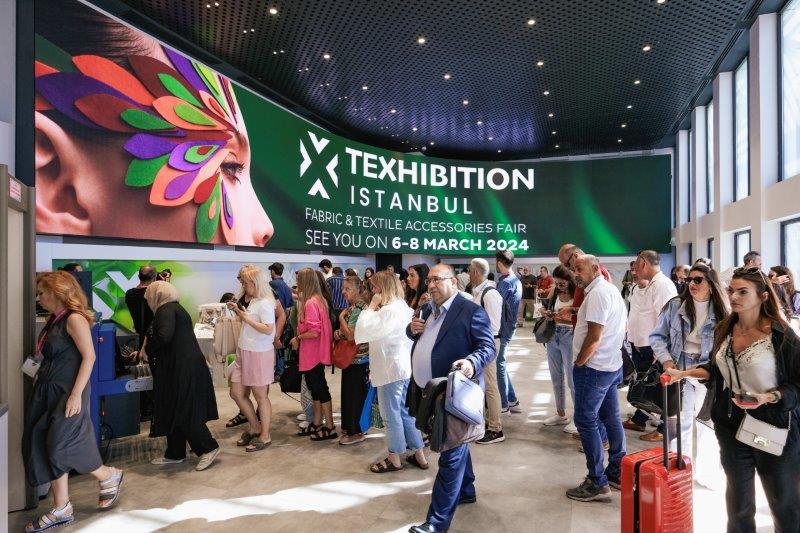
The fourth edition of Texhibition Istanbul Fabric, Yarn, and Textile Accessories Fair, held at the Istanbul Expo Center from September 13 to 15, solidified its reputation as a global textile powerhouse. Since its debut in March 2022, Texhibition has rapidly ascended in the international trade fair scene. This year, it hosted 444 exhibitors across 15,000 square meters, drawing an impressive 20,354 attendees from 112 countries. Notably, international visitors surged by 43.7%, with a total visitor increase of nearly 10% compared to March 2023.
Turkish Textile Industry: A Global Force
Ahmet Öksüz, Chairman of the Board of the Istanbul Textile Exporters Association (ITHIB), highlighted Turkey's textile industry's resilience. With Turkish exports reaching USD 123.4 billion in the first half of the year, the country ranks as the world's fifth-largest and the EU's second-largest textile supplier. Boasting a value chain covering the entire spectrum, Turkey contributes 3.5% of global textile exports and 16% of EU textile imports. High-quality, innovative, and sustainable Turkish textiles continue to garner worldwide demand, with exports reaching USD 6 billion in H1 2023.
Expanding Horizons
Looking ahead, M. Fatih BİLİCİ, Vice President of the Board of ITHIB and President of the Texhibition Istanbul Executive Committee, revealed ambitious plans for Texhibition Istanbul in March 2024. The event will expand to five halls, with a dedicated hall for the yarn product group.
Satisfying Outcomes
The bustling atmosphere at the Istanbul Expo Center was palpable throughout the fair. Renowned market giants and emerging export-oriented companies showcased textiles, ingredients, prints, yarns, artificial leather, and fibers. Exhibitors voiced their satisfaction, underlining Texhibition's pivotal role in supporting Turkey's textile industry in the global market.
Global Presence
International visitors hailed from various countries, including EU nations, Russia, Ukraine, and the Middle East. Prominent buyers from Poland, the UK, Italy, and Spain capitalized on the organizers' matchmaking services. Additionally, Texhibition welcomed its first-ever delegation from the Dominican Republic, highlighting its growing international appeal.
Sustainability in Focus
Texhibition's theme, "United For Climate In Textiles," emphasized the textile industry's commitment to addressing environmental challenges. Future editions will allocate exhibition space exclusively to participants meeting sustainable criteria.
Fashion Forward
The Trend Area showcased the latest fashion trends for Autumn/Winter 2024-25. Themed sections explored well-being, wellness, natural textiles, eco-consciousness, glitter, intelligent textiles, environmental activism, and new materials and aesthetics, all underscored by sustainability.
Trend Seminars
Renowned trend expert Pascaline Wilhelm captivated the audience with insights on fashion, textile, artificial intelligence, and eco-responsibility.
Mark Your Calendar
Mark your calendars for the next Texhibition on March 6-8, 2024, as it continues to shape the future of the global textile industry.
Embee Plumbon Tekstil joins ITMF for global textile leadership
Indonesia's PT Embee Plumbon Tekstil, a prominent player in the global spinning industry since its establishment in 1999, has taken a significant step by becoming a corporate member of the International Textile Manufacturers Federation (ITMF). This strategic move underscores Embee's commitment to enhancing its global presence and staying at the forefront of industry trends.
Embee's customer-centric strategy, characterized by continuous technological upgrades, skillful production, and comprehensive training programs, has propelled it to set high standards in product and process development. Christian Schindler, Director General of ITMF, hailed Embee's reputation and stressed the importance of offering quality products at competitive prices in today's market.
Vijay Agarwal, President Director of PT. Embee Plumbon Tekstil, expressed the significance of joining ITMF, emphasizing the access it provides to industry insights, data, webinars, and a trusted international network. Embee's affiliation with ITMF marks a pivotal moment in its journey toward global textile excellence.
CHIC elevates Chinese fashion elite at Who's Next in Paris
The recent Who's Next fashion fair at Porte de Versailles, held from September 2nd to 4th, attracted a multitude of visitors eager to explore the offerings of around 1,300 exhibitors in clothing, shoes, accessories, and jewelry. This year's theme was "Back to School," and amid the bustling event, the spotlight shone on twenty leading Chinese design labels making their international debut under the banner of CHIC (China International Fashion Fair).
CHIC, with a booth spanning 900 square meters at Who's Next, provided a captivating display of Chinese women's, men's, and sports fashion, including hats. Notable brands such as Ellassay, Jnby, Luo Zheng, Raxxy, Keyone, and more showcased their creations. KB Hong by K-Boxing, along with Joeone, stood out as successful Chinese fashion brands that have made their mark at Paris and Milan Fashion Weeks.
Sylvie Pourrat, Director at WSN, emphasized the deeper exploration of the Chinese fashion ecosystem, aiming to challenge stereotypes of "fast fashion." She noted the brands' success stories and their aspirations for international expansion.
Recognizing the global impact of Chinese design, Luo Zheng and Hong Boming received the prestigious "Jinding Award." Raxxy, known for its impressive Great Wall fashion show, and Ellassay, with a $300 million annual turnover, have also gained international acclaim.
The CHIC Pavilion's debut in Paris marks a significant milestone for emerging Chinese brands seeking international recognition. It underscores the rise of "Design made in China" and hints at further international expansion.
The success of the FASHION CHINA Pavilion is a testament to China's growing influence in the fashion world, with substantial orders, including a €3.1 million order from Van SunSun, highlighting the appeal of Chinese design. This endeavor is a pivotal step toward the global presence of Chinese top fashion, with an eye on expanding to other international platforms in the future.
Indonesian Spinning Company Embee Plumbon Tekstil Joins ITMF as Corporate Member
PT Embee Plumbon Tekstil, one of the leading spinning companies in the world, has joined the International Textile Manufacturers Federation (ITMF) as a Corporate Member. The company, which started its operations in 1999 in Indonesia, has established a reputation for its customer-focused approach, continuous technological upgrades, skilled production processes, and comprehensive training programs. This approach has enabled Embee to set the highest standards in product and process development.
Mr. Christian Schindler, Director General of ITMF, welcomed Embee to the federation, stating that "ITMF is very fortunate to welcome such a renowned spinning company as a new Corporate Member in its membership. Companies like Embee demonstrate how important it is to offer quality products that the markets demand at a competitive price.
ITMF offers Embee an environment that can be seen as a sounding board, helping the company to better understand its position in the global competition, learn about the prevailing trends in the global industry, and identify suitable suppliers and customers."
Mr. Vijay Agarwal, President Director of PT. Embee Plumbon Tekstil, commented that "by joining ITMF we become a part of a unique universe of the global textile supply chain. It is important for Embee to look beyond the daily business and develop a feeling for the evolution of the industry.
A forum like ITMF offers just that. To have access to ITMF’s data, survey, webinars, and its international network across the entire textile value chain provides intangible value for us. Engaging with colleagues from around the world in an atmosphere of trust is very valuable."
Embee's membership in ITMF is a testament to the company's commitment to excellence and its commitment to the global textile industry. ITMF is a leading international organization that represents the global textile industry. It provides its members with a wide range of services and support, including access to data and research, networking opportunities, and advocacy services.
Embee's membership in ITMF is a positive development for both the company and the global textile industry. It will enable Embee to benefit from ITMF's resources and expertise, and it will also help to strengthen the global textile industry as a whole.