FW
RSWM: Textile titan achieves record growth and global recognition
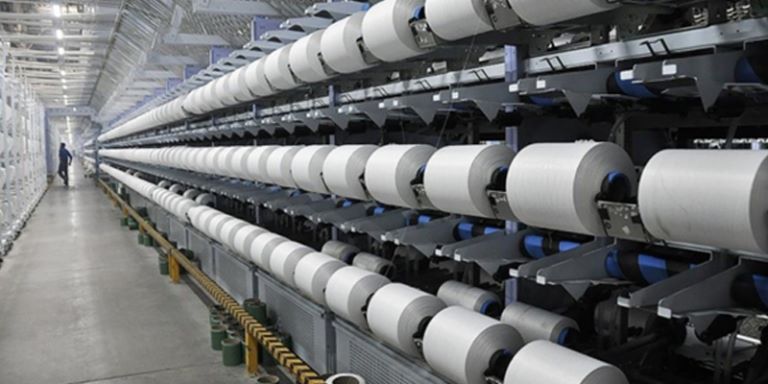
RSWM, a leading player in the textile sector, has entrenched itself as one of India's premier manufacturers and exporters of synthetic and blended spun yarns. Renowned for its unwavering commitment to quality and an expansive product portfolio, the company caters to both domestic and international textile giants.
Distinguishing itself in denim fabric production, RSWM has earned accolades for its exceptional product quality. Esteemed figures in the textile domain rely on RSWM's denim fabric for its innovative designs and durability, contributing to the company's impressive clientele, which includes well-established domestic brands and global industry leaders.
Bolstered by a robust manufacturing infrastructure spanning 11 facilities, RSWM boasts a production capacity of 545,752 spindles, 4,800 rotors, and 172 looms. Notably, the company produces 159,500 tons of yarn, 32.4 million metric tons of denim fabric, and 4,800 metric tons of knitted fabric annually.
Financially, RSWM has demonstrated remarkable growth, with fabric constituting 23% of net profit and yarn contributing 77% as of FY23. The company's revenue surged from ₹2,771 crore in FY 2019-20 to ₹3,789 crore in FY 2022-23, showcasing consistent progress.
RSWM's triumph is underpinned by its unyielding dedication to quality, robust manufacturing capabilities, and enduring global client relationships. As the company continues its global expansion, RSWM stands as an indomitable force in the textile industry, poised for sustained success.
Cambodia's robust $26.5 billion trade surge with RCEP, boosts economy
Cambodia's trade within the Regional Comprehensive Economic Partnership (RCEP) surged to over $26.5 billion between January and November this year, constituting 61% of the nation's total international trade, valued at $43 billion during this period, according to a Ministry of Commerce report released.
The report highlighted a notable 27.29% YoY increase, reaching $7.21 billion, in Cambodia's exports to RCEP countries during the same period. Minister of Commerce Cham Nimol expressed the ministry's commitment to bolstering trade, citing RCEP as a pivotal market, contributing significantly to Cambodia's economic growth.
Emphasizing ongoing governmental reforms facilitating small and medium enterprises, Nimol underscored Cambodia's sustained export growth and job creation. The RCEP free trade agreement, operational since January 1, 2022, includes 15 Asia-Pacific nations, with Cambodia among the 10 ASEAN members.
Senior Minister Sok Siphana lauded RCEP's impact on Cambodia's exports, citing substantial market access and its pivotal role in the nation's sustainable economic development. Cambodia's primary exports include garments, machinery, footwear, leather goods, and agricultural products, with the garment and footwear industry being the largest contributor to foreign exchange earnings, employing around 840,000 workers.
Optimizing polyester and nylon advantages
Teijin Frontier unveils its cutting-edge Microft MX high-performance fabric, a revolutionary textile crafted from multifilament yarn, seamlessly blending polyester and nylon through innovative spinning technology.
This fusion results in a finely woven chambray appearance, marked by deep, vibrant colors. The raw yarn, characterized by a gently V-shaped, highly-deformed cross-section, imparts both bulkiness and a soft, spun-like texture.
The fabric ingeniously marries the best attributes of polyester and nylon, combining the abrasion resistance and color development of nylon with the water absorption, quick-drying properties, and shape stability of polyester.
As the demand for fashion bridging sportswear practicality with lifestyle aesthetics rises, Teijin Frontier aims to launch Microft MX for the 2025 spring and summer outdoor clothing and sportswear collections.
The subsequent expansion into functional innerwear and fashion clothing anticipates selling 500,000 meters annually by 2026, addressing a gap in the market for materials seamlessly merging the texture and functionality of polyester and nylon.
Gas price surge shrinks Pakistan's textile exports to $1.3 billion in November
Pakistan's textile exports, a crucial contributor to foreign exchange earnings, saw a sharp decline of 8% month-on-month and 7% year-on-year, totaling $1.3 billion in November 2023. The primary cause attributed to this slump is the recent surge in gas prices, escalating production costs and diminishing the competitiveness of Pakistani textile products globally.
The textile sector, classified into basic and value-added textiles, witnessed mixed performances. Basic textiles observed a 14% MoM decrease but a 20% YoY increase, bolstered by a significant surge in raw cotton exports. Conversely, value-added textile exports recorded a 6% MoM and 12% YoY dip, with towels being the worst-hit segment.
In the first five months of fiscal year 2023-24, textile exports amounted to $6.9 billion, marking a 6% YoY decline. The government's ambitious target of $25 billion for the fiscal year appears challenging, with the research firm predicting exports to reach $17 billion due to higher energy prices and currency pressure.
Additionally, the Sindh High Court has intervened, putting on hold the Sui Southern Gas Company's recent gas tariff hike, responding to a plea from the textile sector. The All Pakistan Textile Mills Association (APTMA) has urged the government to reduce power tariffs to regional averages, expressing deep concern over the sector's performance and warning of potential economic repercussions.
Sri Bhagirath modernises Nagpur plant
Indian spinner Sri Bhagirath has modernised its plant in Nagpur, Maharashtra
The company has linked 17 of its Rieter K 47compact spinning machines at the plant with Rieter Autoconer X6 winding units.
Equipped with a unique sieve drum compacting and a single-duct system for suction, the K47 produces high-quality compact yarns with much less energy for compacting in comparison to other solutions on the market.
The machine’s monitoring systems including the detect air guide element and the integrated ISM individual spindle monitoring system help it check the running properties of each spinning position. This enables it to achieve the highest level of yarn quality and machine efficiency and reduces operator workload. The machine also reduces operators’ efforts and time required for parameter setting and machine adopting through its semi-electronic drafting system.
The latest generation of Autoconer X6 machines offers intelligent and reliable automation. The machine offers self-optimising functions of the material flow, high cycle rates of the unique optic tube inspector and the efficient upper yarn gripping. The integrated SPID online-quality monitoring system also guides the operator to an off-standard spinning position in order to make corrections after the winding unit has detected faulty cops.
The new open prism technology of the machine enables the company to cover the complete yarn count range with only one prism and nearly no splice parameter variations. It has a consistent splice quality with average splice strength of more than 95 per cent.
China approves Santoni’s acquisition of Terrot GmbH
Santoni Shanghai Knitting Machinery Co’s proposed acquisition of Terrot GmbH has been approved by Chinese authorities as a pivotal step in the company’s strategy to advance the industry and solidify its position as the leading manufacturer.
The acquisition will boost Santoni’s production capacity and market share. It will also enable the company to offer high-efficiency machines renowned for superior performance, low maintenance, and cost-effectiveness. Besides, the acquisition will showcase Terrot’s patented UCC 572-T, a state-of-the-art high-feeder transfer jacquard machine, at ITMA Asia + CITME, providing a sneak peek into the future of this collaboration.
Gianpietro Belotti, CEO, Santoni Shanghai, says, the acquisition will strengthen the company’s position in the industry and allow it to provide a superior knitting experience to customers.
Robert Czajkowski, Managing Director, Terrot GmbH, adds, the acquisition will enhance Terrot’s technological expertise and its ability to offer innovative textile performances to the global market.
Terrot will continue its operations under the leadership of Robert W. Czajkowski and Dirk Lange. Santoni plans to retain Terrot’s headquarters, facilities, brands, and practices in Chemnitz, Germany.
39 brands at risk of sourcing from Uyghur in China: Report
Almost 39 well-known brands from the apparel industry such as H&M and Zara are at a high risk of souring materials, particularly PVC and cotton from the Uyghur Region using forced labor and state-imposed labor transfer programs.
At least four of China’s leading have ‘significant ties’ to the Uyghur region through sourcing, subsidiaries, and/or manufacturing, claims a report by researchers from the Helen Kennedy Centre for International Justice at Shaffield Hallam University (SHU) in the United Kingdom.
These companies are linked to various western brands producing allegedly forced labor-made goods that are ultimately sold in the Europe, adds the report.
The report alleges, EU lacks strict regulations to target forced labor-made goods, leading to a rapid increase in forced labor in recent years.
The report has gained significant attention from legislators, specifically in the United States, where the Department of Homeland Security and the Customs and Border Protection put heightened weight on SHU reports when implementing the UFLPA.
Number of installed short spindles increase to 227 million in 2022: ITMF
According to the International Textile Industry Statistics on productive capacity and raw materials consumption in the short-staple organised sector, number of short-staple spindles installed across the globe grew to 227 million units in 2022 from 225 million units in 2021. The number of installed open-end rotors increased to 9.5 million during the year from 8.3 million in 2021 while the number of installed air-jet spindles increased across all regions in 2022.
Installation of shuttle-less looms increased to 1.85 million in 2022 while that of shuttle looms reached 952 thousand. Total raw material consumption in the short-staple organised sector slightly decreased to 44.26 million tonne in 2022. Consumption of raw cotton and synthetic short-staple fibers decreased by -2.5 per cent and -0.7 per cent, respectively while consumption of cellulosic short-staple fibers increased by 2.5 per cent.
China loses ground, Mexico, Malaysia gain as U.S. reshapes sharply dipping apparel sourcing
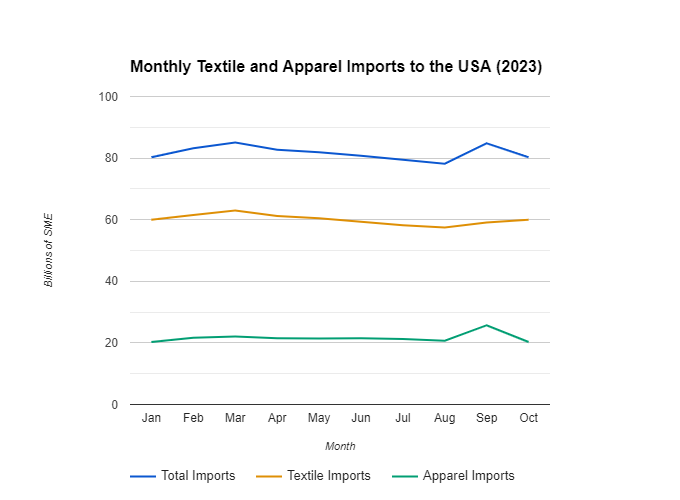
Textile and apparel imports into the United States saw another monthly decline in October, dropping 4.5% compared to September, according to data from the Office of Textiles and Apparel (OTEXA). However, a closer look reveals a more nuanced picture, with annual comparisons showing both gains and losses across different segments and source countries.
Overall Imports:
• While down from September, October imports were 2.8% higher than a year ago, totaling 8.03 billion square meter equivalents (SME).
• This discrepancy is driven by diverging trends within textiles and apparel:
• Textile imports edged up 0.1% for the month and a healthy 7.2% year-over-year, reaching 6.0 billion SME.
• Apparel imports, however, fell sharply, down 14.3% from September and 8.3% from the previous year, at 2.03 billion SME.
Year-to-Date and Ending-Year Trends:
• The year-to-date picture continues to paint a negative landscape, with total imports down 15.0% compared to the same period in 2022, at 78.9 billion SME.
• Similar disparities persist within textiles and apparel:Textile imports are down 11.2%, while apparel imports have taken a steeper 23.8% hit.
• The year ending in October shows an even sharper decline, with total imports down 17.0% to 91.9 million SME. Textiles see a 14.0% drop, while apparel's decline widens to 24.3%.
Source Country Spotlight:
• China remains the top source, though imports dipped 8.0% from September and are still down 19.6% year-over-year.
• India saw a surprising 11.0% monthly increase but remains down 9.7% annually.
• Vietnam and Turkey experienced moderate monthly declines but face larger annual setbacks of 16.5% and 3.1%, respectively.
• Interestingly, both Malaysia and Mexico posted significant monthly gains, with Malaysia imports surging 97.6% and Mexico jumping 32.8%. Egypt also saw a notable monthly spike of 177.7%.
Changing landscape of USA imports
These statistics reveal a complex and evolving textile and apparel import landscape. While the overall monthly decline suggests ongoing market headwinds, the annual and source-country data indicate pockets of resilience and even growth. The continued strength of textile imports compared to apparel suggests a potential shift in consumer preferences or supply chain dynamics. The strong showing of some source countries like Malaysia and Mexico further highlights the diversification of import patterns.
Coats Digital unleashes AI revolution in fashion supply chain
Coats Digital, a leading digital transformation partner for the fashion supply chain, has embraced the era of artificial intelligence (AI) with the launch of an innovative AI Assistant. Developed in just six weeks using Microsoft's Azure AI solutions, the AI Assistant introduces advanced natural language processing capabilities, allowing global customers to access information seamlessly across Coats Digital's solutions. Users can now pose natural language questions related to product documentation and training materials, enhancing the overall customer experience.
John Powell, Senior Director of Software Engineering at Coats Digital, emphasized the collaboration with Microsoft as a crucial step in tailoring AI solutions to the specific needs of the fashion sector. The AI-powered knowledge base, named Docs, has already proven its worth by providing instant, relevant responses to customer queries. Powell highlighted the ongoing AI revolution, foreseeing continuous innovation to benefit shop floor workers globally.
Coats Digital's AI Assistant has notably improved customer onboarding and navigation through the extensive database. Jonathan McCormack, Director of Software Engineering, highlighted its ability to understand user intent, delivering highly relevant results compared to traditional keyword searches. The AI tool has made Coats Digital's knowledge base more accessible and user-friendly, increasing engagement and unlocking previously underutilized resources.
Steve Ede, Director of Customer Support, underlined the AI Assistant's immediate benefits, making Docs the primary resource for customer inquiries. The overwhelmingly positive response has prompted Coats Digital to expand AI capabilities across the business, with plans to enhance internal experiences in production systems and sales channels. Eric Kalin, Chief Data Officer at Microsoft, praised the collaboration as a driver of real digital transformation in the fashion industry, envisioning a future where aligned technology collaborations become indispensable for growth.