FW
AAFA supports USMCA approval
The American Apparel & Footwear Association announced its full support for quick passage of the United States-Mexico-Canada Agreement (USMCA).
AAFA has long supported the USMCA negotiations, calling for the resulting agreement to be trilateral with Mexico and Canada, to not harm to the industry’s supply chains, and to be seamlessly implemented. As part of its support for USMCA, AAFA is an active member of the USMCA coalition.
The American Apparel & Footwear Association (AAFA) is the national trade association representing apparel, footwear and other sewn products companies, and their suppliers, which compete in the global market. Representing more than 1,000 world famous name brands, we are the trusted public policy and political voice of the apparel and footwear industry, its management and shareholders, its nearly four million U.S. workers, and its contribution of more than $400 billion in annual U.S. retail sales.
Lyst releases latest ranking of world’s top fashion brands for Q42018
"Recent data from The NPD Group shows, dollar sales of luxury fashion in the US market have increased by 50 per cent in recent years, with substantial growth registered in sales of expensive apparel and footwear. Global fashion-search platform Lyst also released its latest ranking of the world's top fashion brands for Q4 2018. It analysed the online-shopping behavior of over five million consumers a month, monitoring how these shoppers search, browse, and buy fashion across 12,000 designers and stores online."
 Recent data from The NPD Group shows, dollar sales of luxury fashion in the US market have increased by 50 per cent in recent years, with substantial growth registered in sales of expensive apparel and footwear. Global fashion-search platform Lyst also released its latest ranking of the world's top fashion brands for Q4 2018. It analysed the online-shopping behavior of over five million consumers a month, monitoring how these shoppers search, browse, and buy fashion across 12,000 designers and stores online. The report also takes Google search data and social media mentions and engagement statistics into account. Following brands dominated the rankings:
Burberry : Customers appreciate Burberry’s new look. Despite skepticism around its turnaround efforts, Lyst data shows Burberry's "revamped look" is resonating well with customers. The brand has rolled out limited-edition drops, which are exclusively shoppable on Instagram and Chinese messaging app WeChat. These have been selling out in a matter of hours.
Valentino: Thanks to Gwyneth Paltrow, Valentino had a buzzy start to the fourth quarter. The actress-turned-businesswoman wore a Valentino dress for her wedding in September.
Vetements: Vetements experienced a growth in its social media followers after Tilda Swinton wore a red Vetements dress to the Sitges Film Festival in Spain in October.
Stone Island: Making a reappearance in the top 10 list after a six-month hiatus, Stone Island products registered up 122 per cent growth in the most recent quarter. The brand was mentioned over 327,000 times on social media.
Versace: Versace was bought by Michael Kors, now Capri Holdings, for $2.12 billion last year. The company now plans to grow the brand’s revenue from about $808 million to $2 billion, expand its footprint from 200 to 300 stores, and ramp up its shoes and accessories assortment.
Fendi: Fendi, in October 2018, launched its Fendi Mania capsule collection, which featured a mashup of the Fendi/Fila logo, designed by an Instagram artist. The launch events for this collection, which took place in nine cities, lit up social media, Lyst wrote, creating a big spike in interest around the brand.
Moncler: Occupying fourth place in the list, Moncler’s signature luxury down jackets were included on Lyst's men's and women's hottest products lists too.
Balenciaga: The brand came into the limelight in December, after Michelle Obama wore a $4,000 pair of thigh-high silver Balenciaga boots to an event in New York to promote her new book.
Off-White: Founded in 2012, this high-end streetwear label is the brainchild of Virgil Abloh, who is also artistic director of Louis Vuitton Men's. Its Nike x Off-White The Ten series was the hottest sneaker collection of 2018, according to Lyst.
Gucci: Gucci reigned supreme at the end of 2018 after taking various top spots in the ranking throughout the previous parts of the year. Between October and December, more than six million shoppers searched for the brand’s accessories which have become the most coveted fashion products of the world.
ILRF report lays out roadmap for transforming global apparel industry
"The International Labor Rights Forum’s new paper, ‘Future of Fashion: Worker-Led Strategies for Corporate Accountability in the Global Apparel Industry,’ highlights corporate social responsibility (CSR) and multi-stakeholder initiatives have failed to address and remedy the persistent exploitation of millions of apparel industry workers. The eight-storey Bangladeshi Rana Plaza collapsed on the April 24, 2013, killing at least 1,134 apparel workers and leaving 2,500 others injured. Unfortunately, this is not an anomaly in the global apparel industry. "
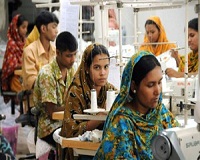 The International Labor Rights Forum’s new paper, ‘Future of Fashion: Worker-Led Strategies for Corporate Accountability in the Global Apparel Industry,’ highlights corporate social responsibility (CSR) and multi-stakeholder initiatives have failed to address and remedy the persistent exploitation of millions of apparel industry workers. The eight-storey Bangladeshi Rana Plaza collapsed on the April 24, 2013, killing at least 1,134 apparel workers and leaving 2,500 others injured. Unfortunately, this is not an anomaly in the global apparel industry. In previous year also, two factory fires – one in Pakistan’s Ali Enterprises factory and another in Bangladesh’s Tazreen Fashions factory – had killed more than 350 apparel workers and left many others permanently disabled. Surprisingly, all three factory buildings had passed safety inspections by corporate-funded auditors.
Dealing with complex global supply chains
The global apparel industry is characterised by complex global supply chains operated by large multinational brands/retailers, like Gap and Walmart. These brands/retailers outsource production to factories in developing nations. This model of outsourced, globalised production enables MNC brands and retailers to increase profits besides insulating themselves from legal liability for working conditions in the factories making their products.
Responding to NGO campaigns, trade union pressure, and media exposés of sweatshop abuses in the 1990s, MNCs adopted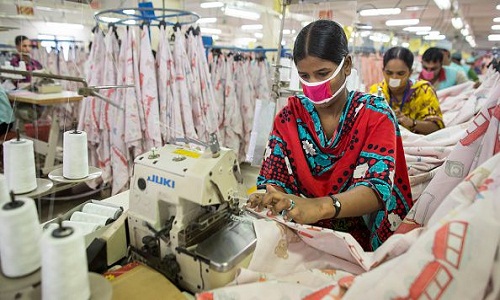 private, voluntary codes of conduct those require their suppliers to comply with minimum labor standards. Monitoring of compliance with these codes is largely left to third-party social auditing firms that conduct short, annual visits to the factories to assess working conditions.
Critics have pointed out the shortcomings of this model, including extreme time pressures on auditors leading to superficial “check-the-box” assessments, the absence of meaningful consultations with workers or trade unions during the audit process, a lack of transparency with regard to the audit results, and a failure to correct violations, even when serious problems are detected.
Notably, most CSR models fail to address a fundamental root cause of labor violations and poor working conditions: the sourcing and purchasing practices of brands’ and retailers’ own business model, and in particular the price squeeze that they impose on their suppliers.
CSR initiatives fail to address industry issues
As a result, corporate-led social responsibility initiatives have been largely ineffective in improving conditions for workers and have particularly failed to address the most pervasive problems in the industry: low wages and the violation of freedom of association and collective bargaining rights. Indeed, corporate-led models based on social auditing have primarily protected corporate interests and image, rather than providing a counterbalance to the unequal power relations that are at the root of poor working conditions and labor violations in garment factories across the world.
‘Future of Fashion’ explores the successes and challenges of three examples – in Indonesia, Honduras, and Bangladesh – of enforceable brand agreements in the global apparel industry, examining the context in which each was developed and how they address the deficiencies in traditional CSR approaches. It then outlines a four-part analytic framework, or essential elements, for identifying what a worker-centered, worker-driven model for advancing workers’ rights in the apparel supply chain should include. Finally, it lays out a road map for transforming the global apparel industry through greater uptake of worker-led initiatives and other actions necessary to strengthen worker rights in the global apparel industry.
India drafts national e-commerce policy
India will not join the negotiations with the World Trade Organization (WTO) to develop trade rules on e-commerce as it is working on a national ecommerce policy, which will be finalised soon. In its draft national e-commerce policy, India has proposed regulating cross-border data flows, locating computing facilities within the country to ensure job creation and setting up a dedicated ‘data authority’ for issues related to sharing of community data.
The e-commerce policy will pursue the existing multilateral work programme that prohibits countries from imposing customs duties on electronic transmissions, something that India and South Africa have questioned, citing revenue loss to developing nations.
India has also sought reforms of the multilateral body and resolution of outstanding issues urgently. Its top most priority is to protect and preserve the system, fix the Appellate Body issue so that the independent dispute settlement mechanism can function effectively.
U.S. firms’ shift to other countries intensifies
Apparel and footwear manufacturers in the US have been shifting their production mix to factories in other countries like Vietnam, Indonesia and Egypt for much of the past decade, but the push has intensified due to the trade war. The United States has not hit most finished apparel and footwear with punitive tariffs.
It will take years, however, for large manufacturers and retailers to build new supply networks. Many companies have held off raising prices to offset tariffs, in hope that they would go away.
As it becomes clear that the risk of tariffs will linger, more companies are taking steps to mitigate them and accepting trade conflict with China as a new fact of life. Some companies are resorting to the price hikes they have been delaying. Kubota held off raising prices until now in hopes that the costs associated with tariffs – including higher prices for imported parts from China – would be short-lived. Kubota has 10 U.S. factories, with seven in Kansas. Its business has been hammered by retaliatory tariffs on U.S. farmers.
Digital textile print bureau generates huge potential
Fuelled by three enablers, digital textile printing, web to print software and vibrant ecommerce platforms, the Digital Bureau has generated huge potential from start-ups all the way through to mass manufacture.
The bureau creates unique fabrics on the roll that can then be used in a myriad of applications from fashion to homewares, craft to interior design. It employs only two or three people and yet is capable of beating larger enterprises in terms of service, delivery and price.
In this entry-level Bureau, all the skills are present through multi-task training from design to pre-press and on to printing, inspection and dispatch. Typically they cater for a broad base of demand.
Many of these Bureau’s offer over 50 standard fabrics and a full range of printing ink-set options from latex to dyesub and from reactive to pigment.
In many cases Bureau’s work with simple workflow software based around Adobe Photoshop for design, and RIPs (Raster Image Processing Software) supplied by the manufacturer. Yet, the system gives the entry level printer the ability to manoeuvre images and print quickly and accurately to satisfy the requirements of their clients who need customisation and personalisation in a hurry.
Thailand applies for CPTPP membership
Thailand wants to join the Comprehensive and Progressive Trans-Pacific Partnership.
The aim is to ensure it is not left behind by its competitors in the vibrant region. Thailand’s membership would lead to increased trade and investment for the country, while upgrading regulations and standards. It is also likely to secure Thailand’s position as a major manufacturing base for foreign-affiliated manufacturers.
The Comprehensive and Progressive Trans-Pacific Partnership came into force last December 30 and currently comprises Australia, Brunei, Canada, Chile, Japan, Malaysia, Mexico, New Zealand, Peru, Singapore and Vietnam.
Thailand’s application will need to be endorsed by at least half of the current members.
The CPTPP covers around 13 per cent of the world’s gross domestic product and provides access to an economic bloc of 500 million people. It is designed to cut tariffs on agricultural and industrial products, ease investment restrictions and enhance intellectual property protection. Its recent entry into force marked a critical milestone for the countries that sought to save its older version, simply called the TPP, from collapse after the US pulled out.
Thailand is already participating in the Asean free trade area of the ten-member Association of Southeast Asian Nations, which includes CPTPP members Brunei, Malaysia, Singapore and Vietnam. It also has bilateral FTAs with CPTPP participants Japan, Australia and New Zealand.
RCEP can help India forge ties with Asean
India can strengthen economic ties with the Asean region by joining the Regional Comprehensive Economic Partnership (RCEP).
Despite India’s concerns about its trade deficits with Asean countries and China, it would be missing out on a key economic opportunity to establish a presence in the fast-growing Asean region if it did not join the RCEP.
If negotiations succeed, RCEP will be the largest multilateral trade pact in history – encompassing China, India, Japan, South Korea, Australia, New Zealand and the ten Asean nations.
The Asean region, and the Cambodia, Laos, Myanmar, Vietnam and Thailand subregion, in particular, is the geopolitical centre of Asia. The region connects east Asia with south Asia, a link between the two economic powers of China and India.
India’s trade strategy complements that of the Asean region, both championing multilateralism over unilateralism in trade negotiation processes. Further RCEP represents the notion of Asean Centrality, and with India’s Act East policy, it is important for India to not lose out on this opportunity to further integrate with the Asean region to reap the economic benefits of multilateral trade.
The conversation surrounding India-Asean relations through the RCEP talks may reinvigorate initiatives to increase regional cooperation in the Bay of Bengal Initiative for Multi-Sectoral Technical and Economic Cooperation (BIMSTEC). This is a multinational organisation comprising Thailand, Myanmar, India, Sri Lanka, Nepal, Bhutan and Bangladesh.
Pakistan moves away from Indian imports, including cotton
More than 50 per cent of the total raw cotton imported into Pakistan was sourced from India in 2014 and 2015.
In 2017, the share of Indian raw cotton fell below 27 per cent. The United States replaced India as the largest source of raw cotton. This is primarily due to the resurgence of the US as a significant exporter of raw cotton globally.
Furthermore, Saudi Arabia has been a major source of polymers of propylene. In essence, Pakistan has shifted away from Indian imports, replacing them with other sources.
In 2017 India supplied mainly raw material and intermediate goods to Pakistan.
Out of 1.7 billion dollars of goods imported by Pakistan from India in 2017, 555 million dollars was paid for chemicals or allied products, 203 million dollars for raw cotton, 141 million dollars for cotton yarn and 68 million dollars for polymers of propylene in primary form.
Pakistan is by far the largest source of Portland cement and fresh or dried dates into India. Pakistan is also one of the leading exporters of Portland cement and dried dates around the world. In essence, exports from Pakistan to India are limited to a few products.
Cement and dates contributed 1.4 per cent of total exports from Pakistan to all its trading partners in 2017.
Myanmar trade deficit declines
Myanmar’s trade deficit for the first four months of the fiscal year has declined.
Imports have increased at a slower pace compared to the same period of the last fiscal year.
Myanmar exports items from seven major commodity groups. These include manufactured goods consisting mainly of garments as well as agriculture produce, minerals, cattle, fisheries and forestry products. Myanmar’s major import items are divided into four groups — capital goods, intermediate goods, consumer goods and cut-make-pack garment products.
The higher volume of exports reflects the government’s efforts to reduce the trade deficit by screening luxury imports, encouraging import substitutes and boosting exports. They also come at a time when foreign direct investments into the country have eased over the past year.
Myanmar’s current account deficit, which includes the trade deficit, is financed mainly by foreign direct investments into the country. On the other hand, the fall in imports of capital goods also reflects less demand and activity in the industrial and construction sectors, implying a slowdown in the broader economy.
The trade volume for the period up to the second week of February reached 12.65 billion dollars, a gain of 634 million dollars compared to the same period of the last fiscal year.