FW
Lenzing revenue up one per cent
Lenzing’s revenue increased by 1.2 per cent in the first half of 2019. The share of specialty fibers in revenue, at 48.4 per cent, significantly exceeded the prior-year value of 44.1 per cent. Ebitda dropped by seven per cent. This decline primarily resulted from higher production volumes and currency effects, which led to an increase in pulp costs, from an increase in personnel expenses and the market environment for standard viscose. The ebitda margin declined from 18.1 per cent in the first half of 2018 to 16.6 per cent in the first half of 2019. Ebit (earnings before interest and tax) fell by 17.9 per cent, resulting in a lower ebit margin of 9.7 per cent. Net profit for the period decreased 15.9 per cent.
Lenzing will use block chain technology to support its Tencel branded fiber business, ensuring complete transparency and traceability for brands and consumers of its fibers in finished garments. In the second quarter of 2019 Lenzing announced a cooperation with a Hong Kong based technology company to accomplish this ambition. Lenzing will carry out several pilot tests involving partners along the entire value chain and expects the platform to be operational as of 2020.
Sports Direct buys UK fashion chain
Sports Direct, owned by retail entrepreneur Mike Ashley, has bought UK fashion chain Jack Wills’ and taken over its distribution centre, 100 stores and employees across the UK and Republic of Ireland in a ‘pre-pack administration’ deal. The brand’s five stores in Hong Kong have been shuttered and staff told to collect their belongings. The future of its stores in Singapore and the US is not yet known with alternative options being considered by the company’s directors.
The Jack Wills business has about 1,700 staff spread across the business, six franchised stores in Kuwait, Saudi Arabia, the UAE and the Channel Islands, and an e-commerce channel serving 130 countries.
Private-equity owner BlueGem began canvassing for prospective buyers for Jack Wills early last month after engaging advisory firm KPMG to prepare a review of the business’ prospects. According to company’s office records, the brand lost £29.3 million for the year to January 31 last year, and a £28 million cash injection from BlueGem in January this year has been almost exhausted.
Six new design studios to join Intertextile Apparel’s product zone
At the 25th anniversary of Intertextile Shanghai Apparel Fabrics – Autumn Edition 2019, six new design studios will join its vibrant Verve for Design product zone. These include the Found Design Studio (UK), Fusion (Denmark), Les Dessines (France), Owens and Kim (UK), Soge Studio (USA) Tek Desen (Turkey). The fair will be held concurrently with Yarn Expo Autumn, CHIC and PH Value from 25- 27 September, at the National Exhibition and Convention Center (Shanghai). The International Halls will be in halls 4.1 and 5.1.
Intertextile Shanghai Apparel Fabrics – Autumn Edition 2019 is co-organised by Messe Frankfurt (HK) Ltd; the Sub-Council of Textile Industry, CCPIT; and the China Textile Information Centre. The fair will feature a comprehensive range of over 140 exhibitors from Austria, Belgium, France, Germany, Italy, the Netherlands, Spain, Switzerland, Turkey, the UK, etc. The Premium Wool Zone will feature over 20 wool suppliers from France, Italy, Hong Kong, Peru and the UK.
India: Textile units to cut cotton yarn production by 50 per cent
To deal with declining cotton yarn exports, textile units in India are planning to cut production by 50 per cent to bring down borrowing/outstanding and stocks. Spinning mills in Andhra Pradesh have also declared a production holiday from July to cut down on the number of working days the backdrop of a decline in exports and rising production costs.
Spinners in Gujarat are also cutting production by 15 per cent as the state witnessed a 30 per cent decline in exports. The demand for apparel and fabric also declined as weavers reduced their inventory gradually to cope up with the situation. Exports to China dropped nearly 50 per cent while those to Bangladesh, Vietnam, and Columbia also declined. As per Cotton Textiles Export Promotion Council, cotton yarn exports from India declined by 33 per cent between April and June of FY 2019 compared to the same period last year.
Cotton yarn exports from April to June 2019 were reported to be 226 million kg as against 338 million kg during the same period last year. In June 2019, these exports declined by 50.74 per cent less as compared to June 2018.
Concordia plans circular business model with PurFi
Concordia Textiles plans to introduce a circular business model by leveraging PurFi’s waste upcycling solution. This solution yields high quality regenerated fiber from surplus stock. The recycling technology utilises product-specific data to monitor its incomings and outgoings, as well as the credentials of each bale before a patented solution separates and recycles textile fibers. The partnership combines the patented technology of PurFi with Concordia’s extensive know-how of fabrics and contributes to textile upcycling on a global level. It will utilise waste in manufacturing.
Concordia Textiles is a Belgian manufacturer. The company is trying to become a case in point for a fully-functioning facility upcycling waste garments that can then be recycled to a standard that’s equal to virgin fiber. PurFi is a recycling innovator based in the US. PurFi’s rejuvenation process makes use of fabric data and target data, information relating to bale-specific characteristics, such as fiber uses, an approximate yarn count, and finishes or treatments added and a predetermined algorithm generated for specified textile outputs. Essentially, the company knows the specifics of incoming waste before it arrives which enables it to act quickly and accurately to ensure garment waste is separated accordingly and recycled to yield a high quality product once more.
Garware sales down four per cent
For the first quarter Garware Technical Fibers net sales decreased by 4.9 per cent. Profit before tax reduced by 8.6 per cent. Net profit after tax dropped 5.7 per cent. Garware Technical Fibers is a manufacturer of technical textiles. The year began with a steady performance in the synthetic cordage segment. The company’s V2 technology based products are seeing good customer acceptance and excellent order flow.
Garware caters to various segments like aquaculture, sports nets, agriculture, geo textiles, etc. through a diverse range of netting products, ropes, coated fabrics and others. Over the past four decades, Garware has built a strong reputation for quality, value addition and application-focused innovation. Its solution segments are niche. These solutions are focused on progress and productivity for agriculture and fisheries, which typically constitutes almost 15 per cent of India’s GDP. With over 20 patents to its name, Garware Technical Fibers is an idea-driven company that achieves valued-added solutions that impact businesses significantly and adds unmatched value to customers. The company was earlier known as Garware Wall Ropes. Working on a long-term strategic plan, the company has identified its niche in the large and growing global market for technical textiles and drawn clear plans to expand its presence in specific sectors and product lines.
Brands need to examine supply chains carefully
Consumers expect companies to source and produce goods ethically and sustainably. Everyone is familiar with certain aspects of supply chain sustainability and ethical production programs. These include maintaining air and water quality, reducing water use, using land and other natural resources responsibly, and producing and releasing less toxic waste. But there are other important factors to consider, too, such as human rights abuses and child labor in the supply chain.
While brand risk remains a significant threat for companies that don’t have full visibility into their supply chains, regulatory risk carries the potential for huge fines. In addition, regulatory risk can quickly morph into reputational risk, compounding an already serious problem as headlines about seizures and violations kill stock prices, scare off consumers and create pressure for a change in company leadership.
The ability to quickly trace a product to its source via an automated supply chain execution system is necessary in these circumstances. Companies that implement a consolidated global trade management solution that connects the trading partner community with product data and retailers’ purchase orders can achieve better results. A software solution for global sourcing and supply chain collaboration can help brands get visibility into key aspects of their sourcing and production operations.
Adidas revenues up four per cent
Adidas’ revenues increased four per cent in the second quarter. This was driven by a 37 per cent increase from e-commerce sales and a 14 per cent increase in sales from China. Operating profit grew by nine per cent. Operating margin rose 11.7 per cent after an 11.3 per cent rise a year ago. The company negotiated better terms with suppliers, sold more high-margin products and scaled back on discounts.
The German sports retailer’s half-year performance could have been even better had the group not faced supply shortages in the US. As a result of supply chain issues, Adidas was not able to meet the higher-than expected demand for mid-priced apparel in the US. In March, the business forecast a loss in sales, equating to one per cent to two per cent of revenue this year. But Adidas remains confident about the sequential revenue acceleration in the second half of the year and expects a full-year growth of five per cent to eight per cent.
In 2019, Adidas is upping the pace of change. The company will produce a landmark 11 million pairs of shoes using upcycled marine plastic waste, intercepting vast amounts of plastic from entering the oceans.
A green revolution in sports industry as brands opt for eco-friendly materials
"Green materials are penetrating all fractions of the fashion industry. Recently, many sports giants have introduced recyclable materials into their products. A case in point is Adidas, whose recently launched reusable running shoes are made of 100 per cent reusable thermoplastic polyutherane. Known as the Futurecraft Loop, these shoes incorporate the brand’s speedfactory technology that spins the material into yarn and weaves it without the need for glue."
 Green materials are penetrating all fractions of the fashion industry. Recently, many sports giants have introduced recyclable materials into their products. A case in point is Adidas, whose recently launched reusable running shoes are made of 100 per cent reusable thermoplastic polyutherane. Known as the Futurecraft Loop, these shoes incorporate the brand’s speedfactory technology that spins the material into yarn and weaves it without the need for glue. They can be recycled without the loss of performance or materials and completely made into a new pair of shoes.
Since the material is 100 per cent recyclable, these shoes can be recycled loosing their performance value and wasting any of their material waste. Adidas plans to launch around 200 pairs of these shoes in Spring/Summer 2021. Besides, the brand will also use renewable materials and technology in all footwear products by 2024.
Eco friendly is the way forward
Besides Adidas, other sports giants who are opting for eco-friendly products include the New Zealand sports shoe brand Allbirds which has introduced wool sneakers made of Merino Wool. Extremely comfortable on the feet, these shoes can be washed directly into a washing machine.
The brand also developed two new materials: the lightweight fabric "Tree" based on eucalyptus fibers, and the carbon-deficient EVA sole material "SweetFoamTM" extracted from sugar cane. As it wants this material to become them mainstream material it will share this technology with other companies to jointly promote the industry's environmental development.
This technology sharing will promote sustainable development of the footwear industry, besides reducing the cost of all Allbirds products. It will also enable the company to promote the concept of environmental protection besides reducing its impact of commodity production.
Digital business media ’Glory’ released China's New Generation Fashion Consumer White Paper in 2018 which revealed that that 80 per cent of Chinese consumers believe that their individual purchases are also driven by their corporate social responsibility.
Global luxury goods and fashion brands increasing focus on building their corporate image besides strengthening environment protection initiatives has increased the sensitivity of young Chinese consumers. Having a better sense of responsibility towards the environment, these consumers usually opt for socially responsible brands. As Pascal Martin, a partner at strategic consulting firm OC&C Strategy Consultants, notes that the consumers’ demand for sustainable and natural ingredients will rise over time, with young consumers becoming the main driving force behind this trend.
Besides meeting the needs of consumers, some companies also have to guide them to green consumption and take on more social responsibilities. For this, world-renowned companies, having a huge brand appeal and a global business impact, need to come together to create more sustainable development of recycled materials.
Pakistan to join ILO’s Better Work Program
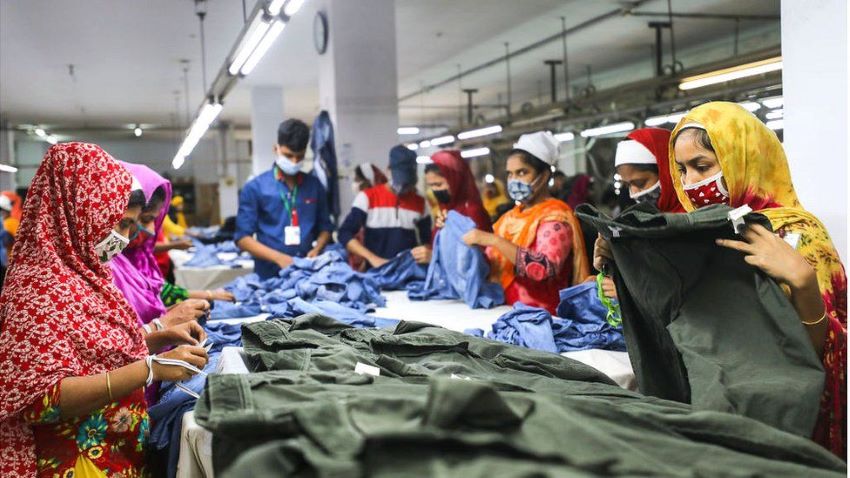
Pakistan plans to join Cambodia, Vietnam and Bangladesh as a member of Better Work Programme six years after it was turned away due to lack of capacity. Launched by the International Labour Organization and International Finance Corporation in 2006, the initiative works to improve labor standards and boost competitiveness in the global apparel supply chain by providing practical assistance to factories, demonstrating the business benefits of decent work and rallying the influence of leading brands and retailers.
Pakistan’s garment industry suffered a blow in 2013 after a catastrophic factory fire, which killed 262 garment workers the previous year, prompted the Walt Disney Corporation to suspend its sourcing from the country, along with other ‘high-risk’ locales such as Belarus, Ecuador, Venezuela and a post-Rana Plaza Bangladesh.
When Disney pulled out, it gave Pakistan two options: either to improve its WGI standing or join the Better Work program. The country chose the latter as it had more candidate countries than it could accommodate. A recent study conducted by the Consortium for Development Policy Research on behalf of the Pakistan Business Council concluded that Pakistan’s garment sector is ‘grossly underperforming relative to its potential’ because of a slate of impediments, including higher production costs, an overvalued currency and export tariffs that restrict market access.
The country’s share of the global export pie is far smaller than those of its competitors: 1.1 percent compared with China’s 32 percent, Bangladesh’s 7.7 percent, Vietnam’s 5.9 percent and India’s 3.8 percent.