FW
Bangladesh RMG export earnings drop in 2020
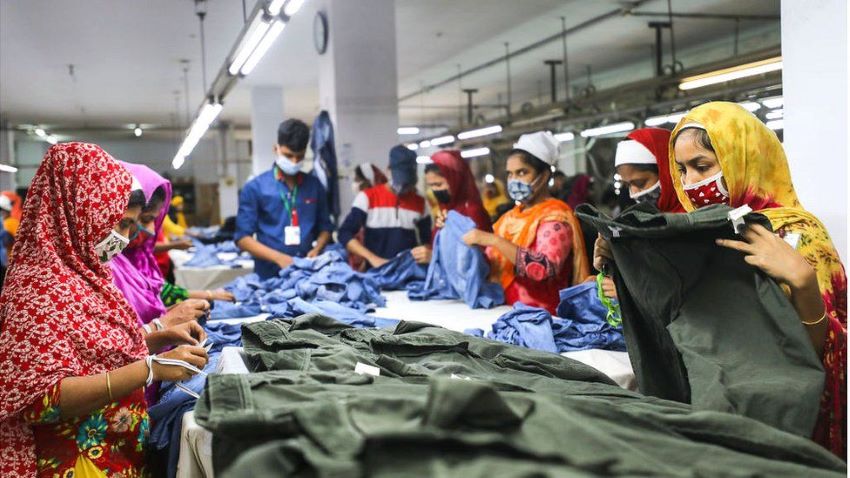
The readymade garment (RMG) manufacturing export earnings, the backbone of Bangladesh’s economy dropped 2.99 per cent to $15.54 billion. As per data from Export Promotion Bureau (EBP) RMG contributes 84 per cent to the national exports. While the overall garment export observed an extraordinary 16.94 per cent year-on-year drop in 2020.
Rubana Huq, President of the Bangladesh Garment Manufacturers and Exporters Association (BGMEA) 2020 was a dark year for the industry with lockdowns in Europe and the US and its impact on retail and demand, the worst-ever Christmas sales, and effects of price decline. Of the export earnings, knitwear shipment earned $8.52 billion, up 3.9 per cent compared to a year ago, while woven exports declined 10.22 per cent to $7.01 billion. However, knitwear export rose as consumers mostly wear casual dresses with stay and work from home.
EPB data also showed that apparel export was down 9.64 per cent in December as the pandemic continues to pound the global economy. Last month, woven garment export recorded the worst performance since June plunging 18.07 per cent. While knitwear export fell 0.45 per cent. One of the key reasons for knitwear growth was easy sourcing of raw materials for local manufacturers. Whereas the majority of raw materials required to produce woven garments, need to be imported.
HP directs leading textile companies to close dyeing units
Leading textile units mainly, Winsome Textiles, Auro Textiles, Auro Dyeing and Auro Textile-II in the Baddi industrial area in Himachal Pradesh have been directed to close their dyeing processes as their effluents have rendered the common effluent treatment plant (CETP) defunct. Three textile units have been levied environmental compensation from July 2020 to December 2020 (160 days), while Auro Textiles has been levied for 140 days. For violating the provisions of the Water Act, 1974, and Environmental Protection Act, 1981, an environmental compensation worth Rs 1.86 crore has been imposed on them by the State Pollution Control Board (SPCB).
This issue was under process from last year as an inspection committee of the National Green Tribunal (NGT) had observed in November 2019 that these textile units engaged in dyeing processes generate category-IV effluents comprising concentrated dyes.
While the government had directed the textile units to chalk out action plans and install their own treatment system to treat these effluents and follow inlet and treatment quality standards the textile units had challenged the order in the high court. However, the court has disposed their petitions and directed the State Government to take appropriate directions as per law against the polluting units while observing that no industry can be allowed to pollute water bodies.
Steve Madden appoints María Teresa Kumar to board of directors
Leading designer, Steve Madden, has appointed María Teresa Kumar to the company’s board of directors. Kumar will be a member of the company’s Corporate Social Responsibility Committee. Her inclusion expands the board to 10 directors.
Edward Rosenfeld, Chairman, and Chief Executive Officer has expressed delight on the appointment of Kumar. Her expertise in connecting and engaging with young audiences, particularly through digital communications, social media, and influencers, along with her passion for creating positive change in the world make her uniquely well-suited for enhancing value for the brand.
Kumar is also the President and CEO of Voto Latino, which she co-founded and built into America’s largest Latinx voter registration and advocacy organization. She is a regular on-air contributor for MSNBC. Serving on the Boards of Emily’s List and the World Economic Forum’s Global Shapers. Kumar is a World Economic Forum Young Global Leader and a Council on Foreign Relations Life Member.
Technology to the rescue for sourcing in a fracture global economy
 Before the pandemic hit global businesses, with Brexit and US China trade stand off the biggest question that bothered businesses worldwide was will the age of globalization come to an end? In fact, COVID-19 exposed the vulnerabilities of long-distance supply chains even more. With 64 (Thomasnet) US manufacturers actively looking at bringing back production nearer home there is a clear redrawing of global supply lines, wrote Enno Lueckel, VP, Scoutbee recently in Spend Matters.
Lueckel writes, “Amid this uncertainty, resilience is the new supply chain imperative. Across industries, there is growing recognition that managing supply chains for maximum efficiency hampers companies’ ability to respond to risk events.” And the frequency of such disruptions is rising, with a recent McKinsey Global Institute survey showing companies expect severe supply chain disruptions every 3.7 years. “Yet when resilience can mean many things to different industries, how should leaders prioritize?”
Transparent supply chains a priority
Lueckel says to reap the benefits of resilience, such as improved flexibility, responsiveness and agility, companies must first make their supply chains transparent and diversified. In fact, transparency is important as organizations can tackle risks only if they can see it clearly. “Effective risk management requires greater visibility into all the interactions and movements taking place within their networks.” However, supply chains too have their rough spots with vendors not divulging information making tracking difficult. Moreover, most companies map only their direct suppliers, not keeping track of the intermediaries in the middle. This could result in expensive repercussions.
Lueckel explains the next step is diversification. Here, companies with broad supply chains will be ahead of competition during a natural disaster or geopolitical shift. However, geographic concentration can increase risks. Meanwhile concerns about domestic supplies of essential goods and continuing US-China tensions are forcing many US companies to reshore of their activities. In an uncertain world, companies need options.
Ways to tackle procurement
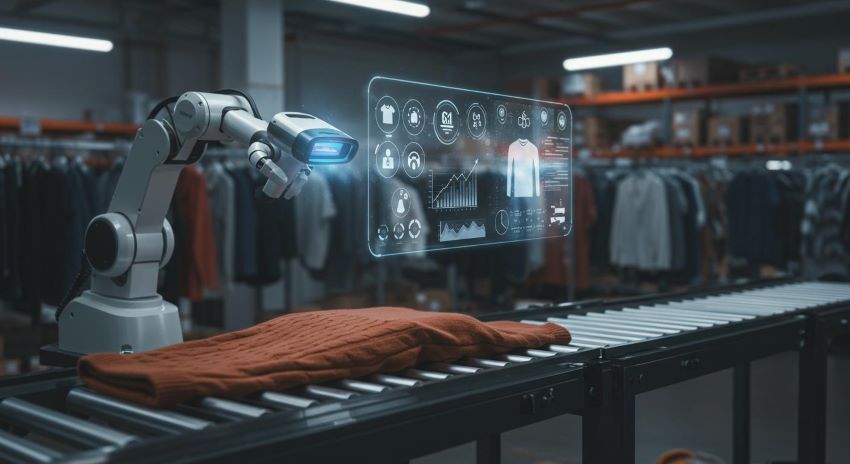
In uncertain times, companies are looking at ways to assess risks and come up with ideal supplier mix. However, this will need complete overhaul of how sourcing is done. New tools need to be adopted as procurement needs advanced digital solutions. Artificial intelligence can give a boost to procurement’s data capabilities. AI offers end-to-end market visibility, which helps companies plan and respond in the best possible way to emerging risks.
AI also offers information advantage – not only for new supply needs, but also to qualify data in existing ERP systems, to identify alternative vendors for existing setup suppliers, provide additional data points for negotiations. It can extract data from publicly available sources to fill-in or verify existing supplier maps. Monitoring real-time inventory movements can enable organizations to quickly scale orders up or down and avoid the kinds of replenishment issues that plagued manufacturers at the onset of COVID-19.
AI also gives access to the entire global market, identifying competitive options in untapped supply markets or those visible in different languages. Indeed, while globalization will not go anywhere, new technologies will make it easier to track and remain competitive in an increasingly changing world.
Warangal to get second textile park, weavers welfare schemes to continue
To support 20,000 weavers’ families, Kodakandla, in Warangal district, Telangana state government plans to set up a mini textile park at Kodakandla in Warangal. Kodakandla has been selected for easy availability of workforce. Warangal already has another big textile park promoted by the state government.
“Scores of skilled weavers are available in the area and they migrated to other sStates due to absence of employment opportunities,” said the state’s industries minister K T Rama Rao1. He also assured the ongoing welfare schemes for weavers would continue uninterrupted. It is important to mention here that the state government is running some beneficial schemes for the weavers like the Cheyutha scheme, which helped weavers overcome the difficulties during the COVID-19 pandemic and the relaxations to the tune of Rs 95 crore extended under the scheme assisted nearly 25,000 families.
UK clothing brand Next expects normal business by July 21
For, Next holiday sales have been good, however, the new lockdowns have dented its business to some extent, but the retailer is now eagerly looking forward to rebound from July. Next showed a lot of optimism at a time when the retail world continues to be shaken by the pandemic.
“Traditionally this is the quietest period of the year and will continue for some time. However, it will improve in April and is likely to return to normal business from July onwards,” says Simon Wolfson, CEO, Next, “we are better prepared this time to face lockdowns and consequent challenges than it was earlier,” he added.
Meanwhile, Next has said it hopes to see a pretax profit of $503 million for its fiscal year before two one-off charges.
Macy’s plans to close 45 stores in 2021
Macy’s is looking to close 45 company owned stores. The selected sites may close by the middle of 2021 and liquidation sales were already underway at some locations. Before the pandemic itself, Macy’s had a three-year Polaris plan that called for significant closures, predominantly in Tier C and D malls. The coronavirus pandemic swept the nation, but still Macy’s kept all doors open throughout 2020.
Following the pandemic, some parts of the Polaris plan were put on hold, The retailer had also tested the idea of “dark stores” to fulfill digital orders in October for the holiday season at two locations Littleton, Colo.’s Southwest Plaza and Dover Mall in Dover, Del.
Retailers typically conduct those reviews in the fourth quarter to see how the stores perform during the holidays. The company was reevaluating store closing plan, noting that decisions will depend on projected sales and a store’s four-wall profitability. As practice Store closure announcements usually follow in January.
M&S joins call to action against Xinjiang cotton
With pressure on clothing retailers worldwide to stop remove Xinjiang cotton from their supply chains, British clothing brand Marks & Spencer has signed the call to action over Uighur forced labour. The call to action comes from a coalition of civil society organisations and labour unions who want to end abuses against Uighur people. It may be recalled that in December, BBC had revealed new evidence that China is forcing thousands of Uighurs and other minorities into hard, manual labour in the cotton fields of Xinjiang.
M&S uses around 40,000 tonnes of lint cotton annually from various sources. The coalition asks any brand sourcing apparel, textiles, yarn or cotton from the region is profiting from human rights violations, including forced labour. M&S sources cotton through businesses accredited with the Better Cotton Initiative (BCI).
In March last year, BCI suspended activities in Xinjiang, hence, no new licensed BCI cotton is sourced from the region. Nevertheless, M&S felt it was important to sign the call to action to encourage other companies to examine their supply chain.
Anti-Slavery International welcomed the move and encouraged other retailers to follow suit. "The Call to Action sets out a clear path of action for brands to follow in line with the UN Guiding Principles on Business and Human Rights and we call upon other major brands to follow suit with M&S and commit to the Call to Action urgently," the organisation's chief executive Jasmine O'Connor said in a statement.
Iran’s garment exports rise, domestic units cater to local demand
Iran exported garments worth over $40 million in the first seven months of current Iranian calendar year (March 20-October 21, 2020), the chairman of Iran Textile Exporters and Manufacturers Association (ITEMA) announced. Majid Nami said exit of foreign clothing brands country in the past two years, as well as the government's decision to ban clothing import, has thrown up a huge opportunity for Iranian producers.
Nami has previously announced garment production in Iran increased 70 per cent during the first eight months of the current Iranian calendar year (March 20-November 20, 2020), compared to the same period last past year. Garment production fluctuated from the beginning of this year but production situation has been satisfactory for producers. The share of Iranian brands in the market has increased significantly compared to the last year, Nami underscored.
Iranian garments are exported to Iraq, Kuwait, Australia, Armenia, Azerbaijan, Uzbekistan, Russia, Afghanistan, Pakistan, Turkmenistan, Kyrgyzstan, Germany, Korea, Japan, UAE, UK, Venezuela, Ivory Coast, Italy, Turkey, Canada, Qatar, Oman, Nigeria, Switzerland, Pakistan, Georgia, Spain, and Denmark. Chairman of Tehran’s Union of Garments Manufacturers and Sellers says, domestic units are supplying 70-80 per cent of the requirement for clothing inside the country.
The EU-China deal means India needs to focus on its own FTA and fast
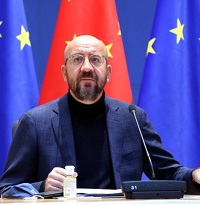 Seven years and 35 rounds of negotiations between the European Union and China finally culminated in the Comprehensive Agreement in Investments (CAI). The deal was announced by the two signatories this week, opens the Chinese market further to EU investors. German Chancellor Angela Merkel played a key role in finalising the deal before the rotating EU presidency went to Portugal. Days before a new administration takes charge in Washington, this is a significant diplomatic achievement for Beijing.
Deal with strategic significance
The importance of the accord between the two economic heavyweights cannot be underestimated. As per estimates, EU-China bilateral trade in 2019 was over $630 billion. Bilateral investments in the last 20 years were about €260 billion — EU companies have invested more than €140 billion in China, and Chinese FDI in the EU is about €120 billion.
The accord expected to come into force in early 2022, indicates the bloc’s determination to focus on economic opportunities in Asia despite large scale criticism of Beijing’s human rights. For the EU, it could also mean mudding its relationship with the new US administration, which had urged Europeans to consult them over China’s economic practices.
Indeed, the CAI is not an FTA. But it will serve an important tool to open Chinese market for EU companies. As European Commission president Ursula von der Leyen points out the deal “will provide unprecedented access to the Chinese market for European investors”. The Global Times editorial calls it “a New Year gift from China and the EU to the whole world” and “a portrayal of the two sides’ common strategic courage.”
For EU nations, the deal gives access to Chinese market for foreign investors across sectors. Moreover, it also tackles underlying Chinese policies which Europe and the US feel distorts market in favour of China with its industrial subsidies, state control of enterprises and forced technology transfers.
China gains geopolitically as it becomes more mainstream and may limit risks resulting from a tougher EU stance on Chinese investments in Europe. It also strengthens their longstanding call to begin negotiations on a FTA with the EU, which has insisted on an investment deal first. What’s more the CAI, linked with the Regional Comprehensive Economic Partnership (RCEP), is an opportunity the EU could not ignore easily.
The CAI will put in place a single EU-China investment framework replacing 25 bilateral investment treaties. Under the CAI, China has offered comprehensive commitments in manufacturing, particularly in transport, chemicals, as well as telecommunication and health equipment. It has eliminated or phased out joint venture requirements or equity caps in the automotive sector, banking, insurance, securities and asset management. The real estate services, rental and leasing services, advertising, market research, management consulting and translation services, cloud services are all opened.
Of course, the deal still has to be passed by the European Parliament, where it could face some objections due to China’s human-rights record. However, the buzz is the deal incorporates a Chinese pledge on labor standards meant to address human rights concerns, including a ratification of related United Nations-backed conventions.
India angle
Of course, the upcoming Portuguese presidency of EU has put relations with India on priority. However, India will need to focus anew on its EU strategy given that FTA negotiations are in the cold storage since 2013. With liberal investment opportunities in Chinese market, ‘decoupling’ from China narrative will become weaker in Europe. Beyond geopolitics India will need to make its market more attractive for European companies, including a serious intent of signing FTA.