FW
Italy, Pakistan looking at strengthening textile trade ties
Andreas Ferrarese, Italian Ambassador to Pakistan announced Italy wanted to start a new era of economic and trade cooperation with Pakistan through transfer of technology and for up-gradation of Pakistan’s textile industry. Reports suggest, Green economy, transfer of technology for industrial sector including textiles and agro industry, construction sector, education and health are major areas of focus to extend bilateral cooperation. Through the green economy, Italy wants to cooperate with Pakistan for environment protection, circular economy, resource saving and management, ecosystem protection and recovery, water conservation and natural disaster prevention. The Italy-Pakistan Textile Technology Center (IPTTC) in Faisalabad at the National Textile University (NTU) shall upgrade the local textile sector. The training centre, which is the first of its kind for Italian textile machinery technology in Pakistan, was inaugurated recently. The Italian government project will support the development of the local textiles industry, by equipping it with Italian machinery.
Pakistan exports to Italy were $.731million during fiscal year 2019-20 with textile, leather, rice, ethanol, textiles articles, sets, worn clothing, cotton, apparel, crocheted, cereals, raw hides and skins, beverages and footwear. Currently, Italy is providing technical assistance to Pakistan’s textiles, leather and marble sectors.
Paris Fashion Week cancels all live runway shows for January
Two Paris Fashion Weeks scheduled for January mainly, menswear and haute couture, will not feature any live runway shows. This has been done keeping in mind the rules laid down by the government as the second nationwide lockdown was announced in France; informed the Fédération de la Haute Couture et de la Mode.
The decision was taken after discussions between the Préfecture de Police in Paris and the Fédération, which informed the participating houses. It also follows the latest address from French Prime Minister Jean Castex, where he emphasized lockdown restrictions would remain in place in France. Restaurants, cinemas and ski resorts have been closed since December as the country struggles to slow down the Covid-19 pandemic.
However, Fédération’s executive president Pascal Morand insists the seasons will continue, albeit overwhelmingly online. He also informed many houses were still deciding on the exact format of their shows but stressed that houses could still present shows with models on the web, though behind closed doors. The federation has a state-of-the-art platform, where people can see every collection on the web. So, everything is in place for it to work.
Paris had already published significant schedules of shows, highlighting the desire of many houses to present collections. There are 71 houses listed on the menswear calendar, including such powerhouse marques as Louis Vuitton, Dior Homme and Hermès, along with influential designer brands as Yohji Yamamoto, Rick Owens, Dries Van Noten, Vetements, Paul Smith, Loewe and Thom Browne. The couture calendar features 32 houses, such as Chanel, Armani Privé and Jean Paul Gaultier.
Brands realign strategies to remain afloat during the pandemic
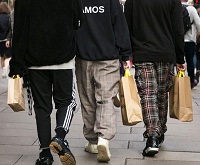 While 2020 was full of hardships for brands and retailers with store closures, major dip in both sales and revenues, many struggled while others looked for ways to stay afloat. In all this madness brands came up with new strategies to survive. From antiviral collections, home apparel line to shop-on-wheels at resident welfare associations and appointment viewing, besides doorstep delivery fashion and lifestyle brands rolled out new ways to reach and connect with customers.
Innovative customer approach
As Ajay Kapoor, President-retail, Fabindia explained to BrandWagon Online, “It is all about unlearning what has been learnt in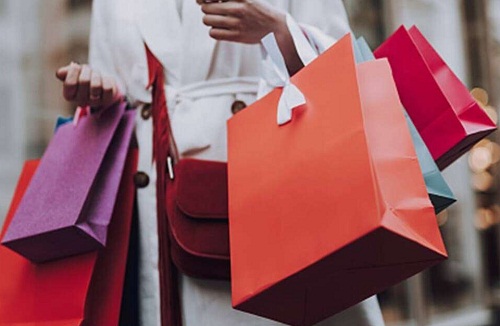 all these years and learning new tricks of the trade.” Fabindia’s business has recovered 60 to 70 per cent while online sales have doubled over the last six months. The brand launched its ‘White glove service’ through which it reaches loyal customers with online customised catalogues and look books to order products delivered at their homes. The aim is to be present wherever the customers are.
Other brands too have come up with innovative ways to connect with customers. Peter England introduced a collection of workwear, loungewear and face masks with virus-resistant technology ‘HeiQ Viroblock’ in collaboration with Switzerland-based HeiQ. Manish Singhai, COO, Peter England, believes most of these products will remain relevant in future. She feels the deep cultural change that took place during the lockdown in consumer habits is likely to stay for a long time. “Moreover, wellness series of products as well as health products are going to gain prominence in the future,” she told the Financial Express, with work from home becoming the new normal, casual, comfortable clothes will be in demand for a long time.
Online retail in focus
Peter England’s online sales have doubled since Covid-19. In fact, most brands have seen a spurt in online sales and hence have increased marketing spends on online platforms.
For example, High Street Essentials clothing brands FabAlley and Indya are looking to only spend online till the first quarter of FY22. As Tanvi Malik, Co-founder, FabAlley and Indya explains, within digital, performance marketing will contribute about 90-95 per cent of the company’s spend and 10 per cent will be spent on brand building on digital. The company’s online sales are almost 120 to 150 per cent higher than last year. Having understood the importance of online sales the company looks to sharpen its focus on the medium. Practices like same-day refund and exchange process; communicating real-time delays in orders through association with logistics intelligence platform Clickpost are some ways they are looking to gain customer’s trust.
The bottomline therefore, is reinvention keeping new realities in focus. Fashion as of now is all about being casual and comfortable and brands need to realign their offerings as per demand.
Lakmé Fashion Week launches ready-to-shop digital couture ‘Nexa Digital Couture’
Lakmé Fashion Week, launched its new digital couture showcase, ‘Nexa Digital Couture’. The couture shall present interactive, ready-to-shop looks by Ridhi Mehra, Amit Aggarwal, and Abraham and Thakore.
Presenting an ethereal and vibrant ensemble for the showcase Designer Amit Aggarwal launched the collection ‘If flowers had fins’ inspired by fantasy. According to the designer, his look is an extension of his wider couture collection, which promises a new beginning through these unprecedented times.
Meanwhile Ridhi Mehra presented a fluid, turmeric yellow look for the digital event. According to Mehra the look is inspired by the royal heritage of Kutch. It embodies timeless elegance, crafted with dexterity and boasting the essence of the elements of the Bandhani art form from Gujarat.
Design duo Abraham and Thakore’s offering was paired down but intricately constructed. The look is inspired from the Sikkimese Baku wrap dress and skirts, which allow the wearer to wrap it to the way they prefer either front or back with the freedom to wear it looser or fitted.
The looks were revealed across Lakmé Fashion Week's social media platforms including Facebook. The looks are also ready to purchase and shoppers can message the brands on Instagram to purchase the looks. The showcase will also feature looks by brands including Kanika Goyal Label and Huemn.
Levi’s explores loungewear trend with Unisex Sweats
The ‘new normal’ has tempted leading fashion brands to take a plunge into the ever growing loungewear market. Keeping in sync with the changing trend Levi’s recently introduced Levi’s Red Tab Unisex Sweats, a collection of French terry sweats—each distinguished by the heritage brand’s hallmark red tab typically found on the back pocket of its jeans.
Made with 100% organic cotton, Levi’s garment dyed loungewear features a unisex design and relaxed vintage fit. The collection includes a crewneck sweatshirt, sweatpants and a hoodie offered in sizes XS-XL.
Levi’s joins a growing roster of brands with denim roots entering the loungewear space. NYDJ recently bowed its first line of sweats called Forever Comfort. The collection features women’s tie-dye hoodies and jogger pants in three colors. L’Agence recently bowed an elevated sweats collection as well.
Bestseller launches Fashion FWD Lab, an experimental sustainability center in Bangladesh
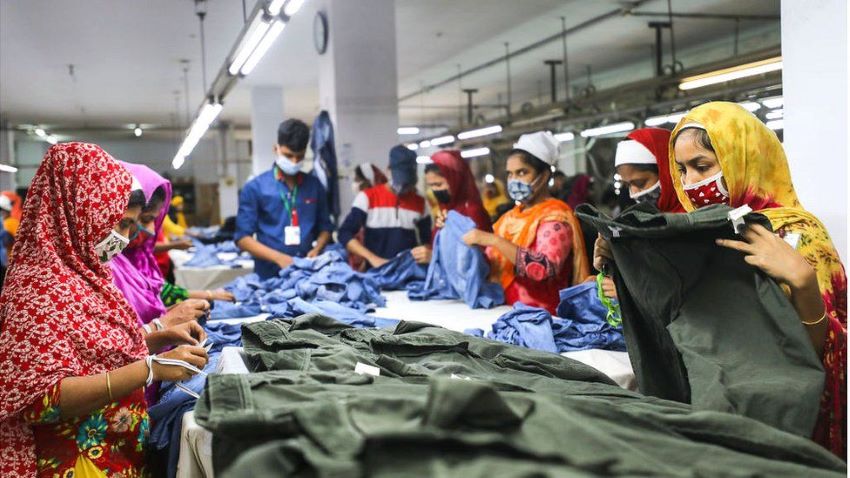
Danish fashion group Bestseller has launched Fashion FWD Lab, an experimental sustainability center in Bangladesh. The lab will focus on developing new, environmentally friendly materials and circular business models, as well as innovative production technologies.
Fashion FWD Lab partnered with GMS Composite Knitting, Bestseller’s largest jersey supplier in Bangladesh as per reports, Bangladesh was chosen because a significant portion of the Bestseller’s total production takes place in Bangladesh, with a focus on cotton.
According to Bestseller that the estimated amount of manufacturing waste in Bangladesh is 400,000 tons per year and that the country currently recycles less than five per cent of its waste domestically.
To develop the coveted new recycled yarns, Bestseller is working with Cyclo–a Bangladeshi recycled cotton fiber company whose mission is to responsibly recycle the hundreds of tons of cotton fabric discarded daily as trim waste. By eliminating the dyeing process, Cyclo uses a mechanical recycling process that shall reduce the amount of water, energy, chemicals and carbon emissions.
Another initiative that Bestseller joined in the early stages is the Circular Fashion Partnerships (CFP) launched by the Global Fashion Agenda. While the collaboration with Cyclo and GMS focuses on the immediate recycling of waste and its direct implementation in future collections, CFP works on a more structural level to implement effective waste stream structures.
Getting Bestseller's several fashion brands involved in these projects is one part of Fashion FWD Lab: So far, Bestseller brands Selected, Name It, and Vero Moda have been approved to participate in the long-running project. The first collections made from Bestseller's own waste will be ready in spring 2022.
Intimate wear sales grow as stay at from change consumer’s style sense
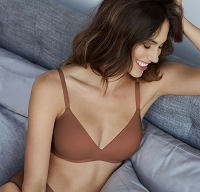 With lockdowns and people being stuck at home, the intimate apparel and sleepwear market has seen surge. As per a WWD report the complete innerwear category has recorded higher sales both for men’s and women’s segment including comfy basics, underwear and lingerie since the pandemic started.
Brands record sales surge
With people staying at home more people are spending on intimate wear, lounge wear and casuals, point out expert. For example, Canadian innerwear brands Mary Young’s revenues grew 70 per cent year-over-year in December while Knix recorded 80 per cent growth. Similarly, Paper Project, a men’s underwear brand was up 438 per cent in fall 2020, compared to same period in 2019. Direct-to-consumer lingerie brand Adore Me’s sales are up 50 per cent year-on-year since March. The story is similar for numerous other brands. London-based Playful Promises recorded 90 per cent sales jump for crotchless-style underpants.
Looking at the market potential, many popular brands like Zara, Karl Lagerfeld and swim and resort wear designer Miguelina expanded their product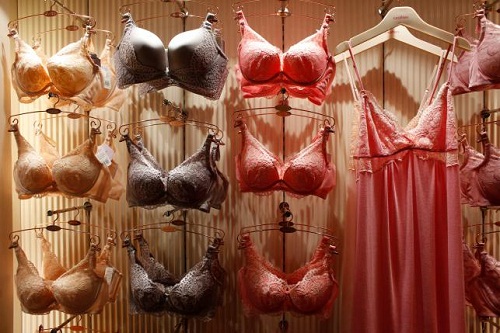 basket to include intimates. While many others are entering new markets, Kim Kardashian West’s Skims launched in the Middle East; Victoria’s Secret plans to enter Israel in the second half of 2021. Brands like Rihanna’s Savage x Fenty and Frederick’s of Hollywood — traditionally known for scantily-clad women’s lingerie —recently launched men’s wear collections.
Not to be left behind and looking at the market growth, investors are now putting in money in the sector. Mindd Bras by Helena Kaylin, earlier associated with Victoria’s Secret got a $1 million investment push from Canadian financial platform The51 and investment firm WVL Capital; similarly MeUndies received investments worth $40 million.
High growth expected to continue
Indeed the pandemic and stay at home may have given a huge boost to the overall segment however, the question remains if this trend will continue in future. Experts believe consumer mindset has changed in the last few months with more focus on casual, loungewear and athileisure. And even when people return to regular office, not much will change as the pandemic has permanently altered consumer’s sense of style. More and more people will embrace a new business casual with the acceptance of upper management in more casual clothes with small details of formality and tradition, believes Guido Campello, Co-chief Executive Officer and Creative Director, Journelle. Fashion has changed forever and styles at work will be more relaxed and cooler than before.
In fact, Helen Mears, Chief Design Officer at Adore Me opines, sales will remain high, even when the pandemic is over. The world has gotten used to this work-from-home, flexible lifestyle — and all the clothes that go with it.
China’s textile machinery sector growth slows down as pandemic continues
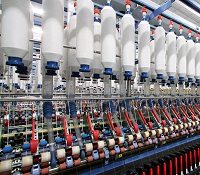 After facing several impediments in the first three quarters of 2020, due to US-China trade stand-off and the pandemic, China’s economic growth has steadied. In fact, the country is doing better than most others at the moment on all economic indicators. Business has recovered steadily as consumption has grown and investment stabilized and exports recovered beyond expectations. In continuation, the textile industry too is improving. Therefore, the overall operation of textile machinery sector in the first three quarters has recovered, while a dip in its economic operation indicators has reduced, says a survey by China Textile Machinery Association.
Demand still to pick up
With growing demand for textile equipment used for epidemic prevention, China’s exports increased significantly. However, the global textile market is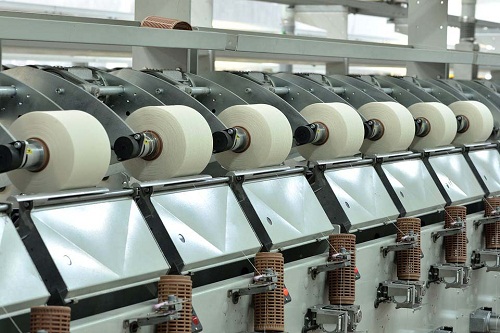 still facing pressures due the pandemic and demand for textile machinery is still low, reports Digital Journal. The analysis reveals from January to September 2020, the total cost of textile machinery enterprises above designated size was down 15.7 per cent to 43.77 billion yuan compared to the same period last year.
The China Textile Machinery Association survey of 95 key textile machinery enterprises on their operating conditions in the first three quarters of 2020 shows operating conditions have improved compared with the first half of the year. Operating income of 50 per cent enterprises declined to varying degrees. In fact, for 11.83 per cent enterprises orders dropped more than 50 per cent, and the prices of textile machinery products are generally stable and down. Almost 41.76 per cent enterprises have the same inventory as last year, and 46.15 per cent enterprises’ capacity utilization rate is above 80 per cent.
Companies point out the problems they are facing are mainly due to low demand from both domestic and foreign markets, pressure from rising costs, and blocked sales channels. Weaving, knitting, chemical fiber and non-woven machinery companies expect orders in the fourth quarter to improve compared to the third quarter.
Customs statistics reveal, cumulative total of China’s textile machinery imports and exports from January to September 2020 was $5.382 billion, a year-on-year a drop of 0.93.
Market ahead
The reports suggests textile machinery industry’s business in Q4 and 2021 is still facing many pressures. The pandemic has slowed down global economy. As per IMF global economy will fall 4.4 per cent in 2020. With uncertainty and instability there are pressures on global supply chain, a sharp decline in trade and investment, massive loss of jobs, and geopolitical conflicts. As per, a survey by the International Textile Federation (ITMF) in September 2020, the turnover of major global textile companies in 2020 is expected to drop on an average 16 per cent. And it will take several years to fully compensate for the losses. As a consequence market adjustment of the textile machinery industry will continue, and pressure on enterprise production and operation will not ease soon.
Sourcing of Indian cotton by Chinese mills on the rise
Cotton stocks at China’s ports are largely from India, ending the India-China tussle. As per feedback from cotton traders and overseas entrepreneurs located in Qingdao, Zhangjiagang, Shanghai and other places, enquiries for bonded cotton and customs clearance cotton (imported cotton) have shown signs of recovery since mid-December.
Imported cotton attracted attention and favour of cotton textile mills and middlemen that has resulted in continually active transactions. This rebound in transaction of imported cotton was mainly due to the widening of price difference between domestic and foreign cotton as well as early overdraft of 2021 cotton import quotas by some buyers.
As per a cotton company based in Jiangsu, sales of high-quality Indian cotton have gradually improved since October ’20 and squeezed the loss of Brazilian cotton ranked second in China’s cotton imports in October and November, second only to the cotton sourced from US.
Meanwhile, in the past two months, the price difference between Brazilian and Indian cotton – which is the same as commodity inspection index – has widened to 800-1000 RMB/tonne, and price of Indian cotton has become more competitive. This upward trend has been facilitated by the short transportation distance and the increase in freight costs as the impact of the epidemic on ships is relatively controllable. Hence shipment and delivery of Indian cotton is normal compared with Brazilian cotton and American cotton.
It is estimated by the end of December ’20, the total amount of bonded cotton in China’s main ports may reach 410-440 million tonnes, which is largely contributed by US cotton, Brazilian cotton, Australian cotton, Indian cotton, African cotton, Central Asian cotton and European cotton.
China sees high demand for luxury products in 2020
Mainland China, which now accounts for 20 per cent of global luxe sales is forecasted to have the biggest market share by 2025. As per Bain & Company and Tmall report, the luxury goods market is forecasted to grow 48 per cent to almost $53.6 bn in 2020 with leather goods and jewelery the most in-demand categories. Demand growth is attributed to the increase in domestic spending resulting from a drop in international travel.
After Covid-19 lockdowns in early 2020, China’s luxury-goods market began to grow in April as consumers made purchases within the country. This repatriation of consumption is one of four factors driving this growth. Reduction in import duties, price harmonization and stricter gray market controls, helped China’s luxury markets boom, reports Bain. Positive consumer sentiment and increased wealth also helped to drive luxury consumption, as did government measures designed to encourage spending.
As per the report, Chinese millennial may be its core consumers, making up more than 70 per cent of the platform’s luxury fashion and lifestyle consumers, but Gen Z shoppers are an emerging strong category. Gen Z puts greater emphasis on “the pursuit of fashion”, and their purchase of luxury collaborations and limited editions increased 300 to 400 per cent between January and October 2020. Indeed, digitalization is another factor driving luxury in China, with Covid-19 resulting in online channels increasing luxury sales by around 150 per cent in 2020.
Another unique trend observed in 2020 was the online growth of domestic duty-free channel, including sales from the Hainan duty-free zone, where 55 per cent merchandise sold online. Similarly, China’s annual luxury online penetration also increased 23 per cent in 2020, up from 13 per cent in 2019, driven by beauty products and domestic duty-free sales.
However, despite the boom, Bain notes the growth in Mainland China failed to compensate for the loss of Chinese spend overseas – the drop in travel saw consumers’ total luxury spend fall around 35 per cent.