FW
Colombiatex de lasAméricas planned from January 25-27, 2022
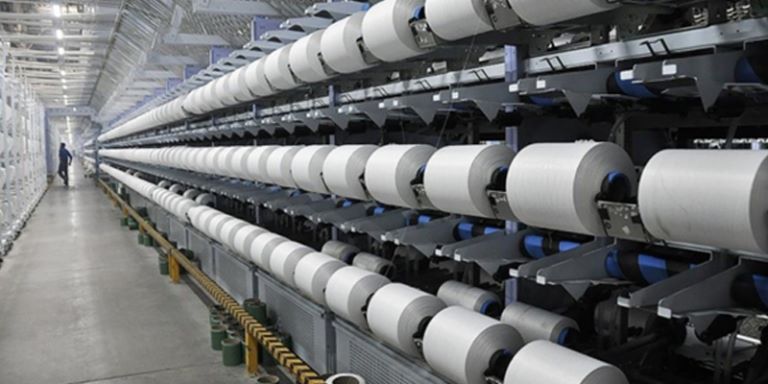
Columbia’s main textile event, Colombiatex de lasAméricas will take place in Medellin from January 25 to 27. As per a Textile World report, the event will be attended by 19 Italian textile machinery manufacturers. It will be organized by Italian Trade Agency and ACIMIT, the Association of Italian Manufacturers of Textile Machinery.
The following ACIMIT member companies will participate in the event. Bonino, Btsr, Color Service, Crosta, Fadis, Flainox, Kairos, Mactec, Mcs, Nexia, Ratti, Reggiani, Santoni, Savio, Smit, SperottoRimar and Tonello.
Italian exports to the important South American market in the first nine months of 2021 reached a value of 9.3 million euros, in strong growth (over +130%), not only compared to the value recorded last year, but also to that of 2019. More than half of the demand for Italian machinery in Colombia refers to finishing machines.
The presence of Italian Companies at Colombiatex is a further sign of confidence for the beginning of 2022. Compared to previous editions of the event, there are more number of Italian exhibitors at the event, the health emergency is far from over and there is great uncertainty characterizing the world economic scenario. The Italian companies exhibiting in Medellin testify to the optimism with which the entire Italian textile machinery industry is looking towards this 2022 year.
Fast Retailing keeps yearly forecast unchanged
Uniqlo operator Fast Retailing has kept its yearly forecast unchanged, even as business in the key market of mainland China was hit by virus restrictions.
The Japanese casualwear behemoth posted better-than-expected sales and profit in the three months to December, thanks to the growing diversification of its business.
The company does not expect the spread of the highly contagious Omicron coronavirus variant to dent overall performance in 2021-22. However, it sounded a note of caution over the unpredictable impact of the pandemic.
Net profit for the first quarter jumped 33 percent on-year to 93.6 billion yen ($817 million) marking its best ever first quarter, Fast Retailing said, as business in many parts of the world rebounded from virus lockdowns.
However, revenue and profit declines were seen in mainland China, which is pursuing a strict zero-COVID strategy and has imposed tough localised restrictions in recent months.
Sales dropped in Japan, too, following strong performance the previous year and as warm autumn weather hit demand for winter outfits.
The company, one of the world's top aooarel retailers, kept its net profit forecast for the year to August 2022 unchanged at 175 billion yen -- a three-percent increase from the previous year's record figure.
Its results have also been boosted by the depreciation of the yen, which recently hit a five-year low against the dollar.
Arvato Supply Chain Solutions to handle Guess’ online business
Arvato Supply Chain Solutions has collaborated with the fashion and lifestyle brand Guess for handling the brand’s online business.
Arvato Supply Chain Solutions performs B2C channel services for Guess from a warehouse spanning 20,000 sq m. The range of services includes shipping individual clients’ orders to dozens of countries, both in Europe and beyond. Additionally, the company also ships business-to-business (B2B) shipments. In the first year of collaboration, Arvato Supply Chain Solutions will employ around 100 people, and during peak seasons this number may even double.
The new distribution center in Poland will play a crucial role in reaching these targets. The opening of the fully dedicated e-commerce processing center is the result of a great example of cooperation and teamwork between Arvato Supply Chain Solutions and GUESS, achieved despite the unpredictable pandemic scenario.
In the logistics center, the following services will be provided: inbound, warehousing, picking and packing, returns management, as well as value added services (VAS) for a range of products including clothing, handbags, footwear and accessories. All operations are based on the WMS SAP Arvato IT system, customized for the client’s needs, on the warehouse infrastructure designed, purchased and installed by Arvato Supply Chain Solutions.
Alvanon launches Fit Studio in Milan
The world’s foremost leader for size standards for the fashion industryAlvanon has launched its latest Fit Studio in Milan in partnership with IstitutoSecoli, the first Italian fashion school recognized worldwide for its patternmaking.
The Fit Studio at IstitutoSecoli will enable designers, fashion brands and retailers to try their garments on full form physical mannequins in a safe and private space, ensuring their collections achieve the best possible fit for their target demographic.
Featuring a full line-up of the Alvanon standard series, the European Standard fit forms available in men’s and women’s, the studio can either be rented out by brands who are looking to test out their fit standards or used by designers practicing their skills on a form that represents realistic body shapes.
Alvanon has previously launched Fit Studios in Amsterdam, Hong Kong, London, New York and Shanghai. In an effort to help foster young talent, Alvanon and IstitutoSecoli agreed to use 100 per cent of the money earned from the Fit Studio for scholarships.
As Brexit impacts margins, British brands eye Germany for expansion
Germany is one of the most lucrative markets for British brands looking to expand operations internationally. As per a Drapers Online report, Germany’s large network of independent retailers and opportunities offered by marketplaces such as Zalando are attracting many international fashion brands despite Omicron hitting the industry hard.
German clothing market to grow
Figures released by research firm GlobalData in early December indicate, the German clothing market will grow 9.6 per cent year-on-year to € 74.2 billion (£62.7 billion) in 2022. The re-election of Social Democrat Olaf Scholz as the new German Chancellor is also likely to boost growth.
Diversification, key to reduce market impact
Emily Salter, Senior Analyst, GlobalData believes it is important for brands to diversify away from a single key market to reduce the impact of store closures, Brexit and weak consumer confidence. Owner of re-usable nappy brand TotBots and re-usable period product company Bloom & Nora, Frugi plans to increase sales share from 14 per cent to 25 per cent. In 2021, the company appointed a new European sales team for the German market with plans to expand German operations by partnering Zalando and independent retailers. It also plans to launch a new German-language website for 2022, and potentially owned stores in the future.
Other UK brands like Boardies are foraying into Germany through distribution partnerships. These partnerships will help the company manage logistics, says Nick Crook, Founder. They will also provide an opportunity to increase brand awareness through online platforms, such as Zalando. The ecommerce market in Germany also boomed during the pandemic. As Salter reveals, online penetration in Germany is expected to increase from 25.9 per cent in 2019 to 33.6 per cent in 2022. Zalando expects its gross merchandise value to exceed €14billion (£11.91billion) in 2021.
Targeting both online and offline expansion
A few brands are also betting on own stores and websites to foray into the German market. Swedish premium footwear and lifestyle brand Axel Arigato, opened its first company-operated store in Munich, Germany in November 2021. The brand aims to expand in Germany through more collaborations, marketing and events, says Albin Johansson, Co-Founder and CEO.
Other brands like Frugi, are setting up German websites. Localized website of British lingerie and loungewear etailer Lounge Underwear has enjoyed a huge success in Germany since its launch in 2020. The website aims to provide seamless customer experience to German shoppers, says Dan Marsden, CEO. Localized website helped the company build a direct relationship with the customer, he adds.
Brexit impact on German foray
Brexit has also impacted the foray of British brands into Germany. It has changed brands’ relationships with the UK as they will no longer incur tariffs associated with trading in the country, adds Salter. Brexit also presented a conundrum for Frugi as it sought to expand internationally, says Clark. The brand opened a third-party distribution centre in the Netherlands in February 2020 to counter this red tapism. Brands Asos and JD Sports Fashion have also opened distribution centers or warehouses in Germany to reduce Brexit-related tariffs. Despite these challenges, Germany remains one of the most favored destinations for international expansion for British brands.
RCEP to help attract more investments in apparels and textiles
With the world’s largest free trade agreement, the Regional Comprehensive Economic Partnership (RCEP) coming into effect on first day of 2022, there is a great deal of apprehension over the changes it will bring. Including the 10 ASEAN members, China, Japan, the Republic of Korea, Australia and New Zealand, the RCEP agreement was passed at the 21st ASEAN summit in 2012, says a CCF Group report. The agreement aimed to establish a free trade agreement with unified market by reducing tariffs and non-tariff barriers. The agreement encompasses the members’ trade in goods, services, investments and rules
Around 27.4 per cent of global trade value
Accounting for 30.9 per cent of the world’s population, RCEP member countries have a population of 2.37 billion. Their GDP accounts for 29.9 per cent of the world's GDP, exports account for 39.7 per cent of the world's exports and imports account for 25.6 per cent. The overall trade value of the RCEP member countries accounts for 27.4 per cent of the global. These countries are mainly exporters with imports forming a miniscule proportion of their imports.
Among the 15 RCEP countries, China accounted for 10.7 per cent imports and 24 per cent exports in the world, in 2019. It was followed by Japan with 3.7 per cent of imports and 2.6 per cent of exports. The third largest trading country was South Korea with 2.6 per cent of imports and 2.8 per cent of exports.
Textile and apparel exports account for 46.9 per cent
Of the total trade from RCEP countries, textile and apparel exports totaled $374.6 billion accounting for 46.9 per cent of the world, while imports totaled $138.5 billion, accounting for 15.9 per cent of the world. Vietnam, Cambodia, Myanmar, Indonesia and other ASEAN regions were the major exporters while China. Singapore, Brunei, the Philippines, Japan, South Korea, Australia and New Zealand were net importers.
RCEP to spike competition for local enterprises
The introduction of RCEP is likely to reduce tariffs among member countries and drop trade costs. This will lead to increased competition for local enterprises not only from domestic but also foreign brands, especially Chinese ones. Except New Zealand, South Korea and Japan, other member countries mainly export clothing, supplemented by textiles, while Myanmar, Cambodia, Laos, Indonesia, Philippines, Thailand are largely importers. The upstream and midstream end apparel users were highly dependent on imports, while developed regions such as Japan and South Korea mainly imported textiles and apparel, which were the main places of consumption.
Rise in overseas investments
The RCEP agreement can help significantly lower tariffs and fulfill the commitment to open investment in services. Reduction in tariffs will significantly improve the competitiveness of RCEP member countries. Meanwhile the competitiveness of textiles and apparel from major production bases such as India, Bangladesh, Turkey and other major production bases has declined in RCEP. Investment barriers among RCEP member countries have also leading to a rise in overseas investment in the region.
University of Georgia introduces new toxic denim dyeing solution
A research team at the University of Georgia has introduced a new solution to toxic denim dyeing that eliminates noxious chemicals from the denim dyeing process while using a fraction of the water.
As per reports, the new denim dyeing method mixes cellulose nanoparticles made from wood pulp — a sugar called chitosan — with natural indigo dye to create a gel that can be applied to the fabric a single time to yield an intense indigo color.
The chitosan essentially glues the pigment in place after the fabric dries, creating a sort of matrix of dye that coats the fibers of the denim. The process does not require reducing agents as it doesn't involve dissolving the indigo dy. It reduces the amount of water used in conventional dyeing methods by about 96 percent.
The process is also non-toxicas the drying time for the chitosan dye is shorter and the new technique yields fabric of the same weight, thickness and overall feel as traditionally dyed denim.
Ted Sheely awarded 2021 Cotton Grow Cotton Achievement Award
Ted Sheely, Owner, Azcal Management Company has been awarded with the 2021 Cotton Grow Cotton Achievement Award.
A graduate from the University of Arizona, Sheely earlier worked on a farm in the San Joaquin Valley – first as an assistant to a foreman, then foreman, ranch manager, and eventually a partners.’”
The lessons learned drive his businesses and industry involvement today, especially in a production environment where water – or the lack, thereof – impacts every decision made on what to grow.
Currently, there are about 1,200 acre of cotton on the Azcal operation. Sheely grows both upland and Pima varieties, including 320 acres of organic Pima. With all Pima acres combined, its about a 50/50 acreage split with upland.
To better manage their own water supply, Azcal has its own water company to help keep track of the farm’s multiple deep wells, along with maintenance.
He was an early participant in the USDA/NASA Ag 20/20 Program, which studied the integration of remote sensing-based tools in precision ag management systems to increase production, efficiency, and improve job quality. He’s also on the board of the Global Farmer Network, a farmer-led, non-profit group that supports free trade and the freedom to choose the tools, technologies, and strategies needed to maximize productivity and profits in a sustainable manner.
Scoop x Pure to be held with safe and secure guidelines
In an effort to address concerns related to the Omicron variant of COVID-19 in the UK, premium contemporary womenswear show Scoop x Pure, to be held at the Truman Brewery London from February 08-10, 2022 will be held with safe and secure guidelines
As per Karen Radley, Founder and MD, Scoop, the event will ask all attendees, including visitors, exhibitors, contractors, venue and organizer staff, to show proof of COVID-19 status on arrival at the venue. Current government guidance also states that face coverings are required in most indoor public settings, including retail spaces and exhibition halls. This means that face coverings must be worn by anybody within the show space, including all exhibitors, visitors, contractors and staff.
Scoop x Pure London will showcase the very best premium and ready-to-wear womenswear and accessories collections from designers including Feri, Sancia, Louise Hendricks, Pom Amsterdam, Primrose Park and new faces including Way Out, Lam, BlankaPukara, Mou, Norr Copenhagen, etc.
SITEX 2022 records Rs 250 crorebusiness this year: SGCCI
The three-day Surat International Textile Expo (SITEX) 2022 generated Rs 250 crore, business this year, says Southern Gujarat Chamber of Commerce and Industry (SGCCI), which organized the event along with the Southern Gujarat Chamber Trader and Industrial Development Council.
The exhibition commenced at the Surat International Exhibition and Convention centre at Sarsana on January 8. It was inaugurated by DarshanaJardosh, Union Minister of State for Textiles and Railways, in presence of CR Patil, President-State, BJP.
According to SGCCI, over 75 exhibitors from Surat and other parts of the country participated in the exhibition with machines made in European countries, as well as China and Japan. Buyers were registered from across the country. The centre of attraction was the latest hi-tech machines like the double rapier weaving machines, dobby rapier loom machines, and 1000 rpm high speed Air Jet loom machines.
AshishGuarati, Chairman, SGCCI says, in three days, exhibitors did business to the tune of Rs 250 crore. The capital investments in terms of installation of new machinery for the next four to six months are likely to be around Rs 1,300 crore. The shifting of orders for polyester bed-sheets for hotels and hospitals from China to India has resulted in a combination of man, machine and skills, for which updated machinery is required. This exhibition will play an important role in achieving this, he adds.