


FW
US’ jeans imports rise by 22.5% in January: OTEXA
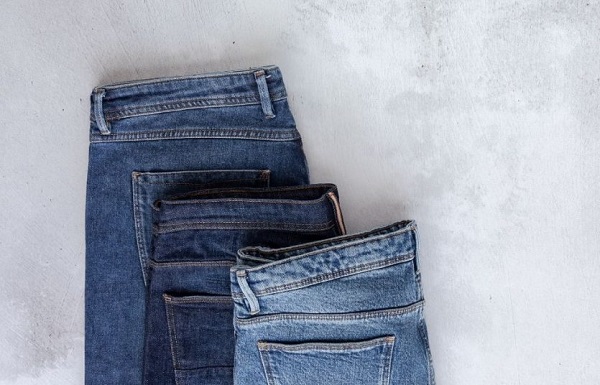
US’ jeans imports rose by 22.5 per cent to $308.19 million in January this year, as per data from the Commerce Department’s Office of Textiles & Apparel (OTEXA) revealed.
Blue denim apparel imports from top supplier Bangladesh rose by 9.99 percent year over year to $62.03 million in January, while shipments from Mexico increased by 28.68 percent to $53.89 million, according to OTEXA.
Jeans Imports from Vietnam surged 49.19 percent to $37.25 million in the month, while shipments reaching U.S. ports of entry from Pakistan rose 32.76 percent to $34.52 million and imports from China increased 17.13 percent to $33.31 million.
Imports from Egypt jumped by 78.17 percent year over year in January to $15.71 million. Shipments from Turkey also surged to $7.95 million, while imports from Cambodia rose 8.54 percent to $15.88 million/
Amongst Western Hemisphere countries, shipments from Nicaragua rose by 20.15 percent in the month to $4.26 million. On a smaller scale from the region, Colombia’s shipments more than doubled to $2.48 million for January and Guatemala imports were up 32.44 percent to $1.66 million.
The global denim jeans market is estimated to grow to $76.1 billion by 2026, from $57.3 billion in 2020, as per a new report from Research and Markets. The market research firm attributed the anticipated success to factors including casualization in the workplace.
Shanghai Fashion Week Fall/Winter postponed
The Fall/Winter edition of China’s most important fashion week event, Shanghai Fashion Week has been postponed. The event was originally scheduled to be held from March 25 to Apr. 1.
The postponement comes as China’s financial capital battles its most serious outbreak of Covid-19 since early 2020, dozens of new cases have been identified in Shanghai in recent days and various parts of the city have heightened restrictions.
This is the second time Shanghai Fashion Week has postponed its event in recent years due to COVID-19 outbreaks. Held every two years, Shanghai Fashion Week is a fashion event fashion event held two times every year in Shanghai. Shanghai, each time lasting for seven days
The current organizer of Shanghai Fashion Week is Shanghai Textile Group, who is in the center of the textile and clothing network in China. In cooperation with many consulates of other countries in Shanghai, Shanghai Fashion Week also invites many international designers to come present their latest work. It's also a venue for those designers who are targeting China.
Russia-Ukraine war boosts recycled yarn prices in Panipat
India’s top furnished yarn market Panipatis facing a yarn shortage due to the ongoing Russian-Ukraine war., pushing up the prices of recycled yarn by Rs5-10 per kg, according to market information.
Panipat market is known for recycled cotton and non-cotton yarn, which is used for furnished fabrics. According to traders, it is currently slump season for furnishing market. However, recycled yarn mills were facing acute crisis of old clothes and woollens from Europe, which is major supplier for Panipat market, where mills import old clothes and woollens and turns into fibre and then use for manufacturing of yarn. A local trader said that furnishing market will pick up after June and will continue to perform better till Diwali.
In Panipat, 10s recycled yarn (white) was traded at Rs95-100 per kg, 10s recycled yarn (coloured - high quality) at Rs95-100 per kg, 10s recycled yarn (coloured - low quality) at Rs65-70 per kg, and 20s recycled yarn (coloured) at ₹125-140 per kg. 10s optical yarn was traded at Rs100-110 per kg in the market.
Luxury brands record robust profits
The pandemic and soaring inflation have failed to take the shine off luxury brands, from Louis Vuitton to Gucci and Cartier, as the sector hiked prices to notch up stellar profits.
Luxury brands have responded to the pandemic by hiking their prices and actually look more desirable to their customers.
UBS analysts estimate that top brands such as Louis Vuitton, which is owned by industry leader LVMH, have raised their prices two-and-a-half times higher than the inflation rate over the past 20 years.
LVMH bagged a record €64 billion ($72 billion) in sales and €12 billion in net profit last year, both exceeding pre-pandemic levels.
The French company also owns a broad range of spirits, perfume, jewelry and cosmetics products.
Kering - which owns Gucci and Yves Saint Laurent - also beat its pre-COVID-19 levels to book a net profit of €3.2 billion on sales of €17.6 billion. Herrmes chalked up profits of €2.4 billion on sales of 9 billion euros.
Swiss group Richemont, which owns Cartier and runs its business year from April to March, said it booked sales of 5.6 billion euros in the third quarter alone, an increase of 38 percent over the corresponding period of 2019.
India can become world’s second largest textile manufacturer: State Textile Minister
The Indian textile Industry has the potential to become the second largest manufacturer of textile products in the world after China, said DarshanaJardosh, Minister of State for Textiles and Railways, during the inaugural address at CITI’s Man-Made Fibre Conclave 2022 held on 9th March 2022.
The Minister stated that “the textile industry is one of the priority sectors for the Government of India and appreciated CITI for organizing MMF Conclave 2022 at such an opportune time”.
The Minister also stated that “the Government is looking towards the inclusive and participative development of Indian textile sector and accordingly, the Government’s central focus has recently been on increasing the textile manufacturing many-folds by developing the best-in-class manufacturing infrastructure, up-gradation of technology fostering innovation, enhancing skills and utilising traditional strengths in the MMF textile sector.”
The Minister exhorted the industry captains to heavily invest in the MMF Sector and take advantage of recently announced schemes like PLI and PM MITRA for the holistic development of this particular sector. This will increase India’s share in the global trade and provide huge employment opportunities for the Indian youths.
GIZ, Decathlon sign MoUto boost Vietnam’s textile and garment industry
To support Vietnamese textile and garment enterprises to reduce emissions, the German Development Cooperation Organization (GIZ) and French sporting goods retailer Decathlon have signed a memorandum of understanding on cooperation in improving the environmental performance of Vietnamese garment and textile suppliers.
Accordingly, GIZ partners with Decathlon Vietnam through its projects, “Climate protection through sustainable bioenergy markets in Vietnam’ (BEM) and ‘Fostering and advancing sustainable business and responsible industrial practices in the clothing industry in Asia’ (FABRIC), to help Decathlon's Vietnamese suppliers improve their ability in climate change adaptation, efficiently use of water and energy, and manage chemicals at factories in 2022.
Specifically, the GIZ Fabric project will offer free e-learning courses namely “Climate Action Training” and “Chemical Management Training (e-REMC), via the platform www.atingi.org.
Henceforth, Vietnam's textile and garment industry aims to focus on green production and reduce emissions and help implement the Government’s commitment to net-zero emissions by 2050.
Cotton Campaign lifts global boycott of Uzbek cotton
The Cotton Campaign has lifted the global boycott of Uzbekistan cotton. The Cotton Campaign was supported by the United States Fashion Industry Association during this decade-long endeavor to rid the Uzbekistan cotton supply chain of child and forced labor. USFIA, and the brands and retailers oppose any form of forced labor in the global apparel supply chain.
US Fashion Industry association encourages brands and retailers to take a fresh look at sourcing opportunities in Uzbekistan and to work with the Cotton Campaign to maintain responsible sourcing and robust due diligence in Uzbekistan. It also encourages the Government of Uzbekistan to make further progress in establishing the enabling environment for responsible sourcing—including the registration of NGOs working to monitor cotton harvests—in order to address remaining risks to labor and human rights and to assure brands that they can source from Uzbekistan with confidence.
The Cotton Campaign launched the Uzbek Cotton Pledge in 2009, consolidating efforts from brands, NGOs, and Uzbek civil society activists to put pressure on the Uzbekistan Government to stop using child and forced labor in their cotton harvest. After a decade of pressure, the Uzbekistan Government launched a reform effort in 2017 to end systemic, state-imposed forced labor. An independent monitoring report by the Uzbek Forum for Human Rights monitoring labor conditions during the 2021 Uzbek cotton harvest found no use of forced labor.
Amsterdam Denim Days to organize live event on April 22-23
After a two-year hiatus, Amsterdam Denim Days, the two-day shopping and educational festival that connects consumers to denim artisans, global brands and the supply chain, will return as a live event on April 22-23 at De Hallen and Denim City, will follow Kingpins’ return to live trade shows April 20-21 at Sugar City. As per a Sourcing Journal report, the event will help reignite Amsterdam’s struggling denim retail sector.
Denim Day’s online platform—be it videos, webinars or written content—will focus on fashion processes and content based on sustainability. Being known as the market edition, the eventwill center on small brands and young designers as well as workshops and talks featuring leading denim players. This focus on fresh talent echoes the denim industry’s greater shift to one-of-a-kind designs, local production, handcrafted garments and sustainability in general.
With vegan making inroads into denim sector brands launch animal-free collections
Moving out of the food domain, veganism is now making inroads into the denim industry with many brands introducing animal-free denims into their collections. The trend is currently being led by AG Jeans which has launched a men’s and women’s capsule collection of vegan leather pants, shorts and shacked. The collection outsteps the softest leather, says the brand. Each garment of the collection has been made using the same seam sealing techniques applied to real leather garments. Resembling real seam placements for an authentic look, the collection boasts of soft-touch matter rubberized hardware finishing made from recycled materials.
Constant scrutiny highlights brand’s apathy to environment
Over years, the denim industry has introduced many alternatives to water-intensive crops and chemical-powered washing processes. Yet, each of the materials used by the industry and its production processes are constantly scrutinized.
In 2019, People for the Ethical Treatment for Animals (PETA) reprimanded Levi’s, for using animal-derived leather in its collections. Though the brand claimed to use Forest Stewardship Council (FSC)-certified Jacron paper in its collection, PETA bought the company’s shares to prevent it from passing shareholder resolutions and securing speaking rights at annual meetings. In 2020, the animal-rights group also launched a petition urging Levi’s to go vegan in its collections. The petition was signed by over 125,000 people
Brands uphold consumers’ values
Forecasted to reach $1.1 billion by 2027, the vegan fashion market is being dominated by brands adhering to the values of millennials and Gen Z consumers, says an Edited report. PETA also lauds other brands like Kings of Indigo American Eagle, Boyish, Closed, Mother, Uniqlo, etc for using non-leather patches in their collections.
However, industry leaders are skeptical about the materials used in these collections and their sustainability. Most often vegan materials are made from synthetic fibers such as petroleum-based polyurethane (PU) or polyvinyl chloride (PVC), which is an extremely harmful variety of plastic, as per Greenpeace. Both these materials are made from fossil fuels and are not biodegradable, says Elif Haslaman, General Manager, DeriDesen Etiket, a Turkish trims manufacturer.
Most trims manufacturers are looking for responsible vegan alternatives like Pineapple leather, apple skin, cork, organic fabrics and stone paper. Some of these materials are certified by Global Recycle Standard (GRS), Oeko-Tex, FSC and Global Organic Textile Standard (GOTS).
Vegan jeans are also a part of the new collections aligning with Ellen MacArthur’s Jean Redesign project, an industry-wide effort to introduce circular jeans in the market. The guidelines of the project urge brands to disassemble trims carefully for recycling. A few participants of the project like Blue of a Kind and H&M are opting for patch-free circular jeans while others such as Tommy Jeans are using laser-print pieces of sustainable denims n their Jean Redesign collections.
Increased use of vegan materials
The percentage of sustainable vegan alternatives in denim collections is rising. Since 2020, Haslaman has been using certified sustainable materials in 80 percent of its DeriDesen’s collection. The company further aims to increase this percentage to 95 in 2021.
The year 2020 proved to be watershed year for the denim industry as it reinforced the sector’s commitment to sustainability. The year called for a more sustainable, ethical and ecological approach to designing and manufacturing vegan denims. The trend is likely to continue and prove as a great restart for the future denim industry.
Physical stores stage quick recovery as revenues grow 25%: CRISIL Ratings

Despite the third COVID wave, revenues of Indian brick and mortar apparel retailers are expected to grow 25 per cent this year, predicts CRISIL Ratings. This year, operating margins of apparel retailers are expected to grow between 5 to 7 per cent compared to 9 per cent pre-pandemic. Most of this growth will be driven by improving operating margins, continued cost rationalization, and prudent inventory management.
Investment recovery to strengthen credit profiles
Last year, an increase of Rs 2,000 crore in equities limited the deterioration in capital of apparel retailers. This year, recovery in accruals is likely to further strengthen the credit profiles of retailers, shows the analysis of 35 apparel retailers by CRISIL Ratings. Representing a fifth of the sector’s revenue, eight of the 35 apparel retailers witnessed strong revenue recovery in the first nine months of this fiscal. Revenues of these retailers grew 55-60 per cent year-on-year on higher festive and wedding sales.
Anuj Sethi, Senior Director, CRISIL Ratings says, easing of COVID-related restrictions and quick fading of the third wave caused minimal disruptions in operations of brick and mortar retailers. Retailers’ sales staged quick recovery in second and third quarter of this fiscal. They are expected to grow 80 per cent of pre-pandemic levels in the fourth quarter. Revenues are expected to grow by 10 per cent next fiscal as footfalls continue to increase and pandemic impact subsides, adds Sethi.
Lessening capital requirement to lower financial risks
Retail restrictions led to brick and mortar operations augmenting their omnichannel operations over the past two years. The share of e-retail sales has surged 8-9 per cent this fiscal, compared to pre-pandemic level of 4-5 per cent.
After the first pandemic wave, apparel retailers renegotiated rentals and entered into revenue-sharing agreements. They also launched limited seasonal collections, which helped rationalize their inventories and lessened their capital requirements.
Gautam Shahi, Director, CRISIL Ratings adds, increasing capital accumulation and lessening capital requirement are expected to lessen financial risks for apparel retailers. Their investments in new store openings will increase, resulting in better debt protection metrics. Interest coverage of retailers is expected to increase five times this year while the ratio of total outside liabilities to net worth is expected to increase 1.7 times.











