FW
Japan October clothing imports up 40 per cent
Imports of clothing and accessories by Japan increased by 40 per cent yearonyear in October 2022.
They were three per cent of Japan’s total imports during the period. The country’s imports of textile yarn and fabrics in October 2022 were 45 per cent higher than the same period of last year. Yarn and fabric imports were one per cent of the total imports by Japan. The country’s exports of textile yarn and fabrics during October 2022 increased by 17 per cent yearonyear. The country’s exports of textile machinery were 38 per cent higher than exports in October 2021.
They contributed 0.3 per cent to the country’s total exports.Japan’s imports of clothing and accessories increased by 29 per cent during April 2022 to September 2022. These imports were three per cent of total imports during the first six months of this year. Imports of textile yarn and fabrics from April 2022 to September 2022 were 30 per cent higher than the same period of last year.These imports were one per cent of the total imports by Japan.The country’s exports of textile yarn and fabrics during the first half of fiscal 2022 increasedby 17 per cent yearonyear. These exports were 0.8 per cent of total exports from Japan during April 2022 to September 2022.
Falling orders hit accessory makers
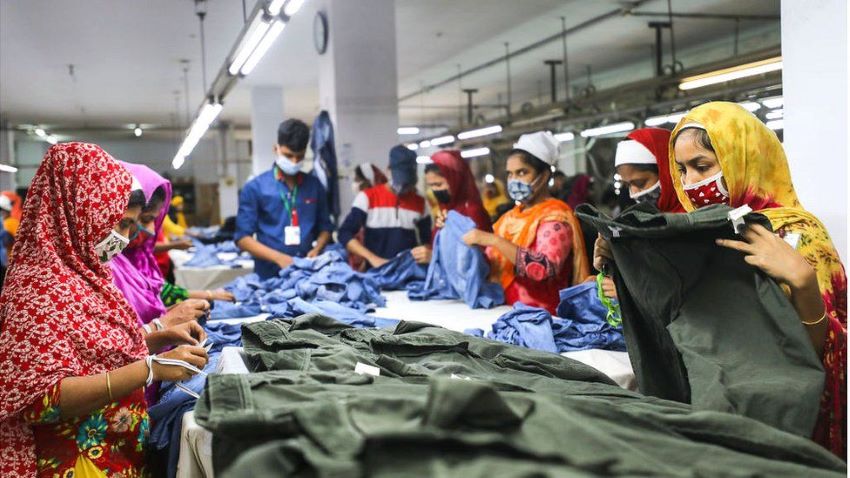
The accessories and packaging industry in Bangladesh is feeling the pinch of falling orders for readymade garments.
Foreign buyers are asking readymade garment companies to delay shipments of finished goods because they are faced with a fall in demand in their domestic markets and have large unsold inventories.Orders for garment exports have slowed down since October and any such reduction will have a corresponding effect on all the sub-sectors.
This is true especially of the accessories and packaging industry, the profit or loss of which is tied to the rise and fall of readymade garment exports. It is feeling the pinch as orders have declined. The accessories industry has to deal with delayed payments since garment exports are on hold.
Work orders for readymade garment exporters have fallen by as much 40 per cent. If garment accessories and packaging manufacturers received a work order for 0.1 million pieces earlier, it now has come down to 35,000 or 40,000 pieces.As garment companies see their business fall, accessories industries that supply various items which constitute the finished fabric are also facing deferred payment for finished goods delivered. There are at least some 2000 accessories and packaging companies in Bangladesh producing more than 25 products needed by the readymade garment sector.
Indian textiles go from linear to circular
The textile industry in India is shifting gears from linear to circular operations.
Manufacturers are making concerted efforts to introduce sustainability by using innovative materials, safe dyes, reducing water and energy consumption, treating waste material and ensuring a greater focus on reducing, reusing and recycling, ensuring that both pre-consumer and post-consumer waste are controlled. Zero Liquid Discharge, for instance, is a wastewater treatment process that removes all liquid discharge from a system. Apart from prioritising organic fabrics, the focus of the sector is all about conserving the natural environment.
Other projects, like processing PET bottles to make recycled polyester fibers, are also underway.This has triggered the movement towards slow fashion that works on a‘fit-to-demand model, reducing surplus and investing in garments that have a long life.With new innovations like 3D printing and new age fabrics made from hemp and bamboo, these changes come as first steps in a long journey towards sustainability.
With the high environmental impact, but large room for improvement, it is very probable that measures to implement sustainability in the textiles sector will have a significant impact.The textile industry in India, which has a four percent share of the global trade in textiles and apparel, is expected to grow by a compound ten percent a year till 2026.
Low demand hits Chinese markets
Guangzhou’s large wholesale fabric market has been hit by low demand rather than the epidemic.
As of November 13, 707 new confirmed cases and 3,941 new asymptomatic infections were reported in Guangdong province, mainly concentrated in Guangzhou. Factories in Guangzhou areshut or running with limited operations. Though the epidemic has caused regional disruptions in production and distribution, lack of demand is the main reason for the depressed market. There has been no increase in orders from markets that have been unsealed.
Hanzheng Street in Wuhan, China Textile City in Shaoxing, China Oriental Silk Market in Suzhou, Nantong Folded Stone Bridge and other major cloth and garment markets are currently less affected by the epidemic, but market transactions are still thin. Factory orders have not improved significantly after the end of the epidemic control.Downstream finished goods inventory pressure is high, and the operating rate has gradually declined.
The high inventory of filament is mainly due to the obvious weakness of downstream demand, as grey fabric, textile and clothing are all under high inventory pressure. In China domestic sales of textile and clothing have gradually weakened and at the same time export orders have not improved. Domestic sales of filament declined rapidly in November.
Deja from Indorama wins award
Indorama’s Deja has won the Chemical Week award. Deja is the world’s first carbon-neutral virgin polyethylene terephthalate resinaimed at reducing environmental impact. These are the world’s first certified carbon-neutral virgin PET pellets. The Deja brand covers carbon neutral virgin and recycled PET resins and a range of recycled PET products, including flakes, resins, fibers, and yarns.It provides Indorama’s global customers with a range of high-performance applications, including packaging, lifestyle, automotive, apparel, and medical equipment.
The solutions help environmentally conscious companies meet their sustainability goals. Deja supports the UN Sustainable Development Goals of promoting a sustainable, greener circular economy. Chemical company Indorama Ventureshas set ambitious 2025 and 2030 targets, which are expected to be met through its six-pronged decarbonization strategy, including energy transition, improving operational efficiency, circular feedstock, and future technologies.
The company also has a goal to recycle 100 billion PET bottles annually by 2030.Chemical Week Sustainability Awards recognize the industry’s best efforts in addressing financial, operational, and strategic challenges by focusing on ESG and sustainable product development. The awards were assessed by S&P Global, the world’s leading credit rating agency, and a panel of experts from various companies across the chemical industry’s value chain.
Primark opens three more US stores
Value fashion retail giant Primark has opened three new stores in the United States.
The target is to reach 60 US stores by 2026. As of now there are a total of 16 US stores and a worldwide tally of 411 stores. Primark first entered the US in 2015,introducing its products to a myriad Americans, thirsty for its everyday low price model, a system different from the majority of other US retailers who operate with extensive discounting, promotions and coupons. The Irish retailer continues to pursue the American dream at a slow pace. The US market is the biggest market in terms of fashion sales and one of the most complex alongside the high competition.
Primark is a company that only operates with physical stores amid an era driven by digitalization and e-commerce. The Irish fast fashion chain’s jeans collection designed in line with the Ellen MacArthur Jeans Redesign guidelines uses organic cotton and recycled content. The collection meets all of the Jeans Redesign standards, with adult jeans in the collection made from either 70 per cent organic cotton, 29 per cent recycled cotton and one per cent elastane, or 70 per cent organic cotton and 30 per cent recycled cotton. Children’s jeans are made of 78 per cent organic cotton, 20 per cent recycled cotton and two per cent elastane.
Denim event showcases the entire value chain
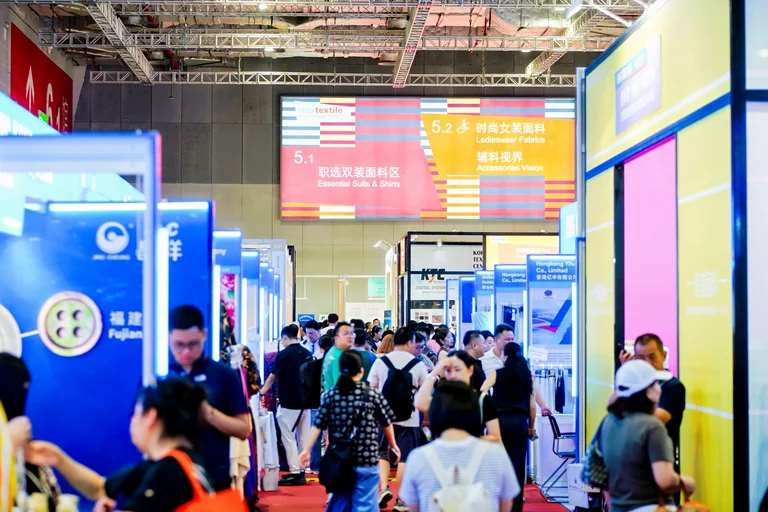
Bangladesh Denim Expo was held November 15 to 16, 2022.
It was a grand event showcasing the entire value chain, creating a platform for connecting with people who love, appreciate, and care for denim.The trade show featured businesses from around the world spanning textiles, machinery, and technology, with a focus on sustainability. The event hosted renowned global denim manufacturers, industry leaders, sustainability practitioners, and the latest technology adopters from all around the world,brought businesses together, enabled meaningful collaborations, and kept participants updated with global denim fashion trends and manufacturing techniques.
Denim offers Bangladesh great prospects. Bangladesh’s next business is denim. With the huge demand from global retailers and brands, the country has established some 30 denim mills. These meet 40 per cent of the demand for denim fabrics from garment makers. The remaining demand is met through imports, mainly from China, India, Turkey and Pakistan.Bangladesh has overtaken China in denim supply to the EU countries because of quality products at competitive prices.Due to the focus on sustainability Bangladesh denim fabric makers have dramatically reduced water consumption over the last few years with the adoption of the latest technologies in production. The target is to reduce water consumption by 80 per cent in the denim making process.
Rise in October UK retail volumes
UK retail sales volumes rose by 0.6 per cent in October 2022 compared to the previous month.
So says the Office for National Statistics. The value of retail sales rose 1.8 per cent compared to the previous month. Looking purely at volumes and on a month-on-month basis, increases were seen in all of the main sectors apart from food stores. Non-food stores sales volumes rose by 1.1 per cent. Clothing stores sales volumes rose by 2.5 per cent month on month but were 3.7 per cent below their February 2020 levels. And department stores volumes fell by 0.3 per cent. The proportion of retail sales taking place online was 26.1 per cent, a broadly consistent level since May 2022.
Online sales of textiles, clothing and footwear were down 8.4 per cent compared to a year ago and down 2.7 per cent compared to September, while department store sales online were down 6.8 per cent compared to a year ago and 1.7 per cent against the previous month. But although there was an uptick in retail sales last month, driven by clothing, a bleak winter lies ahead and consumers are looking at how they can tackle the fallout from the cost-of-living crisis in their spending decisions. There’s still little sign of early Christmas cheer for retailers.
New Delhi hosts technical textile conference
A conference on technical textiles was held in New Delhi, November 16, 2022.
Companies exhibited a wide range of protective textile products. Panel discussions in the conclave covered the prospect of indigenisation of protective textile products in India, experience and expectations of consumers towards adoption of Indian protective textiles and market promotion and export opportunities of protective textiles in India along with global best practices.The technical textile industry is a sunrise industry with a robust growth rate of ten per cent annually. However, the sector is still small in size and there is a lot of opportunity for India to be a prominent player in the global arena.
So the need of the hour is to focus on product diversification, design, aesthetics as well as the need for training the manpower involved. Efforts are being made to develop and implement standards for technical textile items and produce and market quality products that are at par with international standards. The National Technical Textiles Mission has undertaken initiatives such as supporting R&D projects in niche and strategic protech areas. Guidelines will be formulated to support and create an education ecosystem and skilled workforce in the field of technical textiles with the development of new courses and laboratory infrastructure in technical textilesto promote the growth of technical textiles in India.
IAF wants equitable distribution of risk and reward
The International Apparel Federation (IAF) is aiming at a fairer distribution of risk and reward between buyers and producers.
IAF is a global network uniting small and medium manufacurers, brands, manufacturers and their associations. When western brands collapsed during the Covid pandemic, one of the first things they did was to cancel already completed orders.As buyers cancelled orders, suppliers were left in a lurch. They had to sink or swim. The IAFhas identified the need to urgently rebuild trust and has begun emphasising on supply chain issues guided by the urgency of the need for industry transition in a changed world. IAF believes the supply chain, to function well, literally and figuratively speaking, needs a new contract and needs to operate with a greater sense of equity.
So IAF has teamed up with the Star Network of industry associations, GIZ, Better Buying and the OECD in a project in which around ten associations will build their recommendations for payment and delivery terms. Even though intentions are often good, purchasing practices are more an offer by buyers. The financial flows fuelling the supply chain including a fairer distribution of risk and reward are a major part of this new contract and IAF is developing both guidance and concrete services to its members in this area. Another way IAF is preparing for the new world is by adapting to the policies and core values which will gain significance but will come at a steep cost. IAF feels that as the essence to the greening of the industry is a supply-chain-wide collaborative approach, pledges to reduce CO2 emissions are important but not sufficient and that costs and the rewards of transformation need to be shared in the supply chain.
So the financial sector can bridge gaps, education across the supply chain will help and consumers can drive change though they need to be able to base their buying decisions on clear and trustworthy green claims. The organisation notes circularity – the practice of encouraging reuse, recycling, or sustainability in consumption, manufacturing – as the most effective method to reduce the pressure on climate exerted by the apparel industry.At the same time, IAF will focus on bringing the manufacturers' voice more clearly into the global industry infrastructure that is being built to reduce apparel's global environmental footprint.
Other priorities
The IAF's other priorities are working on institutional infrastructure, education and training, digitisation and transparency. It believes the apparel industry needs a better global, institutional industry infrastructure, promoting more inclusivity and that this can be done by reducing audit and standard fatigue.IAF and the International Textile Manufacturers Federation have taken up a project to do this.In line with its aim to build a stronger global institutional infrastructure for the industry, IAF will also work to enhance global coordination of industry education.
Global coordination implies alignment of priorities, quality and efforts to reduce the chances of overlap. IAF is working with several multilateral organisations to organise a more structured transfer of knowledge aimed particularly at industry associations.The IAF will also stress on all-out, all-forces-joined drive for digitization and has emphasised on the need to accelerate efforts to increase transparency of its supply chains since transparency is important to create more responsive supply chains, to improve sustainability and is needed to comply with demands of civil society and government.
IAF's mission is to unite all stakeholders of the fashion and apparel industry, including brands, retailers, manufacturers, suppliers and country associations from around the world to enable and promote smarter, stronger, more sustainable supply chains.Buyers’ conduct at the start of the pandemic often was the exact opposite of collaboration and the breach of trust created caused damage to supply chains that needs to be repaired. IAF has formulated a strategy for strengthening supply chains that will help repair this damage, prevent new damage and contribute to the creation of a stronger, smarter and more sustainable industry.