FW
Uster provides shield against contamination
UsterJossi Vision Shield provides for contamination control in yarn production.
Correct positioning of the fiber cleaning system – at the point where the fibers are most open – is crucial. Contaminants might otherwise be hidden inside bigger tufts, but not with UsterJossi Vision Shield at the fiber opening stage. UsterJossi Vision Shield is better than conventional camera-based systems. Operating across a much greater wavelength, Uster’s spectroscopes can find contamination even within the invisible range of IR and UV light.
Fragments of contamination in light pastel colors and white also pose no problem.Any remaining contamination or defects will then be identified and removed by the final-stage check at the Quantum 4.0 yarn clearers, which will ensure the yarn meets customer requirements.The good news for spinners wondering about capacitive or optical clearing for a new production line, or for retrofit, is that Uster Quantum 4.0 has both capacitive and optical sensors, applicable to different yarns and changing conditions.
Uster Jossi Vision Shield and Uster Quantum 4.0 are two perfectly-linked systems in the production process, minimizing the risk of foreign matter quality issues and focusing on defined quality and profitability.Total Contamination Control is an Uster Value module with Quality Expert, which also reveals optimization potential to save costs.Total Contamination Control balances ejections in the blowroom along with cuts in winding in the most advanced way.
ReshaMandi app gets wide response
ReshaMandi’s app, launched in 2020, has witnessed an increase in participation from farmers, reelers, yarn manufacturers, weavers and retailers.
The app is in five Indian languages, Hindi, Kannada, Tamil, Telugu, Marathi apart from English, and 34,000 stakeholders of ReshaMandi have installed the app with 40 per cent of them using the app’s payment system and receiving the payment acknowledgements on the app.Currently, 95 per cent of ReshaMandi’s wide farmer base is using the app to map the transactions on the platform.
The weaver community has listed more than 5000 sari SKUs on the app and is able to directly connect and distribute to the large retailer base. The support on the app has now expanded to four broad categories,saris, apparel, home and living and fabric.The level of engagement the app has seen over two years indicates ReshaMandi’s ongoing efforts to empower stakeholders and provide them with a greater range of business opportunities. Through the app, 20,000 tons of cocoon, 1500 tons of raw cotton, 6000 tons of cotton bales, eight lakh saris, five lakh apparel and 150 lakh meters of fabric have been sold and transacted. ReshaMandi, based in India, is a farm-to-fashion digital ecosystem for natural fibers.
Emporiom expands TCNS’ digital presence
Emporiom Digital and TCNS Clothing have had a successful partnership.
Emporiom Digital manages the digital aspects of TCNS Clothing’s business including social media marketing and influencer marketing. With this partnership, TCNS has managed to showcase its work to more people through social media channels than ever before. Digital agency Emporiom has helped TCNS spread its story of fashion innovation in the online ecosystem.TCNS Clothing which runs brands like W, Wishful, and Aureliacelebrates womanhood and provides trendy and contemporary fashion wear for women.
The association of TCNS Clothing with Emporiom Digital was a fruitful step in acknowledging the benefits of a digital-first approach that plays a key role in mapping the success story of a brand in the ever-changing media landscape. In the past year, Aurelia and W’s digital reach has expanded by a whopping 62 per cent and 181 per cent respectively.
And Aurelia’s and W’s Instagram follower count has grown by 47 per cent and 21 per cent respectively in the past one year.Propelled by cutting edge expertise and know-how in the digital marketing sphere that Emporiom Digital enjoys, brands like W, Wishful and Aurelia have been able to showcase their delightfully modern and contemporary fusion women’s wear, foot apparel and beauty products to a wider audience.
Bangladesh sees the brighter side
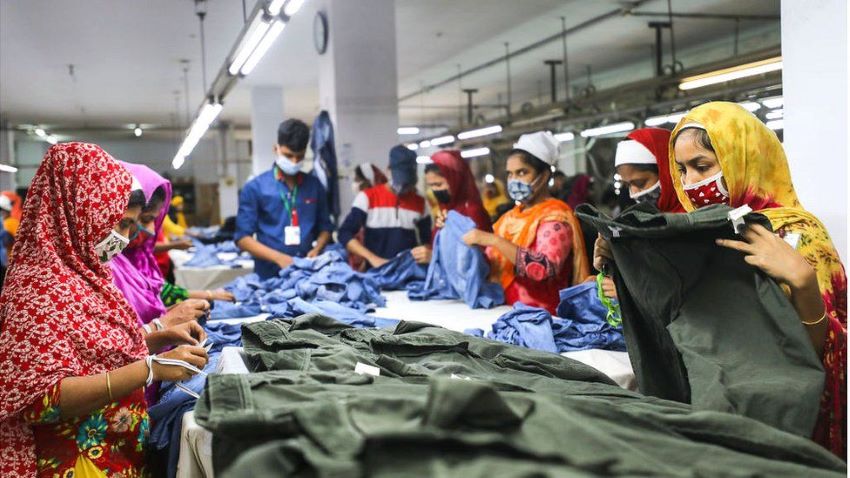
Despite the global economic downturn and the decline in orders, manufacturers in Bangladesh hope for a positive future.
They are confident buyers still trust Bangladesh and expect their share in the global apparel market to increase to eight per cent in 2021 from 6.26 per cent in 2020 and further rise in 2022 and onwards. No work orders have shifted from the country to competitors like Pakistan or Vietnam. The supply of electricity has improved and the gas supply is expected to be improved soon.There is a turbulent situation in the global economy and none of Bangladesh’s competitors have seen positive growth in recent months.
In the midst of several factors affecting the global economy, manufacturers in Bangladesh are now focusing more on branding both Bangladesh and the apparel industry of the country in the hope this will get more work orders. Bangladesh is now the second largest garment exporter in the world after China.Although there are some signs of a slowdown in garment exports now, because of the war-related crisis, the global economic turmoil, and a record inflation affecting retail businesses, it is expected that the shipment to new destinations, particularly to Asian markets, will witness growth.
Bodyline makes a difference
Bodyline has launched a series of CSR initiatives.
The apparel maker has done tree planting, beach cleaning, raising funds for school supplies of students and also opening a forest and constructing toilet facilities at a hospital. Bodyline has created over 60,000 direct employment opportunities In Sri Lanka and India and is making a positive impact on stakeholders, customers, shareholders, employees and community by being the go-to partner for world-renowned brands, providing concept to delivery solutions through a global co-creation center.
Local communities also cherish the company for its legacy projects which include the building of homes for soldiers, the building of a pediatric High Dependency Unit as well as the uplifting of sports like boxing in local communities by building a boxing ring. The company has only been able to withstand economic and political impacts on the industry but has maintainedits contribution to the community. Bodyline is a subsidiary of South Asia’s largest apparel tech conglomerate MAS Holdings and is celebrating its 30th anniversary. Bodyline is a joint venture between MAS Holdings, Triumph Germany and Mast Industries USA. The company has the capacity to produce garments from concept to delivery. It is renowned as the leader in producing fitted garments that provide superior next-to-skin performance wear. It is also the go-to vendor for bra innovations.
Burberry plans to double sales
Burberry plans to increase sales in a big way.
The plan is to double sales of leather goods, shoes and women’s clothing and expand outerwear sales by 50 per cent in the next threeor five years.Longer term, the aim is to increase accessories from 36 per cent of sales to over 50 per cent. Leather goods are the profit drivers of the industry, with successful handbags generating gross margins of over 80 per cent so if the company can sell more It bags, that goal looks realistic. However there are obsacles. For one there’s a downturn in luxuryparticularly in the US.
There is less demand for expensive high-end items as more marginal luxury buyers begin to feel the pinch. So the fashion house best known for its black, white, tan and red check has its work cut out. Previous marketing and advertising efforts were disjointed. Focusing on Burberry’s heritage and made-in-Britain status should give the fashion house more of a coherent identity. Also, to ensure Burberry meets its targets, the Chinese market needs to reopen. Burberry is one of the few high-end brands unencumbered by a family shareholding.This British institution is yet to live up to its full potential.
India should focus on emerging as the world’s largest producer and exporter of hosiery, says Rikhab Chand Jain
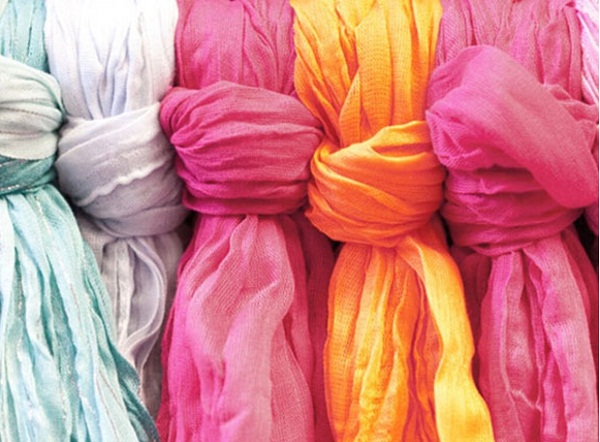
Good times are spinning for the Indian hosiery industry expectations unfold for a ten-fold growth in the next 25 years with focus on a long-term adoption of good cotton farming practices and India becoming more self-reliant. Like a fish in troubled waters, now is the time for India to increase its global exports with many countries unwilling to import apparel from China after the Covid years as well as the disruption in the supply chain in Europe after the Ukraine war.
Focus on self-reliance and pan-India cotton mills
Taking advantage of Prime Minister Modi’s various all-inclusive schemes such as ‘Sabka Sath Sabka Vikas’ and self-reliance of ‘Make in India’, and ‘Self-Reliant India’, the hosiery industry should leap forward and increase its global export rankings, emphasized Rikhab Chand Jain, Former President of the Federation of Hosiery Associations of India (FOHMA) in his address at the Golden Jubilee Celebration in, Kolkata. The event took place on November 12, 2022. Jain said, the best is yet to come and the hosiery industry waits in anticipation in the post-covid years that have just begun
He said, although hosiery production has grown in Delhi-NCR, Ludhiana, and Bangalore over the last 30 years, a lot more is yet to happen. There should be more hosiery mills and focus in Jaipur, Indore, Pune, Kanpur, Varanasi, Nagpur, Surat, Bhubaneswar, Guwahati, Patna, and Ranchi among other cities. Industry leaders along with the Apparel Export Promotion Council (APEC) and the country’s youth should now focus on making India the world's largest hosiery producer and exporter.
Indian manufacturing for all segments of cotton industry
Jain said, “FOHMA should get due active representation in AEPC and other institutions. FOHMA should organize exhibitions and organize delegations for industry contacts abroad and be a part of effective research projects and programmes. FOHMA had made significant efforts to demand the establishment of a separate Ministry of Textiles as well as that it should have a rank of a cabinet minister.’’
Even after 75 years of independence, over 80 per cent of sewing needles, sewing machines, knitting machines, processing machinery, and knitting needles and other items essential for the hosiery industries are still imported from China and Taiwan at very high prices. A now self-reliant India must stop imports and substitute them by introducing local manufacturing by European brands or its China-Taiwan versions.
“For the last few years, with the price increase of 250 per cent in cotton fiber in past nine to ten months, the entire textile industry has been tremendously affected and exports fell drastically. The world's largest cotton and commodity traders have made huge profits from speculation and hoarding. Future trading was banned for seven items that had much lesser price hike than cotton, but cotton future trading was not banned,” Jain highlighted.
Jain summed up saying, it is time for foreign trade to be focussed on and free trade agreements with the US, Canada, Japan, Europe, South Korea, and the UK should be done soon. The government should allow export income to be tax-free for 10 years. Incentives such as a tax-free income for five years for new industries, allowing shareholders for tax rebates on the value of investment done and withdrawing the proposal to increase the GST rate on hosiery and apparel from 5 per cent slab should all be done soon. Instead of simply raising cotton pricing, delving deeper into the root causes and making the whole industry self-reliant is the way forward for the cotton industry.
Clean Clothes Campaign red flags Pakistan on safety
Since 1989, Netherlands-based Clean Clothes Campaign has been working for the interest and betterment of workers in the textile and garment industries. It is now a global network of 235 organizations across 45 countries, helping identify work-force related issues that workers in these industries face and provide support and assistance to find solutions that improve working conditions and quality of life. In 2021, Clean Clothes Campaign introduced the International Accord on Health and Safety that became a binding contract for both, brands and local unions. Now, the South Asian Coalition of Clean Clothes Campaign has placed Pakistan on the radar as reports show regular violation of safe working conditions for its labor force by brands that have signed the Accord as well as brands that are outside the agreement.
Rampant disregard
In 2012, a factory in Karachi burnt due to arson and in what is described as the worst incident recorded of a factory fire, 264 factory workers perished. In a country mired with many problems that affect the manufacturing sector, safety hazards are ignored or lie unattended due to a lack of concern by proprietors and lack of awareness of workers about their rights to work in a safe environment. Deadly incidents are quite frequent and due to their numbers, the media don’t attach much importance to such news.
Clean Clothes Campaign tracked as many as 36 such incidents since January 2021. Tracking showed that most of these deadly incidents could have been well-avoided if basic safety measures were put in place. Plans have been underway since 2018 as garment workers unions in the country have been calling for signing the Clean Clothes Campaign International Accord on Health and Safety but four years on, obstacles prevent the introduction of the Accord. It is a surprise that brands such as Levi’s, GAP, Lee and Wrangler have a bad track record in Pakistan.
A vocal General Secretary of National Trade Union Federation in Pakistan, Nasir Mansoor has often stated how the signing and establishment of the Accord on an urgent basis is the need of the hour. He feels that it is right of every Pakistani factory worker to work in a place where their life is not in danger and he urges owners of manufacturing units to cooperate with the authorities in getting their premises inspected and faults fixed immediately. Ineke Zeldenrust, International Coordinator at Clean Clothes Campaign, supported Mansoor by stating that brands must act immediately in scrutinizing their supply chain to ensure that workers in their supply chain are not putting their lives on risk.
Stalled Accord
Whilst Clean Clothes Campaign says establishment of the Accord in Pakistan is in advanced stage, there are hurdles that keep stalling its implementation. The authorities are yet to decide when to launch it and a definite date is not in the horizon. Additionally, workers don’t know when and how they can seek protection of their rights from the program. Moreover, many stakeholders are opposed to an Accord built on the lines of the one established in Bangladesh as they feel the socio-political environment of Pakistan is unique in its own way. Thus the Accord is being redesigned to fit the Pakistan context and data collection is ongoing to get it right to enable just and legal representation of workers’ rights.
Gap Q3 sales up two per cent
Gap’s thirdquarter net sales rose 2.5 per cent.
The brand’s formal clothing and dresses are having a steady demand from affluent consumers. People are preferring more formal clothing, dresses, woven tops and pants, shelving casual wear like T-shirts and shorts as they return to travel, work and social occasions after two years of pandemic-induced restrictions.Gap's Banana Republic, an affordable luxury brand, posted an eight per cent rise in sales, while its Old Navy brand that has been struggling with out-of-fashion clothes reported a two per cent increase.It expects fourth-quarter net sales to be down in mid-single digits. Gap saw strong volume in October slow a bit in the end and a little bit of a slow start to November.
Gap is expected to continue to struggle over the next 12 months because of its low- to middle-income consumer base and underperforming brands. Heading into the holiday season and 2023, discounts could continue for brands like Gap due to a weaker consumer. Soaring prices of essential commodities have damped lower-income consumer spending on non-essentials like apparel. In October, Gap removed products from its Yeezy Gap line created in partnership with Kanye West, and shut down YeezyGap.com following the rapper's anti-Semitic comments.
Arvind combats textile waste with PurFi
Arvind and PurFi will jointly attempt to reduce the amount of textile waste going to landfills.
Arvind is India’s largest textile to technology conglomerate and PurFi is a sustainable technology company specializing in rejuvenating textile waste into virgin quality products. PurFi’s proprietary technology creates a traceable 360-degree circular solution that rejuvenates textile waste into virgin quality fibers utilizing 96 per cent less water and 90 per cent less energy than virgin textiles. PurFi and Arvind will locate the first in a series of planned fiber rejuvenation facilities near one of Arvind’s manufacturing facilities in India.
This facility will process textile waste – white cotton, colored cotton, denim and synthetics – into virgin-like fibers for reuse from two lines, where each line will have a 5,500-ton capacity per year with plans to expand over the next five years. Expansion plans include an additional production line that removes elastomers from fabrics utilizing another of PurFi’s proprietary technologies.
The textile industry generates more than 64 billion pounds of post-industrial textile waste and 284 billion pounds of post-consumer waste annually. Yet only 12 percent of textiles globally are recycled and about one percent are upcycled. The circular economy is being embraced by those who are conscious of their carbon footprint.