FW
Kontoor Brands reports strong Q4 and 2022, expects low single-digit revenue growth in 2023
Kontoor Brands, the global apparel company that owns the iconic brands Wrangler and Lee, has reported its Q4 and full-year results for 2022, and provided its financial outlook for 2023. In Q4 2022, the company recorded revenues of $732m, an increase of 7% YoY, and reported EPS of $0.91, compared to Q4 2021's $0.75.
For the full year, revenue was $2.63bn, up 6% YoY, and reported EPS of $4.31 compared to $3.31 in 2021. The company also announced that it had returned $166m to shareholders through a combination of share repurchases and dividend payouts.
Kontoor's Q4 revenues were driven by strength in domestic wholesale and digital, offset by decreases in international, with China particularly affected by COVID-related lockdowns and restrictions. In contrast, U.S. revenue increased 16% YoY to $605m, with gains in both Wrangler and Lee brands, and strength in digital wholesale, which increased 66% YoY. U.S. own.com revenue also increased by 19% YoY. International revenue fell 20% YoY to $127m due to the continued impact of COVID restrictions in China.
Looking ahead to 2023, the company expects revenue to increase at a low single-digit percentage compared to 2022, with an EPS in the range of $4.55 to $4.75. CEO Scott Baxter praised the company's performance despite "unprecedented macroeconomic challenges", and said he expects the company's "strategic investments in talent, demand creation and innovation" to drive growth across DTC channels, categories, and international markets.
Armani Exchange India leads sustainable fashion with eco-friendly T-shirts
Armani Exchange India is a brand that is leading the way in sustainable fashion by demonstrating perfect dedication and contribution to the environment. The brand's commitment to sustainability is evident in its T-shirts, which are made from organic cotton, recycled polyester, and produced in a way that reduces waste and energy consumption. Armani Exchange T-shirts are a perfect blend of sustainable materials, innovative production, and fair labor practices, making them an excellent choice for those looking to make a positive impact on the environment while remaining stylish and contemporary.
The production process of Armani Exchange T-shirts involves the use of sustainable materials like organic cotton and recycled polyester, which help reduce the brand's impact on the environment. The brand also uses digital printing technology and water-saving dyeing techniques, which are highly efficient and help conserve water. Additionally, Armani Exchange has implemented a biodegradable packaging program that uses eco-friendly materials that decompose quickly and do not harm the environment.
The brand is committed to reducing waste and energy consumption in its production processes and is also dedicated to bringing fair labor practices. The brand helps local communities, provides a safe working environment for cotton farmers, and ensures that the workers involved in its production processes are treated fairly and receive fair wages.
Armani Exchange's commitment to sustainability goes beyond just its materials and production processes. The brand has implemented a sustainable packaging program that uses eco-friendly materials and works towards the reduction of waste. The brand's commitment to transparency and communication provides its customers with information about the materials and processes used in producing the Armani Exchange T-shirts, increasing their awareness of the fashion industry's environmental impact.
Quake hit Türkiye showcases apparel industry’s strength, resilience at Istanbul Fashion Connection
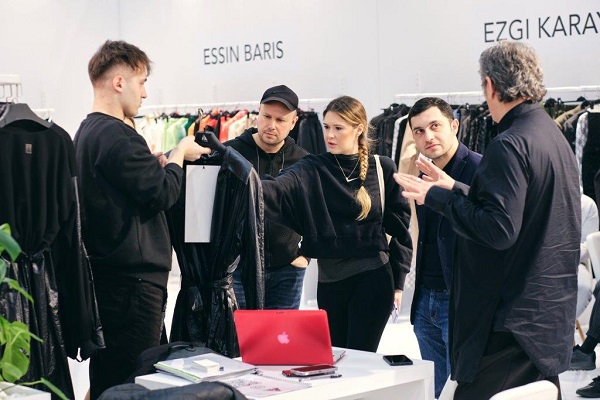
Against the backdrop of a massive earthquake, the third and largest edition of Istanbul Fashion Connection trade fair took place in Istanbul from February 8 to 11, 2023, showcasing Türkiye’s power of disaster management and the need to revive economic development.
The fair, while paying respects to the victims of the disaster- was an extremely successful one with around 588 exhibitors and another 22,543 visitors from 134 countries. This comprised 45 per cent international visitors from Asia (33 per cent), the Middle East (33 per cent), Europe (19 per cent) and Africa (13 per cent) and 55 v domestic visitors, showing their faith in the country’s high levels of crisis management.
Core Istanbul, bridal, and other innovative segments attract crowds
Alongside the busy exhibition, the Türkiye Exporters Assembly (TIM) and Exporters’ Associations also initiated immediate aid campaigns in coordination with the official Disaster and Emergency Management Presidency of Türkiye to help the thousands of victims. The trade fair continued with lively economy-boosting activities with international visitors such as Ackermans (South Africa), Al Shaya (Kuwait), Apparel Group (UAE), Truworths (Kenya), Bodesa (Mexico), El Corte Ingles (Spain) and other countries who met exhibitors relevant to them and concluded orders.
The Istanbul Fashion Connection spread over a massive 100,000 sq. mt. was divided into segments of different brands and manufacturers and showed the collections in women’s wear, menswear, kid’s wear, denim, sportswear, evening and wedding wear, lingerie, hosiery, leather and fur collections. With a concept of B2B meetings in speed dating mode: brands and manufacturers networked with special international buyers which insured the fair’s success.
Also, there was a new and sophisticated designer area called ‘The Core Istanbul’ where globally renowned designers from Istanbul Fashion Week presented their innovative product portfolios. They included Arzu Kaprol, Aslı Filinta, Cerenocak, Çiğdem Akın, Ersozata, Essin Barış, Ezgi Karayel, TAGG, Giyi World, Lug Von Siga, Mehmet Emiroğlu, Meltem Özbek, Kuela, Murat Aytulun and By the Oak among others.
Creative spaces in the trade fair showcased trends and themes for the coming season in a visually-elaborate manner. Euphoric Recall encompassed colourful, playful 70's vibes; Metasphere described the return of glitter and metallic with a futuristic touch. The New Gen area featured pieces by up-and-coming designers. A huge aesthetically appealing display of high-quality bridal and evening dresses and suits was shown in the FashionIST area, which caught the attention of many visitors.
In the IFCO Sourcing area that was specially designed for production trade, visitors networked directly with international production companies such as Bozkurt, Bilce Tekstil, Gelişim, Karar, Cemsel, Bozpa, Demezoğlu, Zevigas and more. As a part of IFCO, around 145 manufacturers presented their product portfolios here.
As per Türkiye’s government, the textile and clothing sector exported around $31.2 billion in 2022 which accounted for around 12.4 per cent of the country’s total exports. With a share of 6.7 per cent of the total GDP, the total production of textile and clothing industry was $79 billion last year. Export volume of over $21 billion is what is keeping the country’s economy alive. The apparel industry as the sixth largest exporting country in the world targets exports worth $40 billion in the medium term. The success of the third edition of Istanbul Fashion Connection was a great step to boost a flailing economy currently reeling under the after-effects of a natural disaster.
Hyve Group UK and Products of Change drive fashion towards sustainability

The Hyve Group’s bi-annual Spring-Autumn Fair, usually held at the National Exhibition Centre in Birmingham, UK, is the country’s leading offline and online marketplace for wholesale fashion, home and gift items. As a part of its commitment to the United Nation’s 17 Sustainable Development Goals programme, the Hyve Group’s fair management division partnered Products of Change, a global educational hub driving sustainable change across consumer product markets and beyond, to create a set of exemplary whitepapers as a part of the ‘Power of One’ campaign that was launched by Pure London in May 2018. The five set of whitepapers aim to help wholesalers, retailers, brands and businesses in the fashion, home and gift items categories make informed decisions to reorganize their operations to begin a journey founded sustainable, ethical and regenerative operations and productions.
Pathway to Sustainability
Called ‘Pathway to Sustainability’ the first of the five-set whitepapers is aimed at continuing to showcase the ‘Power of One’ activities by providing businesses with tools to build action, and together reduce the collective impact over the next seven years across the fashion, home and gift industries to meet 2030 targets.
The whitepaper, focuses on understanding the thinking required to bring about change in organizations and the tools they can adopt after the mindset change and set sustainability goals that are relevant, practical and doable. It serves as an easy to follow guideline that can be used by organizations that are committed or required to deliver on the United Nation’s 17 Sustainable Goals.
The other four whitepapers are deep dives on achieving sustainability. The others papers are: Navigating the Green Claims Code’, ‘Avoiding Greenwashing’ and’ Towards a Circular Economy’. Nikki Griffiths, Group Communications and ESG Director, Hyve Group PLCsays: “Thanks to our partnership with Products of Change, we can deliver real education to our audience of retailers and suppliers, with which they can begin to build actionable steps as part of a wider strategy to transition towards sustainability and business practices that benefit people and the planet. We are really excited to deliver this first series of whitepapers through the lens of the expertise at Products of Change and look forward to seeing the positive change we can all drive across business across the world together.”
The Power of One campaign
Pure London is the UK’s leading fashion trade show that takes place twice a year in Olympia, London. Pure London partnered with Caryn Franklin MBE, British fashion commentator, activist and professor of diversity to accelerate the United Nations’ Sustainable Development Goals with the launch of a new campaign, the ‘Power of One’. Pure London has been acknowledged as the voice of the fashion industry in the UK that wants to achieve a more sustainable, ethical and regenerative future and bring the circular fashion economy to a working level. The campaign is set to champion individual actions and encourage small changes in the way people produce, consume and reuse clothing to collectively made a substantial difference to the environment and the people living in it.
Vietnam strives to reach $47 bn apparel export target amid decreased global demand, intense competition
Vietnamese apparel companies have been working hard this year to fulfill orders in order to reach the target of $47 billion in exports, thanks to the benefits of free trade agreements. They also plan to invest in modern technology to increase efficiency and boost worker incomes.
However, global apparel demand is expected to decrease by nearly 5 per cent annually this year, resulting in a decrease of 25-27 per cent in orders. Major importers of Vietnamese apparel, including the US, China, and South Korea, have shown signs of lower demand since October 2022. Meanwhile, the European Union and Japan have maintained positive growth, albeit at a lower rate than previous months.
In order to achieve sustainable development, Vietnam Textile and Apparel Association (VITAS) intends that the sector will continue to call for investment in the material supply chain, building sales solutions, and developing automation, digital governance, a transparent business environment, and a high-quality workforce.
The sector faces intense competition from Bangladesh, India, and Indonesia, particularly in products with simple designs. Despite this competition, the sector can still produce mid and high-end products, which is one of its advantages to boost exports. However, it is expected that 30-35 per cent of apparel makers will suffer from a shortage of orders, while the remainder will face price pressure.
Domestic textile firms have suggested that the State adjust policies and mechanisms flexibly, particularly those related to credit and foreign exchange rates, in order to improve their competitiveness.
US T&A industry experiences significant increase in imports, exports in 2022, driven by post-Covid demand rebound
In 2022, the textile and apparel industry in the United States experienced a significant increase in imports and exports. According to US government data, textile and apparel imports into the USA were worth $132.2 billion, exceeding the figure of $127.7 billion recorded in 2019. Meanwhile, textile and apparel exports topped the $30.4 billion mark, which was a considerable increase compared to the $22.1 billion recorded prior to the pandemic. This represented a growth of 37.5% over 2019.
China was the leading supplier country, with a market share of 24.7 per cent and an order value of $32.7 billion. Vietnam was China's first competitor, with a growth rate of 27 per cent over a year, resulting in an export value of $19.6 billion. India was third with $11.1 billion, up by 12.2 per cent. Bangladesh, Indonesia, and the European Union followed, with export values of $10 billion (up 35.4 per cent), $6.2 billion (up 36.7 per cent), and $5.7 billion (up 13.6 per cent), respectively. Cambodia also saw a significant increase in imports, growing 31.43 per cent to $5.2 billion, overtaking Mexico ($4.8 billion, up by 10.2 per cent) and Pakistan ($4.7 billion, up by 12.9 per cent).
On the export side, North America accounted for 51 per cent of orders shipped from the USA ($12.8 billion), with $6.8 billion going to Mexico (up 9 per cent) and $5.9 billion (up 11.1 per cent) going to Canada. US textile/apparel exports to the EU were worth $2.2 billion, equivalent to a 16.7 per cent increase that made European orders reach an 8.1 per cent market share. Honduras followed with $1.7 billion (up 22.55 per cent), and China with $798.7 million, down 5.8 per cent.
The US textile and apparel industry's sustained buoyancy contrasted with the European industry's hit by the repercussions of the invasion of Ukraine and the inflation it has triggered on the continent. The United States played a leading role in the renewed growth of international textile and apparel trade since 2021.
The main international trade flow for apparel in 2021 was exceptionally not the one between Asia and Europe (worth $117 billion), but that between Asia and the Americas, worth $124 billion. This was mainly driven by the USA's post-crisis demand rebound.
India: MCX launches new cotton contract to benefit textile industry
The Indian textile industry, which relies heavily on cotton, has faced numerous challenges due to the removal of cotton from the Essential Commodities Act since 2007. Price volatility in cotton futures trading on the MCX platform has had a severe impact on the industry in recent years. In response to these challenges, Piyush Goyal, the Union Minister of Textiles, earlier had established a Textile Advisory Group to address the issues facing the industry.
The Product Advisory Committee made several recommendations to mitigate the challenges, including the reconstitution of the MCX Cotton Product Advisory Committee to benefit all stakeholders and curb speculation. Based on these recommendations and the approval of SEBI, MCX launched a new contract on February 13, 2023. A workshop was conducted on February 27, 2023, at The Residency Hotel, Coimbatore, to create awareness among stakeholders. The workshop included presentations on cotton hedging and cotton contract specifications.
The revised cotton contract specifications have taken into account the concerns of stakeholders across the textile value chain, including farmers, ginners, traders, spinning mills, downstream sectors, and exporters who often face price volatility. The new contract specifications are expected to bring more volume of cotton into trade, increase liquidity, and benefit all stakeholders.
Chairman of CITI and Chairman of Product Advisory Committee of MCX, T.Rajkumar and SIMA Chairman, Ravi Sam, advised all stakeholders to actively participate in the MCX cotton futures trading to reduce the risk of cotton price volatility. They hoped that the new contract specifications would increase physical transaction and lead to more spinning mills participating in the market, and also hoped that two more pending specifications in the MCX cotton futures would be reduced in the coming months to control speculation in the price.
Karl Mayer North America has new president
Karl Mayer North America, a leading textile machinery manufacturer, has announced the appointment of Mariano Amezcua as its new President. Amezcua, an industry veteran with more than 25 years of experience, will oversee overall business operations and strategic initiatives for the American subsidiary of the Karl Mayer Group.
Amezcua has a solid track record in the textile industry, having delivered Sales and Professional Services for industrial automation and software applications. His primary focus has been on developing and implementing manufacturing strategies for Cut & Sew Operations in various sectors, including Automotive, Furniture, Technical Textiles, and Fashion. He previously served as President & CEO for DAP America, Inc.
Amezcua expressed his excitement in joining the KARL MAYER North America team and contributing to the company's growth and success. He praised the team's talent and motivation to provide advanced technologies that offer superior performance for their customers.
Amezcua succeeds Tony Hooimeijer, who led Karl Mayer North America for nearly two decades. Hooimeijer will retire on March 1, 2023. The appointment of Amezcua is expected to bring fresh perspective and leadership to the American subsidiary of the Karl Mayer Group.
China's export growth slows, textile outperforms apparel, imports share in emerging markets rise
Based on the latest data, China's textile and apparel exports in 2022 totaled $323.5 billion, showing a slight increase of 0.2 per cent compared to the previous year. However, this growth was much slower than that in 2021. Garment exports decreased by 0.23 per cent YoY to $175.4 billion in 2022, while textile exports increased by 0.82 per cent to $148.1 billion. The slowdown in growth was attributed to the interest rate hike by overseas governments and the economic recession. Despite this, the overall textile and apparel exports still showed a significant increase of $51.6 billion or 19.0 per cent compared to 2019 and $46.3 billion or 16.7 per cent compared to 2018. In terms of export structure, textile exports outperformed those of apparel.
When looking at specific varieties, cotton and chemical fiber products were identified as the two most important export categories. Although overall exports remained stable last year, there were changes in the export structure. The export volume of chemical fiber products was found to be larger than that of cotton products. However, it is noteworthy that the exports of woven garments made of chemical fibers performed relatively poorly among overall chemical fiber exports.
Changes in export destinations were also observed. The top 10 destinations for China's textile and apparel exports in 2022 and 2021 were compared, revealing that the proportion of the US, Japan, South Korea, the UK, Germany, and Russia declined in 2022, while the share of Vietnam, Bangladesh, Australia, Malaysia, and Kyrgyzstan increased. In general, the proportion of traditional markets decreased significantly, while that of emerging countries increased meaningfully.
Cambodia turns to neighboring countries for exports in 2022
Cambodia's apparel exports to neighboring countries such as Thailand, Singapore, and Malaysia have seen impressive growth, with shipments to Thailand and Malaysia increasing by more than 40 per cent in 2022, while Singapore registered a mild growth. This growth in neighboring countries has compensated for slower shipments to the West.
In particular, Cambodia's apparel exports to Thailand have recovered in 2022, reaching $57.604 million, up from $41.010 million in 2021. However, exports to Singapore experienced a downward trend in 2021, falling to $50.700 million from $156.221 million in 2020, before recovering to $51.625 million in 2022. Similarly, exports to Malaysia registered negative growth since 2019, but in 2022, they increased to $50.435 million until November, a 50 per cent increase from the previous year.
Cambodia's apparel exports to neighboring countries have been inconsistent in recent years, with fluctuations in growth and decline. However, the significant growth in 2022 in Thailand and Malaysia is a positive sign for Cambodia's apparel export industry, which can benefit from focusing on neighboring markets.