FW
The Arrivals shifts focus towards performance pieces in new rainwear collection
New York-based outerwear brand, The Arrivals, has shifted its focus towards performance pieces. The move led the entire brand to embrace the technical side of apparel, resulting in the launch of its first rainwear collection on March 1.
The collection includes a three-layer bonded membrane to compete with other performance brands. The brand uses a factory in China for its technical gear and one in Los Angeles for its cut-and-sew fashion pieces.
The Arrivals aims to positioned in the space between brands like Patagonia and Arc’teryx, which have credibility among outdoors enthusiasts, and luxury brands such as Moncler. The brand hopes to fill the gap between the two extremes. The Arrivals wants to compete by showcasing the unique, objectively measurable performance features of its product.
To grow its performance-focused audience, The Arrivals has hosted community hikes on both coasts and worked with content creators with outdoor credibility. It has also shifted its advertising and creative content to include more photo shoots on the West Coast.
Sustainable Apparel Forum to highlight green production technologies and circular economy in Bangladesh
On 16th March, the Sustainable Apparel Forum (SAF) will host its 4th edition in Dhaka, Bangladesh.
The conference and exhibition event will focus on sustainable clothing production in Bangladesh and showcase green production technologies. The event will bring together more than 60 high-profile speakers, 20 exhibitors, and attendees from the government, finance, human rights, and fashion sustainability sectors.
The speakers will address topics such as circularity, CO2 reductions, renewable energy, and human rights due diligence. Notable speakers include the Honourable Ministers for Commerce and Local Government and the State Ministers for Power, Energy, and Mineral Resources, Information and Communication Technology, and Environment, Forest, and Climate Change. Also, present will be ambassadors from the US, Denmark, and Sweden, and representatives from the International Labour Organization and USAID.
The event partners include numerous organizations such as Laudes Foundation, WaterAid Bangladesh, Oxfam in Bangladesh, and the US Embassy in Bangladesh, among others.
Bangladesh is the world's second-largest garment sourcing destination and is known for its green production and factory safety programs. The event will provide an opportunity for clothing manufacturers, policymakers, green finance professionals, and sustainability experts to engage, network, and explore green growth exhibitions.
Temu, Chinese e-com platform aims to surpass Shein's sales within a year in North America
Chinese e-commerce firm PDD Holdings' shopping platform, Temu, is aiming to outperform Shein, the world's leading fast-fashion retailer, within a year. The company's sales target for its North American arm is to achieve a day's gross merchandise value that tops Shein's.
The app, which offers a wide range of low-priced items, from clothing to kitchenware, launched in the US five months ago and quickly achieved $500m in GMV. In January alone, sales were almost $200m.
Temu is betting on a significant marketing campaign to drive sales growth, and launched two 30-second Super Bowl adverts in February, while rolling out social marketing practices including discounts, cash rewards and free gifts to customers who refer their friends.
The firm has already attracted 24 million downloads and about 11 million monthly active users, up 47 per cent from the December shopping season. Its next goal is to take on Amazon and eBay.
INVISTA names Francis Murphy as CEO
INVISTA, a global leader in nylon 6,6 and propylene production, has announced the appointment of Francis Murphy as its new president and CEO. Murphy, who previously held various leadership positions at Flint Hills Resources (FHR), a Koch company and affiliate of INVISTA, brings 30 years of industry experience to the role.
Having joined INVISTA as part of the company's acquisition of FHR's propylene business in 2022, Murphy is well-positioned to lead the organization as it seeks to expand its presence in the nylon 6,6 and propylene value chains.
"As president and CEO of INVISTA, I look forward to working with our global employees and partners as we continue to innovate in these key areas," said Murphy. "We are excited about the tremendous opportunities ahead for our business."
Murphy takes over from Jeff Gentry, who recently retired after nearly four decades with INVISTA and Koch companies.
Amazon to close eight convenience stores in the US, amid cost-cutting measures
Amazon is set to close eight of its Go convenience stores in the US, as part of its cost-cutting effort.
The company will shut two Go stores in New York City, two locations in Seattle, and four stores in San Francisco on April 1. Amazon spokesperson said that the company will work to help affected employees secure other roles within the organization.
"Like any physical retailer, we periodically assess our portfolio of stores and make optimization decisions along the way," said spokesperson. "In this case, we've decided to close a small number of Amazon Go stores in Seattle, New York City, and San Francisco. “We remain committed to the Amazon Go format, operate more than 20 Amazon Go stores across the US, and will continue to learn which locations and features resonate most with customers as we keep evolving our Amazon Go stores."
Furthermore, Amazon announced that the company is pausing the expansion of the Fresh grocery chain until it can find a format that resonates with customers and meets the company's economic goals.
The first Amazon Go store opened in 2018 at the company's headquarters in Seattle. Amazon currently operates more than 20 Amazon Go stores across the US.
B’desh fails to benefit from UK's Duty-Free Access for non-apparel market
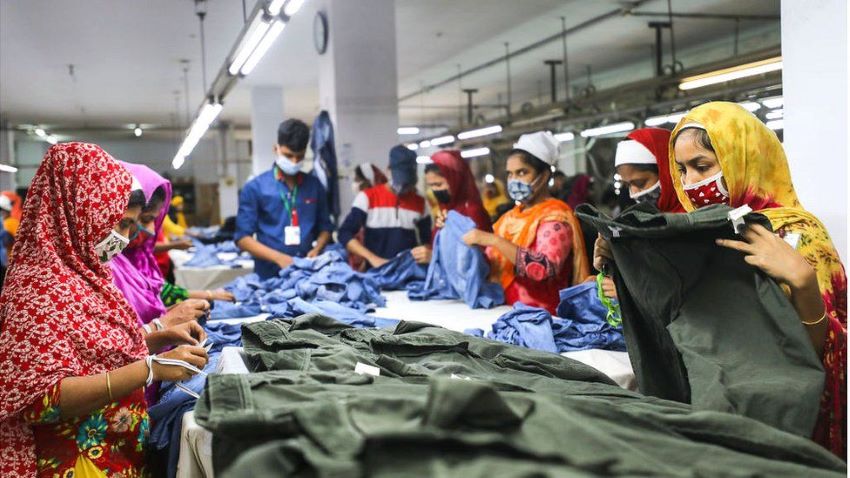
Bangladesh is failing to take advantage of duty-free access to the UK market for non-readymade apparel, despite having a large Bangladeshi emigrant population living in the UK.
Sectors such as agricultural products, processed foods, fish, leather and footwear, and light engineering products have failed to extend their footprint, with RMG exports to the UK market more than doubling over the past decade. The problem appears to be a lack of information and unresolved issues surrounding setting standards and market promotional activities.
Of the total exports to the UK, only 7% came from non-RMG sectors. Bangladesh could benefit from the UK's Rules of Origin (RoO) and diversify its export basket by having unrestricted access to the British market. The Research and Policy Integration for Development (RAPID), a Bangladeshi think tank, believes that the UK's Duty-free Tariff Scheme (DCTS) could be a game-changer for Bangladesh to break its reliance on the RMG sector.
Before this can happen, there needs to be a major effort to address the lack of awareness and information gap between buyers and sellers, establish adequate compliance rules to meet the UK's strict standards, and reduce local taxes to encourage more companies to abide by UK standards. Policymakers need to take a long and hard look at exports and be serious about the paradigm shift Bangladesh needs for the transition from a single-sector export basket to multiple-product diversification.
Athleisure, the $306 bn industry to double up, continues to innovate to blend fashion and function
Athleisure, a blend of athletic wear and fashion, has become a booming $306 billion industry that is predicted to double by 2028, thanks to a combination of fashion and function.
The trend started in the late '70s, with people wearing athletic clothing as everyday wear, but the term "athleisure" was only coined in the late '90s. Technological advancements in fabric development have driven the trend, prioritizing breathability, anti-static qualities, and sweat absorption.
Recently, textile scientists have created fabrics that respond to body temperature, adding to the growing demand for even higher performance activewear. Popular brands in the athleisure market include Lululemon, Alo Yoga, and Sweaty Betty, along with collaborations with luxury fashion houses such as adidas by Stella McCartney and Nike x Jacquemus.
The COVID-19 pandemic has boosted the athleisure market, as people have turned to at-home workouts and prioritize comfort and versatility over formal wear. With fewer places to go, athleisure has become a popular choice for everyday wear. Online shopping has played a significant role in maintaining market growth levels, despite the loss of in-person shopping experiences.
The trend of athleisure is best defined by its aim to popularize comfortable clothing that can be worn for both physical exercise and casual wear. The market for athleisure continues to grow as people are beginning to value clothing that not only looks good but also feels comfortable. The industry's future looks promising, with expected growth in sales and the possibility of more technological advancements in fabric development.
Pakistan's textile exports continue to decline for 5th consecutive month, $1.2 bn in Feb'23
Pakistan's textile exports continue to decline for the fifth consecutive month, reaching a low of $1.2 billion in February 2023, the lowest since May 2021.
This marks a 28 per cent year-on-year decrease in textile exports, with February 2023 figures down from $1.67 billion during the same period in the previous fiscal year. Additionally, textile exports have also decreased by 9.1 per cent month-on-month, compared to exports of $1.32 billion in January 2023.
The current fiscal year's first eight months (8MFY23) saw textile exports amount to $11.24 billion, down almost 11 per cent from $12.60 billion during the same period in the previous fiscal year (8MFY22).
The decline in textile exports is part of an overall trend of decreasing exports for the sixth consecutive month in February 2023, with exports declining by 18.67 per cent to $2.31 billion compared to $2.83 billion in February 2022, according to data released by the Pakistan Bureau of Statistics (PBS).
Esprit returns to North America with new creative headquarter in New York
Fashion brand Esprit is returning to North America, having signed a lease on a new creative headquarters in New York City.
The 40,000 sq ft space will house the brand’s global design, branding, creative and marketing offices, with around 120 employees set to move there by the end of 2023.
While Esprit was founded in California in the 1960s, it left North America in 2011, with its operational headquarters remaining in Hong Kong. Now, the company wants to re-establish itself as a true American brand and will open flagships in New York and Los Angeles later this year, as well as additional stores in Miami, Vancouver and Toronto.
As part of the move, Esprit has poured resources into understanding the US market, conducting consumer research and adjusting the quality of its fabrics, clothing fit and prices. The company has also decided to concentrate on its hero products and foundational products, rather than chasing trends.
The company’s decision come to the US market is to capture a premium positioning into the space that has been left by the likes of J.Crew and Banana Republic.
Victoria's Secret finds company on right path despite challenging year
Victoria's Secret, the intimates giant had a challenging year but is on the right path after its first full year as a public company, as per the company press release.
The company's fourth-quarter net profits decreased by 29.7 per cent, but adjusted profits of $2.47 a share beat analysts' expectations. Sales for the three months ended Jan. 28 decreased by 7.1 per cent, but were in line with Wall Street's expectations. For the full year, net profits fell 46 per cent, and sales declined 6.4 per cent.
Despite the challenging economic environment, the company feels is "prudently positioned to begin 2023." However, the first quarter isn't shaping up to be as strong as analysts hoped, with sales projected to decrease by a percentage in the mid-single-digit range, and adjusted profits projected at 30 cents to 60 cents a share, below the 83 cents analysts anticipated.
The CEO said the company's brand repositioning efforts are tracking well, and the company plans to continue building on its core offerings as the leader in the intimates market through a pipeline of bra launches and expanding its international footprint.