FW
Drop in Vietnam yarn exports to China
The value of Vietnam’s yarn exports to China has decreased by 2.5 per cent. The reason is the depreciation of the Chinese currency against the dollar. Vietnam imports cotton from the US to make yarn products for export to China. If the yuan continues to fall, Vietnam’s yarn producers will continue to face difficulties.
Much of Vietnam’s yarn exports are to China. Vietnam is also one of China’s major yarn suppliers. In 2014, Vietnam ranked third in China’s yarn import markets, after India and Pakistan. In 2017 and 2018, Vietnam rose to the first place, accounting for 30 per cent of China’s yarn imports. Chinese partners of some Vietnamese enterprises want a further reduction in import prices.
The selling price is still on a downward trend and there is no sign of recovery, while China has launched a large amount of cotton stockpiles, which makes cotton prices fall sharply. This year, the export volume of the Vietnamese yarn industry is expected to reduce by ten per cent to15 per cent and the selling price is also expected to drop. However Vietnamese companies which export to Europe, Japan or Korea get paid in dollars and so the depreciation of the yuan would not have much effect on them.
Sourcing at Magic showcases concepts based on collaboration, innovation
The Sourcing at Magic event highlighted garment concepts that hinge on collaboration, innovation and sustainability. The event showcased Planet Rehab, the capsule collection designed by Juan Carlos Gordillo and produced by an international partnership of companies in the denim supply chain committed to reducing their impact on the environment. Intended to inspire other companies to combines their areas of expertise for positive change, the collection uses fabrics from Tejidos Royo with Tencel and Tencel x Refibra branded lyocell fibers. Fabrics were dyed using Officina+39’s Reycrom dye technology derived from textile waste and sustainably finished by Tonello.
Mexico-based garment manufacturer Aztex presented PG Denim’s elevated take on denim fabrications targeted at luxury brands. Described as “gala denim,” the Italian R&D house made indigo and black denim with a weft made with real silver thread. The final product served the ultimate high-low look. For an edgier vibe, Aztex touted PG Denim’s “garage denim” feature, a black fabric with layers of gold laser effects, vivid laminations and splashes of glitter.
For more bold fashion statements, Aztex displayed a variety of mixed media denims from textile mill, Corduroy. Highlights included snake- and camouflage-printed patchwork jeans, and jeans made with both camouflage and floral printed denim. Rather than clash, the prints shared monochromatic color palettes, which added harmony to the novelty pieces.
JC Penney forays into resale clothing business
JC Penney is foraying into the second-hand clothing business in partnership with online consignment store ThredUp Inc as a part of its effort to rebuild the waning brand into a profitable business. Thirty of the brand’s stores will begin selling used clothing through a partnership with the resale site, which stocks brands from Gap to Gucci. The selection will rotate weekly in order to surprise frequent shoppers.
This isn't ThredUp's first foray into brick-and-mortar retail. Macy's recently announced a similar partnership with the company. The partnership will bolster ThredUp's visibility.
The retailer reported a net loss of $48 million for the second quarter, and nearly 9.2 per cent decrease in sales compared to the same quarter a year ago. It sells name-brand clothing for up to 90 per cent off retail prices and has resold nearly 100 million pre-owned garments.
Supply chains remain obsolete
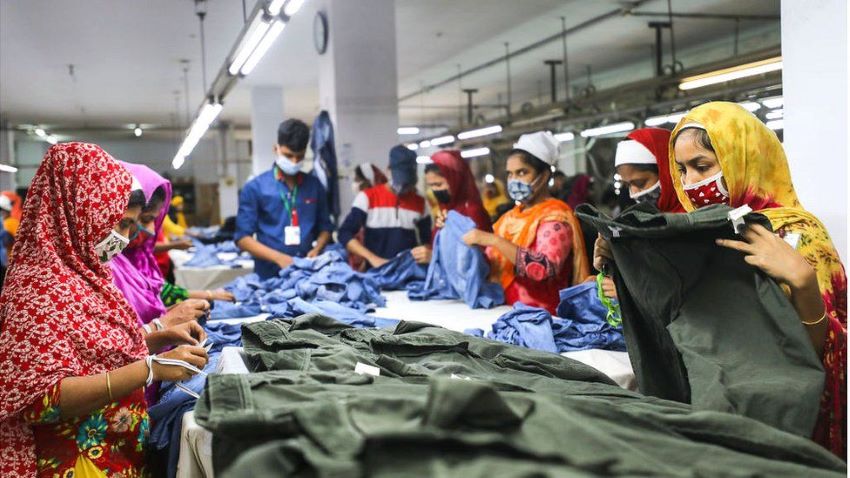
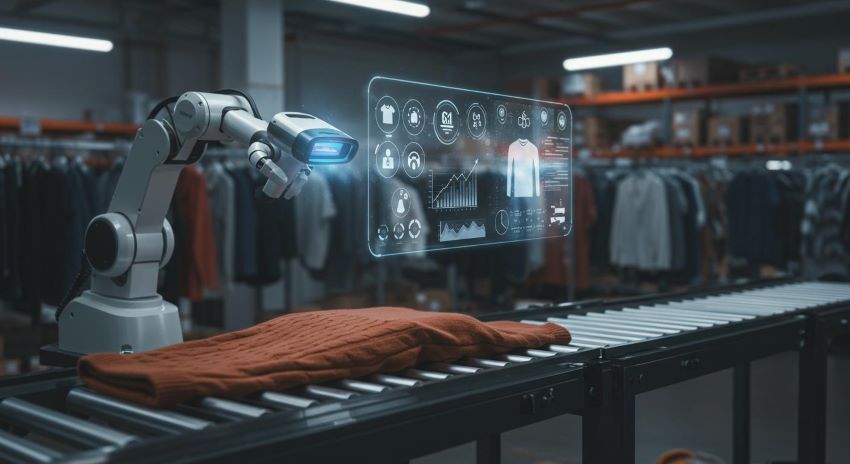
Automation and AI have become integral parts of nearly every industry, including fashion. But when it comes to the apparel supply chain, clunky, haphazard processes and communication issues between suppliers, factories and brands still hold the sector back from truly entering the new era.
Technology streamlines operations and marketing to make them quicker, more efficient and more quality-conscious. While brands and retailers have started to react to the new solutions available to them, they’re not doing so consistently throughout their supply chains. Most apparel companies operate at 50 per cent to 60 per cent efficiency. Factory owners and operators need to empower workers to think rather than simply operate. The goal is to give factory workers the tech tools they need to spot problems quickly, and rectify them systematically. Eliminating waste means more profits. Training artisans with digital education can lead to a zero defect product.
While some companies have figured out how to put certain technology into stores, or how to gather data from e-commerce sales, most don’t know what to do with all that data once they have it. And some are innovating in the area of technology so they can keep up with competitors. They can’t take the necessary steps toward incremental improvement.
US sports goods affected by tariffs
With higher tariffs, US consumers have to pay more for sports footwear and apparel. Sports equipment, headgear and components are also tagged for new tariffs.
The sports and fitness industry in the US, comprising more than 1000 sporting goods and fitness brands, manufacturers, retailers and marketers, wants to discourage the US from increasing import duties on Chinese products, as China plays a crucial role for many American manufacturers. For the US sports and fitness industry, China has become one of the most important production source countries, with companies from every sector selling goods to the US market. The booming sports and fitness industry in the United States employs more than 3,75,000 people and generates $150 billion of revenue in the domestic wholesale business.
The new 10 per cent tariffs are set to take effect in two stages this year, September 1 and December 15. This will be the fourth round of tariffs to be imposed by the US on Chinese-made products. Footwear majors in the US are disappointed by the tariffs on Chinese imports. Since higher tariffs will raise the cost of shoes, they would like footwear to be removed from the proposed list of Chinese imports with higher tariffs. Almost 70 per cent of shoes sold in the US come from China. Duties of over 67 per cent apply on footwear imported from China.
US to shorten list of items in new tariff list
Amid pressure from US businesses and concerns about effects of trade war’s on the economy, the Trump administration has decided to shorten the list of items on which it plans to levy additional 10 percent tariffs. USTR will soon publish in the newly amended list of tariff lines in the Federal Register. For the Chinese products that aren’t removed from the list altogether, the tariffs would be delayed from the proposed September 1 date to December 15, 2019. Products in this group include cell phones, laptop computers, video game consoles, certain toys, computer monitors, and certain items of footwear and clothing.
According to USTR, tariffs on some products will still go into effect on September 1 as planned. While news of the tariff delay may be somewhat welcome, the Retail Industry Leaders Association (RILA) have urged the US administration to use this time to reach a trade resolution with China before the Dec. 15 deadline hits and new taxes hit everyday consumer products and family budgets.
Pakistan’s ban on imports may not hurt India
Pakistan’s move to stop import of products from India or of Indian origin is not expected to have much of an impact on the Indian textile industry. While direct exports to Pakistan of cotton have stopped, indirect exports might continue. India exported only four lakh bales of cotton to Pakistan this year as Indian cotton prices were relatively higher. Pakistan purchased mainly from the US this year.
Pakistan imports mainly yarn and cotton from India. However, in recent years, Indian exporters have slowed down their supply to Pakistan. The annual yarn exports to Pakistan are about $100 million and it is mostly the low count yarns.
India’s exports to Pakistan dropped 20.5 per cent in the first quarter of this fiscal. Exports to Pakistan were only 0.6 per cent of India’s outbound shipments during this period. Purchases from Pakistan, too, collapsed 93.3 per cent in the first quarter of this fiscal. This was due to India’s imposition of a 200 per cent duty on purchases from Pakistan. While India’s exports of cotton crashed 71.4 per cent in the April-June period of this fiscal, that of plastics dropped 24.6 per cent. India granted the MFN status to Pakistan in 1996. But Pakistan hasn’t granted the MFN status to India.
Brazilian cotton output to increase by 32.9 per cent
Data released by CONAB shows, Brazilian cotton output may increase by 32.9 per cent to reach 2.665 million tonne by in July, 2018/19. Exports may increase by 60.3 per cent to 1.5 million tonne. Domestic consumption is likely to rise by 2.9 per cent to 0.7 million tonne. Therefore, ending stocks may rise by 70.7 per cent to 1.135 million tons, for the first time to be above 1 million tons since 2011.
The large increase of cotton output makes the supply glut more obvious. Compared with the data released in June, the consumption and exports are revised lower somewhat, leading to higher ending stocks. In early Aug, global stock and commodity market turns bearish, and CONAB is likely to revise lower the consumption and exports in Aug. Under the continual weakness of global cotton textile industrial chain, the supply glut of Brazilian cotton is more obvious with higher cotton output.
In details, cotton areas in Brazil rose by 36.2 per cent year on year, and in the major cotton producing areas, Mato Grosso and Minas Gerais, areas increased by 38.3 per cent and 68 per cent respectively. For yield, the average level moved lower slightly by 2.5 per cent to 1665 kg per hectare, but the higher areas stimulated the higher cotton output.
Currently, it is still the harvest period for Brazilian cotton, and US cotton crop is setting bolls. China will start the picking in Sep in earliest, and the harvests will be around Nov in India. For the largest four cotton producers in the world, Brazilian new cotton supply is quite ample at present.
Cambodia approves 153 investment projects
In the first half of this year, the Council for the Development of Cambodia approved 153 investment projects worth around $5.2 billion, an increase of 48 from the same period last year. Leading Taiwan-based curtain manufacturer and seller Nien Made Enterprise Co plans to expand in Cambodia to avoid the fallout from the Sino-US trade war.
The firm will expand its production line in Southeast Asia and will shift orders for finished products from China to Cambodia to avoid the risk of US tariffs. Currently, about one-third of the company’s ready-made products, such as blinds, are made in China, but it plans to gradually shift the bulk of its operations to Cambodia over the next few years.
Taiwan-based Eclat Textile Co, a sportswear supplier to Nike Inc and Lululemon Athletica Inc, is also slated to invest in more facilities in Southeast Asian countries – including Cambodia – as it plans to “move beyond Vietnam” amid heightened risks of US tariffs.
US apparel industry opposes tariffs
The apparel industry in the US supports maintaining strong trading ties with China and voices opposition to the escalating tariffs by the US. For instance, China remains a top supplier to the US. More than 40 per cent of all apparel, 72 per cent of all footwear, and 84 per cent of all accessories imported to the US comes from China. This support for strong and uninterrupted US-China business and trade relationships is a result of the supply chains the US has built up with China. The feeling is that any disruption of this is not good for business -- not good for business in America, not good for business in China. The Asian giant is seen as having a positive impact on sustainability, quality control, workers’ rights and product safety.
The opinion is that tariffs are damaging the very industry they are meant to protect, causing trouble for the US economy and causing trouble globally. Retail in America is already reeling and the trade war may deliver the coup de grace. In 2017, the US had more bankruptcies than in the financial crisis of 2008. In 2018, 100 million square foot of retail space was lost, and in the first quarter of 2019, the US more announced store closings than in all of 2018.