FW
G-III among top four in race to takeover Arcadia
New York-based company G-III Apparel, has entered the race to buy Arcadia and is among four top contenders that also include Next, Boohoo, and US-based Authentic Brands. The company owns the DKNY brand and also holds licences for big-name labels Calvin Klein, Tommy Hilfiger, Karl Lagerfeld and Levi’s.
As per Telegraph reports, G-III has around $800 million to help fund any buy. The group itself had pre-pandemic sales of $3.1 billion and a stock market value of $1.3 billion. But the company closed over 200 US stores last summer and said its wholesale business, anchored by our five global power brands: DKNY, Donna Karan, Calvin Klein, Tommy Hilfiger and Karl Lagerfeld, will continue to be the primary growth and profit engine.
There are justifiable fears in British retail that some of the main contenders for Arcadia have little or no interest in running physical shops. Regardless of who wins the Arcadia race, it’s expected to be finalised by the end of next month with administrator Deloitte selecting the parties to go forward to the next bidding round at some point in January.
Edinburgh Woollen Mill to shut down more stores despite imminent deal
Despite positive news of retail chain Edinburgh Woollen Mill being sold, the company continues to shutdown more stores, although the potential buyer hasn’t been named. News reports suggest, hundreds of jobs could be rescued with administrator FRP Advisory having issued sale contracts to the potential buyer.
But despite this, it still seems only a small number of shops in the 400-store chain will continue. The company has already made around a third of the more-than-2,500 employees redundant since the EWM chain collapsed last November. The chain was the foundation of the larger EWM group built up by Philip Day. He also owned Peacocks, Bonmarché, Jaeger and Austin Reed and had a total empire of 1,100 stores.
The chain is now being picked apart with Jaeger reportedly set to be bought by M&S, although there is also little news that the Peacocks buyout plan led by its e-commerce chief has stalled. Day still has a big say in what happens to the various businesses having taken £140 million of security at group level that was previously held by Barclays Bank and cross-guaranteed by various group companies.
Xinjiang accounts for 87.3 per cent of China’s total cotton output in 2020
Xinjiang’s total cotton output, unit yield, planting area, and commodity allocations rank first in China for 26 consecutive years. Data from the National Bureau of Statistics shows, Xinjiang’s cotton output was 5.161 million tons in 2020, an increase of 3 per cent over last year accounting for 87 per cent of China’s total cotton output.
The Announcement of the National Bureau of Statistics on Cotton Production in 2020 issued by the National Bureau of Statistics shows cotton sown area in Xinjiang will reach 37.5285 million mu in 2020, accounting for 78.92 per cent of the national planting area. According to a sample survey by the National Bureau of Statistics, Xinjiang cotton (lint) yield is 137.5 kg/mu, which is higher than the national average yield of 13.2 kg/mu.
Thanks to the unique natural conditions, Xinjiang cotton has high quality. Since the 1990s, China’s cotton production area has gradually shifted from the Yellow River Basin to Xinjiang. At present, Xinjiang is the largest cotton producing area in China and an important cotton producing area in the world.
BGMEA publishes first sustainability report
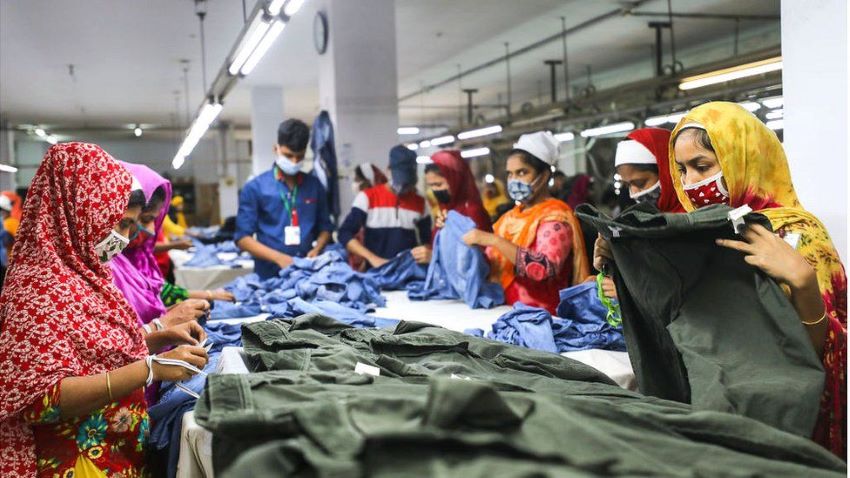
The Bangladesh Garment Manufacturers and Exporters Association (BGMEA) has published its first sustainability report under the theme ‘Go Human Go Green’, where it outlines the country’s readymade garment (RMG) sector’s commitment to becoming more ecologically aware and socially responsible.
The sustainability report has been developed with assistance from German government via the Deutsche Gesellschaft für Internationale Zusammenarbeit (GIZ) GmbH, as part of the Promotion of Social and Environmental Standards in the Industry (PSES) program. Rubana Huq, President, BGMEA declared seven pledges to contribute more towards improving worker’s education, early childhood learning of workers’ children, mental health, sustainability, culture export of Bangladesh, workers health, industry innovation and efficiency for the RMG sector.
Bangladesh is the world’s second-biggest garment manufacturer, after China, and employs about 4.1 million workers and is responsible for more than 80 per cent of the country’s export earnings. The report will help measure and manage the impacts of a business or industry on people and planet and accordingly set goals to perform better. The actions are aligned with the aspiration of building the ready-made garment (RMG) industry of Bangladesh so that it becomes economically, socially and environmentally sustainable.
Dolce & Gabbana cancel physical show at Milan Men’s Fasion Week
Fashion duo Dolace & Gabbana have called off their next menswear physical runway show during Milan Men's Fashion Week owing to the nationwide lockdown imposed in France. The Milan-based house explained in a release that due to contingencies related to Covid-19, the fundamental conditions to create their show were lacking. It was therefore, decided to cancel their upcoming fashion show.
Though Dolce & Gabbana never list their shows on the official calendar of the Camera della Moda, which manages the catwalk seasons for men and women in Milan, their decision to cancel the show further reduces an already meagre season in the Italian fashion capital. The brand has also indicated it does not plan to unveil any digital presentation of the new collection during the season, which features fall/winter 2021 clothes.
After Dolce and Gabbana’ss cancellation, there are only three live shows: Etro, Fendi and K-way (and Etro’s will be staged without any audience) confirmed for the Milanese menswear season. Currently 39 brands are due to participate, though only these three will have runway shows. However, many houses are expected to present their collections in either video form; or with physical presentations, with a few live models but no audience; or on an appointment basis in their showrooms.
Abercrombie & Fitch Co sees holiday-quarter sales decline
Apparel retailer Abercrombie & Fitch Co forecast holiday-quarter net sales declined between 5 to 7 per cent indicating that even strong online demand was not enough to help the company stay afloat after it suffered a blow from temporary store closures and Covid-19 restrictions.
According to IBES data from Refinitiv, the company, which owns the Hollister apparel brand, had previously estimated net sales decline between 5 and 10 per cent for the quarter, with analysts expecting a 5.5per cent fall. Abercrombie also stated it expected fourth-quarter gross profit rate to be up at least 130 basis points, compared to last year’s 58.2 per cent as it discounted less.
Online demand for activewear and loungewear has soared since the start of the lockdowns, but in-store sales have taken a hit as a resurgence in Covid-19 cases in North America and major European markets forced governments to reintroduce certain restrictions.
Asian brands ready to make a big splash in global luxe market
 Asian designers have stood out in Western world with their classy styles and unique offerings for long. Chinese, Indian, and other top designers from the continent have styled Western celebs including Michelle Obama, Rehanna, Gigi Hadid for red carpet events. And as per a luxurystylemag.co.uk report, this year, one can expect to see a clutch of Asian brands and designers making a mark on catwalks, transforming luxe wardrobes across the globe. For years French, Italian, American designers attracted high networth individuals with their styles, now, it’s time for Asian fashion brands to lead from ahead. In fact, a luxurystylemag.co.uk has listed out five luxe Asian brands that will make a mark in 2021.
Rokh: This South Korean brand by Tok Hwang has styled model Gigi Hadid. It’s already made a mark across the industry with its cut-open sleeves, exaggerated hemlines and unique twisted seams. And as the report says, “it’s a brand that doesn’t do things by halves, yet despite its daring nature it has managed to capture the hearts of fashionistas the world over with its equally chic and sophisticated casual designs.”
Sretsis: This Thai quirky yet edgy women’s brand is known for its unique slogan tees and “vibrant, cherry-print jackets”. It’s fast becoming a favourite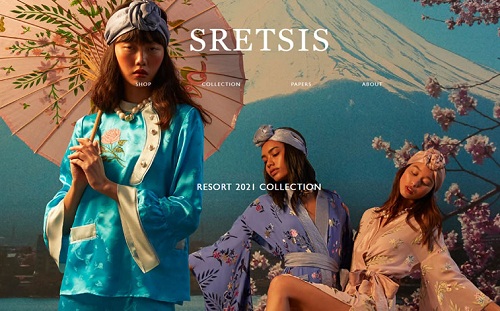 amongst those looking to inject that traditional Asian individuality into the way they dress. Katy Perry and Beyonce are some top celebs to have worn this brand.
With designer Pim Sukhahuta, a Parsons School of Design in New York alumni, at its helm, Sretsis is “centred around the idea of celebration, and with its bold polka dot patterns, whimsical florals and playful shapes.”
Salwar Kameez: This iconic Pakistani brand offers unique and beautiful ethnic ensembles to a largely Asian clientele through its online store. Salwar Kameez is inspired by Eastern beauties, Pakistani brands and iconic celebrities from the world over. An ensemble that offers beautifully designed, high-quality garments for women, men and children. The online store has seen huge traffic over the past year for its unique, designs.
Mimpi Kita: Mimpi Kita, which means ‘our dreams’ in Malaya launched by the Zulkifli sisters offers beautiful hand-finished clothes in line with their own penchant for casual luxury. Mimpi Kita is best known for promoting individuality and unique dressing. The brand’s bridal collection is particularly popular with its line of show-stopping dresses and accessories winning great acclaim across the world.
Lantern Sense: This brand from Hong Kong is known for its edgy fashion sense. Trevor Ng and Lala Yang’s brand draws inspiration from art and photography and offers clean and refined contemporary collection that sets it apart from the other more Asian brands. “Modern, innovative and a projection of its multi-cultural heritage, this is a brand that feels utterly opulent – and it’s just as well, because that’s exactly what it is.”
CAI increases India’s cotton estimate for new season, consumption to rise
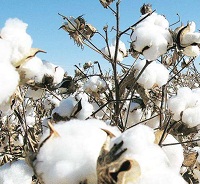 Cotton Association of India has increased its crop estimate for 2020-21 season from previous estimate of 356 lakh bales of 170 kg each (i.e. 378.25 lakh running bales of 160 kg each) to 358.50 lakh bales (i.e. 380.91 lakh running), an overall rise of 2.50 lakh bales.
Production, consumption to go up
As cotton production estimate for the new season (2020-21) is up 2.50 lakh bales, the committee members will closely monitor cotton arrivals in the subsequent months and if any addition or reduction is required to be made in the production estimate, reports CAI.
Estimates of total cotton supply till end of the cotton season 2020-21 that is upto September 30, 2021 was at 497.50 lakh bales of 170 kg each (equivalent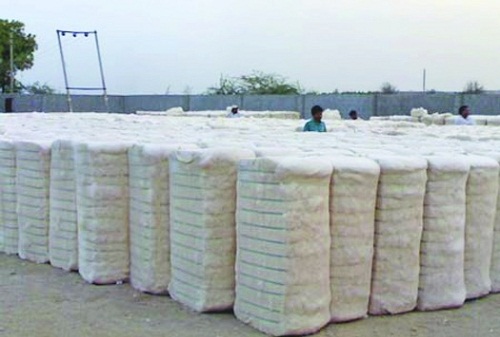 to 528.59 lakh running bales of 160 kg each). This also includes the revised opening stock of 125 lakh bales at the beginning of the season, crop for the season estimated at 358.50 lakh bales of 170 kg each (equivalent to 380.91 lakh running bales of 160 kg each).
The CAI has also retained its consumption estimate for the current crop year at the same level as estimated earlier i.e. 330 lakh bales of 170 kg. each. Comparatively, consumption for the previous season was estimated at 250 lakh bales due to the COVID related disruptions. In fact, consumption is expected to reach pre-lockdown level of 330 lakh bales during the 2020-21 season.
Import down marginally, exports to remain same
Import estimates indicate it will be below at 14 lakh bales of 170 kg. each (equivalent to 14.88 lakh running bales of 160 kg each), less 1.50 lakh bales from 15.50 lakh bales in 2019-20 crop year. Till December 31, 2020, about 4.50 lakh cotton bales of 170 kg each arrived at Indian ports.
Export estimates on the other hand for the 2020-21 season are 54 lakh bales of 170 kg each (equivalent to 57.38 lakh running bales of 160 kg each), against previous years export estimate of 50 lakh bales. Till December end, an estimated 20 lakh bales of 170 kg each were shipped.
Meanwhile cotton stock held by mills as of December 2020 is estimated at 65 lakh bales of 170 kg each (equivalent to 69.06 lakh running bales of 160 kg. each). Mills have on an average about 72 days’ cotton stock in their godowns.CCI, Maharashtra Federation, MNCs, Ginners, MCX among others are estimated to have stock of about 159.85 lakh bales which is equivalent to about 169.84 lakh running bales of 160 kg each.
Therefore, the total cotton stock held by spinning mills and stockists by end of December 2020 is estimated at 224.85 lakh bales of 170 kg each, which is equal to about 238.90 lakh running bales of 160 kg each.
Vietnam retail CEOs urge US to not impose China-like tariffs
More than 200 top retail CEOs, have come together hoping to steering the US away from imposing tariffs on Vietnam. Top executives from athletic giants including Adidas and Nike, designer labels such as Kenneth Cole and Steve Madden, as well as apparel chains J. Crew and Gap wrote to President Donald Trump, asking him implored not to slap punitive levies on goods coming from the Southeast Asian country, considered the second largest supplier of shoes to the US.
They agreed their trading partners must abide by global trade rules, and support enhanced bilateral engagement with Vietnam to resolve concerns. However, responding with tariffs would undermine American global competitiveness and harm American businesses and consumers at a time when they can least afford it, as they are struggling from the impacts of COVID-19.
Late last summer, the Department of Treasury found Vietnam had manipulated its currency in a specific trade case that involved tires. The Office of the US Trade Representative launched an investigation into the country’s “acts, policies, and practices that may contribute to the undervaluation of its currency and the resultant harm caused to US commerce.” In so doing, Washington used Section 301 of the 1974 Trade Act — the law it used to impose tariffs on China, which ultimately launched a protracted trade war between the world’s two largest economies.
Amid rising labor costs and escalation of the Washington-Beijing trade dispute many companies have moved their production from China to Vietnam. Similarly, many companies shifted sourcing to Vietnam as a direct result of the China 301 tariffs and supply chain diversification efforts. Placing tariffs on imports from Vietnam would punish those companies who made the sourcing shift as the administration had asked. If those duties get approval, more than half of all apparel and footwear sold in America could be hit with cumulative tariffs as high as 25 to 50 per cent. Making the situation worse, trade groups are preparing for possible retaliatory tariffs if US ends up taxing Vietnamese products. According to the International Trade Commission, US textile and apparel exports to Vietnam rose $97 million from 2015 to 2019, while US footwear exports increased by $170 million.
US apparel import rise in November 2020
Volume of US’ apparel imports in November was higher compared to same month last year. In November, the country imported 2,004.64 million SME apparels a rise of 9.50 per cent on year-on-year basis. However, import value was down 4.70 per cent to $5.28 billion.
Imports fell 23.70 per cent in November in values terms on month-on-month basis as compared to October 2020, when it imported $6.92 billion worth of garments. Reports suggest the decline in November import values indicates manufacturers who ship apparels to the US reduced prices to grab more orders in festive season and are now anticipating recurring business from buyers after the season is over.
The unit prices in November 2020 were just $2.63 per SME as against $3.02 per SME in November 2019. Unit prices were lower than October’s figure $ 2.75 per SME. While Asian countries dominated the US market both in terms of quantities and values, sourcing from African, Caribbean countries and Latin America also decreased in November.