FW
BGMEA urges government to extend loan repayment period
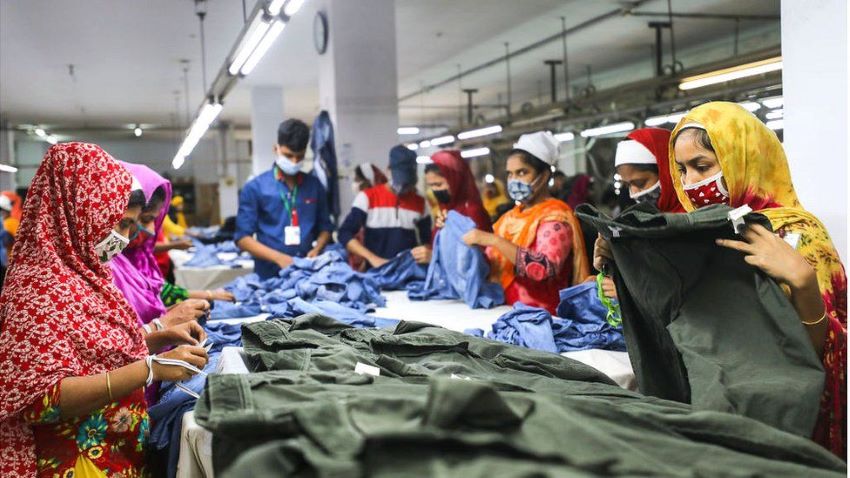
The Bangladesh Garment Manufacturers and Exporters Association (BGMEA) has once again sought extension of loan repayment packages in view of uncertainties caused by the 'second wave' of the pandemic. Industry says garment buyers’ new approach to managing their supply chain amid second wave of Covid-19 has put local apparel exporters in an awkward situation, especially with their management capacity.
The buyers are now deferring order placements and divide them into smaller orders with shorter lead time, though cancellation is not that rampant this time around, exporters say.
Following a surge in new cases in major importing countries, buyers are now deferring order placements and splitting them into batches with shorter lead time, instead of cancelling orders, the BGMEA says. This has an adverse impact on the industry, since factories are not being able to make a forecast and plan their capacity.
Against this backdrop of multipronged crisis, it was becoming increasingly difficult for factories to stay on course without additional financial support by the government. Since factories were already struggling to meet regular expenses and cash flow with exports falling, prices dropped 5 per cent in recent months. Repayment of wage loan incentive, which was availed during April-July 2020, at equal instalments in 18 months would mean an estimated 20 per cent additional wage burden on the factories, the letter mentioned.
Messe Frankfurt to postpone physical shows until 2022
Messe Frankfurt, the trade fair organiser, has announced with regulations and travel restrictions imposed due to COVID-19, all international physical trade fairs planned for April and May 2021 mainly - Prolight + Sound, the International Consumer Goods Show, Heimtextil, Techtextil and Texprocess are being postponed.
An annual spring event is essential for the trend-based order cycles in the entertainment, technology, consumer goods and textile industries, which means postponing these events until the second half of the year would not serve the interests of exhibitors. In addition, this is the time when industry participants normally shift preparations into high gear logistics lead time particularly essential for exhibitors at Techtextil and Texprocess, some of whom need to bring machinery to Frankfurt for their presentations. Due to the current situation and on-going travel restrictions, exhibitors are faced with huge uncertainties about who will be allowed to be present and their customer contacts, making it extremely difficult to commit to trade fair participation.
Due to the fact that physical events are not possible, Messe Frankfurt has created numerous digital offerings for its customers. Consumer Goods Digital Day on April 20, 2021, for example, offers customers the opportunity to get together at a digital location where they can engage in dialogue and obtain information.
The content of Digital Day will be focused on ways in which retailers can help their businesses, particularly since it has not been possible to hold any international flagship fairs in Frankfurt featuring the relevant presentation possibilities and supporting programmes since Ambiente 2020. This content will be supplemented by the opportunities presented by Nextrade, the first order and data management portal for the home and living sector.
IAF’S Priority Issues 2021 focuses on fostering supply chain collaboration
The International Apparel Federation (IAF) has published its ‘2021 Priority Issues’. IAF’s vision leading to the formulation of priority issues is built on its conviction that the keys to building a better industry can be found in the operation of the supply chain, including the processes, the relations, the contracts and the flows of finance that comprise it. To escape a deflationary spiral the apparel industry is making a transition to a sourcing model based on flexibility and the reduction of uncertainty. The current predominant adversarial relations in the supply chain are a barrier to this transition. Flexibility requires investments in processes that stretch across the supply chain and so these processes can only be carried out when buyers and their suppliers collaborate.
Following this vision, in 2021 therefore IAF’s fulfilment of its mission to unite the industry to enable and promote stronger, smarter and more sustainable supply chains will be a strong focus. Institutional infrastructure is another area of focus. IAF believes the apparel industry needs a better global, institutional industry infrastructure. Similarly, bringing knowledge to associations, training them and coaching them can have a great multiplier effect as they in turn educate their member companies. IAF also believes the industry needs all-out, all-forces-joined drive for digitization. The industry must accelerate its efforts to increase the transparency of its supply chains.
The essence to the greening of the industry is a supply chain wide, collaborative approach. Pledges to reduce CO2 emissions are important but not sufficient. The costs and the rewards of transformation need to be shared better in the supply chain. IAF will focus on bringing the manufacturers’ voice more clearly into the global industry infrastructure that is being built to reduce apparel’s global environmental footprint.
A.T.E. offers automated cutting solutions to GA Morgan Dynamics
A.T.E. has entered an exclusive agreement with GA Morgan Dynamics, India, for marketing and sales of cutting room machinery and software systems for technical textiles, home textiles, and shoe upper cutting. All machines are manufactured by Morgan Tecnica, Italy. A.T.E. offers world-class products and solutions spanning several segments.
Morgan Tecnica’s fusion line can be used for 3D and 2D design, cut planning and consists of auto loaders, auto spreaders, auto labelling and auto cutters. This flexible automated line can be used for soft as well as hard materials and ensures increased productivity with savings in material wastage and labour cost.
Morgan India serves more than 500 top performing apparel companies in India today, including Arvind, Page, JG Hosiery, Kitex Garments, S. P. Apparels, Orient Craft, Shivalik Fabrics, Bodycare, Nahar Spinning, Pratibha Textile, Rupa, Lux, Dollar, TT, and more. With a team of professionals, Morgan Industrial Training Centre, centralised parts warehouse, and direct service centres at Bangalore, Delhi, Kolkata, Ludhiana, Tirupur, Ahmedabad, and Mumbai, GA Morgan is committed to provide top quality products and services to the Indian textile industry.
Digital transformation must to improve apparel sector’s supply chain efficiency
 A new collaborated study by YCP Solidiance and Brother Machinery Asia highlights the importance of digital transformation in the global apparel manufacturing sector. It states, the transformation must start from the beginning in some cases with the setting up of factory machinery. The study charts the course towards an efficient, digitalised supply chain in the industry.
Importance of digitalization
The study mainly focuses on the Asia Pacific region -- the hub of global apparel manufacturing -- with key players like China, India, Bangladesh, Vietnam who have emerged as the sourcing centres for top apparel brands. China in fact, is the apparel manufacturing leader “with expertise, experience, modern infrastructure, efficient supply chain management and high productivity.” India on the other hand has come up as a strong competitor. Vietnam and Indonesia are emerging with their governments focusing on the segment. Sri Lanka, Pakistan, Bangladesh offer even cheaper alternatives.
The study states, these markets together hold the giant share of global apparel manufacturing industry worth $9.5 billion. With strong CAGR of around 5 per cent since 2016, the sector is expected to be worth $10 billion in 2021.
However, even though the numbers indicate growth, a closer look throws up an industry in crisis. “Low labour costs that make Asian markets so dominant in apparel manufacturing are rapidly on the rise – in China particularly and across ASEAN markets. At a more fundamental level, the sector remains primitive from a technology perspective, riddling it with inefficiency and subjecting it to all manner of risks,” says the study.
While factories are still labour-intensive, supply chains are fragmented this, at a time when efficiency at lower costs is being given precedence everywhere. Hence, the way forward is ‘digital transformation’. As Satoshi Kuriga, Partner, YCP Solidiance points out with business strategies becoming tougher and the high-cost of Asian labour markets, digitization is perhaps the only long term solution. He says, implementing advanced technology, such as integrated IoT systems, has increased apparel production by 5 per cent and cut cost and time by 88 per cent.
What’s more, the pandemic has made the situation worse with lockdowns across Asia, the apparel industry lost over 70 per cent of its functions and “decreased the total sewing machine operating hours in Bangladesh, India, Indonesia, and Vietnam to 27 per cent.” Therefore, digital transformation is the immediate necessity for factories in the region reflected in the marked increase in digital investments. The study states, with many starting their digital journey from scratch, a step-by-step approach will unfold.
Way forward with digitization
Digitization should begin with a few steps. First is to set up the hardware to automate basic functions in the production process. The hardware then needs to be backed up with advanced robotic and artificial intelligence technology, to efficiently coordinate the machines through data and training. Step three is to integrate the hardware and software function and implement Internet of Things (IoT) technology.
“Once these steps are complete, manufacturers can move on to the final stage of coordinating the entire supply chain ecosystem – from sourcing to retail – using technology such as blockchain to transparently record and monitor information as well as AI and data analytics to make the process more efficient.”
All this will add up to a digitized supply chain that improves efficiency and productivity, while minimising both costs and risks. “Such a setup would be a gold standard for fashion brands, and the race is on.”And with many brands wanting to move away from China in a post-pandemic market to mitigate risks will be looking at safer alternatives. And other countries in the region investing in digital transformation can fill this gap.
Knitwear exports becomes a crucial peg for Pakistan’s apparel industry growth
 Pakistan’s textile exports increased by 7.7 per cent with knitted garments and hosiery taking the lead in first half of current fiscal 2021 compared to the same period last year. As per Faisal Mehboob Sheikh, Zonal Chairman Pakistan Hosiery Manufacturers Association (PHMA) and chief coordinator Adil Butt the country’s textile exports in Jul-Dec (2020-21) was $7.4 billion compared to $6.9 billion in same period 2019-20, a growth of 7.7 per cent.
Knitwear boosts textile exports
Sheikh points out one of the major textile products that contributed to positive trade growth was knitwear, which increased from $1.5 billion last year to $1.8 billion in the current year, a growth of 16.5 per cent. According to him Pakistan’s positive export growth for the fourth consecutive month in December 2020, is a vindication of government’s policy to keep the wheels of economy running during the pandemic. Knitwear, knitted garments and hosiery plays a crucial role in the country’s exports growth, as the industry continued to show its resilience during the pandemic. On a year-on-year basis, textile exports increased 22.7 per cent during December 2020 as compared to the same month last year. Exports during December 2020 were $1.4 billion against exports of $1.1 billion. On a month-on-month basis, exports from the country increased 9.2 per cent during December 2020 compared to exports of $1.2 billion in November 2020.
Based on these figures, the country’s trade deficit also increased 6.4 per cent during the first half compared to same period last year. Trade deficit during the first six months of current fiscal was $12.4 billion against a deficit of $11.6 billion last year.
And as Butt says, the comparatively good performance of value-added textile category proves it has been the main growth driver for the country’s overall exports. The value-added sector clocked in growth because of preferential access to European Union under the GSP+ scheme which can further be enhanced with government support.
He believes Pakistan needs to establish an Aggressive Marketing Plan for garment export to get maximum GSP-Plus benefits. He also emphasized the need for a taskforce, especially when the Chinese garment industry, with 30 per cent global apparel market share, is relocating. A regional taskforce could help determine issues being confronted by the industry and suggest measures to ensure its viability and competitiveness in the international market.
VDMA to host webtalk on material efficiency, fibre recycling in textile spinning
The first VDMA technology webtalk in 2021 to be held on January 21 will be on material efficiency and fibre recycling in textile spinning. Experts will give an overview of the recycling processes that can turn old clothes into high-quality yarns and fabrics.
Bettina Temath, Truetzschler Group will demonstrate how production waste from spinning preparation can be recycled. She will also present solutions to process recycled fibers made from postconsumer textile waste and explain how the best possible quality can be achieved.
Similarly, René Bucken, Saurer Group will share views on how the use of regenerated fibres increases the share of short fibres in the sliver which tends to decrease spinning mill efficiency. Saurer offers solutions for different materials and fibre compositions in order to optimize spinning for all kinds of fibres.
Michael Wolf, will show, using a specific project as an example, how high-quality yarns can be developed and produced from old clothing using blended fibers.
US Cotton Trust Protocol adds first Latin America members
The US Cotton Trust Protocol welcomed its first Latin America-based members: Central America Spinning Works El Salvador, Cone Mills, Colhilados, Fabricato, Gama Textil, Global Textiles, Grupo Industrial Miro, Grupo Vivatex, Hilanderia de Algodon Peruano, Honduras Spinning Mills, Industrias Cannon de Colombia, Industrias Merlet, Industria Textil del Pacifico, Junior de Mexico (OGGI Jeans), Manufacturas Kaltex, MT Textiles, OA, Playeras Mark, Premium Knits, Quality Knits, Ropa Siete Leguas, SJ Jersey Ecuatoriano, Tavex, Textufil, Textiles Marie Lou, Textil del Valle, WT Sourcing and Zagis. Among other benefits, membership enables these mills and manufacturers to prove that the cotton fibre element in their textiles is more sustainably grown.
Gary Adams, President of the US Cotton Trust Protocol, in a statement said the textile industry works to improve the transparency in their supply chain that brands and retailers are asking for. The Trust Protocol is providing verified, reliable data about cotton growers’ responsible growing practices in six key areas – water use, greenhouse gas emissions, energy use, soil carbon, soil loss and land use efficiency – and shows how sustainability is constantly improving through the entire supply chain.
Mills and manufacturers who become members have access to the Trust Protocol credit system to validate consumption of cotton and associated credits. The combination of a unique credit accounting system and the Permanent Bale Identification (PBI) system enables brands to have transparency throughout the supply chain to finished product.
In December 2020, the Trust Protocol also announced GAP’s membership as part of their integrated sustainability strategy and to help achieve their commitment to use only 100 per cent sustainably-sourced cotton by 2025. December also saw the announcement of the first 10 US mills to join the Trust Protocol.
Skechers expands to meet rising demand in China
The US-based company, Skechers, will invest up to $279 million to expand its distribution facilities in China’s Taicang, Jiangsu province, this year. Eexpansion will help the brand meet surging demand in China. In late December, the company set up a distribution center in Taicang. The signing of the Regional Comprehensive Economic Partnership agreement and upgrading of e-commerce businesses during the COVID-19 pandemic has introduced a new market dynamic. Skechers found its current operational capacity will no longer meet the increased demand.
As Taicang has a well-developed container port and customs office, as well as a convenient location to connect many eastern Chinese cities, the Skechers distribution center will further enhance the company's overall supply chain competencies. The expanded facility will play a key role alongside the company's other businesses in building a more comprehensive logistics network in China and other markets, particularly in the Asia-Pacific region.
The company is studying the policy details of the RCEP and hopes to boost two-way trade of its products between China and the markets of the Association of Southeast Asian Nations. In addition to expanding presence in top-tier cities and working closely with domestic logistics service providers, Skechers will open more brick-and-mortar stores in China's lower-tier cities to reach more consumers.
In late December, Skechers forged a partnership with Shanghai Disney Resort to promote sales of its products at Shanghai Disneyland theme park.
As China has recovered from the first wave of the pandemic in an exceptional manner, Skechers saw its local sales jump almost 24 percent year-on-year in the third quarter of 2020. The company entered China in 2008, and now runs nearly 3,000 stores, including 150 super-large shops.
Olympic gymnast Li Ning to buy stake in Clarks footwear
Clarks could soon be owned by ex-Olympic gymnast Li Ning’s investment arm Viva China, which aims to buy up 51 per cent stake in the British footwear retailer for a consideration $69 million (£51 million).
Viva had earlier helped facilitate the acquisition of business out of voluntary administration by funding a loan to LionRock, which allows Viva, to convert this debt into equity in Clarks. LionRock the founding Clark family would remain key shareholders in the business, and aims to help the business reposition for future long-term sustainable growth.
Clarks posted a $111 million loss in 2019 and called in accountants to navigate a restructure through voluntary administration last November. If the acquisition goes through it would be very substantial, but that so far no definitive agreement between Viva and LionRock has been reached. Last year Li Ning also took control of Hong-Kong listed apparel group Bossini through Viva, and announced plans to expand the business into Mainland China. According to reports, Li is a non-executive director at LionRock.