


FW
Nine Asian apparel, textile associations team up to promote better purchasing practices
Apparel and textiles manufacturers of six Asian countries, including Bangladesh, have come together for an initiative to push for better global buyers’ purchasing practices. The nine member associations from six countries have: China National Textile And Apparel Council (CNTAC), Myanmar Garment Manufacturers Association (MGMA), Pakistan Textile Exporters Association (PTEA), Pakistan Hosiery Manufacturers and Exporters Association (PHMA), Towel Manufacturers Association of Pakistan (TMA), Vietnam Textile and Garment Association (VITAS), Bangladesh Knitwear Manufacturers and Exporters Association (BKMEA), The Bangladesh Garment Manufacturers and Exporters Association (BGMEA) and the Garment Manufacturers Association of Cambodia (GMAC).
The textiles and garment industry is characterised by power imbalance between the brands and buyers on the one end and the textile and garment producers on the other and this had increased amid the pandemic. They wanted to come together as associations and manufacturers in Asia, to agree on common positions regarding payment and delivery terms so that they have a stronger voice in individual and in collective discussions with brands and buyers on improving purchasing practices.
The platform hops the common position would be powerful as the countries represent over 60 per cent of all global apparel exports by manufacturers. Until March 2021, the platform would work in five working groups — defining the ‘red lines’, requests and recommendations on topics such as payment and delivery practices, planning and information exchange and third-party negotiations. Based on the output of the working groups, the second phase of the initiative would drive the roll-out in the industry.
Drop in Pakistan’s cotton output affects domestic textile industry
The continued and massive decline in the output of cotton crop is posing serious threat to Pakistan’s textile exports. Pakistan was the fourth largest producer of cotton in the world however cotton production in the country has declined to its lowest level mainly due to inconsistent policies.
Cotton cultivation area has recorded over 33 per cent drop during the last few years and the crop has come down to its lowest level in the last three decades, reaching 0.5 million bales from 1.5 million cotton bales, according to data from Pakistan Cotton Ginners Association (PCGA).
Currently over 60 per cent ginning industry is closed due to lower cotton production. The massive decline in production is a complete failure of government policies and lack of concentration to the cotton crop. If the government does not take serious steps for increase in cotton crop, Pakistan will be completely deprived of cotton cultivation and accordingly textile exports.
According to PCGA the government should formulate a special policy to modernize the cotton industry. In addition, new verities of cotton should be introduced to get more crop yield. PCGA also urged for facilities like textile sector and concessional power tariff for ginning factories. It said that due to the low level of cotton production, a total some 8 billion would be imported to meet the domestic industry demand and it will cost 3 billion dollar foreign exchange. India, Bangladesh, Brazil, Sudan and other countries have surpassed Pakistan by supporting and modernizing their cotton industry, while Pakistan is still relying on old technology.
Brazilian textile and apparel industry projections indicate recovery in 2021
Abit (Brazilian Textile and Apparel Industry Association) announced the numbers for the Brazilian textile industry in 2020, in addition to the sector recovery projections for 2021. With the pandemic, production was affected and many companies started producing masks and other PPE to avoid stopping in the period. The sector closed 2020 with an estimated 1.87 million tons of manufactured products by 2021, this figure is expected to increase to 2.09 million tons and 5.81 billion pieces. The figures are similar to those presented in 2019, when the country produced 2.05 million tons and 5.94 billion pieces.
In the annual revenue, it is estimated R$ 55.3 million in textile manufactured and R$ 152.1 billion in clothing products, which will represent, respectively, increases of 10.5% and 24% compared to the figures recorded in 2020. The association says, although the numbers seem high, in fact the comparison is on a low basis. This is because the sector had been trying to recover since 2010 and in 2019 it was regaining a more solid growth, but was hit by the pandemic, being one of the most affected.
Another highlight is the number of jobs, which after a significant drop in 2020, will grow again in 2021. The expectation is of 25 thousand new jobs, around 65% of the volume reduced last year. The association also points out that this growth will be gradual.
Even with the challenges of the year, the textile and apparel sector can contribute to the pandemic by making masks for sale and donation. The number of the produced item jumped from 6.5 million to 140 million in four months, with around 140 companies converting their production to this demand.
Brazilian companies host first digital edition of Colombiatex de Las Américas
The first fully digital edition of Colombiatex de Las Américas, the largest event of the textile sector in Latin America, took off on a positive note. It hosted 21 Brazil participates, supported by Texbrasil (The Internationalization Program of the Brazilian Textile and Fashion Industry) – the result of a partnership between Abit (Brazilian Textile and Apparel Industry Association) and Apex-Brasil (Brazilian Trade and Investment Promotion Agency).
The 33rd edition event is fully digital where brands have the possibility to exhibit their launches and innovations and negotiate with people interested in their products. According to the event’s organization, more than 2000 qualified buyers, from Colombia and all over the world, are participating.
To support the brands Brazilian companies at Texbrasil will perform several digital actions. In line with the theme of the edition, which will highlight innovation and sustainability in 2021, the program has developed an exclusive e-book with content presented by the companies.
Year 2021 marks the 20th anniversary of Texbrasil’s participation at the event, confirming the commercial importance between Brazil and Colombia and the success of their partnership. In 2020, the 44 companies that participated in the physical edition made $8.96 million in business and prospected another $62.84 in sales.
Against all odds Gujarat cotton yarn makers see revenue cross 2019-20 mark
Despite the pandemic cotton yarn makers in Gujarat are set to surpass their 2019-20 revenues. As per All Gujarat Spinners’ Association (AGSA) estimates, the industry’s turnover was Rs 29,000 crore in 2019-20. Spinning units in the state already achieved this by the end of third quarter of 2020-21, riding on increased demand and higher prices of cotton yarn.
Cotton yarn prices have increased 56 per cent from April to November 2020, when prices stood at Rs 265 per kg. Cotton yarn price was Rs 195 in the first half of March 2020, after which it fell to Rs 170 in April soon after the lockdown. With a sharp increase in prices recently, the industry regained momentum. At this price, realisation from orders has increased for cotton yarn makers. Consequently, revenues of Q4 of 2020-21 will be growing at 25% from the corresponding quarter last year, stated AGSA.
Cotton yarn prices rose over the past two months or so due to an unprecedented increase in demand, especially in the export market. Pipeline stocks dried up a few months of the lockdown and demand sharply increased. Currently, all units are operating at full capacity while at least 70% of the stock is being exported to countries like Vietnam, Bangladesh and China.
The surge in demand also helped industry players make up for revenue lost during the lockdown and after it. Industry players said that with fatter margins due to higher prices, the industry turnover for 2020-21 will grow by 10% against 2019-20. Gujarat is home to at least 140 spinning units with an installed capacity of some 50 lakh spindles according to AGSA. Daily production is at 40 lakh kg.
Post-pandemic Retail Relevance: Brands look at digitalisation, building image
 How has the pandemic accelerated digitalisation, nearly 100 fashion brands shared their plans for the future and strategies until 2023 on the Zalando platform with Zalando Marketing Services (ZMS). The study was a peer-to-peer intelligence-share comprising quantitative survey data and interviews. And as Michele Pilati, Head of digital Transformation at Karl Lagerfeld explained Zalando condensed the feedback of all the brands into one strategic direction for the industry.
Investing on own platforms
Not depending fully on wholesale, Karl Lagerfeld and others that sell on Zalando, like Coach and Vivienne Westwood, are taking greater control of their e-com businesses. They are investing on own DTC platforms and customer journeys while marketplaces are fast becoming shop windows that can express brand DNAs. Brands expect online sales to account for 57 per cent of all sales by 2023. With consumers still looking for experience, and convenience, brick and mortar stores will still be very important.
Brands also agreed long-term investments in brand image and relevance is as important as short-term sales wins. They emphasized accountability matters and brand relatability and experience needs to prove itself commercially and adhere to a set of clear performance goals.
Especially smaller brands need to focus on commercial performance for the next two years. Almost 69 per cent surveyed brands say they plan to invest in ROI driven sales campaigns versus only 45 per cent with an annual turnover of $100 million or greater.
Almost 84 per cent digital leaders in the study are planning to focus more on campaigns along whole user journey. While only 20 per cent of those who do not deem themselves at all prepared to digitalise are ready to think long term and bigger picture. This highlights “the more digital a fashion brand is, the more set up it is to build and retain loyal customers. This also suggests that digital brands are more likely to become a consumer-centric flywheel that doesn’t need to repeatedly bring in new customers at the top of the funnel.”
And as Andreas Antrup, SVP advertising at Zalando says this reflects the purpose-led consumer-centric view. “It’s now less about a transactional view and more about customer lifetime value.”
The study also shows “going forward, storytelling and experiences that provide emotional connection, education and brand content will come from an increasing amount of touchpoints, and at various stages of the journey.” And digital fragmentation, accelerated by social media, sees the journey no longer linear, meaning brands need to plan for an omnichannel customer journey that travels around a constellation of touchpoints (offline and online).
Moreover digital brands are using data for quick decisions. Decisions on varied topics including budgets are also being facilitated. However, constant evolution in digital marketing requires precise planning with 85 per cent brands prepared for digitalisation and prioritizing agility.
The study highlights brands foresee digitalisation naturally affecting how they market and sell. However, only 39 per cent expect this to have a strong impact on their overall organisational structure, while only 25 per cent see digitalisation having an effect on product. As Antrup points out, digital retail has the capacity to test and scale new products in a way that brick-and-mortar can’t. “The scale of opportunity and loss is much greater than with bricks-and-mortar. You aren’t asking how much more could I have sold? You get more data earlier on in the funnel.”
Pandemic effected made-to-measure business will ride on technology to move forward
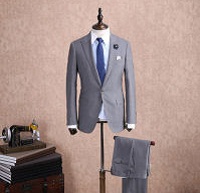 While suits or tailor-made suits were a must in every man’s wardrobe, the pandemic has changed the scenario as formals have lost their appeal. In fact, as per a BFG Magazine report, since 2013, the US suits market for both men and women dipped almost 23 per cent from $3 billion to $2.3 billion. And COVID-19 has fast forwarded this decline as is evident from the way the 200-year-old menswear brand Brooks Brothers faced bankruptcy with dipping revenues.
With only 21 per cent people wanting to return to their normal way post pandemic, and almost 32 per cent preferring a permanent switch to remote working practices, demand for formals is not expected to move north anytime soon. A PwC report had suggested prior to the pandemic, two-thirds of the US workforce spent four or more days a week in the office but that mindset has changed now. So, what does it mean for made-to-measure brands when workwear means sweatpants and tees.
Made-to-measure market could still grow
Of course, work from home has pushed down demand for regular formal work wear. But any webenair or web meeting still requires formal outfits. And as
Pandemic effected made-to-measure business will ride on technology to move forward a Twingate survey shows, 45 per cent employees say they are attending more meetings now than before the pandemic. With video conferencing and remote meetings the new normal, one still needs formals in their wardrobe.
And as the BFG Magazine report suggests, “past scientific studies have found links between the clothing that we wear, brain activity, and productivity, so well-fitting, high-quality workwear can still serve a purpose – even when we’re not at the end of a Zoom call.”
Of course, made to measure will change and this period could actually see a revival of the suit. “Following a period of making do, we tend to dress up in the wake of a crisis — women turned to luxurious dresses following the Great Depression. Once the lockdowns, health and safety concerns, and financial difficulties of Covid-19 pass, we will undoubtedly want to ditch the loungewear.”
Demand to continue
A McKinsey report highlights demand for made-to-order fashion continues despite the odds. Indeed, fast fashion has dominated the industry for the last few decades but consumers now prefer well fitted, long-lasting clothes that meet changing attitudes towards ethics and sustainability, over inexpensive, poor quality apparels. With some 65 per cent shoppers planning to buy less, but better following the pandemic, no wonder retailers like J. Crew, Neiman Marcus, and J.C. Penney are fighting to survive. And brands that are changing their product basket as per demand for more sustainable, better quality, and size inclusive requirements of the consumer are thriving.
For example, Giorgio Armani defied predictions of tailored fashion’s demise with the launch of new made-to-order line of women’s customizable jackets, trousers, skirts, and outerwear, recognizing that “Now, more than ever, clients want something meaningful.”
However, to survive through the current crisis, made-to-measure business will need to adapt, change and incorporate new technologies. For example, 3DLOOK’s Mobile Tailor enable made-to-measure businesses to collect precise body measurements remotely, without the need for in-person fittings. With smartphones, customers can capture their own body measurements anytime and anywhere using two photos taken on any smartphone device.
The bottomline is COVID-19 is just a temporary stumbling block, going forward made-to-measure business will adapt, change and move forward.
The Australian Wool Innovation releases ‘Wool 2030’ strategy
The Australian Wool Innovation (AWI) has released its Wool 2030 strategy. The strategy represents the fulfilment of recommendation 1.3.4 from the 2018 Review of Performance of AWI by EY, to ‘Develop a ten-year wool strategy to inform AWI’s three-year Strategic Plans’.
AWI asked the Woolgrower Consultation Group (WCG) to provide oversight of the development of the Wool 2030 strategy. The WCG has a membership of 29 wool industry groups as well as a representative of the department of agriculture, water and the environment and the independent chair of AWI’s woolgrower industry consultation panel. Each WCG member was asked to invite a ‘next generation’ counterpart to participate in Wool 2030, effectively doubling the size of the group. More than 800 woolgrowers helped write the report that was overseen by AWI’s Wool Consultation Group (WCG) and the Wool Industry Consultative Panel (WICP).
The key themes from the strategy include the need for better communication and understanding along the wool pipeline. Sustainability is a key attribute sought by today’s consumer, and Australian wool will continue to be promoted for its ‘natural’ advantages of being renewable, recyclable and biodegradable. Improved animal welfare will be also on focus. The Merino ewe will continue to be the cornerstone of the Australian flock, AWI said in a media statement.
The harnessing of new technology promises on-farm efficiencies and solutions to longstanding challenges such as wool harvesting and parasite control. People are also a focus of the plan, which envisions a united, cohesive industry that attracts younger generations.
Oversight of the plan will be provided by Wool 2030 steering group comprising an independent chair, and representatives of national woolgrower and stud breeder organisations and members from all sectors of the wool pipeline.
Stock+Field is closing shop and going out of business
Midwestern retailer Stock+Field, that sells a range of categories such as apparel, footwear, farm supplies, outdoor goods for camping, boating, fishing and hunting, power tools and even firearms is closing all 25 shops, hosting a chain-wide liquidation sale.
Despite its limited presence, Stock+Field, catered to enthusiasts of the rural lifestyle, offering price cuts on products from top brands. Available brands include: Under Armour, Wolverine, Wrangler, Lee, Justin Boots, Dickies, Cherokee, Carhartt and Oakley, among others.
Seeing these big-name brands offered at last-call prices is likely to get the attention of local shoppers before Stock+Field liquidates and closes down brick and mortar stores. But the closure of the stores illustrates a major issue many of these brands have faced not only since the start of the pandemic, but in the years prior as more retailers went bankrupt—their trust in wholesale is waning.
Stock+Field’s liquidation is being overseen by a joint venture of financial services firms Tiger Capital Group and B. Riley Retail Solutions. The going-out-of-business sales will take place across stores in Illinois, Indiana, Ohio, Michigan and Wisconsin.
The liquidation discounts will only be offered in stores and not on the company website, which shows products but doesn’t currently give shoppers the option to buy them. Stock+Field’s “Order Online/Pickup In-Store” program has been discontinued.
Retailers told to ensure supply chains free of China forced labor
After the crackdown of US Custom and Border Protection on cotton imports from China's Xinjiang region, the government agency has asked retailers to ensure their supply chains are free of forced labor involving Uighur Muslims. The CBP has issued it would detain all imports of cotton and tomato products from Xinjiang and require companies to either prove the products were slavery-free or ship them elsewhere.
The United Nations estimates at least one million Uighurs and other Muslims have been detained in Xinjiang, and many are said to be put to work. China denies mistreatment and says the camps are vocational training centers needed to combat extremism.
CBP said seizing imports would send a message over forced labor concerns in Xinjiang but that businesses had an even bigger role to play in preventing tainted cotton from entering the United States. The CBP expected US retailers to do due diligence down to the third or fourth tiers of their supply chains. Yet labor rights campaigners say most brands have limited to no knowledge about sourcing beyond their main Tier I suppliers.
The US government agency estimates about $9 billion cotton goods were imported from China in the past year. Under a 2016 law, it is illegal to import goods into the US that are made entirely or in part by forced labor – which includes prison work, bonded labor and child labor. The western province of Xinjiang – home to about 11 million ethnic Uighurs – produces about 85 per cent of China's cotton and 20 per cent of the global supply, which is used by fashion brands worldwide. Labor rights and supply chain experts have welcomed the Xinjiang-wide order but said enforcing it would be difficult.










