FW
Shutdowns in industrial provinces to boost China’s textile and garment prices
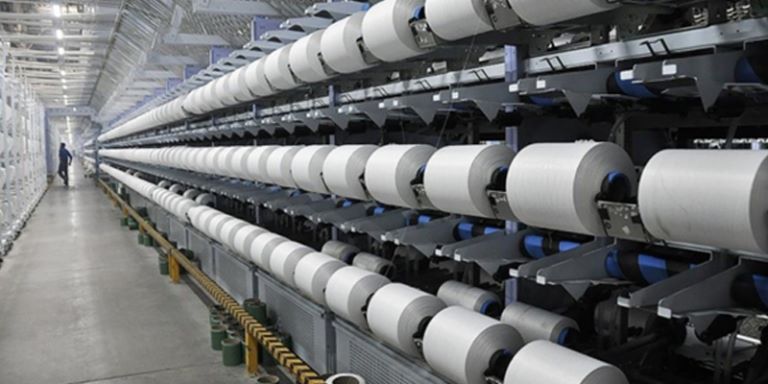
The planned shutdowns in industrial provinces of Jiangsu, Zhejiang and Guangdong are likely to boost China’s textiles and garments’ prices 30 to 40 per cent in the coming weeks. The shutdowns will range from 40-60 per cent, and continue till December 2021, as the Chinese government plans to curb emissions ahead of the Winter Olympics scheduled for February 4 to 22, 2022, in Beijing.
Another reason for planned power blackouts is the extremely tight supply globally, as the boost in demand after lifting of COVID-19 induced lockdowns is seeing an economic rebound the world over. However, in case of China, there is a short supply of coal from Australia on account of its strained relations with that country.
China is a major supplier of several products, including textiles and apparel, to countries across the world. Hence, the continuing power crisis would result in shortage of those products, disrupting global supply chains. On the domestic front, China’s GDP growth rate may falter to around 6 per cent in the second half of 2021, after growing at over 12 per cent in the first half.
India’s trade imbalance increases to $13.87 billion in August 2021
Preliminary statistics on India’s merchandise trade for the month shows, trade imbalance increased to $13.87 billion in August 2021 compared to $8.2 billion in August 2020. As per a Textile Focus report, RMG exports increased 13.99 per cent to $1.235 billion in August 2021, compared to $1.083 billion in August 2020. Cotton yarn, textiles, made-ups, and handloom goods exports climbed 55.62 per cent to $1.297 billion last month, compared to $833.95 million the previous month.
In August 2021, India’s merchandise imports increased 51.47 per cent to $47.01 billion, from $31.03 billion the previous month. India’s item imports grew by 81.75 per cent to $219.54 billion in April-August this year, compared to $120.79 billion in April-August 2020.
Sri Lanka’s garment exports to exceed $8 billion by 2025
During the American Chamber’s recent ‘Be Inspired’ webinar series, Aroon Hirdaramani, Director, Hirdaramani Group, stated the Sri Lankan textile sector may exceed $8 billion in garment exports by 2025. Hirdaramani stated Sri Lanka is well positioned to expand with further local value addition through initiatives like the fabric park in Eravu. The government’s immunization campaign is assisting BOI businesses in staying open.
The Hirdaramani Group is cooperating with a few high-value partners to establish a more stable business environment .Hirdaramani stated policymakers are communicating with the sector and that the importance of trading mechanism is being recognized.
Jeevith Senaratn, Senior Manager, Star Garments Group, added, the industry’s exports are still 10 per cent lower than in 2019. Hasib Omar, Director, Brandix Clothing Company, stated the industry is extremely polluting which could be a future source of concern for clients. The new manufacturing procedures, according to Shirendra Lawrence, Executive Director of MAS Holdings, may be putting additional burden on the workforce.
Archroma to increase product prices by $0.25 per kg
Archroma plans to increase products prices by $0.25 per kg from October 1, 2021. These adjustments will apply to all Archroma products globally. The increase will help the company offset the ongoing exceptionally high freight and logistics costs.
A global, diversified provider of specialty chemicals, Archroma serves the branded and performance textiles, packaging and paper, and coatings, adhesives and sealants markets. Headquartered in Reinach, Switzerland, the company operates in over 100 countries, with 3,000 employees located in 35 countries and 26 production sites.
Archroma is passionate about delivering leading and innovative solutions, enhancing people’s lives and respecting the planet. The company is committed to the principles of ‘The Archroma Way to a Sustainable World: Safe, Efficient, Enhanced. It's our nature,’ an approach reflected in its innovations, world-class quality standards, high service levels and cost-efficiency.
Dye market opens up as customers seek new products, techniques
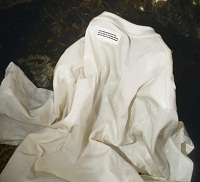 From using natural dyes and innovative new processes to not using dyes at all, retailers are adopting all required measures to control environmental impact of dyeing clothes. They are also launching capsule collections and reinventing old production methods. As per a Drapers Online report, dyeing causes many environmental issues such as use of fossil fuels to create oil-based dyes, excessive water consumption and water pollution from dyeing effluents. To control these issues, brands are launching limited edition collection like the 22-piece collection launched by Primark in August this year. It uses three dyes created from agricultural waste from EarthColors by speciality chemicals provider Archroma.
Brands steps up sustainability efforts
Nuria Estape, Head-Global Marketing, Archroma says, brands are making more efforts to offer sustainable collections. The company works with many high-street brands and offers six dyes sold directly to brands and retailers. Launched in 2018, loungewear and basics brand Pangaia works with natural and polyfunctional reactive dyes that are more efficient at binding and allows it to use less dyestuff. A biosynthetic dye, EarthColors is used by other high street brands, including G-Star Raw and Esprit. The brand procures raw materials from waste that is engineered by Archroma to create higher yield.
Another brand that uses EarthColors is Scandinavian fashion brand Samsøe Samsøe. The brand is still at the product development stage. In June, Samsøe Samsøe launched an undyed range which helped it save 80 litres of water for every kilo of fabric produced. Adidas too launched a range of undyed golf shoes in August this year. These shoes need post-treatment to maintain their performance levels buy they help the brand save water and energy upto 60 per cent. The shoes give a distinct look to golfers. H&M launched a dye-themed range in April in partnership with We Are SpinDye and ColoriFix, a biotechnology company that uses DNA sequencing to decipher the nature of pigments before using them in engineered microorganisms.
The basics of dyeing
Merryn Chilcott, Sustainability and Technical Manager, BAM Clothing opines, it is important to limit the damage of certain dyes in brands’ supply chain before they explore new dyeing methods. Her company incorporated the tools by Zero Discharge of Hazardous Chemicals Foundation to map dyeing supply chain, highlight problem areas and ensure compliance.
Estape says, brands need to experiment with new dyeing methods as customers are responding to the muted colors offered by natural and biosynthetic dyes. Charlotte Turner, Consultant, Sustainable Fashion and Textiles adds, brands can use capsule collections to explore new alternatives to existing dyeing materials and methods. They can achieve sustainability in dyeing by covering entire apparel value chain.
Diplomacy and support may help Bangladesh benefit from new GSP rules
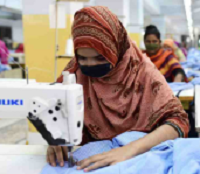 Originally framed on the recommendations of UNCTAD in 1971, the Generalized Scheme of Preferences (GSP) enables developing nations export their products to the European Union. The scheme aims to boost the export earnings of developing nations and boost their economic growth. To improve some of the key features of the scheme and meet the needs and challenges, European Commission recently proposed a new GSP framework that lowers thresholds for exports.
Advances sustainable development
As per a RMG Bangladesh report, the modernized framework enables the European Union to create economic opportunities and advance sustainable development through trade preferences. It also strengthens the Union by enabling it to withdraw GSP preferences in case of trade rules violations. Further, it adds two new human rights instruments on the rights of people with disabilities and the rights of child, two labor rights conventions on labor inspections and tripartite dialogue, and one governance convention on transnational organized crime. Rensje Teerink, Head of delegation of the European Union to Bangladesh, adds, the new regulations also extend to issues of environmental protection and good governance.
A threat to Bangladesh’s competitiveness
However, the scheme can prove a hurdle to Bangladesh’s future economic growth as it limits the country’s gains from the ‘GSP plus’ in key export items like apparels, points out Mustafizur Rahman, Distinguished Fellow at the Centre for Policy Dialogue (CPD). The new scheme reduces the general threshold to 47 per cent and textile threshold to 37 per cent, from existing 57 per cent and 47.2 per cent respectively, enabling poorer developing countries to benefit from the scheme.
However, lowering of thresholds may deprive Bangladesh of the current export competiveness it enjoys in certain products, opines Rahman. The country has been negotiating with the EU to extend its graduation from the Least Developing nations category to 2029 from the current 2024. Its proposal is set to be finalized by 2023 and includes five new points with the current 27 international conventions related to human rights, labor rights, protection of the environment and climate and good governance to benefit from this arrangement, adds Rahman. Though conducive to the country’s development, the proposal may add to the pressure on Bangladesh government, says a representative from the Centre for Policy Dialogue.
Trouble for garment exporters
Fazlee Shamim Ehsan, Vice President, Bangladesh Knitwear Manufacturers and Exporters Association (BKMEA) believes the new proposals may create certain problems for Bangladeshi woven garment exporters. The government needs to provide more policy support for setting up more textile units in this sector, he adds.
Md Saiful Islam, President of Leathergoods & Footwear Manufacturers & Exporters Association of Bangladesh (LFMEAB) also feels the proposal may affect Bangladesh’s apparel exports. He advises the government to ensure diplomatic negotiation with the EU to benefit from the new proposal. The Bangladesh Garment Manufacturers and Exporters Association (BGMEA) is also pushing the EU to improve threshold for exports, affirms Abdullah Hil Rakib, Director The association aims for extension of the full GSP benefits till 2029.
Second Renewable Materials Conference to opt for hybrid format
The second edition of the Renewable Materials Conference will be held in a hybrid format fromMay 10–12, 2022 at Cologne in Germany.
Organizer nova-Institute will present numerous market highlights from bio- and CO2- based chemicals and materials as well as from chemical recycling: Over the course of three days, participants will get a comprehensive overview of the latest developments in the renewable material sector, with a focus on industry-ready solutions from a wide spectrum of sustainable raw materials and technologies.
In 2021, the new concept of the Renewable Materials Conference generated an outstanding response, which exceeded all expectations: 420 online participants witnessed a firework of innovations of non-fossil material. 60 speakers, 11 panel discussions, 500 public posts and 1,500 networking activities were proof of the lively exchange during the three conference days.
In 2022, nova-Institute plans to host the conference physically in the heart of Germany's fourth largest city, Cologne. It is expected to be attended by 400 participants on-site and many more online. On-site, the conference will be accompanied by a large exhibition where companies and institutes can showcase their recent developments. The supporting program, networking activities and many secluded spots at the location offers excellent opportunities to make new business contacts and refresh old ones.
H&M launches Recycled Denim collection
H&M has launched the Recycled Denim collection featuring 10 pieces of women’s garments including baggy jeans, loose straight jeans, a Trucker jacket, an oversized overshirt, a bucket hat and tote bag. As per a Sourcing Journal report, all of these are made from 100 percent recycled fabrics, threads, labels and pocketing. The collection is also partly made with recycled metal zippers and trims.
For the tops and bottoms, H&M incorporated pre-consumer recycled cotton from industrial waste cuttings and post-consumer recycled cotton from collected garments, some with recycled polyester. The accessories are made entirely from fabrics that have been cut and re-used from production rejections.
The washing technique used for the garments has a low environmental impact and is free from harmful chemicals. The collection retails from $24.99-$39.99.
This month H&M Group was named a Global Compact LEAD, which demonstrates an ongoing commitment to the United Nations Global Compact and its Ten Principles for responsible business.
MarediModa planned from November 09-11
The next edition of MarediModa will be held from November 9 to 11 at the Palais Des Festivals in France. The upcoming show will display amazing European textile and accessories collections as well as the high quality know-how of a selected group of private label manufacturers in Cannes.
In the foreground, two conferences by David Shah about trend 2023 followed by an exclusive guided tour led by the MarediModa head of trend board will be held. Visitors will be accompanied to discover the essential themes that will feature summer 2023.
The show plays an important role for the whole industry. It represents the driving force of an economic and cultural revival of the industry by contributing both to a return to normality and to plan a new future.
Intertextile Apparel to feature four Asian pavilions
To be held from October 09-11, the ready-to-wear fabrics fair, Intertextile Apparel will feature four Asian country pavilions — Japan, Korea, Hong Kong and Taiwan.
The Japan Pavilion will consist of 36 companies, including two brand new exhibitors. They will showcase the best of original Japanese designs along with exclusively produced natural and polyester fibers. Key exhibitors in this pavilion will include Iris Co; Marusa Co Nikke Textile Co; Suzuki Bleach & Dyeing Co and, Uni Textile.
The Taiwan Pavilion will feature 15 exhibitors displaying the latest innovative textile and accessories. Highlighted products include world famous lace and embroidery pieces for wedding and high-end dresses, and functional fabrics with antibacterial and hygienic features.
The Hong Kong Trade Development Council (HKTDC) will organize the Hong Kong Pavilion that will showcase ladieswear, casualwear and functional wear from eight suppliers, with a variety of quality embroidery and high-grade knitted fabrics to be discovered. Organized by the Korea Trade-Investment Promotion Agency (KOTRA) and the Korea Fashion Textile Association (KFTA), the Korea Pavilion members will mainly focus on ladieswear, casual wear and functional wear. A variety of fancy and functional fabrics can be found among the 14 exhibitors’ collections, along with velvet, modal, metallic, tencel, nylon, rayon, cotton, jacquard, linen, wool, polyester, coated, printed and mixed woven fabrics. A highlighted exhibitor is Frog Co Ltd (stand number: 2.1-D66).