FW
Chinese prisoners make clothes for C&A, H&M, allege British journo
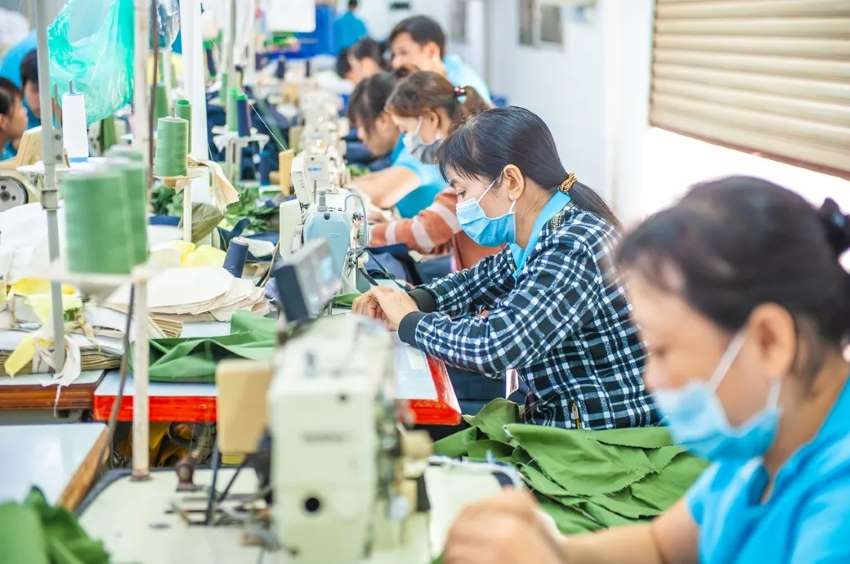
British former journalist and business researcher Peter Humphrey says prisoners in China are forced to make clothes for well-known clothing brands such as C&A and H&M. Peter Humphrey spent two years in a prison in Shanghai after he was convicted for illegally collecting private data of Chinese citizens while investigating a smear campaign against pharmaceutical company GlaxoSmithKline. While serving his sentence, he saw prisoners working for big brands. Inmates made packaging and textile products for companies, including, C&A, H&M and 3M. He says, prisoners who worked full time were paid only about €15 per month. They also earned points with which they could reduce their prison term.
The British business researcher added it is quite possible that the companies in question don't know that prisoners are forced to work for them. C&A launched an investigation to find out the truth and said the company is taking these allegations "very seriously" and the company knows nothing about Chinese prisoners working in its clothing production chain. "We do not tolerate forced labour in our production chain. That also applies to labour in prisons. If we discover forced labour somewhere, the contract with the supplier is terminated immediately."
C&A says it checks the factories of its 273 Chinese suppliers at least annually and has employees dedicated to combat the use of illegal subcontractors. H&M and 3M have not yet responded to these allegations.
China to stay key apparel sourcing hub for global buyers
China has eight major categories such as garment, cotton fabrics, chemical fabrics, wool fabrics, silk fabrics, knitted fabrics, textile machinery and bestfibre. And production capacity of all categories is exceptional by world standards. Data from China Textile Industry Development Report (2014/2015) reveal textile fibre production in China was over 50 million tonnes, accounting for 54.36 per cent of world’s share. As much as 64.2 per cent of the world’s chemical fibres, 64.1 per cent of synthetic fibres and 26.2 per cent of cotton were produced in China.
On the other side, apparel production in China touched 29.9 billion units in 2014, which is 10.4 per cent higher when compared to 2013. Chinese production figures give a clear indication the country will remain the top apparel-sourcing country for international buyers.
Data from International Trace Corporation (ITC) World Trade Organization (WTO) show the total value of China’s apparel and accessories exports was $147.79 billion in 2016 which was $162.35 billion in 2015 and $173.44 billion in 2014 and $165.04 billion in 2013. The data clearly indicated Chinese apparel exports recorded a steep growth rate till 2014 and post ’14 recorded a steep decline. In 2014, Chinese international apparel export was the highest within two years it has lost 14.79 per cent of its exports.
Bangladesh clothing manufactures in dire straits
Bangladesh RMG makers are facing tough times as they ask for a fair price. Further, they are in continuous pressure from international buyers to improve working conditions on shop-floor post the Rana Plaza building collapse in 2013. Domestic apparel makers say more than $1 billion has been invested to renovate and retrofit their factories as per the demand of Western buyers, retailers and brands.
Despite this fact, retailers and brands have not increased their price. Purchasers are still paying the traditionally low prices for products and garnering enormous profits. A shirt costing $3 or $5 is being sold for around $25 to $30. Ditto for high-end value added products, which is 30 per cent of the total volume of garment items, exported per annum from Bangladesh. MNCs pay around $8 to $12 to local manufacturers for a piece of value added high-end shirt and retailers sell the same shirts for around $100 to $150, garment makers said.
Manufacturers and economists assess that the faulty global supply chain is the culprit. Economist Rehman Sobhan, highlighting this factor says the current business model forces suppliers to squeeze their workers as much as they can because they have to produce the shirt at $5. There needs to be investigation into this matter to resolve issues faced by manufacturers.
Now, Asia heads world apparel retail
The era of North American and European dominance of retail sales for apparel is ending. Asia has taken the lead in retail. In 2018, the changing retail industry will continue to be unpredictable, which is now the new normal. The good news is the industry can look forward to solid sustained growth in 2018.
The top 20 per cent retailers globally provide nearly 150 per cent of the economic profit of the world’s retail industry. The largest retailers are forecasted to control an even larger stake in global economic profits in 2018 through their scale and dominance.
Greater personalisation by retailers, both online and in brick and mortar retail, will occur in 2018. Consumer values will be understood by artificial intelligence; AI will then be used to tailor recommendations, engage purchasers, influence and personalise purchasing decisions. In the year ahead more data on each of us will be used to create a purchasing experience custom-tailored to our expectations, likely without our knowledge.
Online platforms will become the consumer's obsession before stepping out of their home to make any purchase. The decisions we make as consumers will be made and will take place on our mobile technology. In 2018, mobile technology will become even more important to consumers for both online and brick-and-mortar retail businesses.
Turkey: Over 1,000 companies of knitted fabrics record $1.5 billion exports
The fabrics industry, in Turkish textiles market, has improved significantly in recent years, following the growing role of the Turkish clothing and home textiles industries in the world’s market during the last 20 years. Knitted fabrics mills are largely based in Istanbul, Bursa, Denizli, Kahramanmaras, Izmir, Gaziantep and Tekirdag making Turkey one of the world’s leading manufacturers of knitted fabrics. 1,000 + companies in the country are manufacturing in the knitted fabrics industry.
Today, Turkish knitted fabrics manufacturers are aware of the trend in international markets for environmentally friendly products and are working towards that goal. Many Turkish fabric manufacturers have ensured ecological labels for their products, including well-known eco-labels such as Oeko-Tex Standard 100, Organic Exchange and GOTS.
In 2017, Turkey imported $1.55 billion worth of knitted fabrics to over 130 countries. Exports increased by 3.6 per cent, as against 2016, making it 15.3 per cent of the total textiles exports from Turkey. During January-December 2017, Bulgaria became the most important country in terms of exports, with Turkey exporting knitted fabrics valued at $264 million.
Other important countries in terms of knitted fabrics exports are Italy, Romania and Greece. Exports to the EU, which have a share of 60 per cent in knitted fabrics exports, increased by 1.7 per cent in January-December 2017 and exports amounted to $930 million.
The myth of millennials socially responsible buying choices
Millennials are demanding socially responsible products and they will switch brands in favour of those with values that match their ethics. A majority of millennials are of the view businesses should be socially responsible and give back to society some of their hoarded profits. Given their annual purchasing power, which is forecast to touch $3.39 trillion this year these 20- and 30-year olds have in their hands consumer power that has to be taken into account. Despite the trumpeting of millennials’ desire for sustainable, responsible fashion, there is not much data to back that up.
New research records that price and ease of purchase (95 per cent) far outweigh any claims of sustainability (34 per cent) when influencing Millennial shoppers when spending on fashion. A report by LIM College professors Robert Conrad and Kenneth M. Kambara titled ‘Shopping Trends Among 18 to 37 Year-Olds’, revealed that millennials are more interested in a product’s brand name (60 per cent) and uniqueness (92 per cent) as against sustainability when sourcing which fashion items.
Kenneth said in a press statement that there simply aren’t enough apparel and footwear options on the market that meet the total demand for a unique, sustainable product that’s priced attractively and easy to acquire.
“There are only a handful of eco-friendly youth-oriented brands such as Anek, Everlane, Nudie Jeans, Patagonia, People Tree, Reformation and K.O.I. and none have the scale or variety of fashion offerings to meet millennials’ requirements for ease, price/value and uniqueness.” Apparel brands such as Eileen Fisher may be seen as ‘ethical’, but lack the mission-critical under 35 appeal. Further, the fashion industry’s greed for low-cost sourcing makes it that much more difficult to ensure which brands are truly socially/ethically responsible in their end to end supply chain.
Robert Conrad said fashion industry’s current approach is backward, bringing to market “what they want to offer, rather than what millennials want.” Brands must listen to what millennials are saying and develop products that resonate with this class of conscious consumers.
China FTA with Pakistan disproportionately benefits former
Pakistan and China have agreed to amend the bilateral FTA to ensure Pakistani exports get enhanced access to the Chinese market. The FTA has largely been responsible for Pakistan’s growing trade deficit with China. According to UN-run database Comtrade, China accounts for 46 per cent of Pakistan’s total trade deficit. The agreement was signed in 2006 and became operational a year later. Post the FTA, bilateral trade zoomed by 220 per cent from $4.77 billion in 2007 to $15.27bn in 2016.
China’s savvy marketers disproportionately benefitted from this rise. From 2007 to 2016, Pakistan’s exports to China rose by 159pc to $1.59bn while imports from China skyrocketed by 229pc to $13.68bn.
Hence, Pakistan’s trade deficit with China, which was $3.54bn in 2007, went up by 241pc to $12.09bn in 2016. Under trade concessions offered by the two countries, the FTA tariff reduction modality provided for tariff reduction or elimination on the agreed number of products from 2007 to 2012. China here also has been the major beneficiary. As per a 2013 study by the Pakistan Business Council, Pakistan’s concession list covered 59pc of its imports from China, whereas China’s concession list covered only 5pc of imports from Pakistan. China is better placed than Pakistan on almost all key economic parameters.
Pakistan’s top three global export products, home textiles ($3.80 global exports), knitted garments ($2.34bn) and woven garments ($2.25bn), have a marginal presence in the Chinese market: $25.78 million for home textiles, $16m for knitted garments and $20m for woven garments. Pakistan’s export-interest products either face high tariffs in the Chinese market or have suffered preference erosion post China’s FTA with countries in the Association of Southeast Asian Nations (Asean). The tariff for rice is 65 per cent, while average tariff for home textiles, knitted garments and woven garments is 4 per cent, 7 per cent and 9 per cent, respectively.
Asean countries face zero tariffs for home textiles, knitted garments, and woven garments under the FTA, while for rice the applied Chinese tariff is 35 per cent. This places Pakistan’s key products in a relatively disadvantageous position in the Chinese market. Pakistan wants China to accord its export interest-products the same level of preferential treatment enjoyed by imports from Asean.
Pakistan’s textile exports up seven per cent
Pakistan’s textile exports increased 7.18 per cent in the first seven months of current fiscal year. Exports of raw cotton grew by 48.72 per cent. Knitwear exports increased 13.27 per cent while exports of yarn (other than cotton yarn) increased by 29.93 per cent. Bed wear exports from the country increased 5.62 per cent while towel exports increased by 1.01 per cent. Exports of readymade garments increased by 13.93 per cent while exports of art, silk and synthetic textile increased by 93.54 per cent.
During the period under review, exports of made up articles (excluding towels and bed wear) also increased by 6.72 per cent. However, exports of cotton yarn declined by 1.42 per cent while exports of cotton (carded or combed) decreased by 95.71 per cent. Exports of tents, canvas and tarpaulin decreased 33.39 per cent.
Among the reasons for increase in exports are: flow of cash under the PM's incentive package, payment of sales tax refunds as well as the depreciation of the local currency, which improved exporters’ liquidity situation. Major measures have been introduced to facilitate duty drawback of local taxes. Pakistan’s textile exports rose ten per cent in December 2017 compared to December 2016.
Nordstrom voted favorite retailer
Nordstrom has been chosen favorite premium fashion retailer among shoppers. Nike takes top spot for footwear. Macy’s topped for e-commerce purchases. These are the results of an annual fashion retail study conducted by Market Force.
Kohl’s ranked first for its loyalty card program as well as for delivering high value for its prices. Lane Bryant, Nordstrom and Dillard’s were at the bottom of the list for high value for the price.
Best merchandise selection, atmosphere and checkout speeds went to Nordstrom. But Lane Bryant was the leader for the ability to create and look and for ease of finding items.
Customers are often assisted at Lane Bryant and Nordstrom and assisted the least at Kohl’s and Old Navy. Nearly 75 per cent of shoppers interact with their favorite fashion retailer online, a 103 per cent increase over the previous year. Despite the online growth, consumers are still hitting physical stores for fashion. According to the survey, 76 per cent have shopped at one of their favorite retailers’ physical stores at least once in the past 90 days, and 48 per cent shopped there at least three times.
Retailers spend good money to market, promote and advertise their brands to lure shoppers into their door, but if their front-line representatives are failing to engage customers and deliver on the brand promise and fundamental customer service basics, they could easily lose that sale to their competitor next door.
India’s share in home textile exports to US stagnates
During the calendar year 2017, India’s share in home textile exports to the US remained stagnant YoY at 33 per cent. The country’s market share (in dollar terms) in cotton sheets increased 1ppt YoY to 50 per cent during the above mentioned period. India has been consistently gaining a 1ppt market share in cotton sheets each year since the above mentioned period.
Also in the period under review market share for towels fell 1ppt to 39 per cent, led by multi-year low market share (sub 35 per cent) reported for the past four months.
Cotton Association of India data shows the pink bollworm infestation in major cotton producing regions of India resulted in an increase in cotton prices since mid-Dec’17 (+5 per cent to R111/kg) and 2 per cent reduction in cotton crop estimate for 2017/18.
Further, appreciation of the rupee (6.4 per cent YoY during the calendar year 18’YTD) continues to remain an issue. In Dec’17, India’s cotton sheet market share (dollar terms) came in at 50 per cent, a fall of 1ppt YoY. The calendar year ‘16market share rose 1ppt YoY to 50 per cent. This is the 6th year in which India saw a 1ppt YoY increase in market share. During the same year, China’s market share fell 2ppt YoY to 20 per cent, while Pakistan’s share remained flat YoY at 16 per cent.
India’s share in the terry towels segment fell sharply by 8ppt YoY to 30 per cent in Dec’17. The calendar year ‘17 market share also recorded a fall of 1ppt to 39 per cent. In calendar year ‘17, China’s market share increased 1ppt YoY to 24 per cent, while Pakistan’s lost 1ppt YoY share to 21 per cent. India’s calendar year ‘17 exports of cotton sheets to the US (in dollar terms) increased 1.9 per cent YoY to $717mn (as against a 0.3 per cent decline in world cotton sheet exports to the US), led by a 2.9 per cent rise in volumes, partially offset by a 0.9 per cent decline in realisation.