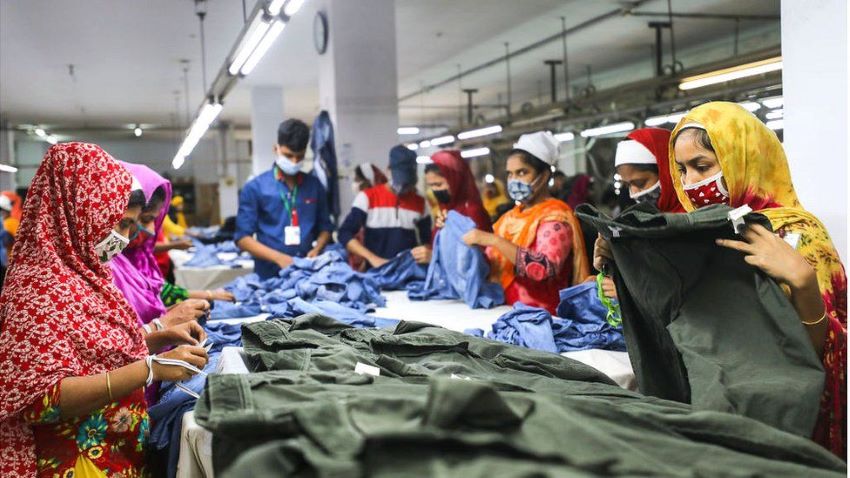
FW
Indian mills find imported cotton cheaper
Indian textile mills are importing cotton as domestic cotton is more expensive. The escalating trade war has led to a slump in global cotton prices. The December new crop cotton contract on ICE Futures US hit a four-year low earlier this week and analysts are expecting another decline due to worsening relations between the US and China, the world's largest exporter and importer respectively.
So far, deals to import around 50,000 bales of cotton have been signed for delivery in October to December, despite the quarter being the peak harvesting season in India. Mills in north India have contracted 6,000 tons to 10,000 tons of cotton, while deals of around 3,000 tons have been signed by mills in southern India. Import deals are being signed mainly with the US, Brazil and West Africa. But prices may fall ahead of the harvest starting in October, which may halt imports. The situation is different from last year, when traders were busy selling the commodity to overseas buyers due to expectations of a bumper domestic crop, which eventually did not materialise.
Global prices have also been hit with an estimate of a rise of around five per cent in cotton output in 2019-20, and slower growth in consumption, which may lead to higher ending stocks for next year.
India’s textile machinery imports up 24 per cent
India’s textile machinery and accessories imports have grown 24 per cent compared to the previous year. The highest imports were of digital printing machinery, accounting for 37 per cent of total imports. Digital printing is a happening segment in textiles. The new machines are versatile and fast and save on water, so demand is high. Weaving machines and spinning machinery and accessories were also imported. Imports of spinning products and machinery grew 41.85 per cent.
Several textile engineering multinational companies have started operations in India and they import parts and accessories. Indian textile engineering industry is operating at about 70 per cent capacity utilisation, serving 65 per cent of the textile sector’s demand. The Indian textile machinery industry has been experiencing tremendous growth over recent years, facilitated by the country’s booming textile and apparel market. India is expected to be a leading textile producing country in by 2020, and domestic textile and apparel market in India is estimated to grow at 12 per cent CAGR over 2020. The technical textile market in India is also showing a promising growth, at 18 per cent CAGR. The machinery industry is expected to reach Rs 35,000 crores by 2021.
Indian cotton yarn exports sink to five year low
Indian cotton yarn exports in June 2019 were the lowest in the last five years. The textile industry is passing through a crisis. Poor demand in export and domestic markets, lack of skilled labor, and high raw material costs are all affecting textile units. Exports of yarn, fabric, and made-ups grew over 50 per cent from 2008 to 2018 but yarn exports saw a steep decline in 2019. China is the main market for Indian yarn. However, it gave duty free access to Pakistan in April this year and Bangladesh and Vietnam already have duty free access. The industry has sought tax refunds and competitive interest rates and the re-introduction of the interest subvention scheme apart from pro-active schemes to train labor. Another important factor for the industry is energy. Textile units in Tamil Nadu have invested in wind energy, initially with state support. Now the industry wants support for wind energy generation.
However, imports of textile machinery and spares are on the rise in India. Industries are focusing on production concepts such as 5S, lean manufacturing, and energy audits. Textile engineering units have a huge potential to tap in the country provided they upgrade technology constantly and concentrate on value addition.
India's exports to Pakistan drop 20 per cent
India’s exports to Pakistan dropped 20.5 per cent in the first quarter of this fiscal. Exports to Pakistan were only 0.6 per cent of India’s outbound shipments during this period, Purchases from Pakistan, too, collapsed 93.3 per cent in the first quarter of this fiscal. This was due to India’s imposition of a 200 per cent duty on purchases from Pakistan following a withdrawal of the most favored nation (MFN) status to Pakistan in the wake of the terror attacks. India had granted the MFN status, a jargon for giving equal treatment to all trade partners under the WTO framework, to Pakistan unilaterally in 1996.
Between April 2018 and January 2019, India’s exports to Pakistan had risen 22.1 per cent from a year earlier, while imports from Pakistan inched up by 12.6 per cent. While India’s exports of cotton crashed 71.4 per cent in the April-June period of this fiscal, that of plastics dropped 24.6 per cent. Exports of organic chemicals, however, rose 8.2 per cent in the first quarter. Together these three items made up for close to a half of India’s exports to Pakistan.
On its part, Pakistan hasn’t granted the MFN status to India and continues to trade with India with a negative list of 1,209 products. This means barring those products on the list India can ship out other items to Pakistan.
India’s viscose yarn imports sees a huge rise
There is a huge jump in India’s imports of viscose yarn compared to the previous year. This is hurting domestic yarn manufacturing spinning mills. Domestic spinners want to be able to buy viscose fiber at international prices and protection from low-priced yarn imports.
The main reason for the increase in viscose yarn imports is the lower material cost for Chinese and Indonesian spinning mills, from where most of the imported yarn is originating. In recent years, demand and use of viscose products has increased in the Indian textile industry, as the sector is slowly and gradually moving toward making more blended products both for domestic and export markets in line with changing fashion trends. Viscose products (including fiber, yarn, and fabric) are playing a major role in the growth of the overall textile manufacturing sector, within both the manmade fiber and the blended product space. Due to this growing momentum in viscose use, several new capacities have been added in the viscose segment with considerable investments, creating a lot of job opportunities across India. Even new technologies like air jet spinning have been introduced in the domestic viscose spinning segment.
Viscose use remains below one-tenth of cotton consumption or production in India.
Export avenues await India
If India can exploit its competitive advantage in the machinery, chemical and textile sectors, the country has great opportunities in the export market.
This will help the country explore the opportunities generated by the ongoing trade standoff between the US and China and narrow its trade deficit. This is especially true of products related to minerals, machinery, mechanical appliances and their parts, electrical machinery and equipment, chemicals, synthetic fibers and textiles.
Escalation in global trade tensions is a recent factor and India has been attracting better investments in manufacturing over the past four years. For instance FDI from China in Indian metallurgical industries rose around five times in fiscal ’19 and three times in the renewable energy and services sector. Similarly, FDI from the US in the Indian software and hardware industry rose more than three times in fiscal ’19. Metallurgical industries, education and power sectors also saw a spike in FDI from the US.
However the extent to which India can increase exports depend on market access, cost competitiveness of the product in comparison to the alternative in different markets and the generation of an adequate export surplus. For instance, exports of India’s major export commodity, steel, to the US have fallen by 35 per cent due to the imposition of the additional tariff of 25 per cent on steel imports by the US.
A pheonmenonal response to Gartex Texprocess India on the first day
"Messe Frankfurt India and MEX Exhibitions jointly launched Gartex Texprocess India in New Delhi today. The comprehensive exhibition on garment & textile machinery, fabrics, accessories and allied industries welcomed thousands of trade visitors on its opening day, and is expects an even higher footfall over the coming two days."
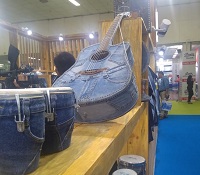 Messe Frankfurt India and MEX Exhibitions jointly launched Gartex Texprocess India in New Delhi today. The comprehensive exhibition on garment & textile machinery, fabrics, accessories and allied industries welcomed thousands of trade visitors on its opening day, and is expects an even higher footfall over the coming two days.
The fair was inaugurated with the unveiling of a special art installation of a denim-wrapped car by Denim manufacturer’s Association of India alongwith Gaurav Juneja, Director, MEX Exhibitions; Himani Gulati, Director, MEX Exhibitions; Raj Manek, Executive Director & Board Member, Messe Frankfurt Asia Holdings; and Michael Janecke, Director Brand Management (Technical Textiles & Textile Processing), Messe Frankfurt GmbH. highlighting India’s competitive position as a world-player and second largest producer of denim fabric.
Coving the entire textile and apparel value chain
The three-day exhibition covers the entire textile and apparel value chain within its six dedicated zones including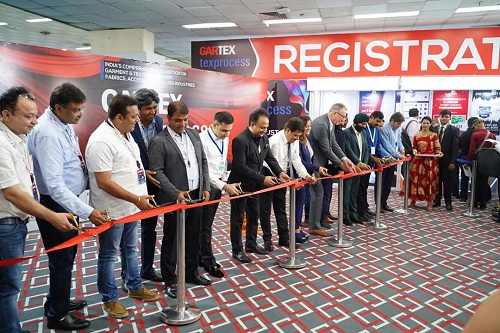 - Embroidery Zone, Garmenting & Apparel Machinery Zone, Digitex Show and Fabrics & Trims Show, India Laundry Show and the Denim Show with several brands launching new technologies within these segments. Covering this ambit, over 200 exhibitors and 400 brands, including some of the leading names in the industry such as Creora, Arvind, Raymond UCO, R Elan, Jindal, Mouvent, Ramsons, Dupont, Epson, HP, Mouvent, Konica Minolta, Colorjet, Mimaki, Kornit Digital, Madeira, Coats India, Mehala, Fabcare, Veit, Primus, Ginni, Oswal, Reliance, Orange O Tec will showcase the best of their innovations, designs and products under one roof.
The three-day trade fair also includes special features within the Denim Show such as Denim Applications, Denim Trends and Circular Trends Zone. While Denim Applications is a point of exhibit for various items covered in denim fabric, Denim Trends displays two themes – ‘Explorer’ and ‘Fashion-Conscious to Conscious-Fashion’ – by Raymond and Arvind respectively. Circular Trend Zone features a circular denim collection showcased by a fashion designer.
Interactive sessions on Circular Fashion
The third day of the fair will host a series of interactive sessions on the theme of ‘Denim Industry In Line With Circular Fashion.’ These sessions aims to draw the attention of industry leaders towards the need for being environmentally-conscious in this ever-expanding industry. Eminent personalities from the denim industry expected at the talk-session include Arvind Mathur, CEO, Raymond UCO Denim Pvt Ltd; Manish Kapoor, Chief Business Officer, Pepe Jeans London; Sumit Shah, Co-Founder, Director- Operations & BOHECO Textile, Bombay Hemp Co Pvt Ltd; Kriti Tula, Co-Founder & Creative Director, Doodlage; and Turbaashu Bhattacharya, Business Head, Roserve Enviro Pvt Ltd.
Besides the Denim Manufacturers Association (DMA), the trade fair is also supported by the Clothing Manufacturing Association of India (CMAI) and Screenprinting & Graphics Association of India (SGAI).
Beach show SwimShow, Cabana curates great brand mix
SwimShow and Cabana were held in the US, July 13 to 16, 2019. At these beach wear and resort wear shows, buyers saw the looks on the models and were drawn to the versatility of the items and, especially, to the fact that they were made of biodegradable fabrics. Laser-cut beach cover-ups also garnered attention.
Cabana brought together an exceptionally curated brand mix and a refined selection of trend-dictating premium buyers and influencers and provided attendees the opportunity to take cues from the world’s most inspirational jet set destinations, and exhibited top fashion, swim and travel lifestyle apparel, as well as accessories, jewelry and footwear. Cabana is the answer to the beachwear industry’s call for a new trade show format--a well-edited show with a sense of discovery and a refreshing, inspiring environment to shop in. The show environment is inspired by the best beach resorts around the world. While inspiration is an important aspect, comfort is also at the top of the list. Cabana is a place where brands and buyers can do business but also reunite and relax. Service is taken into consideration in all aspects of the show whether it’s golf carts between venues, creative food options, or a personalized bracelet instead of a badge.
Ethics and responsibility drive young luxury shoppers
Deloitte's latest millennial survey finds ethics and responsibility are often the differentiators for young shoppers of luxury fashion. Around 36 per cent of respondents said they have started or deepened a relationship with a brand because of its ethical behavior. Another 37 per cent stopped or lessened one because of unethical practices.
P.J. Smith, fashion policy director for the Humane Society, believes that corporations are eager to better serve a new, more socially engaged generation of shoppers. They're not just making changes that cater to young shoppers' tastes, but also taking to social media to boost awareness and engage with this generation more directly.
In December, more than 40 luxury brands signed the Fashion Industry Charter for Climate Action and committed themselves to a series of ambitious UN-backed initiatives. Most notably, charter members have pledged to build an emission-free supply chain by 2050.
Ralph Lauren will set climate action goals by year's end, Prada will no longer use fur, and Kering will only employ models over the age of 18. Some of these moves are the direct result of top-down pressure. Fur, for example, has been labeled as controversial to illegal in certain regions. It is already banned in Los Angeles and West Hollywood, while is about to be banned in California next. When Prada eliminated fur back in May, the Italian luxury brand joined Burberry, Chanel, Coach, Michael Kors, and others. Canada Goose - one of fur's few remaining champions - is facing renewed controversy as the Federal Trade Commission is investigating its claims of ethical sourcing.
Skechers partners with solutions provider for seamless retail
Skechers has partnered with Aptos to provide consumers with a seamless experience across its direct-to-consumer sales channels. With a singular platform to track customers, products and orders, the brand plans to see faster checkout and personalized consumer engagement. Skechers will also benefit from Aptos’ mobile checkout software, which allows transactions to be processed by associates anywhere, at any time. This will eliminate dependency on finicky WiFi connections driven by unreliable servers, ensuring efficient transactions that aren’t dependent on outside factors. The partnership will deploy new point of sale technology, provide sales audits, and leverage Skechers’ microservices-based SaaS platform. Aptos will help Skechers enhance its omnichannel and retail infrastructure. Skechers has chosen Aptos as a technology partner in improving the infrastructure and efficiency of Skechers’ direct-to-consumer operations.
Skechers is a US-based footwear brand with a diverse array of offerings. Skechers’ sales in the second quarter rose 11 per cent. Aptos, a retail technology solutions provider, has decades of expertise supporting industry-leading footwear retailers. It has the ability to implement software on a global stage with a single master configuration, solutions that are proven at scale and functionally robust. In addition Aptos invests in innovation, including modern, API-driven architecture.