FW
Rising input costs put pressure on Pakistan’s textile segment
Input costs in Pakistan's manufacturing sector and particularly the export sector are high. For one, utility rates are higher than in competing countries. Purchase agreements are forged with fuel exporting countries or with domestic private sector terminal operators at higher rates than are available to other countries as well as due to poor performance within the energy sub-sectors.
In the first week of June, a 17 per cent sales tax was imposed with the intention of plugging the loopholes that account for lower revenue collections than the sales tax refund applications. However, 70 per cent of semi-finished products emanate from indirect exporters and is supplied to direct exporters. This has raised the cost of inputs, making the country’s exports uncompetitive in the international market.
The textile sector in Pakistan employs 40 per cent of the industrial labor force, accounts for 59 per cent of total exports on an average, and is therefore regarded as the most important manufacturing sector of the country with the longest production chain and the potential for value addition at each processing stage. However concessions announced for the textile sector, which has the highest export earning capacity in the country, have not yet been implemented.
Lenzing launches botanic shoe in India
Lenzing has entered Indian footwear with the botanic shoe. The launch of botanic shoe comes at a time when India has committed to ending the use of single-use plastic. Tencel fiber and the material construction to create the shoe require no special care, making it all season friendly. The shoe has a healthy mix of performance, sustainability and versatility. It has a strong presence of Tencel features such as sustainability (raw material wood from responsibly managed forestry, environmentally friendly production processes, compostability), comfort (breathability, smooth to the skin) and performance (moisture management, reduced bacteria growth). Tencel for footwear is conceptualized using source ingredients from nature.
Lenzing is looking at partnering footwear brands in India that are looking for sustainable solutions with strong performance features. The possibilities range from the textile fiber in the upper material, as a filling material or a nonwovens fleece in the inner sole through to Lenzing Lyocell powder in the outer sole or the padding. Likewise, shoelaces and the supporting material for zippers are possible. The more shoe components are made of Tencel Lyocell/modal fibers, the closer is it possible to get to the vision of a bio-degradable shoe.
Globally, Lenzing has partnered with brands such as UGG, Converse, Native, Gant, TOMS, Allbirds, Alceste, Veja, H&M, Soludos and Leguano for sustainable footwear.
H&M and Pringle launch knitwear
H&M has launched a knitwear collection with Pringle. There is a cosy hoodie in wool with a Pringle font emblazoned down each sleeve. Knitted midi-length dresses have a directional turtleneck zip detail and a slashed thigh that is ideal for throwing on top of gym leggings. There are also knitted trousers and sweater combos. H&M has reworked different scales and colourways of the argyle. Inspired by streetwear styling and sport influences, the Swedish fast fashion brand developed new designs around the classic pattern, and introduced an acid yellow color as a highlight accent which brought the whole collection together. The collection uses raw materials such as organic cotton, recycled polyester, viscose and wool. The collection features Pringle’s heritage highland argyles and jacquards reimagined with a sporty twist.
Scotland’s brand Pringle was founded almost two centuries back and is known as the oldest British fashion brand. H&M has also launched a collection from recycled materials like recycled polyester, recycled brass, recycled zinc and a blend of Tencel and Refibra. Inspired by masquerade balls, the collection includes eveningwear such as softly tailored check separates, figure-fitting dresses and oversized hoodies, in an earthy color palette of light neutrals, black, with pops of orange and red.
Archroma joins ZDHC Foundation
Archroma, a global leader in color and specialty chemicals towards sustainable solutions, has joined the ZDHC Foundation as a contributor.
This decision is in line with Archroma’s commitment to continuously challenge the status quo in the deep belief that it is possible to make the textile industry sustainable. Archroma develops innovations and system solutions developed in compliance with this commitment and aims to help textile manufacturers to optimise productivity and/or value creation in their markets.
Archroma is supporting the ZDHC Manufacturing Restricted Substance List (ZDHC MRSL) and the related “pyramid” conformity system designed to eliminate duplicative approaches. This is the fundamental base to the success of ZDHC and all stakeholders of the textile value chain.
Archroma has already uploaded and published a first batch of more than 1020 products on the Chemical Module of the ZDHC Gateway, the online search tool that enables stakeholders in the textile value chain to evaluate the ZDHC MRSL conformance level of chemical formulations used in their production processes. These products are all bluesign® approved and are therefore associated with the highest level of confidence in ZDHC MRSL conformance. More products will be added in the ZDHC Gateway in the weeks and months to come.
Sustainability and innovations rule Premiere Vision Paris F/W 2020-21
"Held from September 17-19, 2019, latest edition of Premiere Vision in Paris showcased innovations for F/W 2020-21. Well-attended by top international buyers and insiders, the show held a number of meetings and networking activities. Focusing on sustainability, the fair displayed several new age materials and products in its Smart Creation area. One of them was Reda Flexo, a new merino wool fabric with an eco-friendly stretch fiber added to it. "
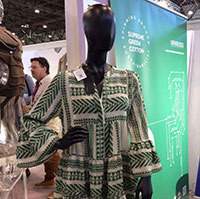 Held from September 17-19, 2019, latest edition of Premiere Vision in Paris showcased innovations for F/W 2020-21. Well-attended by top international buyers and insiders, the show held a number of meetings and networking activities. Focusing on sustainability, the fair displayed several new age materials and products in its Smart Creation area. One of them was Reda Flexo, a new merino wool fabric with an eco-friendly stretch fiber added to it. Also on display were cotton fabrics produced with Supreme Green Cotton, a variety of OGM free cotton grown by Greek manufacturer and cotton grower Varvaressos, whose cotton fields are irrigated according to a pioneering satellite-powered drip irrigation system using Israeli innovative technologies that customise water pouring and help save up to 40 per cent water.
Tanned leathers and biodegradable fabrics
Innovations by leather manufacturers and tanners included Evolo by Sciarada. This is a new variety of leather which is tanned by reusing raw materials without additional chrome. This reduces the level of water consumption and recycling leather from the tanning process. Other tanners who offered their environmentally friendly leathers included Dani, Chiorino and Raynaud.
Eastman Naia Cellulosic Yarn showcased 100 per cent Naia fabrics that are more biodegradable. The brand also offered new blends with other sustainable fibers such as cellulosic fibers, wool, bamboo and silk, while offering sports mesh entirely made with Naia.
Sportswear and outdoor brands displayed their performance and eco-friendliness fabrics. Prominent among these was Polartec, the polar fleece specialist, which showcased a special material that aims to be more sustainable as it is trying to cover its fleece with two matelassè strata that prevent the microplastic fibers to be released when washed.
Wool and other fabrics for winter
Sensitive Fabrics by Eurojersey offered a wide selection of prints, which though similar to checked and herringbone wools, are doubled with other Sensitive Fabrics on the inner side to enable them to be used for winter jackets and coats also.
Estethia G.B. Conte, a division of Marzotto Group, launched new line technical wools known as Wool+ which can be worn during commuting and other daily activities. . Redaelli Velluti presented its Super Velvet three-layer waterproof fabric and also a selection of Primaloft eco-friendly materials that are worked as fake-furs, are super soft and as beautiful as natural ones.
Schoeller launched it Proearth collection of biodegradable textiles designed for lifestyle, fashion and outdoor categories. These textiles are made with virgin polyester optimised for biodegradation and tested to biodegrade at faster and better rates than competitive offerings. For this fall the offer includes fabrics for jacket, pant and lining material qualities with various color options.
Bio-technical treatments on display
Denim exhibitors displayed innovative bio-technical treatments such as those developed by M Blue including Avocado Finish and Lanolin Finish adding softening properties, and Stay Fresh, adding odor-control properties to garments. Shinjentex presented a special enzyme wash that requires no further garment washing after the treatment. Also new was the selection of denims offered by Hemp Fortex that also uses fibers like hemp, wild silk and yak hair.
Innovations also ruled the products displayed by shirting specialists. Canclini, for instance, offered Canclini 1925, a series of more casual shirting fabrics available in different weights, patterns and weaves, such as checked fabrics for over shirts and leisure time shirts, and in chambray and lightweight indigo denim alternatives.
Pakistan needs to evaluate policies while vying for top slot in global textile market
"The war for the best apparel maker crown is getting hotter with Pakistan joining the race alongside Vietnam, Cambodia, India, Bangladesh. However, as the country aspires to reach the top, it first needs to check the availability of a suitable product category, materials required, labor cost and skill, workers’ rights, compliance, access to ports, manufacturing equipment, tariff structures, distance to end market and most importantly production capacity. The country also has to the face the additional obstacle of government taxation."
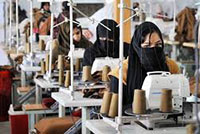 The war for the best apparel maker crown is getting hotter with Pakistan joining the race alongside Vietnam, Cambodia, India, Bangladesh. However, as the country aspires to reach the top, it first needs to check the availability of a suitable product category, materials required, labor cost and skill, workers’ rights, compliance, access to ports, manufacturing equipment, tariff structures, distance to end market and most importantly production capacity. The country also has to the face the additional obstacle of government taxation. To attract government’s attention on this issues, some apparel manufacturers are going on strike and even shutting down temporarily.
Lack of government support hinders growth
One such company, Shahkam Industries exporter of hoodies, track pants and polos to brands like American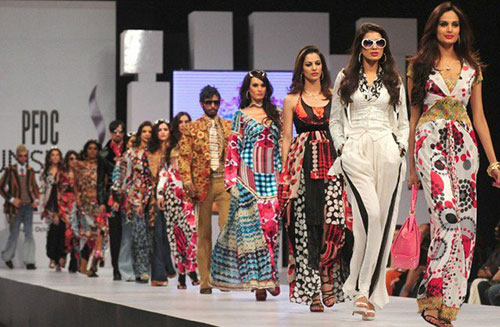 Eagle, Zara, Primark, Pull and Bear, Forever 21 and Urban Outfitters. Operating since 1992, Shahid Bhatt, CEO of the company believes Pakistan is very competitive as it has excellent raw material, readily available yarn and factories which, after the lifting of quotas in 2005 and the cotton crisis of 2009 survived. He says, the main obstacle in their progress is the government’s lack support. Bhatt reveals that Vietnam gets duty free access to the US, whereas Bangladesh has the same situation as Pakistan. Additionally, their industry is preferred by their government and given protection because it forms 80 per cent of their industry. He feels the only reason the Pakistani industry is able to survive is because other places import their fabric/raw material and Pakistan makes on its own.
Butt also believes the government needs to incentivise downstream value addition. It needs to punish export of raw material (yarn and cotton) and compel value addition of them. If they don’t, exports will remain low – our yarn is sometimes being sold to Bangladesh and other Asian countries and they use it to compete against Pakistan’s apparel, companies.
Increase in sales tax to make things worse
As per Awais Ashraf, Head of Marketing, Interloop, another successful manufacturing company that focuses on hosiery and active wear, the new 17 per cent sales tax is likely to increase prices of the raw material, leading more people to import their raw materials, killing the local industry. Pakistan also needs to focus on vocational training and literacy. Untrained labourers cost margins to exporters as they make mistakes.
The prices of electricity and gas are also increasing, leading to bigger companies like Interloop trying to generate their own power. However, other countries facilitate their industries with electricity and gas. They get uninterrupted supply and industrial zones are created, with duty free benefits.
Pakistan’s infrastructure too isn’t sophisticated enough to compete with larger rivals. Bangladesh is the top contender followed closely by Vietnam and India. Though the country has abundant materials and labour it first needs to tick off other requirements with the support of the government. Overall, the country has huge potential in the apparel sector. However, to reach the top, it needs to first reevaluate its policies.
Bluesign to update its system criteria
For the first time, Bluesign is holding consultations with both external and internal stakeholders to update its Bluesign system criteria. The consultation, which has been extended from system partners, to NGOs, trade associations, and various textile industry authorities, has also been extended to September 30, 2019. The latest revision includes language refinements for better understanding, specific changes in content, and the development of new criteria to ensure the Bluesign System is ‘better aligned’ with the textile industry and related areas.
Bluesign regularly revises limits and usage bans for chemical substances that are published in the Bluesign system substances list (BSSL) for consumer safety limits to produce a comprehensive restricted substance list (RSL) for download that brands can use to improve chemical management in their supply chains.
Manteco to showcase innovative textiles at Premiere Vision
Italian textile company Manteco will showcase its innovative range of textiles at Première Vision’s Smart Creation, the fair’s most cutting edge epicentre that features visionary innovators pushing for a sustainable change and making a difference in the fashion business. Manteco’s latest responsible fashion innovations, selected by the Smart Creation team, will be displayed in the Smart Library, located in the Smart Creation area, Hall 3 of Première Vision, take the chance to touch and feel real responsible innovation!
The Prato-based company showcases a unique range including:
•BiBye®, a heritage superfine wool coming from the best farmers in Australia and NewZealand that give life to a double splittable traceable fabric, with the best performance thanks to its unique construction and processing techniques.
•Woolten®, a Manteco development with proven sustainability credentials, and a fabulous unique touch, made with a patented special carded yarn that blends the Next Generation recycled wool by Manteco and Tencel® by Lenzing.
•Project43® by Manteco, a “zero waste” oriented circular economy system, fully integrated that allows customers to confer their production fabric scraps made with Manteco fabrics, and get back a totally engineered P43 new smart fabric.
Tamil Nadu textile fair Waves in November
Weaves will be held in Tamil Nadu from November 27 to 30, 2019. The textile fair permits weavers to connect with a global audience. The event will focus on promoting powerloom and handlooms. Over 250 exhibitors will showcase their distinct products from different parts of Tamil Nadu. Weaves will highlight processed and finished fabrics, home textiles, textile machinery as well as ethnic, handloom and khadi material, would be of great use to the 90 weaving clusters in the state.
Businesspersons from all over the world will take part in the world’s largest wholesale textile market in south India. Weaves, South India’s first mega textile fair, aims at creating a positive and constructive environment for manufacturers and traders, where they can showcase their products and meet with buyers from India and other countries. Weaves acts as a gateway to the textile industry for weavers and an opportunity to showcase, connect, and collaborate, where innumerable textile talents can showcase their expertise and market their products to customers from all over the globe. Weaves is an attempt to have a global connect for weavers and all kinds of textiles manufacturers and create opportunities through networking, technology, smart marketing and business empowerment.
Kontoor Brands refuses shipments worth $2.6 million from Bangladesh RMG units
Kontoor Brands recently refused to accept shipments worth $2.6 million (more than Tk 22 crore) dealing a serious blow to 11 Bangladeshi garment exporters although the shipment reached the port on time. As a result of this, the garment companies will have to bear the freight charges for shipping the goods back and face compensation claim from US retailer Kontoor Brands. Kontoor, however, claims it sent back the goods as the shipment missed the sales season. The goods were shipped from Bangladesh in January this year.
Of the 11 companies, Nassa Apparels lost $998,110. The exporter claimed to have shipped the goods on free on board (FoB) basis. Scott Deitz, Vice President for global corporate relations of Kontoor Brands stated that according to Kontoor’s contract terms, the vendor bears all risk of loss of the goods only until the goods reach the destination terminal and transfer of the title of goods to Kontoor takes place. He claimed that many of the vendors did not have the necessary insurance, while others chose not to protect themselves from the potential risk of loss.
The brand is therefore taking certain steps to assist these affected uninsured vendors who continue to produce goods on the brand’s behalf. This assistance includes paying demurrage fees, costs to loss adjustors to prevent the goods from being abandoned, and return-to-origin transportation fees on behalf of the vendors to limit their further losses. Kontoor is also helping to arrange for the now distressed goods to be sold through other channels to mitigate the losses for these affected vendors.