FW
Textiles Ministry extends timeline for submission of PLI applications
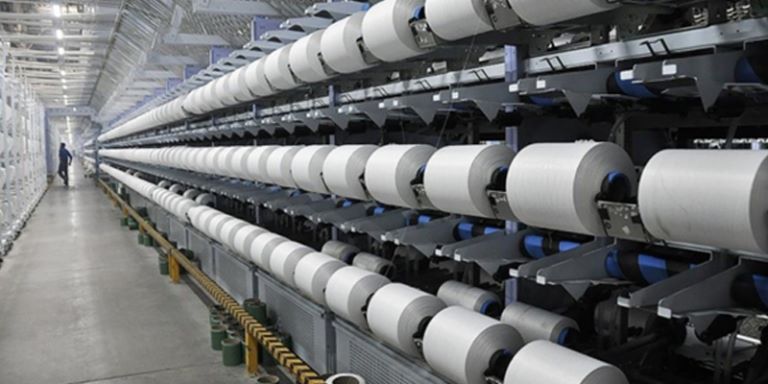
The Ministry of Textiles has extended the timeline for submission of applications under the PLI (Production Linked Incentive) Scheme for textiles till February 14, 2022. The earlier date of submission of online applications under this scheme was January 31, 2022. Approved with an outlay of Rs 10,683 crore for five years, the PLI scheme for textiles, aims to promote production of MMF apparel, MMF fabrics and products of technical textiles.
The ministry started accepting online applications for the scheme from January 1, 2022, via pli.texmin.gov.in/mainapp/Default portal. The scheme was approved in Cabinet in September for some specific segments in the textiles sector. The scheme prioritizes factories based around aspirational districts or Tier-III and Tier-IV cities that are likely to especially benefit states like Gujarat, Uttar Pradesh, Maharashtra, Tamil Nadu, Punjab, Andhra Pradesh, Telangana.
Value addition can help India boost apparel exports to Columbia: AEPC
Focus on high-value added products can help India boost apparel exports to Columbia by double digits, says Narendra Goenka, Chairman, AEPC. India’s exporters are already focusing on higher value and specialized products like man-made fibre (MMF) apparels, medical and technical textiles, he adds. Currently there has been a fall in RMG imports by Columbia though Indian exporters have been able to maintain their share at 3.2 per cent with $ 21 million in 2019 and $13 million in 2020, he adds.
Colombian investors can also set up apparel manufacturing facilities in India directly or through joint ventures. They can also partner Indian manufacturers in building R&D, innovation and incubation centres in India, he adds. Sanjiv Ranjan, Indian Ambassador to Colombia opines, rising popularity of Indian garments and textiles in Colombia is an added advantage for exporters. However, they need to make concerted efforts to reach the pre-pandemic level of exports of $22 million, he adds.
JAAF appoints Sharad Amalean chairman of new Executive Committee
At its recent annual general meeting, JAAF appointed Sharad Amalean the chairman of its new executive committee for 2022-23. Saiffudeen Jafferjee and Felix Fernando were appointed deputy chairmen. Past chairmen Noel Priyathilake, Azeem Ismail and Ashroff Omar were included in the executive committee. At the meeting, Sri Lanka’s apparel exporters urged authorities to change foreign exchange regulations to help resolve supply chain issues and help the industry grow.
As per an Economy Next report, Sri Lanka’s apparel exports grew to $5 billion in 2021. By November apparel and accessory exports had reached $4.9 billion. Yet, the country continues to face obstacles, says Sharad Amalean, Chairman, JAAF and Deputy Chairman, MAS Group. To navigate these issues, stakeholders need to come together to discuss issues pertaining to foreign exchange and the adoption of regulations with authorities, he adds.
Sri Lanka has imposed certain rules on exporters requiring them to repatriate and also sell dollars as money printed to keep interest rates low created forex shortages. This is making it difficult for exporters’ suppliers to clear goods, says Sri Lanka’s Shippers Council. Up to November 2021, Sri Lanka’s apparel exports increased 23 per cent. However, the country faces a severe foreign exchange crisis.
Sri Lanka’s businesses and academic economists and politicians have long pushed for export growth as a solution to frequent forex crises instead of changing the monetary law to reduce the discretionary independence of the central bank to print money using ‘flexible’ policy. Many exporters have also called for depreciation of the rupee in the past, which triggers inflation, capital destruction and higher interest rates within the country.
A Sukumaran, Past Chairman JAAF, says, the principle of global value chains still held, despite supply chain disruptions seen after the COVID-19 pandemic.
Kornit enters into an agreement to acquire German company Tesoma
Worldwide market leader in sustainable, on-demand, digital fashion and textile production technologies, Kornit Digital has entered a definitive agreement to acquire Lichtenau, Germany-based Tesoma. As per a Globe News Wire report, the agreement will involve aligning of Tesoma’s technology and solutions with Kornit’s strategy to add smart automation capabilities within its innovative, sustainable on-demand production solutions. This will empower customers to improve productivity, optimize quality, and reduce the total cost of ownership.
Tesoma’s acquisition will allow Kornit to continue accelerating its mission to transform the industry, with innovative and sustainable, never-before-seen, on-demand textile production solutions, says Ronen Samuel, CEO, Kornit Digital. As partners, Tesoma has been working closely with Kornit on innovative next-generation solutions and accelerate its mission to elevate the industry standard, with intelligent user functionalities and industry 4.0 connectivity, adds Andreas Irmscher, Manager, Design Engineering, Tesoma. Together they aim to heighten the market’s expectations for clean, efficient, automated on-demand production, with a fully integrated solution that yields a superior, brilliant impression every time.
The acquisition is expected to be completed on or before April 1, 2022, following the satisfactory completion of business transition and integration plans.
Sweden: H&M to double sales by 2030
Helena Helmerson, CEO, H&M says, the fast fashion retailers’ sales will double by 2030 after reduction in discounts and clearing out of the company’s longstanding inventory buildup. Helmersson also aims to boost the brand’s operating margin by more than 10 per cent within three year. To reach these goals, she is boosting investments to about 10 billion kronor ($1 billion) this year. By November last year, the company’s inventory stood at $4 billion and it is yet to meet its target of reducing it to the level of 12 per cent of full-year sales.
To achieve this, the company relies on markdowns, which it expects will boost profitability in the first quarter. H&M also is reducing costs, planning net closures of 120 stores this year, mostly in Europe. H&M’s pretax profit rose 64 per cent to 6 billion kronor in the three months through November, beating analysts’ estimates. Sales in December and January increased 20 per cent. The company is rewarding investors with 3 billion-kronor share buyback program and it maintained its dividend at last year’s level. Helmersson expects the company’s long-term, sales growth will start increasing 10 per cent to 15 per cent a year again.
India: Kitex Garments’ PAT rises 120 per cent in Q3
Kitex Garments’ profit after tax (PAT) increased 120 per cent Y-o-Y in Q3 FY2021-22 to Rs 34.71 crore against Rs 15.60 crore in Q3FY21. As per an India Infoline report, the company’s consolidated revenues for the quarter ending December 2021 grew 71.68 per cent to Rs 208.20 crore as against Rs 121.70 crores for the quarter ending December 2020.
EBITDA margin for this quarter increased 80.32 per cent Y-o-Y as compared to Q3 FY21. Profit before tax margin increased 99 per cent at 23.43 per cent for Q3 FY’22, against Q3 FY’21. Sabu M Jacob, Chairman and Managing Director says, the company was able to achieve higher turnover and profits despite high material costs due to effective control measures.
A part of renowned Anna-Kitex group of companies, founded by MC Jacob, Kitex Garments is the largest employer in private sector in Kerala. Located near Kochi it has easy access to sea and airports. The company was established in 1992 and currently employs over 5000 people at its facility, and has been a business provider to many satellite businesses in the state. It is the second largest producer of children's apparel in the world, and is now in the process of setting up operations in the USA.
Denim Days to hold live events in 2022
Denim Days plans to hold live events in Amsterdam in 2022. As per Joanne Schouten, Coordinator, a Denim Days Festival-The Market Edition will be held on April 22 and 23 in De Hallen and Denim City. It will host workshops and exhibitions and offer customized denim products to visitors. The Denim Talks will bring all denim lovers together to learn about new happenings in the industry.
Started in 2014, Denim Days is a platform for creators, consumers, brands and buyers to unite over a shared love of denim for talks, workshops and shopping. With Tencel™ Denim as one of the event partners, a key focus of the event is sustainability, whether that means low-impact production, repair, upcycling or recycling.
The event will focus on new technologies, innovations and new perspectives on the future of the denim industry. A part of the event, the Towards a Brighter Blue Mission conference will spotlight important initiatives towards a more responsible denim industry.
Over the past years, Denim Days has attracted the attention of a bigger range of consumers and denim lovers, says Schouten. Its followers on social media (@denimdaysfestival) are growing into global and very loyal community. It launched the new Denim Days platform last October to invite the community to stay in touch in between the live events.
Cotton demand to remain high despite supply chain and pricing issues
Cotton experts’ panel predicted at the recent Supima Harvest Symposium predicted, demand for the fiber will continue to remain high even as the market will face supply chain, pricing and availability issues. Speakers also forecast the ongoing strong demand for cotton home textiles products without appreciable changes in the global availability. Demand for premium extra-long staple cotton will be especially strong, they added.
Global demand for cotton has recovered to highest levels in history, said Jody Campiche, Vice President -Economics and Policy Analysis, National Cotton Council Even though fewer planting acres in 2021 still produced a higher yield, the availability of US cotton is very limited with low stock levels coming into the New Year, she added.
World’s second largest cotton grower India, produced about the same amount it had previous year, the crop in China – the largest grower – was significantly lower, Campiche added. Pakistan, the fourth largest grower, had larger crop in 2021 but that comes after five years of decline and its yield last year is just getting back to earlier levels.
Last year, Supima produced 350,000 bales of cotton against 800,000 produced four years ago. Marc Lewkowitz, President and CEO, Supima said it will produced similar number of bales in 2022 with maybe a little increase in plants. Joe Dixon, Chief Operating Officer, J Hilburn said, all above factors are causing end users – retailers and manufacturers of home and apparel products made of cotton, to plan better and anticipate potential surprises. Yet, price issues will continue to persist, he added.
All three panelists agreed that even as cotton prices continue at their higher levels, the fiber will not lose its market share to synthetic products as happened the last time prices spiked in 2010-2011.
Asahi Kasei launches first fluid-wear collection
Asahi Kasei has launched its first fluid-wear collection made with the Bemberg fiber. As per a Textile Value Chain report, the collection is inspired by the ancient Pay-Jamé: a piece of clothing worn by a woman or a man for fluid wellbeing 24/7 regardless of the activity, or the location, or duration time it is needed for.
A revolutionary line of new-generation clothing, Jamé is designed and made in Italy, digitally printed, and created to deliver wellness, style, and 24/7 comfort. Every Jamé piece is available in eight patterns with the choice of 17+ designs that go back to the Italian tradition. Jamé is made from the Bemberg™ fabric which is a very unique textile that gives it the highest contemporary qualities. Each of Jamé clothing is 100 per cent recyclable and manufactured following a very contemporary and responsible made-to-order business mode
The fabric is based on a regenerated cellulose fiber made from the smart-tech transformation of cotton linters. As a pre-consumer material obtained from the manufacturing process of cotton seeds oil that is converted into fiber through a traceable and transparent closed-loop process, Bemberg™ DNA is deeply based on a circular economy approach.
The fabric is gentle on the skin, with amazing touch and exceptional moisture management properties: it quickly absorbs and releases moisture through very small waterways, keeping the wearer cool, fresh, and comfortable at any time of the year.
JAAF calls for greater collaboration to resolve forex crisis
The Joint Apparel Association Forum of Sri Lanka (JAAF) called for intensive dialogue and greater stakeholder collaboration in order to arrive to resolve the current forex crisis, as well as legislative reform towards a more sustainable medium-long-term trajectory for Sri Lankan apparel.
These views were expressed at the recent Annual General Meeting (AGM) of the Association, the apex body representing five associations encompassing supply chain partners, the export-oriented apparel manufacturers, buying offices and representatives of international brands in Sri Lanka.
Addressing the gathering, SharadAmalean, Chairman, JAAF and Deputy Chairman, MAS, commended the resilience demonstrated by the sector in the face of an unprecedented pandemic and outlined measures necessary for the sector to achieve its target of $8 billion in exports by 2025, while maintaining GSP+ and enhancing bilateral trade.
Meanwhile, outgoing JAAF Chairman, A. Sukumaran noted that the industry would likely face continuing disruptions to their supply chain over the coming year, making the need for continuous engagement across industry stakeholders an essential pre-requisite to developing long-term solutions to the industry’s current and future challenges.
The AGM saw the appointment of JAAF’s new executive committee for 2022/2023, which includes SharadAmalean, Chairman; SaiffudeenJafferjee and Felix Fernando, Deputy Chairmen; Noel Priyathilake, Past Chairmen; Azeem Ismail and Ashroff Omar. Duly Authorized Representatives of the constituent bodies: Pubudu de Silva, Fabric & Apparel Accessory Manufacturers Association; JatinderBiala, Free Trade Zone Manufacturers Association; AroonHirdaramani, Sri Lanka Apparel Exporters Association; HemanthaPerera, Sri Lanka Chamber of Garment Exporters and Welhem Elias, Sri Lanka Apparel Sourcing Association