FW
Mango intensifies retail footprint in Türkiye
Mango Fashion Group continues to accelerate its international retail development with the inauguration of a new establishment in Edremit, Türkiye. This latest opening is part of a broader commitment to reinforce the company’s presence in one of its most vital global markets. By targeting high-traffic regions beyond major metropolitan hubs like Istanbul and Ankara, the firm aims to deepen its engagement with local consumers. This initiative aligns with the company’s overarching Strategic Plan 4E, which prioritizes the expansion of its physical store network alongside a robust digital infrastructure to ensure a seamless omnichannel experience.
Operational focus on local integration
The expansion strategy in Türkiye focuses on integrating the brand's sophisticated design identity with local market preferences. Each new location serves as a testament to the company's ‘New Med’ design concept, which emphasizes freshness and a Mediterranean aesthetic. Huseyin Golcuk, International Director – Retail, highlighted the importance of this growth, stating, the company has nurtured a strong bond with Turkish customers since its entry three decades ago. By maintaining a mix of company-owned stores and strategic retail partnerships, the firm is successfully capturing significant market share, consistently outpacing competitors through refined inventory management and a localized approach to apparel and accessory curation.
Mango is a global fashion brand specializing in high-quality apparel for women, men, and children, along with home accessories. The company operates in over 120 markets, leveraging an omnichannel retail model. Following record 2025 revenues of €3.8 billion, the firm continues to invest heavily in its global store network. Established in 1984 near Barcelona, Mango remains a leader in mid-premium fashion retail.
US apparel imports stumble amidst sourcing realignment
The United States textile and apparel sector is currently navigating a period of significant contraction, with import values falling by 12 per cent during the first four months of 2026. This downward trajectory reflects a combination of cautious consumer sentiment - driven by an inflation rate of 4.2 per cent as of May 2026 - and aggressive sourcing diversification. While traditional trade powerhouses face headwinds, the industry landscape is undergoing a structural reset as brands prioritize supply chain resilience over legacy volume contracts.
China faces steep contraction
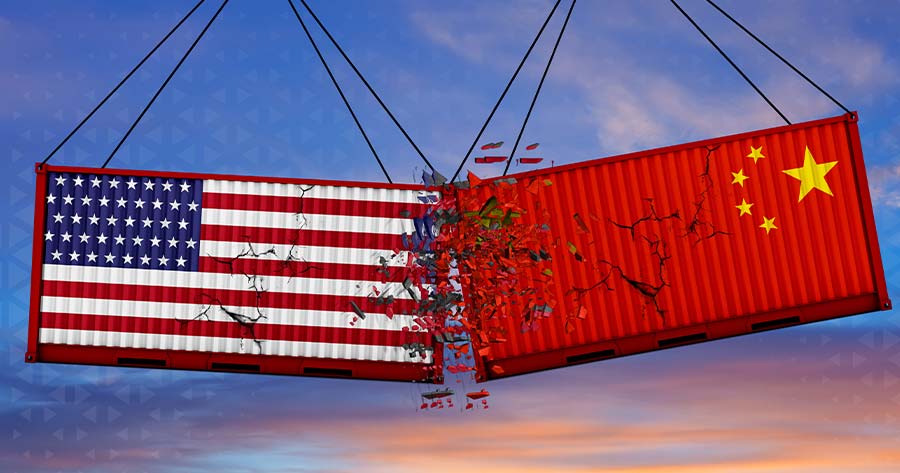
The most notable casualty of these shifts is China, which has experienced a precipitous decline in US market share. Amidst elevated tariff structures and ongoing geopolitical risk mitigation, imports from China declined by over 50 per cent in the first four months of the year. Conversely, Southeast Asian suppliers are capturing the resulting vacuum. Vietnam has emerged as a primary beneficiary, posting modest growth and strengthening its foothold in the man-made fiber (MMF) apparel category. Cambodia and Egypt have also registered double-digit growth in shipments to the US market, positioning themselves as critical alternative hubs for brands seeking to hedge against concentration risks.
Industry strategic outlook
The current trade environment is forcing a fundamental reassessment of global supply networks, noted a recent industry report. While some regions benefit, others face pressure; for instance, Sub-Saharan African exporters saw a decline of nearly 31 per cent in April, illustrating the volatility of emerging markets. As firms navigate these complexities, the push toward man-made fibers remains a dominant trend, favoring manufacturing hubs with deep integrated production capacity rather than those reliant solely on cotton exports.
US textile and apparel industry
The US textile industry focuses on high-value, technical, and man-made fiber production, serving as a pillar of domestic manufacturing. Key markets include apparel retail and defense logistics. While firms are aggressively expanding production through automated, sustainable processes to improve efficiency, the industry faces severe challenges from trade volatility and inflationary pressures.
Scaling India’s textile footprint: A strategic roadmap to Rs 33 lakh crore
The Indian textile and apparel sector is poised for a significant transformation, with the Union Government announcing an ambitious target to expand the industry’s market size to Rs 33 lakh crore by FY31. Currently valued at approximately Rs 16 lakh crore, this objective represents a doubling of the sector's contribution to the national economy. Union Textiles Minister Giriraj Singh emphasized, this growth will be driven by a robust ecosystem that integrates domestic consumption with an aggressive export strategy. By diversifying into 135 international markets and leveraging a network of 18 free trade agreements, the ministry intends to position India as a premier hub for high-value fashion and technical textiles.
Operationalizing the growth strategy
To reach this valuation, the ministry is focusing on comprehensive value-chain integration, ranging from farm-level productivity to advanced manufacturing. A central pillar of this plan is the ‘5F’ vision - Farm to Fiber, Fiber to Factory, Factory to Fashion, and Fashion to Foreign—which streamlines raw material availability and manufacturing efficiency. The government has prioritized infrastructure modernization, evidenced by the rollout of seven PM MITRA Parks, which are collectively projected to attract Rs 70,000 crore in investments and generate over two million jobs. These integrated clusters are designed to lower logistics costs and improve the global competitiveness of Indian textile firms.
Workforce empowerment and technical adoption
A critical component of this strategy involves scaling the formal labor force, which has already grown from 2.8 crore in 2014 to 5.3 crore in 2024-25. Minister Singh highlighted, the industry is expected to generate an additional 2 crore jobs over the next three years, fueled by the modernization of traditional sectors like handloom and handicrafts. For instance, the government’s targeted skilling initiatives aim to raise the annual income of individual weavers to Rs 5 lakh. Complementing this, the rapid expansion of the technical textiles market - growing from $6 billion to $25 billion - demonstrates a successful shift toward high-performance materials. As manufacturers increasingly adopt AI-driven machinery and automated production lines, the sector is well-positioned to meet the demands of global supply chains seeking sustainable, high-quality manufacturing alternatives.
The Indian textile landscape
The Indian textile sector is a primary pillar of the domestic economy, encompassing the entire value chain from natural fiber cultivation to garment assembly. Key products include cotton yarn, technical textiles, and ready-made apparel. Growth is currently supported by state-led investment schemes, infrastructure development, and proactive trade policy reforms. Historically a labor-intensive industry, the sector is rapidly transitioning toward high-tech, innovation-driven manufacturing to enhance global export competitiveness and long-term financial performance.
Jack Technology accelerates factory intelligence through Siemens partnership
Jack Technology is advancing its commitment to next-generation garment manufacturing by integrating a robust suite of industrial software from Siemens into its global operations. This strategic collaboration is designed to modernize apparel production lines by incorporating AI-orchestration, low-code application development, and sophisticated product engineering tools. By leveraging Siemens' Xcelerator portfolio, specifically Intelligence Center X and the Mendix platform, Jack Technology aims to optimize workflows that have historically been labor-intensive, targeting efficiency gains of up to 30 per cent in product development and assembly cycles.
Engineering a responsive manufacturing ecosystem
The partnership addresses the growing complexity in the apparel supply chain, where rapid shifts in consumer demand require high levels of production flexibility. Jack Technology will deploy Designcenter software to enhance product simulation and digital prototyping, effectively creating a ‘digital twin’ of its sewing equipment and robotic systems. This shift allows engineers to test machine configurations and production layouts virtually before physical implementation, significantly reducing development time and operational waste. As the industry faces pressures to minimize lead times, the integration of these digital tools provides a framework for manufacturers to manage smaller batches and highly customized orders with greater precision and speed.
Humanoid robotics and shop-floor AI
Beyond software-driven efficiency, the collaboration emphasizes the implementation of artificial intelligence within the physical sewing environment. Jack Technology is increasingly incorporating humanoid robotics and AI-enabled vision systems into its machinery, aiming to resolve skilled labor shortages that frequently impact textile hubs worldwide. By utilizing the Siemens industrial AI operating logic, Jack Technology expects to create more adaptable sewing systems capable of identifying fabric imperfections and adjusting stitch patterns in real time.
This evolution from traditional mechanical automation to software-defined production marks a departure from conventional manufacturing, signaling a new era where intelligent sewing systems can autonomously adjust to varying material properties, ensuring consistent quality across high-volume production lines.
Integrating AI to achieve global manufacturing leadership
Founded in 1995 and headquartered in Taizhou, China, Jack Technology is a global leader in industrial sewing, cutting, and intelligent garment-manufacturing solutions. Its portfolio serves markets in over 130 countries, encompassing footwear, luggage, and automotive textiles. The company focuses on integrating AI and robotics to a +c+++hieve global manufacturing leadership.
Source Fashion and Neuthread forge strategic alliance to advance circularity
UK’s premier global sourcing exhibition, Source Fashion has announced a high-profile partnership with Neuthread, an innovative charity-led fashion initiative, to elevate circularity and social inclusion within the apparel sector. This collaboration seeks to bridge the gap between industrial-scale sourcing and community-driven, waste-reduction manufacturing. By embedding Neuthread’s expertise—which focuses on repurposing donated textiles—into the wider Source Fashion ecosystem, the partnership aims to provide brands and retailers with actionable models for integrating circular production into their standard supply chains. This initiative serves as a direct response to the industry’s increasing pressure to move beyond linear "take-make-waste" models, offering a tangible framework for brands to demonstrate environmental stewardship while supporting equitable employment opportunities.
Scaling sustainable solutions for the 2026 landscape
As the global circular fashion market is projected to reach approximately US$ 8.33 billion in 2026, the partnership highlights the industry’s shift toward radical transparency and waste mitigation. Manufacturers visiting upcoming Source Fashion events will gain access to collaborative case studies and technical insights, enabling them to evaluate the viability of incorporating reclaimed fibers and mixed-material upcycling into large-scale production. "Meaningful progress requires moving beyond sustainability circles to create a collective commitment to circular living," noted a representative from the Source Fashion advisory board. By uniting Neuthread’s specialized model—which leverages AI-powered tracking to manage complex waste streams—with Source Fashion’s global network of manufacturers, the collaboration provides a blueprint for brands to scale sustainable collections without compromising on quality or traceability.
Neuthread is a charity-led fashion brand and manufacturing project that transforms donated textiles into high-quality apparel. Operating at the intersection of circular economy innovation and social impact, it provides inclusive employment for autistic individuals while developing eco-manufacturing frameworks that pioneer AI-supported carbon tracking for complex, reclaimed material supply chains.
Bangladesh apparel sector charts post-LDC roadmap at Denim Expo
Held in Dhaka this June, the 20th edition of the Bangladesh Denim Expo served as a crucial forum for the nation’s apparel industry to address its post-Least Developed Country (LDC) graduation strategy. With the nation set to graduate from LDC status in November 2026, the sector is entering a transitional phase that necessitates a fundamental shift in its economic model. Industry leaders and policymakers utilized the ‘Frontline to Future’ theme to signal that the era of relying solely on low-cost labor and trade preferences is nearing its end. Mahmud Hasan Khan Babu, President, BGMEA, emphasized, while Bangladesh currently leads the EU and US markets in denim exports, the loss of existing tariff advantages - which have long anchored the industry’s competitive edge - demands urgent institutional reforms to maintain market share.
Deepening economic ties with global partners
Diplomatic engagements at the expo highlighted an intensified push for long-term economic partnerships, specifically with the European Union. Michael Miller, Ambassador, EU, confirmed, Brussels is actively evaluating Bangladesh’s request for a potential free trade agreement (FTA), building upon the recently initialed Partnership and Cooperation Agreement. As part of this diplomatic outreach, the European Commission has invited Bangladesh’s leadership to the upcoming Global Gateway Summit, underscoring the EU’s interest in integrating Bangladesh into more sophisticated, high-value supply chains. For local manufacturers, this represents an opportunity to diversify beyond basic apparel, though stakeholders warned that success hinges on meeting stringent international labor and sustainability standards to secure a level playing field in the competitive global market.
The Bangladesh apparel industry
Bangladesh is a global leader in ready-made garment (RMG) manufacturing, particularly in denim. The sector is a primary economic driver, heavily reliant on exports to the EU and the U.S. Current efforts are focused on post-LDC trade diversification, enhancing energy efficiency, and upskilling the workforce for high-value production.
India eliminates cotton import duties to stabilize textile supply chain
The Indian government has implemented a comprehensive duty-free window for raw cotton imports, effective from June 1, 2026, through October 31, 2026. This policy maneuver effectively removes the 11 per cent cumulative import tax burden - comprising Basic Customs Duty and the Agriculture Infrastructure and Development Cess - that previously constrained domestic manufacturers. By facilitating access to global raw material supplies during the critical cotton off-season, the measure is designed to alleviate the margin pressure currently faced by the spinning and garment sectors. Industry analysts emphasize that this elimination of artificial cost barriers is essential for maintaining India’s export parity against regional competitors like Bangladesh and Vietnam, who have historically benefited from duty-free raw material access.
Bolstering export resilience and MSME performance
This shift in fiscal policy is particularly significant for small and medium-sized enterprises (MSMEs), which have struggled with domestic price volatility and supply deficits throughout the current fiscal year. With domestic cotton consumption projected to reach 340 lakh bales against a domestic output of roughly 290 lakh bales, the duty waiver provides a vital mechanism for balancing the domestic supply gap. Trade bodies, including the Apparel Export Promotion Council (AEPC), anticipate that lower input costs will translate into more aggressive pricing for global orders, ultimately supporting the nation’s objective of reaching US$ 100 billion in textile and apparel exports by 2030. The move signals a proactive effort by the Ministry of Finance to stabilize the textile ecosystem while ensuring that domestic farming interests remain protected during the transition to the next harvest cycle.
The Indian textile & apparel sector
India maintains one of the world's largest vertically integrated textile industries, spanning from fiber cultivation to high-end garment production. The sector is a major employment driver, focusing on cotton, man-made fibers, and technical textiles. Growth initiatives center on scaling manufacturing capacity, leveraging new Free Trade Agreements, and enhancing industrial sustainability.
EFI Reggiani unveils digital printing suite to accelerate on-demand textile manufacturing
At the ITM Istanbul 2026 exhibition, EFI Reggiani has introduced a high-performance suite of digital printing solutions aimed at modernizing the textile value chain. Addressing the industry's shift toward high-speed, on-demand production, the company is showcasing its new Hyper series, which integrates a ‘High Quality Booster’ to achieve superior print resolution without sacrificing output volume. This technology addresses persistent manufacturer pain points, specifically the need to reconcile rapid turnaround times with the stringent aesthetic demands of global fashion brands. By moving away from resource-heavy traditional processes, these digital platforms enable factories to reduce lead times significantly while minimizing their environmental footprint through optimized ink consumption and automated diagnostic workflows.
Digitizing for sustainability and scale
The integration of data-driven analytics remains a core pillar of this year's showcase. With the introduction of the EFI Reggiani Query software, manufacturers can now access real-time production logs and performance reporting, allowing for granular adjustments to industrial workflows. This focus on ‘smart factory’ capabilities is critical as firms contend with rising utility costs and the demand for sustainable pigment-based printing solutions, such as the ecoTERRA Titan. ‘In a market environment defined by volatility, our goal is to empower producers with the agility to scale production dynamically while adhering to evolving environmental standards,’ noted a company spokesperson. The firm’s comprehensive strategy emphasizes that true industrial resilience is rooted in the transition from analog bottlenecks to integrated, data-optimized digital ecosystems.
A global leader in digital textile printing technologies
EFI Reggiani is a global market leader in integrated digital textile printing and finishing technologies. Providing solutions ranging from yarn treatment to high-speed digital fabric printing, the company serves the fashion, sportswear, and home textile industries. It maintains a strong commitment to sustainable, high-productivity manufacturing and innovation.
Uzbekistan accelerates regional export strategy via Dubai textile hub
Uzbekistan is intensifying its push into the Middle Eastern apparel market, formalized through a high-level cooperation agreement with the Dubai Textile Merchants Association (TEXMAS). This partnership is designed to transform the UAE into a primary distribution gateway for Uzbek textile manufacturers, granting domestic producers access to critical infrastructure within Dubai Textile City. By securing dedicated commercial and warehouse facilities, Tashkent aims to bypass traditional logistical bottlenecks and establish a consistent, professional presence for its cotton-to-garment value chain. The collaboration focuses on facilitating direct B2B engagement and exploring private-label manufacturing opportunities, effectively allowing Uzbek factories to integrate directly into the supply chains of established UAE-based international brands.
Value chain upgrading and export ambitions
The initiative aligns with Uzbekistan's ambitious 2026 export target of $3.3 billion to $4.0 billion. With textile exports reaching nearly $740 million in Q1, FY26 - a 17.6 per cent increase Y-o-Y- the government is aggressively promoting the ‘Made in Uzbekistan’ brand. Recent industrial reforms have enabled local clusters to move beyond raw commodity trade, focusing increasingly on finished apparel and high-value textiles. According to industry analysts, this shift is critical for offsetting rising energy costs and mitigating fluctuations in global yarn prices. By leveraging Dubai’s status as a regional trading nexus, Uzbek manufacturers expect to elevate their market competitiveness, ensuring sustained growth through diversified trade corridors and deepened international manufacturing partnerships.
Focus on value-added exports and FDI
Uzbekistan possesses a robust, vertically integrated textile sector, managing the entire process from cotton cultivation to finished apparel production. Its primary product categories include yarn, fabric, and ready-to-wear garments. The industry is currently prioritizing value-added exports and foreign investment, targeting synthetic and blended textile growth. Following comprehensive sector reforms - including the elimination of systemic forced labor - the country has seen improved access to Western markets and increased production efficiency. The government remains focused on strengthening international trade partnerships to sustain its long-term industrial output and economic stability.
NCTO urges federal crackdown on rampant textile customs fraud
The National Council of Textile Organizations (NCTO) has formally endorsed a bipartisan appeal from the House Textile Caucus, demanding. the Department of Homeland Security (DHS) implement a rigorous, comprehensive enforcement plan to combat systemic customs fraud. This push comes as domestic manufacturers contend with an era of unprecedented market disruption, where illegal transshipment, tariff evasion, and the exploitation of trade loopholes are eroding the economic viability of the American textile industrial base.
Closing regulatory loopholes to restore parity
Industry leaders have long identified the abuse of duty-free and inspection-free ‘de minimis’ shipments as a primary conduit for illicit goods entering the US market. As Klim Glas, President and CEO, NCTO noted, these predatory trade practices not only deprive the US Treasury of billions in potential revenue but also place legitimate domestic producers at a severe competitive disadvantage. The proposed enforcement framework seeks to mandate increased audits, systematic lab testing for origin verification, and the imposition of significant civil and criminal penalties for repeat offenders. According to industry data, the sector has already experienced significant contraction, with dozens of facilities shuttering their doors due to mounting pressures from foreign competitors.
Safeguarding the domestic industrial base
The gravity of the situation is reflected in the current industrial landscape, where domestic textile and apparel shipments reached approximately $60.9 billion in 2025. With nearly 453,000 workers employed across the supply chain, the industry is framing stronger customs enforcement as a matter of national economic security. By calling for the revocation of trade privileges for bad actors and advocating for greater transparency in Customs and Border Protection (CBP) activities, the NCTO aims to level the playing field. This strategy is designed to insulate the domestic sector from the volatility of global supply chains and ensure that trade policies are backed by consistent, effective oversight that protects American manufacturing investments.
The National Council of Textile Organizations (NCTO) is the premier trade association representing the US textile sector, spanning the spectrum from fiber production to finished sewn goods. Based in Washington, DC, it advocates for trade policies that boost domestic manufacturing and protect national industrial capacity. Through strategic partnerships with Congress and federal agencies, NCTO drives policy initiatives to enhance supply chain resilience, support defense procurement through the Berry Amendment, and combat unfair global trade practices.