FW
Lingerie brands address sustainability issues new initiatives, materials

Though the underwear sector is becoming increasingly sustainable, it still remains one of the largest contributors to clothing landfills.As per Environmental Protection Agencyestimates, US consumers discard approximately 11 million pounds of underwear every day. Only about 15 per cent of this textile waste is recycled due to garment’s limited re-use, as per a Glossy report. Most of the discarded underwear is downcycled, as it is made from a mix of fibers, including elastane. These fibers cannot be separated and made into new items.
Resale, recycle programs to curb waste
The sector has been incorporating organic and bamboo materials in new underwear. However, it needs to step up efforts to combat the amount of waste it generates. US brands like Parade are recycling old underwear into new ones. While others like Modibodi are making their products biodegradable. Two-year old brand The Big Favorite is also eliminating the use of elastic in its underwear.
Over 60 per cent consumers believe, brands and retailers should offer resale and recycling programs for their products, as per a 2022 consumer behavior report from Avery Dennison. However, the current underwear brands fail to address the needs of the whole sector.
Parade joined the Science Based Initiative to help companies reduce emissions in line with the Paris Agreement goals. The brand also collaborated with well-known US recycling company Terracycle to introduce a take-back program. The partnership aims to curb the dumping of underwear into landfills. Kerry Steib, Head-Impact, Parade says, the partnership aims to find ways to convert these underwear made from blended materialsinto new products like housing materials, insulation and furniture. The brand is creating a bio-elastane material to recycle underwear into new ones. Parade is also introducing new ways to increase supply chain transparency. The brand is providing opportunities to consumers to get involved into its activities, adds Steib.
Opting for biodegradable materials
Meanwhile other apparel companies are focusing on launching underwear products made from biodegradable materials. Two years ago, underwear brand Modibodilaunched a range of biodegradable brief made using both natural and bioengineered synthetic textiles. Each of these briefs has an inside liner, making it period-proof. Kristy Chong, Founder and CEO, says, these brief reduces environmental impact by eliminating waste.
The briefs launched by Modibodi underwear are Standard100 certified by Oeko-Tex. They are also free of harmful chemicals with 97 percent components scientifically proven to break down into nontoxic substances. Durable and tested to perform even after 100 washes, the briefs offer the same quality as the rest of Modibodi’s products.
Other companies like The Big Favorite are offering underwear that can be directly recycled into new underwear. The brand provides customers a QR code on the garment’s label that can be used to return the item. The brand thencleans and sorts these garments and sends them to a textile recycling partner in Peru. This helps the brand recycle these fibers into new under wear, thus extending their lifespan.
Zimbabwe’s cotton exports grow 132%
The value of Zimbabwe's cotton exports grew by 132 percent in 2021, earning the country $102,2 million in export revenue.
As per an All Africa report, Zimbabwe’s exports witnessed a significant rise from the $43,9 million the country achieved in the comparable period in 2020.
The sector's exports were mainly driven by cotton lint and cotton yarn exports, which increased to $85,7 million in 2021 from US$29,1 million the prior year.
Zimbabwe’s clothing and textile exports value also increased to $16,9 million in 2021 from $14,9 million in 2020. This growth is largely attributable to the notable Government support through Cotton, which has revived yield levels in the sector.
A recent survey shows, Zimbabwe uses 30 percent of locally grown cotton and 70 percent is exported to textile industries dotted around the world. The country fails to exploit competitive advantage in the cotton value chain considering the country's ability to grow the raw material locally.
Texprocess 2022 to showcase innovative approaches to textile processing
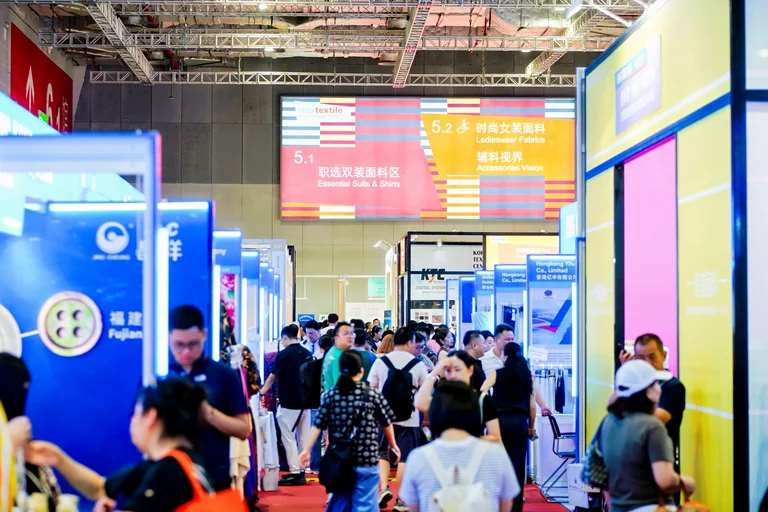
To be held from June 21-24, Texprocess 2022 will showcase innovative approaches to textile processing. The event has already confirmed more than 1000 registrations from international exhibitors.
As per a Knitting Industry report, the event will include the Texprocess Innovation Award for honoring progressive and unconventional new developments, ideas and visions and thus supports the cross-sector dialog between researchers, the manufacturing industry and users.
For the first time, Texprocess will also mark an outstanding development in the field of garment making and processing technologies with the Texprocess Fashion Technology Award.
An independent international jury will select the best ideas from all the innovations submitted. The winners of the Innovation Award will be presented at a special show at Texprocess 2022.The winners will also be presented virtually in the Digital Extension of Texprocess.
Techtextil and Texprocess 2022 will offer a Digital Extension: exhibitors and visitors can thus be found both on-site in Frankfurt and virtually and can exchange ideas in complementary formats. These new touchpoints include Matchmaking offers, round tables, chat function, 1-to-1 video calls or digital timetables.
International order cancellations affecting India’s textile mills: Chairman, SIMA
The cancelling of orders by international buyers due to cotton shortage is having a severe impact on the Indian textile mills, says Ravi Sam, Chairman, Southern Mills India Association (SIMA). He urged the government to remove import duties on cotton with immediate effect.
Immediate removal of the import duty will boost imports in May leading to huge profits for Indian farmers and enable them to begin sowing for the next season, adds Sam
The propagation of international traders for the removal of import duty will affect farmers badly but, non-removal will lead to a doom of the textile industry, he adds. Only en-users should be allowed to import cotton and not the international traders who try and hold them creating a further crisis for the Industry, states Sam.
Only 65% garment companies in Australia disclose initiatives on modern slavery: Report
A recent report released by international human rights group headed by Grace Forrest, Walk Free, shows, only 65 per cent garment companies in Australia disclose their initiatives on modern slavery.
Only 31 per cent of apparel companies in Australia and their respective statements meet the minimum approval requirements and reporting criteria. Similarly, only 61 per cent of luxury companies are transparent their approach to modern slavery.
Workers are bearing the losses induced by COVID-19 in the form of wage cuts and cancelled contracts. On the other hand, they are being forced to work for extended hours without any protection against COVID-19.
In line with Australia's Modern Slavery Act, companies across all sectors are required to provide statements on how they are actively addressing the issue of modern slavery.
In 2021, Walk Free along with Wiki Rate and a handful of academics from ANU, Nottingham University, Columbia University, and The University of Connecticut, reviewed the statements of garment companies to find out if they meet the basic requirements of current legislation
Around 43 per cent of companies failed to take affirmative action to mitigate the effects of the pandemic on the supply chain and their workers, the report shows.
Share of woven garments in Bangladesh’s apparel exports decline
The failure of Bangladesh’s backward-linkage industry to support the apparel subsector is causing the share of woven garments in its export earnings to wane.
Bangladesh’s woven apparel subsector faces strict rules-of-origin (RoO) requirements in its major destinations, including the European Union, after Bangladesh's LDC graduation. Manufacturers in the country will need to comply with double-transformation requirement irrespective of their access to GSP or GSP-plus schemes.
Most woven garments in Bangladesh are made from imported fabrics as local spinners can meet 35-40 per cent of demand of woven exporters, they say.
Demand for woven garments declined during the pandemic as most people stayed at home, says MD ShahidullahAzim, Vice President, , Bangladesh Garment Manufacturers and Exporters Association (BGMEA).
Mahmud Hassan Khan, Former Vice President, BGMEA, adds, the main reason behind the decline of woven share is absence of strong backward-linkage industry here.
Bangladesh imported 552,859 tonne of woven fabrics in 2021, up from 490,430 tonne in 2017, according to BTMA reckonings
Men’s formal shoe market to grow by 6.2% CAGR by 2022: Report
According to a new report published by Allied Market Research, titled,’Men formal shoe Market by Type and Application: Global Opportunity Analysis and Industry Forecast, 2014-2022, the global men formal shoe market is estimated to grow by a 6.2 per cent CAGR from 2016 to 2022 to reach $ 9,881 million by 2022.
The boots shoe type segment is anticipated to grow at a CAGR of 7.1 pre cent during the forecast period. The market in the developing economies is propelled by aggrandized production and sales of formal shoes in China and other Asian countries. There is also increased imports from many Asia-Pacific countries such as China, Indonesia, Vietnam and India to Europe and North America that enhanced the revenue on classic oxfords, stylish brogue, and loafers globally.
Increase in overall disposable income and consumer spending on footwear is expected to propel the market growth.
Europe is leading men formal shoe market, followed by the Asia-Pacific region. Asia-Pacific would witness the highest CAGR of 7.9 per cent mainly led by China, because of the large amount of footwear production and exports to European and North America nations. Other countries such as India, Japan, and Malaysia have also started to increase in market share.
Luxury brands to pause operations in Russia
Some of the world's leading luxury brands plan to temporarily close stores and pause business operations in Russia.
These include Birkin bag maker Hermes and Cartier owner Richemont were the first firms to announce such moves, followed by LVMH, Kering and Chanel. Russia’s invasion of Ukraine has made doing business in Russia complicated as United States, Britain and European Union have imposed sanctions on the country.
French luxury giant Chanel has decided to temporarily pause its business in Russia while LVMH, which owns such brands as Christian Dior, Givenchy, Kenzo, TAG Heuer and Bulgari among others, will close its 124 boutiques in Russia but will continue to pay the salaries for its 3,500 employees in the countryrs.
French multinational Kering, whose brands include brands as Gucci, Saint Laurent, BottegaVeneta and Boucheron among others, has two shops and 180 employees, which the company will continue to support.
While affluent Russians are keen consumers of luxury goods, analysts say the proportion of luxury sales generated from Russian nationals is small compared to the industry's main growth engines, China and the United States.
Richemont, which also owns Dunhill, Jaeger-LeCoultre, Montblanc, Piaget, and Van Cleef&Arpels among other brands, suspended commercial activities in Russia on March 3 after stopping Ukraine operations on February 24, the day Russia launched its invasion.
Russia accounts for around $9 billion in annual luxury sales, which is around 6 per cent of Chinese spending and 14 per cent of US spending on luxury goods, as per Investment bank Jefferies
Swiss watchmaker Swatch Group, which owns high end watches and jewellery labels including Harry Winston, has deferred exports from Russia due to the challenging situation"
L'Oreal, LVMH and Kering have all pledged financial support to help Ukrainian refugees and Richemont is initiating a significant donation to Medecins Sans Frontieres.
Inditex closes 502 shops, ceases online operations in Russia
Spanish fashion retailer Inditex has closed 502 shops in Russia besides stopping online sales.
Russia accounts for around 8.5 per cent of the group's global EBIT (earnings before interest and tax) and all the Inditex stores operate on a rental basis, The company palns to introduce a special support for its over 9,000 employees. It has already closed 79 stores in Ukraine.
Spain's second-largest fashion retailer Mango has also temporarily closed 120 Russian shops, and Tendam, the third-largest clothing group, has also taken a similar decision.
A week rouble and increased logistical challenges are making it difficult for retailers to conduct business in Russia , says Adam Cochrane, Analyst, Deutsche Bank Research. The country was an important element of Inditex’s sales growth in 2021, he adds
Fast Retailing to continue operating in Russia despite concerns
Fast Retailing Co., Asia’s largest retailer and parent of Uniqlo, will continue to operate in Russia even as international pressure to isolate the country for its invasion of Ukraine sees waves of companies pull out.
Tadashi Yanai, Chief Executive Officer, questions the trend that pressures companies to make political choices, The company also faces a French proble alongside a number of fashion brands.
Russia’s invasion of Ukraine has drawn international condemnation, sparked trade restrictions and financial penalties, and spurred an exodus of global companies. Fast Retailing’s bigger rival Inditex SA is temporarily closing 502 stores in Russia and suspending online sales. Apple Inc. and Nike Inc. have also closed stores, while carmakers including BMW AG and General Motors Co. have suspended vehicle deliveries.
The Japanese government has followed the line of the U.S. and much of Europe in imposing a raft of sanctions, including freezing the assets of a number of Russian officials and oligarchs, as well as those of financial institutions including Russia’s central bank.