


FW
U.S. Polo Assn. Hits $2.3B Sales, Aims for $3B by 2030
U.S. Polo Assn., the official brand of the United States Polo Association (USPA), surpassed the $2 billion milestone in 2022 with a record-breaking $2.3 billion in global retail sales. Operating in 190 countries, the brand has over 1,100 retail stores and a strong presence in department stores, sporting goods channels, independent retailers, and e-commerce. License Global ranks U.S. Polo Assn. among the top five largest global licensed sports brands worldwide, alongside NFL, MLB, and NBA.
The brand's growth is attributed to expanding across regions, gaining market share in mature markets like North America and Western Europe, and experiencing significant growth in emerging markets such as Asia, Latin America, the Middle East, and India. U.S. Polo Assn. aims to become India's leading casual menswear brand and a billion-dollar business.
With plans to increase its store count to over 1,500 globally, U.S. Polo Assn. entered new markets like the UK and Brazil in 2022 and will introduce an elevated brand concept in 2023. The brand's digital business tripled, operating around 50 brand sites in 20 languages and amassing 7 million social media followers.
U.S. Polo Assn. aims to reach $3 billion in sales and operate 1,500 retail stores by 2030 through strategic partnerships, authentic polo connections, and effective global marketing.
Puma secures exclusive sponsorship for San Francisco Marathon
Puma joins forces with Jumping Fences Inc., producer of the San Francisco Marathon, in their first-ever apparel and footwear sponsorship for a U.S. marathon. The collaboration grants exclusive rights to Puma for footwear and apparel throughout the marathon weekend in July. Puma takes the lead as the sponsor for the esteemed Run365 Training Program, motivating runners of all levels.
Puma plans to unveil a special edition Nitro shoe and apparel collection, reflecting the marathon's colors, for the 2024 event.
The brand has already sponsored notable U.S. female runners, including Molly Seidel. Lauri Abrahamsen, Director of Operations for Jumping Fences Inc., sees the partnership as a seamless match, highlighting shared values of collaboration, community, and humility in the endurance-running world.
Secondhand Apparel Market Growth Prospects
The USA & Canada secondhand apparel market is set to reach a value of $28.1 billion in 2023, with a compound annual growth rate (CAGR) of 12.3% from 2023 to 2033, as per Future Market Insights. The market's growth is fueled by the rising demand for sustainable fashion as consumers gravitate towards circular fashion practices and seek alternatives to fast fashion. Secondhand clothing contributes to sustainability by prolonging garment lifecycles and reducing clothing waste.
Cost-effectiveness plays a significant role in expanding the market, providing affordable options for individuals who desire quality brands at lower prices. The market caters to consumers seeking diverse styles, brands, and sizes, allowing them to express their individuality and personal style.
Online platforms have been instrumental in driving market growth, offering convenience and accessibility to shoppers. E-commerce enables consumers to effortlessly browse and purchase secondhand items from the comfort of their homes. Rental and subscription services have also gained prominence, providing customers with the opportunity to enjoy a rotating wardrobe without long-term ownership commitments.
Despite initial disruptions caused by the COVID-19 pandemic, the USA & Canada secondhand apparel market swiftly adapted by embracing online sales and emphasizing sustainability. Thrift shopping gained popularity due to affordability, showcasing the market's resilience. Key players such as ThredUP, Poshmark, The RealReal, and Depop are strengthening their market presence through collaborations, partnerships, and innovative product offerings.
India's Cotton Harvest Weakness Spurs Price Surge, Import Threat
International cotton prices are poised to increase further as India, the world's second-largest cotton grower, faces predictions of a weak harvest, potentially turning the country into a net importer. New York cotton futures closed at 84.79 cents a pound, experiencing a 7% surge since the end of April.
India's cotton export forecast for the 2022-23 year has been downgraded by the U.S. Department of Agriculture (USDA), with a 22% decrease compared to the previous estimate. Poor weather conditions in Telangana, Maharashtra, and other states have impacted India's cotton harvest, leading to a production forecast downgrade by the Cotton Association of India.
Experts anticipate that India will increase cotton imports, partly due to a tariff-cutting agreement with Australia. The USDA predicts a 75% rise in cotton imports for India in 2022-23. This shift in India's export status may strain global supply and demand, potentially driving up prices. With reduced exports from India, other cotton-producing countries will face increased demand.
Furthermore, the USDA projects a 14% decline in cotton exports by the United States, the world's largest cotton exporter, and an 11% decrease in exports from Brazil. This limited capacity to compensate for falling Indian exports coincides with growing global cotton demand, driven by economic recovery, particularly in Asia.
Overall, the combination of reduced Indian exports and rising global demand creates a tight supply situation, with potential implications for international cotton prices.
Textile Value Chain Hits Rock Bottom in May 2023
In May 2023, the textile value chain's global business situation worsened, hitting a new low of -36 percentage points. This deepened the industry's struggle as companies grappled with declining order intake and rising production costs, creating a perfect storm. Experts project this challenging scenario to persist until the year's end, according to the majority of global textile value chain forecasts.
Facing Persistent Challenges
Although expectations have slightly diminished after a positive start to the year, companies' outlook for the business climate in six months has gradually improved since November 2022.
The 20th ITMF Global Textile Industry Survey shows that order intake reached a new low in May, significantly impacting North & Central America and the fiber segment. "Weakening demand" has been a persistent concern since July 2022, with "inflation" gaining prominence as a global issue. Geopolitical worries have also escalated and are now among the primary concerns.
While the survey indicates relatively low order cancellation levels, there has been a slight increase compared to four months ago.
Inventory levels experienced a minor decline in May, particularly in South America, where the highest inventory level was recorded. Home textile producers and dyers/finishers/printers reported the highest inventory levels among different segments.
Overall, the textile industry faces a challenging period as it navigates through poor order intake, soaring production costs, and mounting concerns regarding inflation and geopolitics.
Prada, Zegna Invest in Fedeli's Knitwear
Prada and Ermenegildo Zegna have announced their acquisition of a 15% stake each in Luigi Fedeli e Figlio, underscoring the significance of high-quality knitwear in the luxury market. Luigi Fedeli, the current CEO, will retain majority ownership of 70% and remain in his role. The transaction's financial details were not disclosed.
Italy, renowned for its artisanal craftsmanship, houses numerous small manufacturers that dominate the global luxury clothing and leather goods production. Fedeli, established in 1934 in Monza, Italy, has been a family-owned business for three generations and has garnered acclaim for its premium yarns and knitwear.
Prada Group Chairman, Patrizio Bertelli, described the agreement as a strategic investment to uphold the excellence and tradition of Italian craftsmanship. Gildo Zegna, the head of Zegna, and Bertelli will join the board of Fedeli, according to the joint statement by the companies.
Inditex's Spring-Summer Sales Skyrocket
Despite wage costs and the loss of its Russian business, Inditex, the owner of Zara, reports a remarkable 16% increase in sales for its spring-summer collection. The world's largest fast fashion company continues its strong momentum, exceeding expectations with a 54% rise in first-quarter profit. The impressive net profit of 1.2 billion euros ($1.24 billion) showcases Inditex's ability to maintain competitiveness amid rising costs and the ongoing cost of living crisis.
With a market capitalization surpassing 100 billion euros ($107 billion), Inditex proves its resilience in adapting to challenges while keeping prices competitive. The company's strategic approach includes higher pricing outside the Eurozone, resulting in steady margins. Despite divesting its profitable Russian division, Inditex reports solid sales of 7.56 billion euros, indicating successfully navigating labor cost pressures.
In contrast, rival H&M struggles to compete amidst the cost of living crisis and adverse weather conditions in its home market. Inditex's in-store and online sales increased by 13% to 7.6 billion euros, aligning with earlier reports for the 2023 financial year.
Inditex's focus on enhancing the customer experience includes innovative measures like self-scanning checkouts and embedded garment chips to replace traditional anti-theft tags, reducing queues. Additionally, the company plans to open 30 more stores in the United States within two years, emphasizing its global expansion strategy.
As consumers become more discerning, Inditex's ability to gain market share underscores its position as one of the most vital global fashion retailers. With steady margins and an optimistic outlook for 2023, Inditex continues to thrive in the fast-paced fashion industry.
ASEAN pushing its way into global textile manufacturing leadership

Global textile manufacturing has traditionally been associated with China, US, the EU collective of France, Germany, Italy, Spain and Portugal, India, Bangladesh, Vietnam. Now a bunch of countries that come under the ASEAN group are emerging as strong bases for textile manufacturing – China’s predicament over rising labour costs, a sluggish demand cycle from the West and the niggling annoyance of the US trying to impede its financial journey, the ASEAN nations are making the most of it.
The case is almost the same with India. Inflation has become rampant in the country. This has increased input costs as a result finished goods have become costlier. Studies show 40 per cent of manufacturers have re-shored their units back from India and China to US. If not re-shored, they have found other cheaper destinations for manufacturing. India is no longer a favored destination for outsourcing.
Currently, the nations of the Association of Southeast Asian Nations (ASEAN) are harnessing the power of trade, migratory labour and transferable capital to create prosperity in South-East Asia. In particular, the international garment industry within ASEAN is helping to integrate regional investment, transfer skills, create jobs and boost economic growth.
ASEAN region steadily captures market share
ASEAN countries are making steady inroads in the global textile market. Countries like Cambodia, Thailand, Vietnam, Myanmar, and the Philippines have a potentially strong textile market and they are developing the sector well. Exports of textile products are continuously increasing. These countries have started giving a tough competition to India and China.
They have fair chances of ruling the global textile market in the distant future. As deputy chairman of Cambodian AFTEX member Textile, Apparel, Footwear and Travel Goods Association in Cambodia (TAFTAC), Alfred Tan recently stated the textile-linked industries are a linchpin of many ASEAN economies and operate in highly competitive markets. He claimed the region had performed well in terms of capturing more global market share, serving as an alternative source of supply to China and some other key supplying countries. Tan also highlighted that over the past decade, overall gap between production costs, which primarily include raw materials, labour, logistics and compliance, and FOB (free-on-board) and retail pricing has narrowed. He expects this trend to continue into the next decade. ASEAN governments were quick to pick up the future potential of the sector in their respective countries in terms of domestic job opportunities and generation of foreign exchange. In fact, most of these governments are providing tax holidays to manufacturing units and working with the sector to attract local, regional and international direct investments.
The ASEAN cooperation on environment is guided by ASCC Vision 2025 that strives to promote and ensure balanced social development and sustainable environment that meet the needs of the peoples at all times through coordinated efforts on key priority areas as outlined in the ASCC Blueprint 2025. This has helped in establishing their credibility in moving towards greener methods of manufacturing that has gone down well, particularly with the EU.
Towards stronger vertical integration
The ASEAN Federation of Textile Industries (AFTEX), a group of textile and garment associations of the 10 ASEAN member countries, has launched the Source ASEAN Full Service Alliance (SAFSA). SAFSA works on linking ASEAN apparel factories to create a virtual vertical supply chain between buyers, textile mills, and apparel factories, enabling businesses to offer a complete service package to international buyers. SAFSA has 45 members trading among themselves including 27 buyers with over US$ 50 billion in annual apparel sales. Some of the major brands that are SAFSA customers are the Benetton Group, Colombia Sportswear Company, Debenhams, Guess, Marks & Spencer, Polo Ralph Lauren, and Hermes-OTTO.
Spurt in orders injects optimism among Indian garment exporters
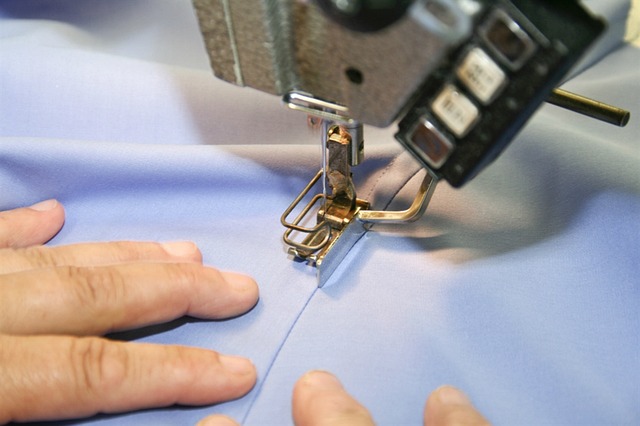
The readymade garment export situation in India has been a trending discussion in media and for good reason. While a lot was being talked about the Ministry of Textile laying out behemoth plans for seven textile and garment manufacturing hubs spread across the county, truth be told the RMG exporters weren’t a joyful bunch. Needless to say, the global economic slowdown, mainly in the EU, has impacted consumer spending, and demand for textile products, irrespective of the brand, has declined. Indian businesses seem to think that this is a passing phase as the West has grappled with recession and inflation and might soon stabilise.
Additionally, businessmen have realised as the anti-China stance grows in the West, India then becomes an obvious choice for sourcing. Minister of State for Textiles Darshana Jardosh has been an encouraging voice for the beleaguered sector. She appealed to the apparel manufacturers and exporters to emphasize innovation and quality by matching the latest fashion trends and assured all sorts of support from the government for the development and expansion of the apparel industry. She points out, India’s annual textile and apparel exports closed 2022 at $44 billion, up 41 per cent. RMG made of cotton accounted for the largest value in Indian textile exports in fiscal year 2023. On average that year, textiles from cotton and man-made fibers had a higher export value compared to jute and silk, as well as raw materials from the country.
What lies ahead
While the 41 per cent increase is an outstanding performance, it is mainly in the textile and its auxiliaries that accounted for the growth. In 2022-23, India’s RMG exports were $16 billion, an increase of 1.09 per cent over the previous year. A decline in orders was being faced by garment manufacturers but things are improving. Experts point out, even though volume is not as huge as expected, the flow of orders means the apparel and garments should hit stores in markets such as the US and Europe for Christmas and New Year. And of course, these orders have come in May, unusually late for the end of year sales in Western markets.
Many manufacturers have taken this as cue to feel upbeat about an incoming surge in orders in 2024 and 2025. KM Subramanian, President, Tirupur Exporters Association (TEA) is one such optimist. He says, it would be prudent to wait and watch as there is no clarity on orders among global customers in the present climate.
International high street and luxury brands such as Tommy Hilfiger, Nautica, Ross, Decathlon, Suburbia, Polo Ralph Lauren, and GAP are major customers for Indian garment exporters and seem to be returning with orders for Winter 2023/24. After a bad April 2023 that saw exports of readymade garments dip as low as 17 per cent, recovery albeit slow started from May. The industry saw a fall in orders compared with the previous year. Large companies are expected to see a decline in turnover of the order of 10-30 per cent. Smaller companies have faced even greater difficulties.
A case in point is Tirupur-based Eastman Exports, supplier of knitwear and high-end apparel for international fashion labels. The Managing Director, N Chandran declared that orders are now back again, much to his relief. Some exporters are holding their breath for the finalization of India’s FTAs with Canada and the UK, which will bring in a substantial scope and opportunity.
Walmart opens up a lot more possibilities
When chief executive officer Doug McMillon of Arkansas-based Walmart announced in May that his firm will meet the sourcing target of $10 billion from India each year by 2027, it did feel that India’s readymade garment exporters finally had a shining star to look up to. TEA announced that the hub had already started receiving orders for textiles from Walmart, Target, H&M and Tommy Hilfiger.
ASEAN pushing its way into global textile manufacturing leadership
Global textile manufacturing has traditionally been associated with China, US, the EU collective of France, Germany, Italy, Spain and Portugal, India, Bangladesh, Vietnam. Now a bunch of countries that come under the ASEAN group are emerging as strong bases for textile manufacturing – China’s predicament over rising labour costs, a sluggish demand cycle from the West and the niggling annoyance of the US trying to impede its financial journey, the ASEAN nations are making the most of it.
The case is almost the same with India. Inflation has become rampant in the country. This has increased input costs as a result finished goods have become costlier. Studies show 40 per cent of manufacturers have re-shored their units back from India and China to US. If not re-shored, they have found other cheaper destinations for manufacturing. India is no longer a favored destination for outsourcing.
Currently, the nations of the Association of Southeast Asian Nations (ASEAN) are harnessing the power of trade, migratory labour and transferable capital to create prosperity in South-East Asia. In particular, the international garment industry within ASEAN is helping to integrate regional investment, transfer skills, create jobs and boost economic growth.
ASEAN region steadily captures market share
ASEAN countries are making steady inroads in the global textile market. Countries like Cambodia, Thailand, Vietnam, Myanmar, and the Philippines have a potentially strong textile market and they are developing the sector well. Exports of textile products are continuously increasing. These countries have started giving a tough competition to India and China.
They have fair chances of ruling the global textile market in the distant future. As deputy chairman of Cambodian AFTEX member Textile, Apparel, Footwear and Travel Goods Association in Cambodia (TAFTAC), Alfred Tan recently stated the textile-linked industries are a linchpin of many ASEAN economies and operate in highly competitive markets. He claimed the region had performed well in terms of capturing more global market share, serving as an alternative source of supply to China and some other key supplying countries. Tan also highlighted that over the past decade, overall gap between production costs, which primarily include raw materials, labour, logistics and compliance, and FOB (free-on-board) and retail pricing has narrowed. He expects this trend to continue into the next decade. ASEAN governments were quick to pick up the future potential of the sector in their respective countries in terms of domestic job opportunities and generation of foreign exchange. In fact, most of these governments are providing tax holidays to manufacturing units and working with the sector to attract local, regional and international direct investments.
The ASEAN cooperation on environment is guided by ASCC Vision 2025 that strives to promote and ensure balanced social development and sustainable environment that meet the needs of the peoples at all times through coordinated efforts on key priority areas as outlined in the ASCC Blueprint 2025. This has helped in establishing their credibility in moving towards greener methods of manufacturing that has gone down well, particularly with the EU.
Towards stronger vertical integration
The ASEAN Federation of Textile Industries (AFTEX), a group of textile and garment associations of the 10 ASEAN member countries, has launched the Source ASEAN Full Service Alliance (SAFSA). SAFSA works on linking ASEAN apparel factories to create a virtual vertical supply chain between buyers, textile mills, and apparel factories, enabling businesses to offer a complete service package to international buyers. SAFSA has 45 members trading among themselves including 27 buyers with over US$ 50 billion in annual apparel sales. Some of the major brands that are SAFSA customers are the Benetton Group, Colombia Sportswear Company, Debenhams, Guess, Marks & Spencer, Polo Ralph Lauren, and Hermes-OTTO.











