


FW
Fashion Weeks Unveil Massive Emissions
London Fashion Week commences, highlighting the industry's overlooked environmental impact. A recent study reveals that fashion shows, business travel, and collection transportation contribute significantly to carbon emissions.
The study by Carbon Trust & ORDRE unveils shocking findings: 11,000 retail buyers and 5,000 designers produced a staggering 241,000 tonnes of carbon emissions, surpassing Saint Kitts and Nevis' 2017 greenhouse gas emissions and capable of powering Times Square for 58 years.
New York's fashion week ranks highest with 60,000 tonnes of emissions, followed by Paris with 45,000 tonnes and London with 28,000 tonnes. Buyers average 12.1 tonnes, while designers' employees average 7.6 tonnes of carbon footprint.
This report intensifies global pressure for sustainable fashion practices. Recommendations include economy class travel, combining trips, prioritizing trains over flights, and consolidating seasons and collections.
The research encompasses fashion weeks in Amsterdam, Tokyo, Barcelona, and other cities, emphasizing the urgent need for industry-wide changes.
Bulgaria Embraces Bangladeshi Garment Workers
The European labor market offers a significant breakthrough for Bangladeshi garment workers as the Bangladesh Overseas Employment and Services Limited (BOESL) initiates the first-ever opportunity. At the expense of the government, 55 skilled workers from Bangladesh will be sent to Bulgaria, a Southeast European country known for its thriving garment and textile industry.
The selected workers, including swing and pressing machine operators, textile tailors, and other skilled professionals, will join Bulgarian garment factories, fulfilling the demand specified by the Bulgarian government. They can expect a monthly salary ranging from 35,000 to 50,000 taka, inclusive of overtime, and accommodation facilities provided by the employing organization.
This landmark move marks the creation of employment opportunities for Bangladeshi garment workers in the European Union, a crucial milestone for the country's workforce. To ensure successful integration into Europe's labor market, the Bureau of Manpower, Employment, and Training (BMET) has devised a special action plan.
With Bulgaria expressing interest in hiring Bangladeshi garment workers in 2022, the process of visa processing and candidate selection is currently underway. Bangladesh has also set an ambitious target of sending 1.2 million workers to various countries this year, according to the BMET.
Green Label Awards for CO2 Reductions at ITMA
Italian textile machinery association, ACIMIT, recognized two of its member companies, Pafasystem and Brazzoli, with Green Label awards for their achievements in reducing carbon dioxide emissions generated by their machines. The awards were presented at an event held during the ITMA exhibition in Milan.
Pafasystem, based in Prato, specializes in spinning machinery, while Brazzoli, located in Senago, focuses on fabric dyeing technologies. The Green Label Awards are part of ACIMIT's Sustainable Technologies project, which began in 2010 and involves over 40 member companies dedicated to environmental improvements.
ACIMIT President Alessandro Zucchi highlighted the long-standing commitment of Italian manufacturers to sustainability, emphasizing their dedication to providing effective and cost-saving technological solutions.
Pafasystem CEO Francesca Fani expressed gratitude for the recognition, attributing the achievement to the collective efforts of their team in enhancing production efficiency.
Greta Banfi, Technical Department Manager at Brazzoli, emphasized the company's early participation in the Green Label project, showcasing the prominent role of Italian textile machinery manufacturers in promoting eco-friendly technology trends.
With 422 exhibitors, Italy, as the host country for ITMA 2023, enjoys the largest presence at the exhibition.
Asia’s garment manufacturing should focus on strategic shift: McKinsey
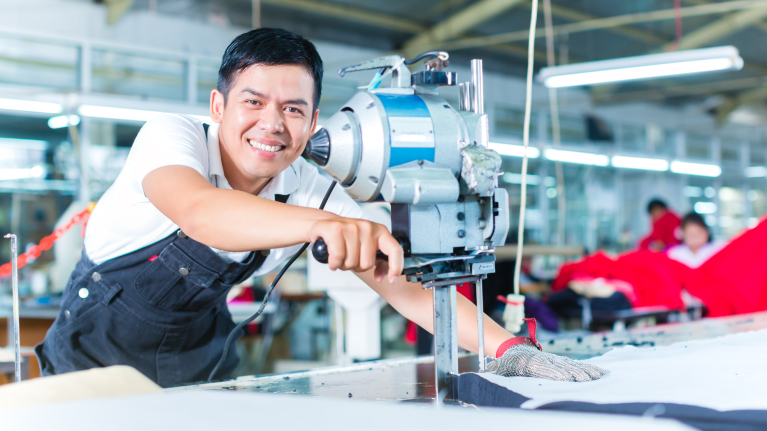
In a recent McKinsey report, a group of experts from the consulting firm’s Retail Practice point out, Asian readymade garment manufacturers need to be strategic in the context of changing scenarios in their importing markets that were primarily driven by the 2020-2021 lockdown, the Ukrainian conflict and the ever-rising environmental concerns that the garment industry has been facing for decades.
Post pandemic, most fashion brands have changed their buying strategy to make it more seamless and foolproof, especially the ever-important supply chain. Western buyers now seem more interested in their resources in Asia undergoing digital transformation and be analytics driven thus enable themselves to provide smooth interaction. So much so that in the near future Western importers might make digital transformation a mandatory feature if the supplier wants their business. The other strategy gaining grounds is “near-shoring” or having manufacturing hubs closer to the consumer market which lowers logistical costs and saves on carbon miles. The idea is suppliers invest in creating hubs closer to their long-term partners’ markets.
Asian manufacturers face serious issues
China, India, Bangladesh, Indonesia, Malaysia, Vietnam and Sri Lanka are at the helm of global exports of readymade garments. However, with the US and EU reducing orders steadfastly it has created a crisis-like situation so much so that in an all-time first for the region, Vietnam and already financially-crippled Sri Lanka shut down factories or operated at a bare minimum starting January 2023 until round April. Even Bangladesh and India have run units at 60 or 70 per cent capacities and the challenged situation is seeing profits spiral downwards.
The key challenges these nations face are that fashion brands are paying less to balance their retail sales in an economic crisis-hit west, which in turn is adding to the cost pressure as Asian nations too are paying more on operational costs and raw material. The other main challenge is the speed and flexibility of suppliers, which raises the point of near-shoring for the benefit of a long-term partnership, and flexibility so supply chains can be rearranged effortlessly if and when situations arise. Digital transformation, an element that is poorly represented in Asian manufacturing hubs has to be deployed immediately and sustainability has to be taken seriously to gain credibility in conscious consumers. That is a lot to take on and in this situation McKinsey has some insightful recommendations to the beleaguered sector in Asia.
Five-deck strategy to meet challenges
An important recommendation for the future will be partnerships that large Asian manufacturers invest in. As the fashion sector becomes increasingly polarized, it has been observed that the top 20 brands are resilient and steady since 2019 until now. It may be worthwhile deciding who suppliers envision as long-term partners and initiate their choices based on honest appraisals of their own capacities and capabilities.
Future-proofing manufacturing units by leveraging digital and analytics to drive productivity and provide strategic benefits to partners that are categorized as long-term ones – the value on offer will play a key role in sustaining such partnerships.
Recalibration of commercial negotiations that are based on customers, their product portfolios and the economic situation of their markets will help fortify the relationship as credibility and practicality of the business engagement will enable its continuity.
Structural overhauling is the fourth part of the strategy that requires alignment of the commercial aspect of the business with demand and specification-based initiatives in external spends. Done well, this can end up with about ten per cent cost benefit for manufacturers.
Lastly, diversification of geographic customer portfolio and investing in targeted markets thereby onboarding near-shoring is a key strategy. The manufacturers that have already adopted the “local for local” are winning on logistical costs already.
Swimwear rides the health and wellness global tide

With heightened awareness on health and fitness worldwide, Indian attitude to swimwear has been swimming against the tide of a relatively nascent apparel segment. Many Indian fashion brands have now entered the swimwear market with innovative designs in the bikinis and one-piece cut-away swimsuits that are the most popular although other silhouettes like monokinis, swimming dresses and even burkinis are also part of the extended portfolio in India and other traditional countries.
Growth in the swimwear retail market can be attributed to a thriving beach travel industry, influence of social media, rise of physical fitness and even destination weddings where swimwear is now a part of the bride’s trousseau. Experts say, that the segment makes a profit margin of around 40 per cent especially due to the New Age social media.
Global swimwear segment to grow 2.16 per cent CAGR
Latest Statista report the leading global provider of market and consumer data- the revenue in the sports and swimwear global segment amounts to $817.70 million in 2023 with the market expected to grow annually at 2.16 per cent CAGR from 2023-2027. In global comparison, most of this revenue is from the US with $12,600 million in 2023 and expected to show a volume growth of 2.4 per cent in 2024.
In India too, many domestic brands have sprung up over the last decade, giving stiff competition to international brands as they have versatile designs more suited to the Indian woman’s shape and likings. As fashion comes of age in India, more homegrown labels are jumping into this bandwagon and more international niche swimwear labels are launching here.
Many international retailers such as Madewell are expanding their third-party brand mix to diversify their range and acquire new customers which currently stocks 14 external brands while M&S has extended its branded offering with stocking Sosandar and Fantasie.
Allied Market Research, a well-known consulting and advisory firm had valued the global swimwear market at $18,454 million in 2017 and new reports indicate that there has been a healthy growth rates in India and the market is currently pegged at Rs 150-200 crores while growing at the rate of 15-20 per cent year on year.
Bespoke and innovative swimwear making waves
As per Ajay and Kalpana Rajpal of Mezzaluna who have a innovative portfolio of bespoke swimsuits, the swimwear segment is now vast, ranging from tiny bikinis to covers-more silhouettes like monokinis and even burkinis and it is now a category that caters to all cultures. With destination weddings on the rise, bikinis are not only part of the trousseau, but even entering traditional dressing as they can double up as sari blouses and maillots can be worn as bodysuits.
Neha Gupta, Founder of Exchange4Fashion, says international luxury labels in India are focusing on innovative styling on Indian women’s body shapes and working with overlay styles. As the market grows, entry-level prices of most brands are increasing while including inclusive product descriptions with mentions of slimming designing abilities having drastically decreased to inspire body confidence while retaining shape and fit. Specialized niche design such as long-torso designs and special period and leak-proof swimsuits made from recycled fabrics with Modifier Swim Technology that is absorbent, stain and odor-resistant, is also making an all-new entry into the category.
ITMA ASIA + CITME expands to Singapore
CEMATEX and its Chinese partners have chosen Singapore as the second Asian location for the ITMA ASIA + CITME textile machinery exhibition. The event held biennially in Shanghai since 2008, will take place at the Singapore Expo from 28 to 31 October 2025. ITMA Services will organize the exhibition, co-organized by Beijing Textile Machinery International Exhibition Co. The expansion aims to support local manufacturers in South Asia, Southeast Asia, and the Middle East.
The exhibition, themed "The Leading Textile Technology Exhibition Driving Regional Growth," is expected to attract 700 exhibitors and 30,000 visitors across 60,000 square meters. Singapore's facilities, business environment, and connectivity to textile hubs make it an attractive choice.
The Singapore Tourism Board welcomed the decision, recognizing the exhibition's importance in fostering growth and trade integration.
The upcoming ITMA ASIA + CITME exhibition will be held in Shanghai from 19 to 23 November 2023, with subsequent editions continuing in Shanghai biennially
Better Cotton Transforms Uzbekistan's Sector
Better Cotton has partnered with key stakeholders in Uzbekistan to develop and sign a Roadmap of Sustainability Developments, aiming to drive significant improvements in the country's cotton sector. Signatories to this collaborative agreement include Uzbekistan's Senate Chairperson, Her Excellency Tanzila Narbayeva, and the Chairperson of the National Commission to Combating Human Trafficking and Forced Labour, Ilkhom Khaydarov. Rachel Beckett, Senior Programme Manager of Better Cotton, presented the roadmap during Tashkent Textile Week to an audience of over 600 delegates, highlighting its importance. National stakeholders, including the Ministry of Agriculture, Ministry of Employment, and Textile and Garments Association, have pledged their support for the roadmap's objectives.
The roadmap builds upon the existing Better Cotton Programme launched in Uzbekistan in 2022, focusing on establishing effective management systems, promoting labor rights and safe working conditions, encouraging environmental sustainability, and developing a three-year strategic plan.
Better Cotton aims to create value and drive positive changes for the environment, producers, and workers in Uzbekistan's cotton sector by offering recommendations for sustainable practices.
With the backing of key stakeholders, Better Cotton aims to address current and future concerns while supporting cotton farmers across the country.
VDMA Members Transform Textile Industry
VDMA members made a significant impact at ITMA 2023, the world's leading trade fair for textile machinery in Milan. The 110 exhibiting VDMA members, covering various machinery chapters, presented their innovations in spinning, nonwovens, weaving, knitting, and more. The German exhibitors, totaling around 200, showcased their expertise on 17,700 square meters, accounting for 15% of the event's space.
During the VDMA press conference at ITMA, themed "Transforming the World of Textiles: efficient - digital - circular," five prominent member companies showcased their solutions in sustainability, circular economy, digitalization, efficiency enhancement, and resource saving.
The chairman of the exhibition and marketing committee of VDMA Textile Machinery, André Wissenberg, unveiled the EvoSteam process, which enables significant water savings. Oerlikon presented digital ecosystems for real-time alerts, condition monitoring, and predictive maintenance.
Saurer Group focused on sustainable spinning and twisting solutions for yarns made from recycled or regenerated fibers. Lindauer Dornier highlighted their commitment to productivity, quality, and innovation in the dynamic textile industry.
Herzog Maschinenfabrik demonstrated their role as enablers of CO2-neutral energy production, while Thies showcased their Signature Series, reducing dyestuff consumption and water usage.
In addition, VDMA introduced a web-based demonstrator for the digital networking of machines using the OPC UA standard, facilitating the exchange of process information.
Moreover, VDMA invested €95,000 to support 320 students from technical universities attending ITMA, recognizing the importance of highly qualified engineers for developing marketable technologies in the textile industry.
Bangladesh RMG Must Align Globally
A recent report by PwC Bangladesh highlights the need for readymade garment (RMG) manufacturers in Bangladesh to align their product offerings with global sourcing trends and transition towards value-added products. The report, titled 'What's next for the RMG sector in Bangladesh?', emphasizes the importance of customized strategies to penetrate existing markets, enter new markets, and diversify product ranges.
It further emphasizes the significance of industrial infrastructure, logistics, and efficient operations to reduce costs, ensure environmental sustainability, and mitigate business risks. The report also stresses the need for continuous skill development, adoption of new technologies, and a focus on circular economy practices and sustainability in product design. Additionally, it calls for improvements in power supply, transportation, custom clearance processes, and textile manufacturing capacity to drive industry growth.
Milan's EURATEX Assembly: Innovating Textile Sustainability
EURATEX General Assembly in Milan on June 7 focused on innovation, sustainability, and the future workforce. Members embraced the Textiles Transition Pathway as a roadmap for a green and digital transition. The event strengthened ties with textile machine manufacturers at ITMA 2023, the largest textile machinery trade fair.
Hosted by Sistema Moda Italia, discussions revolved around developing competitive business models guided by Industry 5.0. This concept prioritizes worker well-being and uses technology for prosperity while respecting the planet's limits.
Keynote speakers highlighted the impact of digital transformation in retail and the need for adaptation. Textile machinery manufacturers discussed facilitating the transformation through advanced machinery, emphasizing collective efforts and public support. ITMA 2023 in Milan will showcase innovation and sustainability.
Sistema Moda Italia is honored to host EURATEX's event, advocating for a circular economy. Their goal is to promote circularity and a sustainable supply chain.
EURATEX President emphasized the importance of stakeholder support for Textiles 5.0. The EU transition pathway for textiles was reviewed, highlighting the collaboration between institutions and stakeholders. Future initiatives should follow the same approach.











