


FW
Female sports boost $305.67B sportswear market
Global sportswear market to reach USD 305.67 billion by 2030, growing at 6.72% CAGR. In 2022, it was valued at USD 182.01 billion and is expected to reach USD 193.89 billion in 2023. Popularity of sportswear due to breathability and sweat-wicking capabilities drives market growth. The "Sportswear Market, 2023-2030" report by Fortune Business Insights™ analyzes market trends, growth factors, and strategies of key players.
Factors contributing to market growth include increasing female participation in sports like basketball, athletics, and football, as well as rising popularity of events such as Women’s FIH Hockey World Cup and FIFA Women’s World Cup.
Counterfeit products in several countries pose challenges. COVID-19 pandemic negatively impacted sportswear industry with decreased sales and delayed shipments due to lockdowns. Market is expected to recover as precautions ease. Market segmented into apparel, footwear, and wearables. Apparel dominates due to high demand in activities like tennis, basketball, and football.
Men's segment shows significant growth with outdoor activities like trekking and cycling. Distribution channels include retail stores and e-commerce. Retail stores to expand due to global popularity of sportswear brands.
Geographically, market divided into North America, Europe, Asia Pacific, South America, and the Middle East & Africa. Sportswear market poised for robust growth, driven by demand for products and increasing women's sports participation.
China's World Factory Status Under Threat
China's "world's factory" status is challenged by a ten-month decline in its US exports due to supply-chain reshoring. Weak demand, a sluggish economy, and inflation have reduced overall US imports, with China experiencing a more significant decline compared to Mexico. Notably, China's share of major US imports, especially in textiles and apparel, has dropped by 4 percentage points from 2022 and nearly half of its level a decade ago.
Factors like Covid disruptions, US-China trade tensions, and the Uygur Forced Labour Prevention Act discourage sourcing from China. China's dominance in low-cost consumer goods, such as furniture and toys, has diminished. Chinese companies have shifted furniture assembly to Mexico-focused industrial parks near the border.
China's share of US imports for mechanical and electrical products has also decreased. While no country can replace China entirely, low-cost Asia-Pacific nations and Mexico can benefit from changing supply chains.
The trend of declining Chinese exports to the US will persist, impacting China's economy in the short term and necessitating a focus on domestic demand. In the long term, China's export advantage relies on high-tech products.
Bangladesh Flourishes in Non-Traditional Markets
Bangladesh's apparel exports to non-traditional markets surged to $7.68 billion in FY23's first eleven months, a 32.74% YoY increase. Non-traditional markets, including Japan, Australia, Russia, India, China, South Korea, UAE, Malaysia, Brazil, Mexico, accounted for 18.04% of the ready-made garment (RMG) sector's earnings during July-May. In FY22, non-traditional markets contributed $6.37 billion, representing 14.96% of Bangladesh's total RMG export revenues.
As major markets face saturation and economic uncertainties, Bangladesh aims to diversify by exploring non-traditional markets and capture a larger global market share. Noteworthy growth was seen in exports to Japan (45.80% YoY increase, $1.46 billion), Australia (41.82% increase, $1.06 billion), India (46.44% surge, $947.86 million), South Korea (28.85% growth, $501.01 million), and Mexico (29.41% rise, $313.94 million).
Bangladesh's potential inclusion in the BRICS economic group (Brazil, Russia, India, China, South Africa) opens doors to significant non-traditional markets. Apparel exports to BRICS countries reached $1.87 billion in July-May, a 16.38% increase from the previous fiscal year. By focusing on non-traditional markets, Bangladesh aims to increase exports, diversify products, and leverage geographical proximity to countries like China, Japan, India, and Australia.
This strategy taps into the purchasing power and growth potential of these markets, while major markets face economic challenges. In the current fiscal year, Bangladesh earned $42.63 billion from global apparel exports, reflecting a 10.67% growth compared to FY22.
As apparel imports by US, UK and EU falls, Japan bucks the trend with a rise: Wazir Report

Wazir Advisors in its June 2023 ‘Apparel Trends Scenario in key global markets and India’ report reveals Japan’s apparel import in April was $1.8 billion, 6 per cent higher than that in April 2022. On YTD basis, imports are 4 per cent higher than in 2022. In Japan’s apparel imports, Vietnam’s share increased by 2 per cent, whereas that of China declined by 7 per cent compared to 2021. From January to April 2023, China was the largest apparels supplier to Japan, still holding on to more than half of the total imports, at 51 per cent. Vietnam during that period supplied only 16 per cent whereas Bangladesh and Cambodia supplied 6 per cent and 5 per cent respectively. The total supply from other countries to Japan is again bucking Western trends as its diversification of supplier countries is considerably less than that of the US, the UK and the EU. The latest Wazir report covers the period April and May 2023
Imports down, retail up in the US
April 2023 has been a tumultuous one for the US economy with many banks failing and national debt in crisis mode. Therefore, apparel imports were 19-months down at $5.8 billion in April, which is 28 per cent lower than in April 2022. On YTD basis, imports are 21 per cent lower than in 2022. China’s share in the US market has reduced by 5 per cent since 2021, whereas India’s share rose 2 per cent. Moreover, April performed slightly better than March 2023, YOY. China continues ruling the roost at 18 per cent with Vietnam catching up at 17 per cent. US’ near-shoring is evident as other supplier countries form the bulk at 42 per cent. The good news is that in May 2023, the US monthly apparel store sales were estimated at $18.5 billion, 1 per cent more than in May 2022. On YTD basis, sales were 4 per cent higher than in 2022. With home furnishings showing negative sales were down by 9 per cent in May 2023 compared to May 2022. In Q1 2023, online clothing and accessories sales grew 2 per cent over Q1 2022 and were 32 per cent lower than Q4 2022.
The UK and EU mirror the US
UK apparel imports in April 2023 were $1.4 billion, 22 per cent lower than in April 2022. On YTD basis, imports in 2023 are 16 per cent lower than in 2022. In the UK apparel market, China’s share has decreased by 5 per cent, since 2021 and it now has only 17 per cent of import as do Bangladesh. Again, like the US, the UK is definitely spreading its buying basket wider as other countries constituted 47 per cent, the largest amongst the four markets discussed.
The EU’s diversification is lesser than that of the US and the UK as others form 30 per cent whereas China and Bangladesh are the two top suppliers pegging at 24 per cent. This is due to China losing 6 per cent and Bangladesh gaining 4 per cent. The EU’s apparel import in April 2023 decreased by 16 per cent, compared to April 2022, and was valued at $6.3 billion. On YTD basis, imports are 3 per cent higher than in 2022.
As for e-commerce, in Q1 2023, online sales of clothing registered a growth of 13 per cent over Q1 2022. In April 2023, the UK’s monthly apparel store sales were £3.6 billion, which is 9 per cent higher than in April 2022. On YTD basis, the sales were 13 per cent higher than in 2022.
Indian apparel exports still down
In May 2023, India’s apparel exports are estimated to be $1.2 billion, 14 per cent lower than in May 2022 exports. On YTD basis, exports were 13 per cent lower than in 2022. The US remains India’s top destination with 31 per cent of its apparel exports.
IFCO-Unrivaled fashion event in Istanbul
IFCO Istanbul Fashion Connection, the largest fashion fair in Europe, and this year it's going to be even bigger and better, to be held between August 9th to 11th, 2023, at the Istanbul Expo Center to showcase the latest trends and innovations in the industry.
Featuring an impressive lineup of 400 exhibitors representing every aspect of the fashion world, this event is a must-attend for anyone with a passion for style. Spanning across six halls, visitors will be treated to a diverse array of fashion products, including women's, men's, and children's fashion, denim, sportswear, bridal fashion, accessories, and much more.
The highlight of the event will be "THE CORE ISTANBUL," where top designers will showcase their exquisite creations. Market leaders like İpekyol, Damat, Kiğılı, and Lufian, among others, will also be present to present their renowned brands.
Moreover, attendees will have a unique opportunity to connect with leading Turkish manufacturing companies across various sectors. With an expected turnout of over 30,000 visitors from more than 100 countries, IFCO promises a global networking experience like no other. Buyers can look forward to a special invitation program exclusively tailored for them.
Through the successful speed-dating networking concept, both visitors and exhibitors will benefit from targeted and effective networking opportunities. Don't forget to mark your calendars and join us at IFCO Istanbul Fashion Connection for an unforgettable fashion extravaganza!
Foreign investors loyal amid Indonesia’s textile decline
Amidst a decline in investment in Indonesia's textile sector, foreign investors from South Korea and Taiwan continue to demonstrate their commitment to the industry. According to Ignatius Warsito, Director General of the Chemical, Pharmaceutical, and Textile Industry (IKFT) at the Ministry of Industry, foreign direct investment (FDI) dominated over domestic investment (PMDN) in the first quarter of 2023.
Warsito stated, "In the first quarter of 2023, FDI in textile investment will actually increase," adding further credibility to the industry's foreign appeal. Investment data obtained from the Investment Coordinating Board's National Single Window for Investment (NSWI) website reveals that textile FDI during this period amounted to US$74.34 million, equivalent to IDR 1.10 trillion.
This represents an 84.13 percent increase compared to the same period last year and an 81.49 percent increase from the previous quarter. Among the foreign investors, South Korea led the way, investing US$28.6 million in 125 textile projects, followed by Taiwan with US$13.96 million across 27 projects.
India also contributed significantly with five projects totaling US$11.28 million. Despite the challenges faced by the Indonesian textile sector, other nations such as Hong Kong, Japan, and China also demonstrated interest, further diversifying the investment landscape.
India: Yarn Bazaar raises funds for expansion
In a successful pre-Series A funding round, B2B managed marketplace, The Yarn Bazaar, has raised INR 15 crore. Led by the Rajiv Dadlani Group and Equanimity Ventures, the funding round attracted prominent investors such as ArihantPatni, EktaKapoor, Ritesh Malik, AakritVaish, SumeetSrivastava, and MitenSampat.
Renowned names from the textile industry, including Anil Mansingka, Dr.Amit Lath, Sharda Group of Companies, NikunjBagdia, and VineetGarg, also joined the round. The Yarn Bazaar plans to utilize the funding to strengthen its senior leadership team, expand operations, and leverage its strong inbound pipeline. As a B2B managed marketplace, The Yarn Bazaar provides real-time yarn prices, market trends, and valuable information, empowering sellers to expand their market reach and increase profits.
Similarly, buyers can reduce procurement costs and raw material expenses. With transaction value exceeding INR 370 crore and an average order value of INR 19 lakhs, The Yarn Bazaar aims to enhance its online presence and deliver an improved user experience, solidifying its position in the market.
Denim Global Fabric Market Soars
A recent research study delves into the global Denim Fabric market, revealing impressive growth projections. The market, which recorded a value of USD 19,021.04 million in 2022, is expected to reach USD 27,381.25 million by 2028, exhibiting a robust compound annual growth rate (CAGR) of 6.26% throughout the forecast period.
Denim fabric, known for its durability and commonly used in the apparel industry, finds application in jeans, jackets, shorts, and other clothing and accessories. By employing weft and warp weaving techniques, denim fabric acquires its distinctive diagonal ribbing. Reinforced by a twill weave, denim can withstand substantial friction before succumbing to wear and tear.
Occasionally, small amounts of polyester or spandex are incorporated to enhance specific attributes. However, the denim fabric market experienced setbacks due to the COVID-19 pandemic. Disruptions in the supply chain and increased raw material costs, particularly cotton and cotton yarn, hindered production.
As a result, the market witnessed shifts in fabric requirements, styles, and sales models. Industry players responded with innovations such as bio-antibacterial and environmentally friendly denim fabrics.
Online sales methods gained prominence, while offline sales faced challenges, particularly in China. Logistics restrictions further impacted delivery timelines. In this dynamic landscape, the report provides comprehensive insights into market trends, emerging technologies, industry drivers, challenges, and regulatory policies. It also profiles key players and outlines their strategies.
As the Denim Fabric market continues to evolve, advancements in technology and M&A activities contribute to its growth. Local and regional vendors are offering specialized application products to cater to diverse end-users. While international vendors dominate the market, new entrants face the challenge of competing on reliability, quality, and technological innovation.
European Parliament’s takes the lead with its new sustainability norms for garment industry
The Environment Committee of the European Parliament has made its stance clear – the time has arrived for the model of ‘take, make, dispose’ that harms our planet, our health and our economy -- to end it once and for all. Well over a year ago, the committee had put forward a proposal for a regulation to establish a general framework for setting eco-design requirements for sustainable products and repeal current rules that focus on energy-related products only.
Finally, Europe has taken the global lead in moving a step ahead and is fully engaged in its bid to make products in the EU more environment-friendly, circular and energy efficient throughout their lifecycle with a key committee of the European Parliament voting to make sustainable products the norm. The Environment Committee has voted in favour of revising the EU’s eco-design framework for sustainable products and has adopted its position on revising the eco-design framework with 68 votes in favour, 12 against and 8 abstentions.
The point of action is a part of circular economy package that also includes an EU strategy for sustainable textiles and a proposal on empowering consumers for the green transition by way of introducing a product passport with easy-to-repair facility and consumer access to repair guidelines.
Adoption of report in July 2023
The Environment Committee’s report will be officially adopted by the European Parliament at a plenary session next month. The report will provide guidelines to be undertaken by the European Parliament’s negotiation roadmap as it provides a platform for directives and dialogues with individual European nations to finally fulfill the legislation. Members of the European Parliament (MEPs) have insisted that consumers can easily access and compare product passports online. The report also recommends the European Parliament initializes a specific ban on the destruction of unsold textiles and footwear among other products, one year after the entry into force of the law.
Premature obsolescence is out
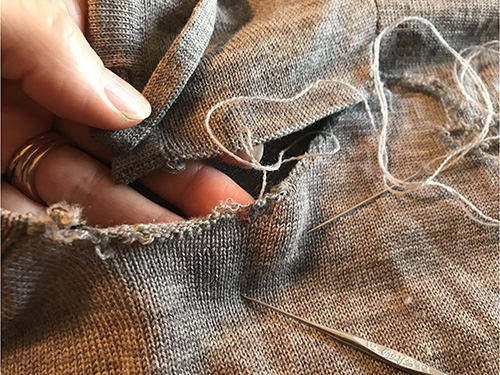
One main point is manufacturers cannot set product lifetime limits through design features and must make software updates, consumables, spare parts and accessories for an appropriate period of time to ensure product longevity that is best for the planet and the consumers’ finances. Every product should be easily repaired and come with easy access to these repair guidelines. Product passports to be made mandatory for sale of every product and the information within these product passports must be transparent, authentic and updated information as per requirements. The purpose of these product passports is clear - consumers and businesses can make informed choices when purchasing products, facilitate repairs and recycling, and increase transparency about the environmental impact of what they are buying.
MEPS play pivotal role in implementation
Apart from making product passports mandatory, the MEPS also want the Committee to prioritise a number of product groups in its first working plan to be adopted within three months after the entry into force. These priority products include: iron, steel, aluminium, textiles (notably garments and footwear), furniture, tyres, detergents, paints, lubricants and chemicals. They have stated that economic operators which destroy unsold goods would have to report the annual number and percentage of products they discarded as well as their reasons why. Based on this information, MEPs want the Commission to identify products for which a destruction ban should be introduced. Additionally, the report asks for a specific ban on the destruction of unsold textiles and footwear as well as electrical and electronic equipment, one year after the entry into force of the law.
Immersive Metaverse Unveiled at Milano Unica
The upcoming 37th edition of Milano Unica, the renowned high-end textiles and apparel accessories show, to be held at Fiera Milano Rho from July 11 to July 13, 2023, marks a significant milestone as Milano Unica presents an unprecedented immersive experience through the Metaverse—a specially created 3D space that enables individuals to interact as if physically present, without spatial limitations.
PwC Italia spearheaded the augmented reality project in collaboration with Milano Unica, allowing visitors to explore the Metaverse and experience a captivating journey. Within the Metaverse, the Milano Unica avatar serves as the guiding voice, inviting attendees to the trade show, providing updates on novelties, and offering tips on maximizing the Metaverse experience.
The immersive journey through the Metaverse showcases the creative cues for the Fall/Winter 2024/2025 season through three thematic communities: Night, Family, and Culture. Fabric and accessory collections representing each theme will play a central role in guiding visitors and creating an engaging environment.
By blurring the lines between reality and the Metaverse, Milano Unica aims to amplify its distinctive values and provide an enriched experience for attendees. Join us at Milano Unica and embark on an unforgettable journey in the Metaverse. Let our avatar be your guide through a world of innovation and creativity.











