


FW
Cambodia's FTAs unlock new markets for GFT exports
Cambodia's garment, footwear, and textile (GFT) industry is looking to tap into new export opportunities through Free Trade Agreements (FTAs). While exports of footwear to China and South Korea have shown growth, exports to the European Union (EU) and the United States (US) have declined.
However, there is optimism that GFT orders will rebound in the middle of 2023 once excess inventory is cleared. The global demand for GFT has been impacted by the Ukrainian conflict and inflation. Nonetheless, there is an anticipated increase in GFT orders during the high season and towards the end of the year.
Besides China, South Korea, the EU, and the US, GFT products are also being exported to markets such as the UK, Canada, Japan, and others. While specific export percentages are not disclosed, GFT exports in the first half of 2023 amounted to $5.26 billion, representing an 18.7% year-on-year decrease.
The GFT industry plays a vital role in Cambodia's foreign exchange, with 1,300 factories employing approximately 840,000 workers, predominantly women. The Regional Comprehensive Economic Partnership (RCEP) has contributed to Cambodia's trade by providing trade preferences and reduced tariffs, as acknowledged by the Ministry of Commerce.
Texworld Evolution marks 25-year milestone
Texworld Evolution Paris, along with Apparel Sourcing, Avantex, and Leatherworld, held its summer edition from July 3 to 5, attracting an impressive 6,800 international visitors. This 25th-anniversary event showcased a vibrant atmosphere with a captivating scenography.
The exhibitors are already anticipating the next edition scheduled for February 5 to 7, 2024, at Porte de Versailles. Held at Parc des Expositions, Porte de Versailles, in Hall 1, Texworld Evolution Paris received widespread acclaim as the largest gathering in the textile and clothing industry, featuring over 1,350 exhibitors from 27 countries. Collaborating with Curve Paris and Interfilière Paris, renowned fairs for lingerie products and accessories, it offered buyers an unprecedented fashion platform in Paris.
The commemorative 25th-anniversary edition of Texworld Evolution Paris introduced a renewed design and enhanced visitor experience. The T-Club space was redesigned for better business exchanges, and various areas like the entrance, Trend Forum, and Agora showcased captivating new scenography.
Visitors and exhibitors appreciated the addition of a concierge service. The breakdown of the 6,800 visits over the three days, including 200 from Interfilière, highlighted France as the leader with 18% of visits, followed by Spain, Italy, the United Kingdom, Turkey, and Germany. The event showcased a diverse range of products from Asian sourcing zones like China, Korea, and Taiwan, as well as Mediterranean and Indian offerings.
Turkey's presence remained prominent. Holding the event in downtown Paris simplified access and pleased buyers. In response to inflation, collection managers are redirecting their sourcing strategies towards Asia or the Mediterranean. Texworld Evolution Paris provides comprehensive options for buyers seeking fabrics from Spain or Portugal and finished products from Indonesia.
This session marked a turning point for Texworld Evolution Paris, reflecting global market reorganization. To meet consumer and buyer demands for price, quality, and durability, the organizers continuously strive to enhance the visitor experience. Future plans include refining the manufacturer selection to provide buyers with a more focused offering. Sustainability emerged as a prominent theme, with more supplier countries prioritizing eco-friendly practices.
The event also highlighted emerging sourcing zones worldwide, including South African creativity. The successful summer edition of Texworld Evolution Paris sets the stage for future editions to surpass expectations and shape the fashion industry further.
India Tex Trends Fair's 12th Edition Commences in Tokyo
The 12th edition of the India Tex Trends Fair kicked off in Tokyo, Japan, with esteemed industry figures in attendance. Among them were Tsunenori Suzuki, Chairman of Japan Apparel Fashion Industry Council (JAFIC) and Chairman of Onward Holdings Co., Ltd., along with Kenji Ueyama, Vice Chairman of JAFIC and Chairman and Representative Director of World Co.
During his speech at the inauguration, Naren Goenka, Chairman AEPC hailed the successful organization of the India Tex Trends Fair over the past 11 years, with more than 180 exhibitors participating this year. He also shared the remarkable growth in Japan's total imports from the world, which surged from 28.49 USD billion in 2018 to 46.72 USD billion. Furthermore, Goenka underscored Japan's position as the fourth-largest garment importer globally, following the USA, Germany, and France.
Within the NEA (North-East Asia) region, Japan dominates with approximately 50% of the market share, making it the largest importer of garments in the area. The Japanese apparel market is projected to experience a Compound Annual Growth Rate (CAGR) of 2.55% from 2023 to 2027. Goenka emphasized the immense potential for Japanese trading companies to source from India's robust garment industry, which offers unique products and opportunities for trade diversification, especially with China's declining dominance in Japanese apparel imports.
Currently, India's share in Japan's total garment imports stands at just 1%, indicating substantial room for expansion. Goenka further highlighted India's strong business prospects in Japan, particularly in light of the decreasing garment supply from China over the past five years.
He underscored India's advantage of duty-free access for Ready-Made Garments (RMG) following the Indo-Japan Comprehensive Economic Partnership Agreement (CEPA), in contrast to China and Turkey, which face approximate 9% duties. Echoing Goenka's sentiments, Sudhir Sekhri, Vice Chairman of AEPC, emphasized India's advantageous position due to its abundant raw materials, such as cotton, jute, silk, and wool, combined with the world's second-largest spinning and weaving capacity.
This availability of resources enables the industry to achieve a remarkable 95% domestic value addition, offering a comprehensive value chain solution from farm to fashion. Sekhri highlighted India's competitive edge in terms of shortened lead times to reach buyers, supported by a skilled workforce and technological advancements that result in high-quality textiles meeting global standards.
The fair exhibits a wide range of products, including traditional cotton attire and unique items such as ladies' and men's apparel, outerwear, jackets, pants, skirts, stoles, nightwear, shorts, leggings, fashion accessories, organic and sustainable products. Additionally, the fair presents home fashion products like fabrics, bed and pillow covers, cushions, curtains, rugs, belts, tableware, home furnishings, and interior goods.
Running concurrently with the India Tex Trends Fair, seminars and B2B business delegation meetings were held to foster stronger understanding and collaboration among industry stakeholders from July 19th to 21st, 2023.
Fashion Industry Fails Transparency, Inequality
The Fashion Transparency Index by Fashion Revolution highlights the fashion industry's inadequate response to global inequality and the climate crisis. It ranks 250 fashion brands based on their transparency regarding human rights and environmental policies.
While there have been slight improvements, the overall transparency performance of major brands falls short, with an average score of only 26%, a marginal increase from the previous year. However, there have been positive changes, as over half of the assessed brands now disclose their first-tier supplier lists, compared to 32% in 2017.
A notable development is the inclusion of luxury brand Gucci among the top performers for the first time, securing the second position with an impressive score of 80%. Gucci, along with Armani, Jil Sander, MiuMiu, and Prada, demonstrates significant progress in transparency. Gucci, in particular, improved its score by 21 percentage points, showcasing the potential for substantial improvement with genuine commitment.
Fashion Revolution's Liv Simpliciano expressed frustration with the slow progress and emphasized the need for 100% transparency as the baseline expectation. Critical deficiencies among major fashion brands include failure to disclose living wages for workers (99%), fuel types used in manufacturing (94%), annual production volumes and commitment to reducing new items (majority), responsible tax and purchasing practices (82%), and zero deforestation commitments (few).
Although some brands achieved high scores, such as OVS (83%) and Gucci (80%), the industry must address the urgent need for significant change, as 18 brands received a 0% rating. The fashion industry must overcome resistance and embrace transformative actions to tackle the climate crisis effectively.
Kids Apparel Market to Reach USD 318.34 Billion by 2030
The global kids apparel market is projected to reach USD 318.34 billion by 2030, growing at a CAGR of 6.96% from USD 198.80 billion in 2023. The presence of children and tweens on social media platforms has driven parents to invest in attractive, comfortable, and high-quality clothing for their kids.
Cotton remains the preferred fabric for kids apparel due to its comfort, lightweight nature, and color retention. The report analyzes key market segments, recent trends, and driving factors. COVID-19 restrictions negatively affected market growth, but the industry adapted through automation and sanitation protocols.
The casual clothing segment dominates the market, favored for its comfort and lightweight properties. The boys segment leads in end-users due to the rising birth rate of newborn boys. Kids above 10 years prefer stylish and trendy apparel, boosting that market segment.
Offline distribution channels hold a significant market share, with expansion to meet demand. Asia Pacific leads the market, driven by increased consumer spending, disposable income, and improved childcare services. North America experiences strong growth due to parental concerns for their children's health and safety.
Prominent players like Nike, Burberry, and Carter's implement growth strategies, such as store launches and partnerships. In November 2021, Children's Place introduced Sugar & Jade, a tween apparel brand with five collections.
Weft Insertion Revolution: Unmatched Flexibility
KARL MAYER Technical Textiles presented an extraordinary upgrade to their highly sought-after weft insertion machine, the WEFTTRONIC® II G, at ITMA 2023 in Milan. The remarkable enhancements showcased their deep market understanding and received an overwhelming response.
The machine's innovative features, including the VARIO WEFT laying system, edge stabilization solution, weft tension monitoring, and central suctioning device, captivated the attention of visitors. The WEFTTRONIC® II G was displayed in the popular 213" working width, ideal for geogrid production.
The highlight of the upgrades was the VARIO WEFT, which revolutionized weft patterning and delighted customers. This electronic solution allowed for effortless, rapid, and flexible changes in weft patterns without any mechanical interventions during threading. It offered unparalleled freedom in repeat length, significantly reduced selvedge waste, and introduced a novel threading principle.
By employing a stop-and-go operation of the transport chain and a new movement curve of the supporting sinker, the yarn was fed into the fabric according to the desired pattern. Spaces within the fabric were created by pausing the transport chain and dipping the supporting sinker under the weft yarn.
The flexibility of VARIO WEFT in weft patterning sparked discussions and inspired new product ideas among customers during ITMA. Moreover, the elimination of vacant positions in the transport chain led to a reduction in waste, positively impacting costs and the environment.
In the conventional process, the empty positions resulted in discarded yarn sections, escalating both expenses and environmental consequences. By considering the absolute savings potential and the count of weft yarns in the fabric, the overall benefits of the upgrade became apparent.
With the WEFTTRONIC® II G featuring the groundbreaking VARIO WEFT, KARL MAYER Technical Textiles not only redefined weft insertion but also offered their customers unmatched profitability, increased flexibility, and environmentally conscious production.
H&M Sets Sights on Brazil Expansion in 2025
H&M, the renowned fashion retailer, has revealed its plans to launch both physical stores and an online presence in Brazil by 2025. This move marks another significant stride in H&M's expansion within Latin America, with an initial focus on major cities in Southeast Brazil, aiming to expand its reach across the entire country over time.
Having established its first Latin American store in Mexico back in 2012, H&M has since made its presence felt in Peru, Uruguay, Chile, Colombia, Ecuador, Guatemala, Panama, and Costa Rica. With a population exceeding 210 million in Brazil and a strong fashion-forward culture, the market holds immense potential for growth.
H&M Group is all excited about the forthcoming expansion announcing the opening of its first store and online platform in Brazil in 2025. With its positive progress in Latin America, group sees great opportunities in Brazil.
This marks an incredibly exciting step as it brings H&M's fashion, quality, and sustainable offerings at the best prices to numerous customers across the country. To ensure the success of this endeavor, H&M has formed a partnership with the Dorben Group, leveraging their wealth of local expertise and knowledge.
The group is delighted to have partnered & joined forces with H&M in Brazil, further strengthening its existing relationship with a fashion industry leader.
This collaboration allows both companies to capitalize on their unique strengths, resources, and expertise to unlock the incredible potential of the Brazilian market.
Asia-Pacific drives global growth slowdown
IMF predicts 2.8% global growth in 2023, led by Asia-Pacific. G20 shows divergence with weak manufacturing but strong service sectors and labor markets.
Collaboration key amidst uncertain economy, Zambia's debt restructuring and $100bn SDR pledges highlight global cooperation. Monetary policy must manage financial instabilities caused by strict measures. Global inflation high, caution urged against premature easing to maintain progress. Consistent monetary approach and supportive fiscal policy crucial for disinflation, buffer building, and debt sustainability.
Medium-term outlook lacks promise, growth projected around 3%, below historical average. Economic fragmentation risks hindering global challenges like rising debt and climate change. More support needed for nations facing climate change, high costs, and interest rates.
Multilateral institutions play vital role, IMF pledges adaptability and stronger resources. Strong G20 leadership essential for resilient international financial system. Global response crucial for sustainable growth.
Economic uncertainties do not hamper luxury sale in Asia-Pacific

Asia Pacific continues to patronize luxury brands despite economic upheavals worldwide creating waves of concern and uncertainties, says Euromonitor International’s new report that focuses on the performance of the luxury market and outlines the top three trends visible in the present and perhaps in the near future. Besides Asia Pacific market the other trends identified include, the return of the extravagant Chinese shopper into international shopping destinations after stringent travel restrictions for nearly three years and the possibility of a new revenue stream for luxury fashion and beauty brands – authentic experiences at home and outside.
Luxury is unfazed in Asia Pacific
The Asia Pacific luxury goods market size is expected to grow from $136.29 billion in 2023 to $166.30 billion by 2028, at a CAGR of 4.06 per cent during the forecast period of 2023 to 2028. The Asian luxury market is in flux, with consumers demanding luxury goods from different backgrounds and starting points. A steady economy, rapidly changing consumer trends, the growth of boutique luxury brands, and the massive shift from physical to digital channels are creating a new competitive landscape for the luxury goods market.
Younger consumers are driving change in luxury consumption and attitudes. They are heavily fixated on sustainability, and most luxury consumers say they prefer brands that are socially responsible. In this region, investment in luxury goods, particularly leather goods, jewellery, and timepieces, is anticipated to surge as an alternative asset. The top five luxury companies in Asia Pacific are Chanel SA, Hermes International SA, Kering SA, Rolex SA and LVMH SE.
Return of Chinese luxury shoppers
The three-year-long pandemic saw Chinese nationals repatriating their luxury consumption and now it seems there is no going back. Even with international borders reopened, local shoppers are choosing to splurge at home. According to sales compiled by alternative data provider Sandalwood Advisors, 62 per cent of luxury spending by Chinese consumers in April took place within the country, far surpassing the 41 per cent recorded in the same period in 2019. This is the main reason why luxury brands are not only rising and shining in China while developing their communication platforms and design concepts such that they are earn favor from local buyers. Jonathan Siboni, Founder and CEO of Paris-based data intelligence firm Luxurynsight, believes Chinese consumers are rethinking their lifestyles post-pandemic as they no longer want to spend three hours queuing outside a store in Paris in the rain. Rather they would connect with a local sales associate who knows them and can advise them better.
Authenticity at home and about
The lockdown saw the emergence of a new home, the one that was also a professional work space, the gym and the only place for two-long years that was supposed to create an authentic living experience within its four walls. This trend of luxuriously appointed homes has given a new lease of growth for luxury home furnishings and accessories which luxury fashion brands are eyeing as a new source of revenue as the trend seems to be here for a longer term. Moreover, with everything back to pre-pandemic normal and travelling opening up, luxury hospitality sector worldwide is seeing a rise. Global sales of luxury hotels grew 27 per cent in 2022 with further real growth of 17 per cent expected by the end of 2023.
The Euromonitor report highlights, the global luxury market has experience three-long years of the unusual series of events that shook the whole consumption pattern worldwide. But today both, luxury consumers and luxury brands are looking at a new reality where consumers are realigning their wants and brands are trying to cater to the emerging behavior.
Good clothes, fair pay campaign triggers action on living wages
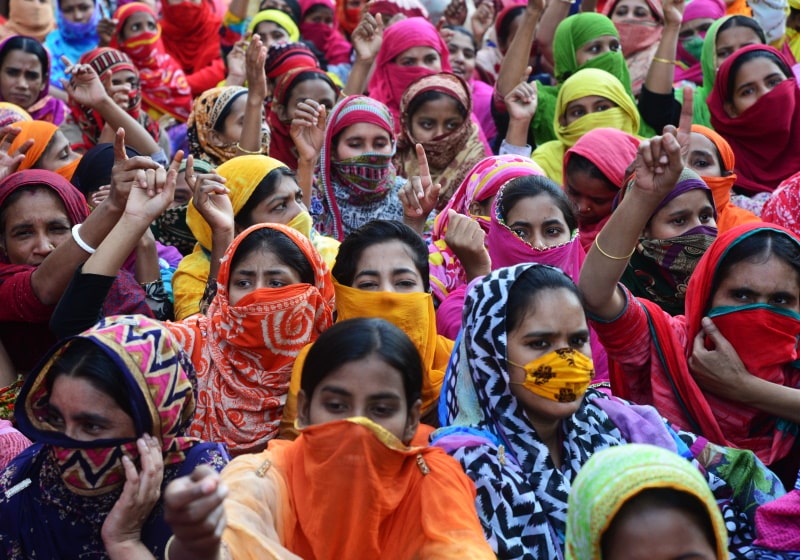
Good Clothes Fair Pay is a campaign, by European Citizens’ Initiative for living wages in the fashion supply chain, demanding legislation that helps achieve fair pay for textile and garment workers around the world. The campaigners believe the millions of workers in global textile, garment and footwear manufacturing industries are not paid enough in most cases to eke out a decent living to fulfill their basic needs. What makes it worse, according to campaigners, is that a vast majority of such workers are women. They remain trapped in poverty while big fashion companies continue to profit from their hard work.
It is a deeply unfair and exploitative system, and the campaigners demand better. The pandemic has deepened wage insecurity for the people who make our clothes, leaving workers without any social safety net, struggling to pay for food, healthcare and shelter. As the campaign has hit the ground running and is rapidly approaching a million signatures from EU citizens that will ensure the EU Parliament pays heed, a large number of global garment groups have swung into action, liaising with the European trade unions for introducing a time-bound action to close the gap between actual and living wages.
Demand for legislation to implement on entire supply chain
An excerpt from the campaigners’ open letter the European Commission clearly states “While garment brands and retailers have seen their revenues and profits grow over the past decade - most even remained profitable during the Covid-19 pandemic - workers in garment production countries have not experienced a similar growth in their purchasing power.”
The initiative called on European Commission to implement specific legislation that would require garment brands and retailers importing into the EU market to put in place, implement, monitor, and publicly disclose a time-bound and target-bound plan to close the gap between actual and living wages. It is a tall order at the moment but with the 40 global groups onboard, the European Commission is bound to pay attention and move forward with data and specifics as the manufacturing hubs are not only spread across South and South East Asia, but also North America (Mexico), Central and South Americas where legalities are most often ignored and manufacturing hubs are controlled by often violent mafia.
What the European Citizens’ Initiative wants
The scope covers brands and retailers who want to trade in the EU, independently of whether they are based in the EU or elsewhere. It puts particular emphasis on requiring brands to identify risk groups that are particularly hard hit by low wages, such as women and migrant workers. The proposal includes measures such as the companies’ pricing, costing and overall purchasing practices, ensuring that workers do not have to rely on excessive overtime to meet their basic needs. This legislation would be the first living wage legislation at the EU level for garment workers worldwide.
Better laws and regulations in Europe can make sure that companies all over the world do their part in ensuring that the workers in their supply chains are paid fairly. This will be the single biggest EU campaign on living wages in the garment sector to date. If successful, the legislation will be a groundbreaking step in building a fairer fashion system where brands are held accountable for the people who make their clothes. We believe that proactive policy like this is crucial for safeguarding millions of workers in the fashion supply chain, and that the EU can lead the way for positive change.











