


FW
Comprehensive prosperity index for China’s textile industry grows in 2023
Rebounding notably, the comprehensive prosperity index for the China’s textile industry grew by 55.6 per cent, 57 per cent, 55.9 per cent, and 57.2 per cent respectively in 2023, shows data from the China National Textile and Apparel Council.
Capacity utilisation rates and production in the textile sector increased steadily during the year, as per the National Bureau of Statistics. In 2023, the textile and chemical fiber industries boasted capacity utilization rates of 76.4 per cent and 84.3 per ent respectively, surpassing national industrial averages. Particularly, the chemical fiber industry saw a 2-percentage-point increase in utilisation compared to the prior year. Though the industrial added value of large-scale textile enterprises decreased by 1.2 per cent Y-o-Y, it reflected a 0.7 percentage point improvement from 2022.
Diverse and personalised clothing consumption, coupled with the rising popularity of independent brands and the ‘guochao’ phenomenon, fueled domestic demand for textiles. Retail sales of clothing and related goods surged by 12.9 per cent in 2023, marking a 19.4 percentage point increase from 2022, surpassing pre-pandemic levels. Online retail, especially in sporting goods, grew by 10.8 per cent Y-o-Y.
Despite challenges such as reduced overseas demand and increased trade risks, China's textile exports demonstrated resilience. Exports to ‘Belt and Road’ countries showed promise, mitigating overall declines. Total textile and apparel exports reached $293.64 billion in 2023, marking an 8.1 per cent Y-o-Y decrease
While textile enterprises contended with market sluggishness and high costs, improved domestic demand bolstered benefits. Business revenue decreased by 0.8 per cent narrowing by 0.1 percentage points from the previous year, while total profits surged by 7.2 per cent a 32 percentage point increase from 2022. Operating income margins reached 3.8 per cent, a 0.3 percentage point rise from 2022.
Looking to 2024, China's textile industry faces continued uncertainties amid a complex international landscape. Yet, domestic market dynamics driven by urbanisation and ‘guochao,’ along with initiatives like the ‘Belt and Road’ and free trade zones, offer avenues for expansion and resilience against external risks.
Global technical textile market to grow at 5.7% till 2032
Growing at a CAGR of 5.7 per cent, the global technical textile market is poised to reach $331.8 billion by 2032.
As per a report by Textile Today, growth in this market is likely to be driven by the advancements in science and technology, particularly in material science and technology, driving continuous innovation in the sector. Innovations in fiber and fabric technology have led to the creation of high-performance materials boasting attributes such as strength, durability, chemical resistance, and flame retardancy.
In 2024, synthetic polymers/fibers accounted for more than half of the worldwide technical textile market revenue. Synthetic fibers are widely used in automotive, apparel, building, filtration, and home furnishings industries. Woven textiles, categorised by weave, thread density, yarn count, and crimps, dominated the market, contributing to over five-eighths of the revenue.
Rapid urbanisation, population growth, increased construction and remodeling activities, and expansion in the automotive industry are driving market growth. The rise in sales of hybrid and electric vehicles further boosts product demand worldwide.
The healthcare sector contributes significantly to growth of the global technical textiles market with the rise in disposable medical clothing demand and the construction of healthcare facilities globally. Asia-Pacific is expected to rise as the fastest-growing region for technical textiles with growth driven by technological advancements in textile manufacturing.
Demand for industrial textiles is expected to rise during the forecast period, driven by applications in various sectors such as decatising cloth, bolting cloth, drive belts, and printed circuit boards. The growing population in emerging nations fuels demand for sanitary and personal care medical equipment, boosting growth in the medtech textile market.
Establish MIP for fabric imported from China, urge textile leaders
India’s textile leaders are urging the Central Government to establish a minimum import price (MIP) of $2.71 per kilogram (₹225/kg) for fabric imported from China.
Industry bodies primarily from northern India, particularly Punjab, have warned of suspending production and staging protests starting March 1, 2024, if their demands are not met. This call for action stems from persistent concerns within the textile sector regarding sluggish global demand.
During a meeting convened by the Federation of All Textile Trading Manufacturing Associations (FATTMA) of Ludhiana, industry representatives unanimously agreed to push for an MIP of $2.71 per kg on fabric imports from China. They argued, China has been flooding the market with fabric at significantly reduced prices, alleging that these imports are often under-invoiced. According to them, only by implementing a minimum import price can such practices be curtailed.
A prominent industry leader, Tarun Jain Baba highlighted, they have repeatedly raised these concerns during discussions with officials from the Ministry of Textiles. Indian textile mills have reportedly been compelled to slash their production by as much as 50 per cent of their total capacity.
Business leaders assert that the influx of cheaper fabric is facilitated through the manipulation of the Harmonized System of Nomenclature (HSN) code.
In a collective statement, industry organisations have issued an ultimatum to the government, warning of a complete halt in production across various sectors including spinning, weaving, knitting, dyeing, and printing if their demands are not addressed promptly.
China’s cotton yarn imports from Pakistan surge 46.7 % in 2023: CCCT
In 2023, China’s cotton yarn imports from Pakistan surged by 46.7 per cent to a record high of $695.62 million, as per reports by the China Chamber of Commerce for Import and Export of Textile and Apparel (CCCT).
In its recent report, the All Pakistan Textile Mills Association (APTMA) attributed this import surge to a sharp rise in energy prices coupled with interruptions in power and gas supply which led to over a thousand textile factories halting production.
According to CCCT, the import surge was a result of the substantial price gap between domestic and foreign cotton yarns, particularly evident after the second quarter of the year. This discrepancy motivated importers to increase their orders, further driving up imports.
In December 2023, China’s cotton yarn imports from India, Pakistan, and Uzbekistan increased substantially by 243.2 per cent 351.1 per cent, and 867.1per cent, respectively. Its cotton yarn imports from Pakistan alone accounted for 15.8 per cent of China’s total imports in this category throughout the year.
As per statistics from the General Administration of Customs of China (GACC), the total value of yarn imports and exports in 2023 amounted to $19.68 billion, reflecting a 2.9 per cent decrease compared to the previous year. While exports declined by 8.6 per cent to $13.7 billion, imports rose by 13.2 cent to $5.98 billion.
Import quantities also increased by 32.6 per cent to 2.043 million tons.
Cotton yarn remains a crucial category among China's yarn imports, constituting 70 per cent of the total and representing 24 per cent of textile and clothing imports.
The demand for imported cotton and cotton yarn in China shows no signs of slowing down, with cumulative imports reaching 1.687 million tons in 2023, marking a significant 43.4 per cent increase compared to the previous year.
Australian wool market shows mixed results
While Australian wool auction results remained mostly unchanged last week, with some softening in Western Australia, measured in US dollars (USD), the market saw a 1.3 per cent increase in the Eastern Market Indicator (EMI). This reflects a slightly stronger demand considering the global wool trade primarily uses USD.
Following the Chinese New Year break, activity in the Australian wool market picked up as businesses resumed operations. While direct buyers and some traders showed increased participation, European operators remained cautious, according to a report by the Australian Wool Innovation (AWI) report.
Demand for Merino Wool (19-22 microns) continued to rise leading to a slight rise in prices. However, prices of super fine wools declined.
Prices of finer and broader micron crossbred wools also declined while those of mid-micron types remained stable due to stronger exchange rates. Carding Wool prices held firm, with some sectors even witnessing slight increases.
This week, the market anticipates 40,000 bales offered, indicating continued activity.
ICAC: 2023 CSITC continues decade of improvement
The International Cotton Advisory Committee's (ICAC) Task Force on Commercial Standardization of Instrument Testing of Cotton (CSITC) has achieved a remarkable decade-long streak of improvement in Round Trials (RTs), spanning from 2011 to 2023. This continuous success underscores a crucial commitment to accuracy and consistency within the cotton industry.
In the latest 2023 RTs, involving laboratories from 30 countries, between 57 and 68 labs participated in each of the four trials. Despite seasonal fluctuations, the number of instruments tested ranged from 90 to 158, with the third RT of 2023 nearly breaking the all-time record set in 2012. The average annual median Overall Evaluation Result (OER) in 2023, standing at 0.342, remains commendable, although slightly below the peak achieved in 2021.
The significance of these results extends beyond numerical achievements. Over the past decade, participating labs have consistently reduced variation across key properties such as Micronaire, Strength, and Length Uniformity, among others. This trend is exemplified by the substantial improvement in the median OER, which has decreased from 0.54 in 2010 to 0.34 in 2023, as illustrated in the accompanying chart.
These advancements not only enhance the reliability of instrument testing but also foster trust and integrity within the global cotton trade. By ensuring accurate measurements and minimizing discrepancies, the ICAC's CSITC initiatives contribute to smoother transactions, reduced disputes, and overall efficiency in the industry.
Since 2007, CSITC RTs, managed by ICAC, organized and evaluated by Bremen Fibre Institute, and facilitated by USDA for sample provisions and dispatch, have been conducted quarterly. The objective is to align lab results with reference values, reducing inter-laboratory deviation to mitigate costly claims for buyers and sellers.
Final Report - IFCO Istanbul set record attendance
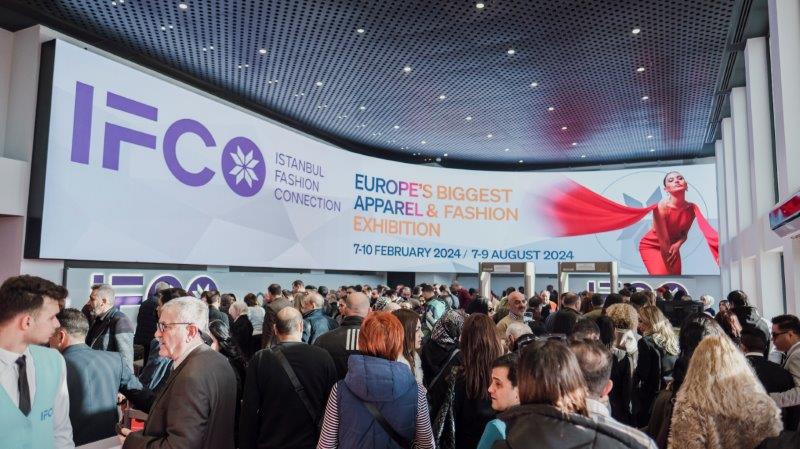
The fifth edition of the IFCO Istanbul Fashion Connection, held from February 7-10, 2024, witnessed a remarkable turnout, welcoming a record-breaking 38,545 visitors. The event, hosted at the Istanbul Expo Centre across eight expansive halls, saw participation from 545 exhibitors who engaged with international trade visitors hailing from 159 countries worldwide.
A diverse array of attendees from across the globe graced the event, highlighting its international significance. The Middle East constituted the largest contingent at 33.4 per cent, followed closely by Europe at 24 per cent, with Asia and North Africa contributing 23.3 per cent and 13.3 per cent, respectively. Notably, 6 per cent of visitors represented regions including the USA, South America, Australia, and Africa, underscoring the event's global outreach.
Exhibitor satisfaction
Mustafa Paşahan, Vice President of İHKİB, expressed immense satisfaction with the event's success, emphasizing its pivotal role as a nexus for the global fashion industry. Exhibitors lauded both the quality and quantity of visitors, alongside the creative presentations and high-caliber products showcased.
Spanning an extensive 100,000 sq m, the exhibition featured distinct zones showcasing the latest collections across various fashion domains. Notably, 'The Core Istanbul' embraced the Color of the Year 2024, boasting a peach-colored ambiance and hosting 25 acclaimed designers.
In the 'IFCO Brands' section, leading market players like Armine, Giotelli, and Kayra captivated attendees with trendy displays, showcasing their latest collections and fostering international business opportunities.
Specialized showcases
Lingerie and hosiery manufacturers were showcased in the LinExpo section, while FashionIST presented a diverse range of bridal and evening wear selections, reinforcing the event's comprehensive scope.
The event's unprecedented attendance reaffirmed its stature as a premier international fashion hub. Notable international buyers, including 6th Street Apparel and Ted Baker, leveraged the platform for networking and order placements.
IFCO collaborated with the Fashion Designers' Association for the first time, enriching the event with curated projects and thematic engagements. Additionally, the inclusion of educational institutions and innovative trend showcases added depth to the visitor experience.
Insights and outlook
Expert sessions highlighted industry trends, emphasizing a shift towards sustainable fashion and digital transformation. The Turkish textile and clothing sector's robust performance further underscored the nation's pivotal role in the global fashion landscape.
With plans underway for Texhibition Istanbul in March 2023, IFCO continues to fortify its position as a comprehensive platform for the international fashion trade. The forthcoming edition, scheduled for August 7- 9, 2024, promises to further elevate industry standards and foster global collaboration.
Lindstrom India introduces recycled polyester workwear
Lindstrom India, a key player in textile rental services and a subsidiary of Lindström Oy, Finland, takes a significant stride towards sustainability with its latest initiative. The company announces the incorporation of recycled polyester from PET bottles into its workwear garments collection, aligning firmly with Lindstrom's dedication to science-based climate targets and environmental stewardship.
This innovative process involves sorting and cleaning PET bottles, followed by mechanical shredding into small flakes, and subsequent melting and purification to create fibers. These fibers, combined with 35 per cent cotton, yield a versatile fabric merging cotton's comfort with polyester's durability.
Anisha Mukherjee, Head of Procurement & Sustainability at Lindstrom India, underscores the environmental advantages of this 65 per cent recycled polyester 35 per cent cotton blend. By utilizing recycled polyester sourced from post-consumer plastic bottles, the production process effectively diverts plastic waste from landfills, conserving resources and reducing the need for virgin polyester production notorious for its high energy consumption and greenhouse gas emissions.
This sustainable fabric finds applications across various textiles, from clothing to upholstery, significantly reducing the demand for new raw materials and lessening the environmental impact associated with traditional polyester production. Estimates from the Textile Exchange suggest that recycled polyester materials could potentially emit 30 per cent less carbon dioxide compared to virgin polyester, requiring 45 per cent less energy and 20 per cent less water.
Jayant Roy, Managing Director of Lindstrom India, emphasizes the blend's benefits, highlighting its softness, breathability, resilience, and longevity. This durability not only reduces the need for replacement products but also fosters a more sustainable approach to workwear, minimizing overall textile waste.
Moreover, recycling polyester consumes substantially less energy than producing virgin polyester, while blending it with cotton further mitigates the water footprint. This eco-conscious blend not only addresses concerns regarding resource depletion and pollution but also offers a high-quality fabric meeting the demands of conscientious consumers.
Roy notes a positive response from a prominent customer in South India since introducing recycled polyester in workwear. Lindstrom Oy joins the ranks of over 4500 companies with approved science-based climate targets and 2897 companies globally committed to net-zero targets, signifying a growing momentum towards sustainability across industries.
Archroma, Pointcarre boost textile design with Color collaboration
Archroma Textile Effects, a global leader in sustainable specialty chemicals, is integrating its 5,760 color portfolio into the Pointcarre digital textile design and manufacturing system, enhancing designers' capabilities.
Pointcarre, a Mac and PC textile design software pioneer for over three decades, empowers designers across fashion, home furnishing, and technical textiles to create precise digital samples and streamline production processes. By infusing Archroma's color range, designers gain access to an extensive library for enriched design workflows and precise color matching during production, all meeting stringent eco-standards.
Chris Hipps, Archroma Textile Effects' Global Head of Color Management, emphasizes the competitive edge of end-to-end agility in the textile value chain. The integration aims to facilitate seamless color implementation, fostering both agility and sustainability.
Steve Greenberg, President of Pointcarre Textile Software, underscores the collaboration's goal: to simplify design workflows, enhance productivity, and reduce costs for their esteemed clientele. To aid in utilizing the new color library, Pointcarre offers interactive e-learning modules and multilingual support.
Renowned brands like Ralph Lauren, Tommy Hilfiger, and Decathlon trust Pointcarre systems, highlighting the reliability and innovation driving the partnership's success.
Silk cluster revival: Mysuru's sericulture gets a boost
After seven years of dormancy, the Chamundeshwari Mega Silk Cluster is set to transform a 10-acre plot near Belavadi on the outskirts of Mysuru. Initially sanctioned by the Union government in 2017 with a generous allocation of Rs 49 crore, the project languished in uncertainty until now.
The initiative aims to rejuvenate sericulture, a cornerstone industry of the Mysuru, Chamarajanagar, Mandya, and Ramanagar regions. With Mysore silk's coveted geographic indication tag highlighting its distinctiveness, the cluster promises a surge in employment opportunities, bolstering the local economy and nurturing silk-related enterprises.
The Karnataka State Textile Infrastructure Development Corporation (KSTIDCL), tasked with spearheading the project, has embarked on groundwork and surmounted hurdles, notably land acquisition. Endorsed by the Union government, KSTIDCL assumes the pivotal roles of cluster management and technical oversight.
Out of the total project cost of Rs 49.2 crore, the Union government's funding comprises 60 per cent, with the state government contributing Rs 10 crore, and the remainder sourced from entrepreneurs. A meticulously crafted blueprint, aided by the Infrastructure Development Corporation Karnataka Limited (I-DECK), envisions essential amenities encompassing roads, drainage systems, water, power, and waste management facilities.
The cluster's infrastructure will accommodate 24 industrial sheds, catering to silk-centric ventures such as yarn dyeing, fabric printing, and more. This initiative, one of six nationwide under the revamped National Handloom Development Programme, has already received an initial infusion of Rs 2.5 crore from the Union government.
However, delays have escalated the project's estimated cost to Rs 76 crore, prompting a revised proposal. Yet, the Union government has mandated adherence to the original budget, emphasizing efficient execution. As tenders are floated, imminent commencement of cluster-related development heralds optimism, albeit underscored by the imperative of expedited progress.
The Chamundeshwari Mega Silk Cluster embodies not merely a developmental endeavor but a promise of resurgence for the region's silk legacy, urging swift action to translate aspirations into tangible prosperity.











