


FW
J Crew launches new recycling initiative in partnership with SuperCircle
Renowned New York-based fashion retailer, J Crew unveiled a groundbreaking swimwear recycling initiative in partnership with the technology and logistics platform SuperCircle.
Accessible both online and across its nationwide chain of stores, this innovative program allows customers to trade in used swimwear from any brand for a $5 credit, which can be applied towards the purchase of full-price men's, women's, or kids' swimsuits, as outlined on the official program website. Customers can accrue credits up to $20, and can either mail in their swimwear or exchange it in person at any J Crew store.
Under the leadership of SuperCircle, based in New York, the returned swimwear in any condition is repurposed by transforming old fibers into new clothing items. Garments unsuitable for fiber-to-fiber recycling undergo processing through the company's open-loop recycling channels to be transformed into various products such as furniture batting, insulation, and padding.
Emphasising on the importance of adopting new recycling solutions, Chloe Songer, CEO and Co-founder, SuperCircle, says, with a significant portion of new textiles ending up in landfills within a year of production and textile waste surpassing plastic waste growth rates, recycling initiatives are becoming increasingly important.
SuperCircle operates on a business model where partner companies pay a monthly platform usage fee along with a recycling fee tied to the volume of materials collected. While textile recycling is gaining momentum as a preferred sustainability strategy for fashion brands embracing circular practices, recent setbacks like the bankruptcy filing of Renewcell highlight the challenges in making sustainability economically viable.
J Crew has strategically repositioned its operations in recent times. The company introduced a resale program in January 2023 and launched a virtual store in June.
Bangladesh T&A companies push waste imports to bolster recycled fiber production
Garment and textile businesses in Bangladesh have made a significant push to import apparel and textile waste, including clippings, without duties, to bolster the production of recycled fibers.
In addition to duty-free imports, these businesses are seeking exemptions from the 7.5 per cent value-added tax (VAT) on raw material sourcing for recycled fiber production and the 15 per cent VAT on the purchase of these fibers by spinning mills. Furthermore, they propose the adoption of a Harmonised System (HS) for imports, a standardised method used globally for classifying traded products.
Presented by Faruque Hassan, President, Bangladesh Garment Manufacturers and Exporters Association (BGMEA), during a pre-budget meeting with the National Board of Revenue (NBR), these proposals are geared towards sustaining apparel exports and enhancing the country's competitiveness in the global market.
Both the Bangladesh Knitwear Manufacturers and Exporters Association (BKMEA) and the Bangladesh Textile Mills Association (BTMA) echoed similar demands.
Reiterating on the need to support recycling initiatives, Abu Hena Md Rahmatul Muneem, Chairman, NBR, emphasised on the importance of backing recycling industries such as garment scrap and plastic to mitigate environmental impact.
However, he voiced concerns about potential misuse of the benefits, highlighting instances where privileges intended for industries were exploited due to inadequate mechanisms for detection. He emphasised on the need for stronger monitoring to prevent revenue losses for the state.
H&M launches new venture for textile-to-textile recycling of polyester
H&M Group is embarking on a new transformative venture to revolutionise sustainability in the textile industry. In collaboration with Vargas Holding and TPG Rise Climate, the group has cofounded a venture called Syre for rapid scaling of textile-to-textile polyester recycling.
Securing a groundbreaking off take agreement worth $600 million over seven years, the partnership sets a substantial foundation for H&M Group's long-term demand for recycled polyester. This agreement underscores a pivotal shift away from the prevalent bottle-to-textile recycling method towards a closed-loop alternative, marking a significant milestone in the industry's evolution.
Syre represents a crucial step forward in H&M Group's commitment to integrate circularity into its operations. By spearheading textile-to-textile recycling on a large scale, they aim to inspire other industry players to join the movement towards a sustainable future.
In alignment with its broader sustainability goals, H&M Group has enhanced its recycled material ambition, aiming for 100 per cent recycled or sustainably sourced materials by 2030, with a subgoal of achieving 30 per cent recycled materials by 2025, and now aiming for 50 per cent by 2030.
Recognising the need for collaboration and investment in innovative solutions, H&M Group continues to invest in scalable technologies like Syre. The venture is set to produce recycled polyester yarn of equivalent quality to virgin polyester, yet with a significantly reduced environmental footprint.
Syre's inaugural production plant, slated for North Carolina, United States, aims to be operational by 2024, with plans for global expansion thereafter. With aspirations to establish twelve operational plants within a decade, Syre aims to produce over 3 million metric tons of recycled polyester, marking the onset of a significant shift in the textile industry.
Moreover, H&M Group benefits from its partnership with Vargas Holding, which specialises in building impact companies, and TPG Rise Climate, a renowned investor in climate solutions and circular economy initiatives.
Abercrombie & Fitch projects full-year revenue growth to surpass estimates
Abercrombie & Fitch Co projects, the company’s full-year revenue growth will surpass Wall Street estimates as demand for its apparel brands remains robust on account of a successful holiday shopping season and a promising start to spring in the United States.
Apparel retailers like Abercrombie and Lululemon Athletica have reaped the rewards of inventory management efforts and the introduction of new styles during the holiday period. Abercrombie, in particular, emphasised its increased marketing efforts and investments in digital and in-store experiences to attract customers, strategies it intends to maintain throughout the year.
Abercrombie anticipates, surpassing marketing expectations, first-quarter net sales will grow in low double digits, on account of positive reactions to its spring collection. While reduced discounts and lower shipping and raw material costs, such as cotton, have boosted Abercrombie's margins, potential increases in shipping costs in the second quarter and beyond due to the Red Sea conflict could offset some gains.
For fiscal year 2024, Abercrombie forecasts net sales growth of 4 per cent to 6 per cent, exceeding the LSEG estimate of 4 per cent growth to $4.43 billion. Analyst Dana Telsey, Telsey Advisory Group remarks, A&F brand remains robust with a resilient customer base and compelling assortment. It has the potential to further expand its margins through digital growth.
Surpassing analysts’ expectations, Abercrombie’s fourth-quarter revenue grew to $1.45 billion.
Levi’s launches new collection for Spring/Summer 2024
Inspired by the designs of 90’s and 2000s, Levi's has launched an extensive jeans range for Spring/Summer 2024.
Incorporating fibers suitable for warmer weather, the collection includes the Baggy Dad jeans range characterised by a relaxed design with an ‘easy top block’ and loose straight leg. The Baggy Dad Wide Leg jeans offer a wider silhouette with pleated legs in lightweight 10 oz. denim. Additionally, the Featherweight Baggy Dad is lightweight denim range available in both shorts and skirts. Catering to both functionality and style, the women's Baggy Cargo features utility pocket details, reminiscent of workwear vibes. For those seeking non-denim options for warmer climates, Levi's offers the lightweight pleated trouser shorts, tailored and refined for a loose fit.
In the men's collection, Levi's offers the 568 Stay Loose and the 468 Loose Short. The 568 Stay Loose aims to recreate a vintage, thrifted look with 14 oz. 100 per cent cotton denim. Sitting at the waist and maintaining a loose fit throughout, it offers a classic yet relaxed style. For a lighter option, the 568 Stay Loose Short is available in new lightweight cotton/linen denim. The men's 468 Loose Short, sitting at the waist and loose through the seat and thigh, hits just above the knee.
The Loose Fit family is now accessible on Levi's website, app, and select stores. During the company's Q4 earnings call last month, Michelle Gass, President and CEO, Levi's, hinted at the arrival of more loose fits. Loose Fit accounted for half of the brand's women's business and anticipated opportunities for more fashion fits like XL in 2024, she revealed.
TAF leads textile innovation and sustainability at Spinexpo 2024
Thai Acrylic Fibre Co., Ltd (TAF) is poised to make waves at Spinexpo, set to unfold at the World Expo Exhibition & Convention Centre in Shanghai from March 5-7, 2024. With a focus on advancing industry collaborations, TAF's participation underscores its pivotal role in driving sustainability through its innovative Regel technology. Beyond a mere display, TAF's presence at booth V04 serves as a clarion call for sustainable practices within the textile realm.
Regel takes center stage in TAF's repertoire for its sustainability approach. Crafted from recycled acrylic fibre, Regel comes in 50 per cent and 75 per cent recycled content variants. What distinguishes Regel is its ability to match the quality and performance of virgin acrylic fibre while significantly reducing the carbon footprint of textile production. Holding both GRS certification and bluesign Approved designation, Regel exemplifies TAF's unwavering commitment to environmental stewardship and innovative sustainability.
TAF's presence at Spinexpo transcends mere exhibition; it's an avenue to connect with industry luminaries, trailblazers, and potential collaborators. Tuhin Kulshreshtha, TAF's head of marketing, underscores the event's significance, emphasizing, "The Spinexpo platform offers invaluable networking opportunities, fostering partnerships that drive innovation and sustainability." With an eye toward the future, TAF seeks to leverage this premier stage to cultivate meaningful dialogues and partnerships shaping the textile landscape.
In an evolving textile landscape, sustainability takes precedence like never before. TAF's participation in Spinexpo 2024 signals a seismic shift toward eco-conscious production methods and materials. By showcasing Regel and engaging stakeholders worldwide, TAF not only contributes to the sustainability discourse but also sets new benchmarks for environmental responsibility in textiles. This exhibition stands as a pivotal juncture, heralding a collective stride toward a greener, more sustainable future.
TAF's presence at Spinexpo 2024 transcends the exhibition floor, marking a significant stride toward textile sustainability. By fostering collaborations and spotlighting the success of Regel technology, TAF catalyzes a shift toward a greener, more sustainable industry ethos. As we reflect on this momentous event, one thing is clear: the future of textiles hinges on innovation, sustainability, and collaborative efforts. TAF's participation in Spinexpo 2024 serves as a rallying cry, inspiring others to join the movement toward a more sustainable tomorrow.
ICAC: Cotton review explores traceability legislation impact
The latest edition of "Cotton: Review of the World Situation" delves into a critical issue shaking the foundations of the cotton value chain: traceability legislation. While it may seem innocuous, the policies under development wield the power to reshape not only the cotton sector but the entire realm of natural fibers.
At the heart of the matter lies the indispensable link between sustainability and traceability. With over half of environmental claims made by companies found to be ambiguous or misleading, governments worldwide are rightfully crafting policies to ensure transparency, empowering consumers and rewarding genuine sustainability efforts.
Yet, the textile industry's intricacies present a challenge for legislators, risking the creation of legislation that fails to establish a level playing field for all fibers, both natural and synthetic.
This 35-page issue of the Review tackles the issue comprehensively, featuring insights from the four Permanent Committees within the ICAC's Private Sector Advisory Council (PSAC), spanning from producers and ginners to brands and retailers.
Additionally, contributions from industry experts such as Dalena White, Lorena Ruiz, Nate Herman, and Peter Wakefield offer diverse perspectives on the pressing issue.
As the cotton industry braces for regulatory changes, this issue serves as a roadmap for navigating the complexities of traceability legislation, ensuring a sustainable and equitable future for all stakeholders involved.
WTO extends moratorium on e-commerce tariffs for two years
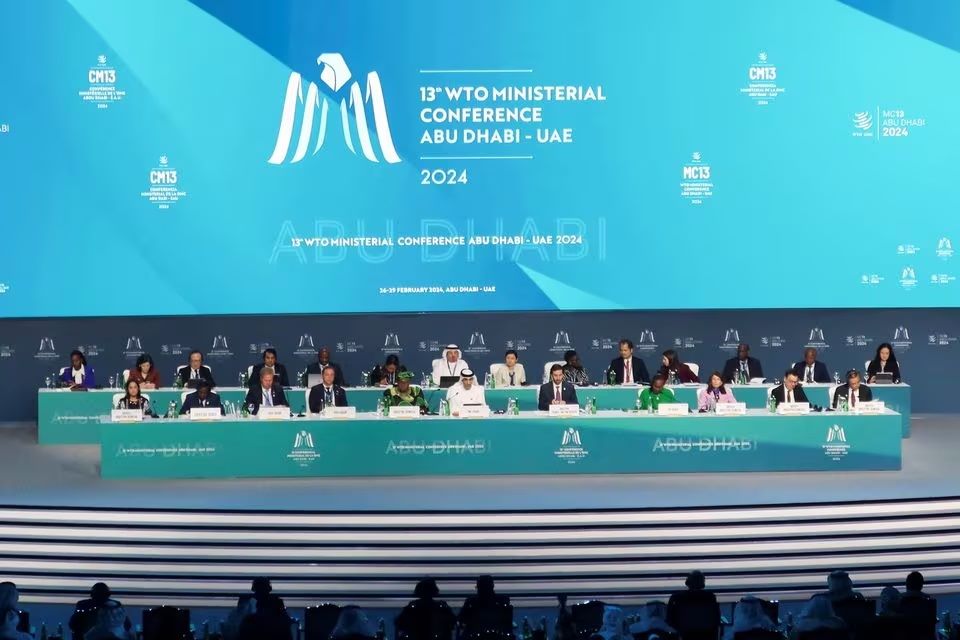
In a potential boost to global digital trade members of the World Trade Organization (WTO) have tentatively agreed to extend a moratorium on tariffs on electronic commerce for another two years, according to a draft document released last week. However, the decision still requires formal approval from all 164 member states.
As per the document: "We agree to maintain the current practice of not imposing customs duties on electronic transmissions until the 14th Session of the Ministerial Conference. The moratorium and the Work Programme will expire on that date." Ministerial conferences are held by the WTO every two years, with the next one scheduled for 2026. This temporary extension would allow further discussions on the future of e-commerce within the organization.
Boost to free flow of goods
This move comes as a relief to businesses and consumers who rely on the free flow of goods and services across borders. The moratorium, originally established in 1998, has been periodically extended since then, fostering the growth of e-commerce and the digital economy.
Proponents of the moratorium argue that it has fostered the growth of the global digital economy by reducing barriers to trade and encouraging innovation. They also emphasize its potential to support economic recovery efforts in the wake of the COVID-19 pandemic.
While the draft document signifies a positive step towards continued duty-free online trade, it is crucial to note that formal approval from all 164 WTO members is still necessary.
However, the decision to extend the moratorium is not without its critics. Some countries argue that it prevents them from raising revenue to support domestic industries. Others call for further negotiations to clarify the scope and application of the moratorium.
Overall, the potential extension of the moratorium has been met with optimism by industry leaders and advocates who view it as essential for fostering the continued growth of the global digital economy. They believe it would prevent potential disruptions and increased costs for businesses and consumers alike.
Restrict fabric dumping from China, urges Punjab Dryers Association
Representatives of the Punjab Dyers Association recently convened with officials from the Union ministries of textiles and industries and commerce to convey the urgent need to mitigate the adverse impact of unrestricted fabric dumping from China on the Indian textile sector.
During the meeting, they highlighted the disparity in import duties imposed on Chinese fabrics, which they deemed unjust and detrimental to the domestic market. Advocating for a fair competitive landscape, they urged the implementation of a minimum import price on Chinese fabric imports.
The delegation emphasised that Chinese fabrics, valued at Rs 400 per kg, were being significantly undervalued at Rs 40-50 per kg upon importation, resulting in substantial losses for the government. Bobby Jindal, Representative, Punjab Dyers Association, underscored the adverse effects of unfair dumping practices on the Indian textile industry. He emphasised the dire consequences, including job losses, diminished revenue, and decreased production capacity, caused by the undue pressure exerted on domestic players.
Yarn Expo Spring to welcome 500 exhibitors from 11 countries
To be held from Mar 06-08, 2024 at the National Exhibition and Convention Center (NECC) in Shanghai, Yarn Expo Spring will welcome over 500 exhibitors from 11 countries and regions, including Bangladesh, China, Germany, Hong Kong, India, Indonesia, Pakistan, Singapore, Taiwan, United Arab Emirates and Vietnam.
The exhibition will showcase a wide spectrum of the latest innovations across seven feature zones spanning 27,000 sq. m.
Some of these major zones include the Cashmere Yarn Zone, Fancy Yarn Zone, Chemical Fiber Zone, Linen Yarn Zone, Cotton Yarn Zone, Wool Yarn Zone, and Overseas Yarn Zone, which includes the India Pavilion and Pakistan Zone. The exhibition will host a series of seminars, forums and panel discussions concurrently to dive deeper into industry trends, a series of seminars, forums and panel discussions.
The show will offer unmatched sourcing opportunities for buyers with a strong international and domestic exhibitor lineup showcasing the latest yarn and fiber innovations, says Wilmet Shea, General Manager, Messe Frankfurt (HK).
The Overseas Yarn zone will host over 70 suppliers from 11 countries and regions. It will display a wide range of products focused on sustainable characteristics.
The exhibition will also host an India Pavilion featuring over 30 of the country’s top suppliers in the cotton yarn industry. Products to be featured in this zone include pure cotton carding, pure cotton combing along with compact spinning, woven yarn, air-jet yarn, fancy synthetic filament yarn, Lyocell linen, Modal linen and Tencel, among others.
The Pakistan Zone will host 11 suppliers presenting cotton yarns and unfinished fabrics, as well as Apex Industries, showcasing organic cotton options.
Other notable international exhibitors at the event include Blinks International from Pakistan, specialising in raw cotton, cotton yarn and grey fabrics; PT Bintang Makmur Sentosa Textil Industri from Indonesia, highlighting spinning, weaving and finishing products; and Rütex GmbH from Germany, specialising in all standard yarns to specialties and development-intensive yarns.











