


FW
Government extends RoDTEP benefits to the textile sector
The government has declared an expansion of benefits under the renowned export promotion scheme, Remission of Duties and Taxes on Exported Products (RoDTEP), to encompass export-oriented units (EOUs), units in special economic zones (SEZs), and Advance Authorisation (AA) holders.
This extension of the RoDTEP scheme aims to bolster India's export competitiveness in global markets in major sectors such as engineering, textiles, chemicals, pharmaceuticals, and food processing.
With a consideration for budgetary allocation, the extension of RoDTEP benefits to additional sectors is currently set until September 30, 2024, as per a release issued by the Commerce Department on Friday.
The decision acknowledges the substantial contribution these sectors make to India’s exports, constituting approximately 25 per cent of the total exports. Amidst global economic uncertainties and supply chain disruptions, extending RoDTEP to uncovered sectors such as AA, EOU, and SEZ units will assist the exporting community in navigating international headwinds
The RoDTEP scheme plays a pivotal role in refunding various embedded taxes and duties on exported products. Since its inception in January 2021, the scheme has provided support amounting to Rs 42,000 crore to over 10,500 export items. In the current financial year, the scheme has been allocated a budget of Rs 15,070 crore, with an additional increase of 10 per cent in FY25.
Under RoDTEP, applicable to over 8,500 products, various central and state duties, taxes, and levies imposed on input products are refunded to exporters. The current RoDTEP rates range from 0.3 per cent to 4.3 per cent.
GBCC, PRGMEA sign MoU to boost T&A exports
The Greater Birmingham Chamber of Commerce (GBCC) and the Pakistan Readymade Garments Manufacturers and Exporters Association (PRGMEA) have signed an MoU to boost garment and textile (T&A) exports between the two countries.
According to the MoU, the GBCC and PRGMEA will collaborate to build a dependable, pragmatic and advantageous relationship, besides initiating effective and cordial relations between the two associations through increased cooperation among industrialists, businessmen, and entrepreneurs.
Mubashar Naseer Butt, Central Chairman, PRGMEA says, the MoU benefits both the organisations, and will enhance growth and interaction between them.
Both the parties will able to disseminate maximum information amongst each other leading to further promotion of trade and industry. The MoU will also benefit the exporters, industrialists, and entrepereneurs, he adds.
Nasir Awan,, President, GBCC adds, the centre will continue to support and nurture local businesses in Birmingham, while PRGMEA, representing Pakistan's readymade garments industry, will become a supportive partner.
Awan maintains, Greater Birmingham Chamber will connect, support and grow local businesses situated in Birmingham while PRGMEA will extend all support, cooperation, and assistance needed for the initiative.
Both organisations agreed to develop concrete proposals and recommend advance trading and industrial activities in their respective countries. They also committed to safeguard investments and promote bilateral activities among their members.
Bangladesh RMG exports surge by 13.93% in Feb’24: EPB
Bangladesh's Ready-Made Garment (RMG) exports surged by 13.93 per cent Y-o-Y to $4.49 billion in February 2024. As per data released by the Export Promotion Bureau (EPB), in January 2024, Bangladesh’s RMG exports had surged by 12.45 per cent Y-o-Y to $4.97 billion.
On a cumulative basis, RMG exports during the first two months surged by13.15 per cent to $9.47 billion as compared to the corresponding period in the previous year. Meanwhile exports during July-Feb 2023-24 surged by 4.77 per cent Y-o-Y to $32.86 billion from $31.37 billion in the same period of FY23.
Of this, knitwear exports surged by 9 per cent Y-o-Y to $18.59 billion, while exports of woven items declined by 0.26 per cent to $14.26 billion compared to FY23.
Faruque Hassan, President, Bangladesh Garment Manufacturers and Exporters Association (BGMEA), says, the growth in Bangladesh’s RMG exports reflects the industry’s product and market diversification initiatives and its success in value addition. The industry’s emphasis on quality particularly in backward linkage will help enhance the production of high-quality goods over the next five years, he adds.
Despite global trade challenges stemming from inflation and the Russia-Ukraine war, industry insiders remain hopeful about Bangladesh's RMG sector. They believe, the positive growth in non-traditional markets, with apparel exports reaching $8.87 billion in 2023, presents a significant opportunity for further expansion and export value enhancement.
35th GTE to be held from Mar 08-11, 2024 in New Delhi
The 35th edition of Garment Technology Expo (GTE) will be held from Mar 08-11, 2024 at NSIC Exhibition Complex, Okhla, New Delhi. GTE is Southeast Asia's biggest garment technology exhibition showcasing innovations in garment manufacturing.
Over 800 exhibitors and 20,000 businesses are expected to attend the event. GTE aims to help garment manufacturers compete globally by showcasing the latest technologies.
The exhibition will feature demonstrations of cutting-edge technologies from over 20 countries. Sewing machines, fabric washing machines, embroidery machines, and knitting machines are some of the technologies that will be on display.
GTE has been a key platform for garment manufacturers in India for the past 23 years. The next edition of GTE Bengaluru will be held from September 20 to 22, 2024.
Expressing gratitude for the unwavering support received over the years, Vicky Sahni, Joint Managing Director, Garment Technology Expo, emphasised on the remarkable journey since the inception of GTE in 2001.
Ambareesh Chopra, Director, Garment Technology Expo, adds, with participation from over 20 countries and 500 brands, the upcoming edition promises to showcase the latest innovations in the garment industry.
India-EFTA Trade Pact: A boon for textiles and fashion?
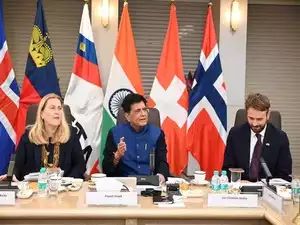
A free trade agreement (FTA) signed between India and the European Free Trade Association (EFTA) on Sunday promises a significant shake-up in the textiles, apparel, and fashion trade landscape. While the deal boasts job creation and economic benefits, its impact on these specific sectors remains to be seen.
Potential boost for Indian exports
Indian exporters, particularly those specializing in cost-competitive garments, stand to gain from the pact. The removal or reduction of tariffs on textiles and apparel entering EFTA countries could lead to a surge in exports. According to a study by the Centre for Monitoring Indian Economy (CMIE), India's textile and apparel exports to the EFTA region currently stand at around $5 billion annually. The FTA has the potential to push this figure significantly higher.
Increased competition for Indian manufacturers
However, the FTA is a double-edged sword. Easier access to the Indian market for European apparel brands could pose a threat to domestic manufacturers. Established European fashion houses, known for their quality and brand recognition, may find a receptive audience among India's growing middle class. This could lead to increased competition for Indian companies in their home market.
The reasons for India's hesitation in the past
India has been cautious about entering FTAs in the past, fearing negative consequences for domestic industries. The reasons for this apprehension included competition from Established brands, as they are known for their quality and brand recognition, which could threaten Indian manufacturers in their home market and job losses; the increased competition could lead to job losses in the Indian textile and apparel sector, particularly for low-skilled workers.
Historical Case Study: The rise of fast fashion
Similar concerns were raised when India liberalized its textile trade in the early 2000s. While the move did boost overall exports, it also opened the door for cheaper garments from countries like Bangladesh and Vietnam. This led to the rise of fast fashion brands in India, which cater to price-conscious consumers but may not prioritize ethical labor practices or environmental sustainability.
Potential impact of EFTA agreement on the key sectors
|
Sector |
Potential Impact |
|
Indian Apparel Exports |
Increase |
|
Competition for Indian Manufacturers |
Increase |
|
Foreign Investment in Indian Textiles |
Potential Increase |
|
Job Creation |
Potential Increase (long-term) |
EFTA and trade with India
The EFTA is a four-member trading bloc comprising Switzerland, Norway, Iceland, and Liechtenstein. These countries are not members of the European Union and have their own independent trade agreements. As per the data from the Ministry of Commerce & Industry, India, here's a breakdown of their current trade with India. Total EFTA-India Trade, the two-way trade between India and EFTA stood at approximately $18.65 billion in 2022-23, down from $27.23 billion in the previous year. Sector-wise, India is a major exporter of textiles and apparel globally, and EFTA countries likely import a portion of these goods. And for fibres and yarns, EFTA countries may also import raw materials like cotton and synthetic fibers for their own textile industries.
EFTA countries trade with India, individually
Switzerland: India's largest trading partner within EFTA.
o Exports to India: $15.79 billion (mainly machinery, gold, pharmaceuticals)
o Imports from India: $1.34 billion (mainly chemicals, gems & jewellery)
Norway:
o Exports to India: $2.3 billion (mainly seafood, mineral fuels)
o Imports from India: $1.2 billion (mainly textiles, apparel, machinery)
Iceland:
o Exports to India: $30 million (mainly fish & fishery products)
o Imports from India: $10 million (mainly pharmaceuticals, chemicals)
Liechtenstein:
o Exports to India: Negligible
o Imports from India: Negligible
A Balanced Approach Needed:
The success of the FTA for India's textiles and fashion industry will hinge on a balanced approach. The government can play a role by investing in skill development for workers, promoting design innovation, and ensuring adherence to stricter labor and environmental regulations. This will allow Indian manufacturers to compete effectively with European brands while maintaining ethical and sustainable practices.
Future Outlook and potential impact of the agreement
The impact of the FTA will likely unfold in multiple stages could be in short-to-mid term, Indian apparel exporters focusing on cost-competitive garments may see a rise in exports. However, domestic manufacturers could face increased competition from European brands. Whereas, in the long term the success of the FTA hinges on India's ability to enhance its design abilities and also to upskill its workforce to compete in the evolving market.
India-EFTA FTA presents a mixed bag for the textiles and fashion sector. The FTA has the potential to significantly impact the textiles, apparel, and fashion trade. While Indian exporters have a chance to expand their reach, domestic manufacturers need to prepare for heightened competition. A focus on innovation, quality, and sustainability will be key for Indian companies to thrive in the new trade environment.
Dietz-Motoren joins ITMF as key component supplier
Dietz-Motoren, a manufacturer of custom electric motors, fans, and blowers, has joined the International Textile Manufacturers Federation (ITMF) as a corporate member. Founded in 1922, the German company employs 270 people and also supplies components to textile machinery companies.
ITMF Director General Christian Schindler welcomed Dietz-Motoren, highlighting that the organization serves not only textile and apparel companies but also those in the supply chain. ITMF offers publications, statistics, and networking opportunities to help members navigate the complex textile industry.
Dietz-Motoren's Key Account Manager, Marrin Degenhardt, sees ITMF's global reach as a valuable asset. Membership will allow them to connect with industry leaders, identify business opportunities and risks, and develop their strategy accordingly. They look forward to actively participating in ITMF activities.
Scott Racing Team soars with Roica, Sitip, Rosti
In a dynamic synergy between Scott Racing Team and three industry-leading companies uniform for the 2024 season emerges, blending innovation, sustainability, and unparalleled performance. This collaborative effort underscores a shared commitment to excellence, with each entity bringing its expertise to the forefront of sports apparel design.
At the heart of this partnership lies the relentless pursuit of superior performance. The 2024 uniform, meticulously crafted in collaboration with Sitip, showcases a fusion of cutting-edge technology and advanced materials. Sitip's renowned fabrics, infused with Roica by Asahi Kasei's premium stretch yarn, redefine sportswear standards, offering athletes unrivaled comfort, breathability, and durability.
The incorporation of Roica yarn introduces a new dimension of functionality to the uniform, with properties such as color retention, resistance to wear, and ease of maintenance. This innovative approach ensures that athletes can focus solely on their performance, without compromise.
Notably, Sitip's dedication to sustainability further elevates the uniform's appeal. With a comprehensive range of certifications and a commitment to reducing environmental impact, Sitip sets a new standard for eco-conscious manufacturing in the sports apparel industry.
The partnership extends beyond technical excellence, encompassing a shared ethos of responsibility and ethics. Sitip's Sustainability Report, alongside a multitude of corporate certifications, underscores the company's unwavering commitment to ethical practices and environmental stewardship.
Rosti knitwear, renowned for its technical prowess and Italian craftsmanship, rounds out the collaboration with its unwavering dedication to product excellence. The renewal of this partnership reflects a mutual commitment to innovation and quality.
For Ivano Camozzi, President of the Scott Racing Team, the 2024 season represents a reaffirmation of the team's winning legacy. With the support of esteemed partners, the team remains poised to uphold its tradition of excellence, driven by innovation, sustainability, and unwavering commitment to performance.
In essence, the unveiling of the 2024 uniform marks a pivotal moment in the evolution of sports apparel, where cutting-edge technology, sustainability, and performance converge to redefine the boundaries of athletic excellence.
Spinnova, Suzano ink deal for new fiber facility
Spinnova Plc and Suzano S.A. have solidified their collaboration with the signing of a Letter of Intent (LOI) aimed at establishing a new production facility for wood-based Spinnova fiber. The LOI outlines plans for Suzano to assume ownership and operation of the facility, with a projected annual capacity of 20 thousand tonnes of fiber. Likely to be situated close to an existing Suzano pulp mill, the facility represents a significant step towards expanding the production of sustainable fiber materials.
The non-binding LOI delineates key criteria for advancing into the pre-engineering phase of the facility's development, including preliminary terms and conditions. Notably, Suzano will spearhead the effort to secure funding for the project, alleviating the need for Spinnova to raise capital. This strategic move allows Spinnova the flexibility to explore potential investments in future plants independently.
Since 2020, Spinnova and Suzano have been collaborative partners in Woodspin, an entity focused on advancing wood-based Spinnova fiber technology. The successful operation of Woodspin's inaugural production facility in Jyväskylä, Finland, serves as a testament to the viability of Spinnova's innovation and Suzano's expertise in textile MFC technology.
The forthcoming pre-engineering phase, slated to commence in the latter half of 2024, hinges on several factors, including the delivery of a Process Design Package (PDP) by Spinnova and strategic approval from Suzano. Additionally, meeting specified process and fiber metrics at the Woodspin facility is deemed crucial.
Tuomas Oijala, CEO of Spinnova, expressed enthusiasm for the partnership's potential to scale fiber technology and achieve large-scale industrial production. Meanwhile, Christian Orglmeister, Suzano's Executive Officer for New Business, Strategy, IT, and Digital, emphasized the company's commitment to expanding Spinnova fiber production capacity, leveraging existing infrastructure, and fostering synergies to drive business growth.
The collaboration between Spinnova and Suzano signifies a significant milestone in advancing sustainable fiber production, underscoring their shared vision for innovation and environmental stewardship.
CCPIT, BGMEA discuss potential collaboration to elevate Bangladesh garment industry
Led by General Zhang Tao, Vice President and Secretary General, a delegation from the Sub-Council of Textile Industry, China Council for the Promotion of International Trade (CCPIT), met Faruque Hassan, President, Bangladesh Garment Manufacturers and Exporters Association (BGMEA), to discuss a potential collaboration to elevate Bangladesh’s apparel industry on the global stage by organising international exhibitions.
The delegation was accompanied by Wu Zhizhen, Deputy Director, and Jiao Jiao, Assistant Director, Sub Council of Textile Industry, CCPIT. Leo Zhuang, Managing Director of Liz Fashion, was also present at the meeting.
The parties delved into showcasing the strengths of Bangladesh’s Ready-Made Garment (RMG) industry, highlighting its enhanced capabilities in manufacturing complex and high-end fashion products. Additionally, they discussed the Sub-Council of Textile Industry, CCPIT's role in facilitating investments in Bangladesh's non-cotton textile sector, as the country’s apparel sector is increasingly diversifying towards higher-value garments, especially those made using man-made fibers.
Hassan provided insights into the impressive transformation of Bangladeshi garment factories, emphasising advancements in safety, dynamism, modernisation, energy efficiency, and environmental friendliness.
Hugo launches new denim collection for Gen Z and younger consumers
The youthful brand under the Hugo Boss umbrella, Hugo unveiled Hugo Blue, its latest denim-focused line for Gen Z and younger consumers on March 06, 2024 in Berlin. The debut featured a spectacular launch event attended by approximately 1,000 guests.
Attendees at the event explored the inaugural collection of Hugo Blue and immersed themselves in its vibrant world. The experience seamlessly blended inspiring product installations with a diverse array of entertainment and gaming elements.
Despite having initiated the Hugo x Replay jeans capsule collaboration with Replay in October 2022, the German fashion powerhouse opted to launch its standalone brand, encompassing menswear, womenswear, and all-gender pieces.
The collection showcases bold logo details and various shades of blue denim, with a primary focus on denim essentials and streetwear, including printed t-shirts, hoodies, tops, shorts, pants, and outerwear.
The key looks were creatively presented through three distinct ‘closets,’ featuring playful inflatables, denim walls, and large LED panels. A ‘Customisation Zone’ allowed local artists Rafaella Braga and Max Teutsch to personalize guests' Hugo Blue pieces live, adding a unique touch to each item.
Additionally, each participant received a Hugo Blue denim tote bag, while selected VIP guests were treated to a teaser in the form of a denim jacket with an iron-on flower patch and an integrated NFC chip, offering an immersive Hugo Blue experience on Snapchat. The event also marked the introduction of Planet Hugo, an ecosystem of connected experiences on Roblox, a leading platform for communication and connection.
The launch showcased the first two 3D environments of Planet Hugo—Hugo Hangout and Hugo Fashion Match—in a gaming zone, displaying different immersive spaces simultaneously on multiple screens. Nadia Kokni, SVP- Global Marketing and Brand Communications, Hugo Boss, highlighted the event's focus on activating gaming and the metaverse as cultural focal points.











