


FW
Kering forecasts 20% drop in Gucci’s sales during Q1FY’24
Gucci-owner Kering has forecasted a significant drop of approximately 20 per cent in Gucci's sales for the first quarter, citing a sharper decline than anticipated in the Asia-Pacific region. This setback further widens the gap between the French luxury conglomerate and its primary competitors.
Owned by the billionaire Pinault family, Kering has grappled with staying abreast of competitors like LVMH and Hermes International, particularly as luxury sales cooled off in the past year, notably in China. LVMH's diverse brand portfolio and Hermes's enduringly long waiting lists for coveted handbags have bolstered these companies' resilience.
According to analysts at Vital Knowledge, Gucci has been facing internal challenges for several quarters, but this latest update will amplify concerns regarding consumer spending and the state of China's economy.
Overall, Kering’s comparable sales are anticipated to decline by about 10 per cent i across its portfolio. This includes esteemed labels such as Balenciaga and Saint Laurent.
Gucci's sales declined during the closing months of the previous year as the brand grappled with attracting more affluent shoppers to its high-priced Double G belts and Princetown slippers. A year ago, Sabato De Sarno was appointed as the brand's new designer.
Cellulose Fibres Conference concludes with top innovations

The Cellulose Fibres Conference 2024 held in Cologne on 13-14 March, emerged as a testament to the remarkable strides in the cellulose fibre industry, showcasing innovative projects and scale-ups across various sectors. Hosted against the backdrop of an evolving policy landscape geared towards reducing single-use plastics, the event spotlighted the pivotal role of cellulose fibres in addressing sustainability challenges within the textile industry.
Exploring the innovation landscape
The conference featured 40 international speakers who delved into the latest market trends and highlighted the vast innovation potential of cellulose fibres. Discussions encompassed diverse applications ranging from textiles and hygiene products to construction and packaging. Notably, experts introduced cutting-edge technologies for cellulose-rich raw material recycling and shed light on circular economy practices.
Interactive sessions and networking opportunities
Attendees actively engaged in panel discussions, fueling insightful exchanges and fostering collaboration. The event, attended by 214 participants and 23 exhibitors from 27 countries, provided a dynamic platform for networking and forging new industry connections. Asta Partanen from the nova-Institute, which curated the conference content, expressed satisfaction with the positive feedback received, underlining the event's comprehensive focus and conducive atmosphere.
The highlight of the conference was the presentation of the "Cellulose Fibre Innovation of the Year" Award, an accolade celebrating innovative advancements in sustainable fibre solutions. The award, sponsored by GIG Karasek, showcased exceptional innovations poised to drive the industry towards sustainability.
Innovation Award winners
First - DITF & Vretena (Germany): The straw flexi-dress - Design meets sustainability
The winning innovation, the Straw Flexi-Dress, epitomizes the fusion of design and sustainability. Crafted from HighPerCell filaments derived from unbleached straw pulp, the dress embodies a circular fashion ethos. Its versatile design allows it to be worn in multiple styles, showcasing the potential of cellulose fibres in fashion.
Second - Honext material (Spain): Honext Board FR-B (B-s1, d0) – Flame-retardant Board from upcycled fibre waste
Honext's flame-retardant board, derived from upcycled industrial waste fibres, represents a leap towards sustainable building materials. With its high mechanical performance and fire safety credentials, the product offers a viable alternative for interior applications, underscoring the value of cellulose in fostering a circular economy.
Third - TreeToTextile (Sweden): A new generation of bio-based fibre
TreeToTextile's innovative fibre combines sustainability with performance, offering a compelling alternative to traditional textiles. With a low environmental footprint and biodegradability, this fibre presents a promising solution for reducing reliance on conventional materials like cotton and polyester.
Future outlook and collaboration
Looking ahead, the Cellulose Fibres Conference remains a vital forum for collaboration and innovation within the cellulose fibre ecosystem. With industry support from leading sponsors and partners, including Andritz, Lenzing, and Fashion for Good, the conference serves as a nexus for industry associations, research institutions, and interest groups. Mark your calendars for the next conference on 12-13 March 2025, promising further advancements in sustainable textile solutions.
Puma targets €620 million revenues in 2024
Expecting mid-single-digit currency-adjusted sales growth, Puma targets revenues ranging from €620 million to €700 million in fiscal 2024. The brand's football innovations, including Future, Ultra and King boots, have garnered significant market share and attracted world-class athletes like Kai Havertz, Jack Grealish, and Xavi Simons.
Moreover, Puma's commitment to sustainability is evident through initiatives such as using recycled or certified materials in 8 out of 10 products since 2023. The brand plans to manufacture all football jerseys from recycled textile waste with RE:FIBRE.
Embodying the values of excellence and athleticism, Puma recently released its annual sales report for 2023, showcasing impressive growth despite industry volatility.
In Q4 2023, Puma’s sales surged by 6.6 per cent, culminating in a full-year growth of the same margin. The company's global revenue soared to approximately €8.6 billion. Notably, Puma achieved a 20 basis point improvement in gross profit margin, reaching 46.3 per cent, attributed to favorable pricing, geographical mix, and channel effects. However, adverse currency fluctuations resulted in over €400 million in lost sales.
The Asia/Pacific and EMEA regions witnessed robust sales growth, whereas the American region faced challenges, particularly due to the extraordinary devaluation of the Argentine peso. Undeterred, Puma refined its strategy in 2023, focusing on brand elevation, product excellence, and enhanced distribution.
Strategically appointing new management teams in the US and China, Puma aimed to bolster long-term growth in these critical markets. Consequently, the company entered 2024 in a stronger position, poised to capitalise on major sporting events such as the Olympic Games, Euro 2024, and the Copa America.
APTMA presents plans to target $50 billion in textile exports by 2029
The All Pakistan Textile Mills Association (APTMA) has presented an ambitious plan to Commerce Minister Jam Kamal, aiming to boost the country’s textile exports to $50 billion by 2029. This plan focuses on aligning energy tariffs with regional competitors and making key policy adjustments to rejuvenate the textile sector.
Emphasising the crucial role of export-led growth in sustaining Pakistan’s economy amidst significant external financing needs, APTMA stresses the urgency for immediate action. With the country's annual gross external financing needs projected at over $25 billion for the next five years, export-oriented strategies become paramount for economic sustainability.
APTMA’s policy roadmap revolves around three main pillars: diversification, expansion, and competition. These pillars are supported by a multifaceted approach to harness Pakistan's textile potential fully.
Firstly, the roadmap emphasises incentivising product diversification to broaden the range of exportable goods. This includes rationalising import duties on essential inputs like purified terephthalic acid and polyester staple fiber to enhance competitiveness. Additionally, encouraging investment in manufacturing capacity for man-made fibers (MMF) and promoting higher value-added original brand and design manufacturing are considered crucial.
Secondly, significant investments are proposed for upgrading and modernising manufacturing facilities. APTMA aims to establish 1,000 new garment plants to pivot towards higher value-added production, thereby increasing export capacity and global competitiveness.
Furthermore, APTMA advocates for specialised industrial and export processing zones with modern facilities to attract investment and foster growth and innovation. These zones aim to reduce barriers for new ventures and stimulate export expansion through domestic and foreign investment.
Addressing the energy issue, APTMA stresses the need to align power tariffs with regional norms to boost sectoral competitiveness. Currently, Pakistan's industrial power tariffs are higher than those of regional competitors, making exports less competitive internationally. APTMA proposes solutions such as reducing power tariffs for industrial consumers and enhancing solar net-metering for industrial use.
In a joint letter to the Commerce Minister, APTMA leaders Asif Inam and Shahid Sattar highlighted that achieving this ambitious export target would not only strengthen the textile industry but also drive economic prosperity and job creation.
The Lycra Company to participate in textile recycling seminars at Performance Days
Renowned for its pioneering work in innovative and sustainable apparel solutions, The Lycra Company is set to participate in various seminars at Performance Days Munich, happening from March 20-21 in Germany.
Organised by Accelerating Circularity, a proactive non-profit organisation dedicated to advancing textile-to-textile recycling systems, these seminars will delve into the current landscape of polyester recycling from textile waste.
Jean Hegedus, Director - Sustainable Business Development, The Lycra Company, will participate as a panelist in the Recycled Polyester Database Launch session, scheduled in the Reality Zone each day of the fair. This platform serves as a nexus for polyester recyclers and fabric producers incorporating textile feedstocks into their operations.
Following the presentation, panelists will engage in discussions on the challenges associated with utilising textile waste and strategies to surmount them.
Subsequently, breakout sessions will provide brands and retailers with the opportunity to engage directly with providers for more detailed insights.
The Lycra Company has been at the forefront of developing specialty polyester fibers derived from textile waste. Since 2021, it has offered Coolmax and Thermolite EcoMade fibers crafted entirely from textile waste, boasting virgin-equivalent quality. Available in staple, filament, and insulation forms, these fibers find applications across a diverse range, from performance wear to outdoor garments, socks, and ready-to-wear apparel.
In a bid to promote the adoption of products sourced from textile waste, The Lycra Company launched the ‘Waste for Good’ campaign last year, with the tagline ‘Don't Waste this Opportunity.’ This campaign champions circularity in the apparel and textile industry, showcasing the potential of Coolmax and Thermolite EcoMade technologies.
Cotton exports decline to 14lakh bales in 2023-24: CAI
Anticipating a reduction in cotton output to 18 lakh bales from Madhya Pradesh in 2023-24, Cotton Association of India (CAI), a key agency for cotton trade and procurement has set a target of 14 lakh bales for cotton exports for the 2023-24 period.
Operating under the Ministry of Textile as a key agency for cotton trade and procurement, the Cotton Corporation of India (CCI) procured approximately 6.35 lakh quintals of cotton until February this year from farmers in Madhya Pradesh.
This season, CCI also established 21 procurement centers across Madhya Pradesh in response to a decline in cotton prices observed in various centers nationwide, attributed to high arrivals and subdued global demand. Notably, the government had set the Minimum Support Price (MSP) for medium staple cotton at Rs 6,620 per quintal and for long staple cotton at Rs 7,020 per quintal. CCI's procurement was notably absent in the previous season due to cotton prices prevailing above the MSP.
Market analysts have observed a decline in cotton arrivals in spot markets, with expectations of further decreases in the coming weeks. They attribute this trend to increased demand from textile mills, which are reportedly operating at full capacity.
Vivolo: Redefining fashion with sustainable leather trims
In the bustling landscape of fashion, where trends evolve at lightning speed, Vivolo emerges not just as a manufacturer of leather trims but as a beacon of sustainability and innovation. Founded in 1977 by Luciano Vivolo and his wife Marianna, Vivolo's journey began with a vision to repurpose leather industry waste into exquisite elbow patches, carving a niche in the global fashion scene. Fast forward to today, the Bologna-based company stands as a leader, supplying the world's top fashion houses with meticulously crafted leather trims for apparel, footwear, and leather goods.
At the heart of Vivolo lies a commitment to quality and responsibility. With a workforce comprising 85 per cent women, the company's 100 employees ensure the production of 8 million items annually, each meeting stringent quality standards. The recently inaugurated ultra-modern headquarters in Bologna serves as a hub for fashion's elite, offering bespoke solutions tailored to the industry's ever-changing demands.
Yet, Vivolo's impact transcends mere product excellence. Environmental ethics form the cornerstone of its operations, with initiatives like photovoltaic panels and rainwater harvesting showcasing a commitment to sustainability. The company's vertically integrated supply chain not only ensures efficiency but also enables the adoption of circular economy solutions, further minimizing environmental footprint.
Moreover, Vivolo's ongoing product evolution mirrors its innovative spirit. From pioneering capsule collections with minimal environmental impact to embracing cutting-edge techniques like 3D printing, the company continues to push boundaries, anticipating and shaping fashion trends.
In essence, Vivolo embodies a paradigm shift in the fashion industry, where sustainability and innovation converge to redefine the essence of luxury. As the world increasingly embraces conscious consumption, Vivolo stands poised at the forefront, setting new standards of excellence and responsibility in fashion manufacturing.
Karl Mayer Group showcases sustainable tech at JEC World
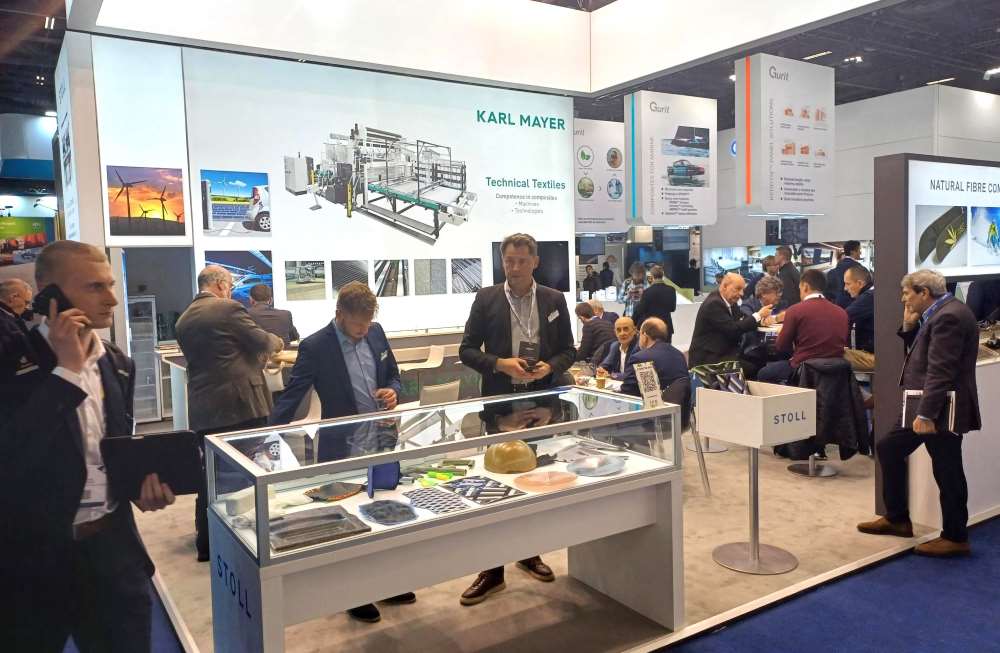
At JEC World 2024 in Paris, the Karl Mayer Group showcased its innovative technologies in multiaxial reinforcement fabrics and technical flat knitting solutions. While satisfied with the response, the company acknowledges a challenging economic landscape. Hagen Lotzmann, Vice President Sales, notes a pause in investments within the composites industry, attributing it to low demand and pressure on margins.
Market pressures and industry dynamics
Lotzmann identifies two significant pressures affecting the market: low demand and plummeting raw material prices. The dominance of glass fibers in the composite industry faces challenges due to stagnated growth in wind energy, disrupting demand and leading to oversupply issues. Additionally, disrupted supply chains from past crises and high energy costs further compound the industry's challenges.
Conversely, carbon non-crimp fabrics represent a stable market for the Karl Mayer Group, with a consistent project pipeline. Lotzmann emphasizes their competitive edge with the Cop Max 5 machine, enabling precise and efficient production tailored to specific applications.
Innovation in flat knitting and sustainability
Martin Legner, head of Stoll application technology, highlights the increasing importance of carbon fiber processing on flat knitting machines. The integration of thermoplastics in knitting technology presents promising innovations, such as durable housing cases, showcasing the potential for sustainable solutions in lightweight construction.
Lotzmann discusses the industry's openness to sustainability innovations, citing positive responses to exhibits like hemp-based skis. Despite growing interest, challenges remain, particularly in pricing and raw material extraction. However, Lotzmann asserts that technology, like multiaxial warp knitting machines, can significantly contribute to advancing sustainable practices.
Industry diversification and market prospects
While the sports industry shows openness to environmentally friendly innovations, automotive engineering remains cost-conscious. Nevertheless, the Karl Mayer Group continues to drive innovation across sectors, particularly in automotive composites, where their technology has been instrumental in projects such as the BMW i sub-brand.
As a longstanding development partner in the composites industry, the Karl Mayer Group remains committed to providing first-class expertise and innovative solutions. With a focus on sustainability and technological advancement, the company looks forward to addressing new challenges and driving progress in the industry.
Kontoor Brands appoints Tom Waldron as Chief Operating Officer
Kontoor Brands, Inc., renowned for its iconic brands Wrangler and Lee, has named Tom Waldron as its new Chief Operating Officer, effective March 19, 2024. This strategic move aligns with Kontoor's initiative, Project Jeanius, aimed at streamlining operations and enhancing efficiency.
Scott Baxter, President and CEO of Kontoor Brands, expressed confidence in Waldron's leadership, citing his instrumental role in driving growth and profitability for Wrangler amid challenging global conditions. Waldron brings over three decades of experience to his new role, where he will oversee global operations for both Wrangler and Lee, as well as the company's supply chain.
Joining Waldron in key executive positions are Jenni Broyles, appointed as EVP, Global Brands President for Wrangler & Lee, and Ezio Garciamendez, named EVP, Chief Supply Chain Officer. Broyles, with a robust background in brand management and marketing, is poised to drive expansion and innovation. Meanwhile, Garciamendez, recognized for his expertise in enhancing supply chain efficiencies, will continue to optimize Kontoor's global operations.
In tandem with these appointments, Christopher Waldeck, the former EVP, Co-Chief Operating Officer, Global Brand President for Lee, will transition out of his role by June, facilitating a seamless shift in the company's operational structure.
Baxter expressed gratitude for Waldeck's contributions over the past five years, signaling a forward-looking approach as Kontoor Brands gears up for transformative growth under Waldron's leadership.
ITM 2024: Pioneering sustainable textile tech & digitalization
The upcoming ITM 2024 Exhibition is set to showcase the forefront of textile innovation, emphasizing sustainable solutions and digitalization trends. Hosted by Tüyap Tüm Fuarcılık Yapım A.Ş. and Teknik Fuarcılık A.Ş., in collaboration with the Textile Machinery and Accessories Industrialists Association (TEMSAD), the event will unveil innovative advancements in textile machinery, technologies, and design concepts.
Scheduled from June 4-8 at the Tüyap Fair and Congress Center, the exhibition promises a comprehensive display of state-of-the-art machinery, emphasizing sustainability and digital design trends. Amid growing concerns about environmental impact, ITM 2024 aims to spotlight innovations tailored for a greener, more efficient textile industry.
In a pivotal shift towards sustainability, ITM 2024 will feature machinery and equipment designed to minimize environmental footprint, utilizing recyclable materials and energy-saving technologies. The event will also highlight advancements in digitalization, artificial intelligence (AI), and automation, revolutionizing production efficiency and cost-effectiveness.
With a spotlight on new manufacturing techniques such as AI and automation, ITM 2024 anticipates a convergence of industry leaders, exhibitors, and innovators, fostering discussions on the future of sustainable textile production. Themes including smart weaving machinery, energy efficiency, and waste reduction solutions will take center stage, reflecting the industry's commitment to eco-conscious practices.
As the textile industry continues its trajectory towards sustainability and digital transformation, ITM 2024 emerges as a pivotal platform for collaboration and innovation, shaping the future of textile manufacturing.











