FW
AEPC team meets FM, textile minister, gets assurance on resolving pending issues
Senior officials of Apparel Export Promotion Council met the finance minister Piyush Goyal and textiles minister Smiriti Irani to discuss various issues facing the industry especially the huge blockages in GST refunds since the roll out of GST and slow disbursements in RoSl.
The industry has witnessed a reduction in drawback and RoSl benefits by over 5 per cent of FoB since the pre GST period. This, coupled with the disadvantage of around 10 per cent faced by the industry vis-a-vis its competitors in the major markets like EU, due to lack of preferential access, had led to India losing out to Bangladesh and Vietnam in a big way.
HKL Magu, Chairman, Apparel Export Promotion Council expressed his gratitude for the speedy response from both ministers. He said, the FM has instructed his team to urgently identify central and state embedded taxes and work out a reimbursement mechanism. Also, the Ministry will expedite GST and ROSL refunds in a time bound manner. FM assured all possible support from his Ministry to enable exports growth and creation of jobs by the employment intensive apparel, made ups and textile industry. He said, “The industry has also assured that with our competitive position restored, we would be able to regain lost market share, further consolidate these gains and create gainful employment in shortest possible time.”
Pure London scheduled for July 22
Pure London is London’s largest festival of fashion will open its door from July 22 to 24. The event offers women’s wear, men’s wear, footwear and accessories brands as well as new sections for kids wear and maternity wear and ethical brands.
The Spirit section has been re-edited this season, offering more British designers, including Elizabeth An’Marie and Amy Lynn, and exciting new international names including POL Clothing from the US, Tally Weijl from Switzerland, and Australian brand Honey and Beau.
Exciting brands in new Pure Conscious section include ethical and sustainable fashion pioneers People Tree and Skunkfunk. One such clothing line is Emme Marella featuring unique prints and contemporary separates. For summer 2019 the collection offers assorted interesting proposals in terms of prints, thanks to an eye-catching and bold mix of floral and geometric patterns.
Pure London will offer visitors a festival of fashion – bringing together a strongly edited collection of over 700 global brands, including some of the best emerging designers showcasing their latest collections in the UK for the first time. Exclusive spring/summer ’19 trend insights will be delivered by WGSN. Catwalk shows, including children’s wear, will bring forth the season’s key looks.
For three days, visitors will be immersed in the world of fashion with a host of exciting guest speakers, workshops and networking opportunities.
Ermenegildo Zegna awards wool growers
Since 1963, the Ermenegildo Zegna Superfine Wool Trophy has honored Australia’s best wool growers. This competition is today the oldest in the world of wool. The Vellus Aureum (Golden Fleece) Trophy was added in 2002 to celebrate the incredible advances made by Australian woolgrowers and to reward the absolute finest wool fleece produced every year.
In 2016, the finest and best fleece was recorded at an exceptional 9.9 micron, making it a still unbeaten world record. The 2018 edition marked a significant increase in the number of farms participating in the trophy: 56 farms in 2018 vs 39 farms in 2017.
The Superfine Wool Trophy was won by David and Angie Waters (Tarrangower Merinos – Hillgrove, NSW), with Allan and Carolyn Phillips (Glen Stuart – Deddington, Tasmania) and Ed and Jill Hundy (Windradeen Mudgee -Pyramul, NSW) taking second and third place respectively.
The winners, David and Angie Waters, took first place for the second year in a row while the Phillips and Hundy families have been among the winners for the last six editions. Mulgowan (Amiens-QLD), Gowrie (Guyra-NSW), Wildford (Tenterden-NSW) were for the first time in the final ranking. The winners of the Vellus Aureum Trophy were Ross and Rebecca Blake from Allandale-Walcha NSW. David and Susan Rowbottom from Rowensville – St. Helens -VIC and Annie Hutchinson from Kentucky Station- Kentucky NSW were respectively second and third in the competition.
Denim becomes subtle and sensual
Denim is emerging from its purely masculine look to reveal more subtle and sensual fabrics with no gender attached. The result is high-end fabrications intended for tailored trousers, jackets and outerwear. There’s fluidity between fashion and denim. Whereas denim tends to dwell on the past—be it heritage work wear or nostalgic ’90s—the new season has shades of blue, novelty textures and a focus on how denim can adapt to its new niche market, including sport, street wear and evening.
Wool aspects can be visible such as natural-looking surfaces with irregular yarns or hidden as brushed wool on the inside of a jacket. Pinstripes, herringbones, Prince of Wales check and classic window pane patterns play up the tailoring story but are updated in blue.
To contrast, relaxed heavy denim inspired by street style is gaining momentum in the men’s and women’s categories. The trend is urban, graphic and inventive. Fabrications are made with thicker yarns to add softness and fullness to silhouettes. Nonchalant styling like cozy knits and cocoon-like shapes are key. Techniques that pump-up volume, such as smocking placed on shoulders to create an exaggerated ruffle, are made simply to surprise. Color blocking and contrast stitching add a youthful feeling.
India’s cotton yarn imports stabilise in March 2018
India’s cotton yarn imports stabililsed at 2.77 per cent to around 3.2 million tonne in March 2018 as against 1.69 per cent in February 2018. Pakistan witnessed the highest growth in March 2018 with 32 per cent to reach 3.5 million tonne. China imported 2.34 million tonne in 2015, which was the peak of the over five years. And then declined in 2016 and 2017, its imports were both less than 2 million ton. In the first quarter of 2018, China imported 460,000 ton of cotton yarn, declining by 13.24 per cent year-on-year.
Imports for Vietnam also slowed during the period. The country’s imports had stabilised at 5.82 per cent in March from 3.38 per cent in February 2018. In terms of volumes, the country’s imports declined to 3.3 million ton in February 2018 from 6.8 million tonne in January 2018 and again increased to 5.8 million tonne in March 2018.
Buoyant quarter for Global Fashion Group
Global Fashion Group unit reported a buoyant quarter as revenue and customer numbers rose strongly, although the company remains loss-making on an ebitda basis. The ebitda loss widened a little and the margin was a negative 13.6 per cent, better than the minus 13.9 per cent of the prior year’s quarter. The number of active customers rose over 12 per cent.
The company’s group net revenue for the quarter was up 17.6 per cent on a constant currency pro forma basis but translating into 3.6 per cent growth in reported euro terms. Net Merchandise Value (NMV), which includes marketplace sales, grew 19.9 per cent on a constant currency basis, which was an acceleration on the equivalent period last year.
The 3.6 per cent sported rise meant that depreciation across all key currencies hurt topline euro growth with the Brazilian real, the Russian ruble and the Australian dollar being particularly problematic.
However, continued operational efficiency gains had a positive impact, even though the company’s investments in price at Dafiti, Zalora and The Iconic meant the gross profit margin declined by one percentage point year-on-year to 37 per cent. This impact was more than offset by path-to-profit initiatives and scale benefits.
Global Fashion Group is a part of Rocket Internet.
Bangladesh looks for Lankan partnership
The Bangladesh envoy in Colombo has sought Sri Lankan collaboration in global apparel supply chain and logistics. The High Commissioner Riaz Hamidullah described Bangladesh’s vision and approach to multi-modal connectivity and outreach to South Asian region and beyond while addressing a special event on Bangladesh’s Journey in Development: Moving beyond LDC; and Perspectives on Regionalism at University of Colombo.
The event, organised with the Faculty of Graduate Studies at the Colombo University, commenced with a screening of a specially-tailored documentary highlighting key aspects of Bangladesh’s history, culture, geography and different facets of contemporary development.
In his 45-minute presentation, the high commissioner underlined inter alia the values and features of Bengali people and nationalism, people’s yearning for the values, Bangabandhu’s leadership in steering the War of Liberation. He summarised how Bangladesh’s development across the society and economy over the past four and half decades have come about in spite of various constraints and limitations.
The high commissioner also shared a number of Bangladesh’s developmental indigenous solutions and experience across sectors which are now replicated internationally.
Bangladesh amends labour laws
Bangladesh is going to the International Labor Conference in Geneva with the draft copy of amended labor laws to satisfy the international community. The country has introduced changes to the draft of the labor law as per the recommendations of international communities like the ILO, the EU and the US to improve labor rights in the country.
Changes to the labor law have been brought in mainly in two areas. Now, an association of 20 per cent of the workers in a factory is sufficient to form an union instead of 30 per cent.
Second, officials of the Department of Inspection for Factories and Establishments would be able to visit and inspect the factories housed inside the Export Processing Zones. Previously this was not possible. With the current amended labor law that was adopted in July 2013 after the Rana Plaza building collapse, it was difficult to collect the consent of 30 per cent workers of a factory to form a trade union. Since then, only 625 trade unions have been formed in the garment sector, a paltry number.
As a result, the international community, particularly rights groups, lobbied to lower the threshold to a reasonable level so that unions can be formed easily. So 20 per cent was agreed to in consultation with the tripartite committee.
Yesmin Textile earns the right to Authorized Economic Operator status
Yeşim Textile has earned the right to have internationally valid Authorized Economic Operator status. Yeşim Textile is the 228th company to obtain this document, thus proving its credibility by documenting that it fulfills the requirements of the legislation. This document, given to companies that have no adverse situation with respect to customs legislation and whose commercial records are reliable and traceable, offers a great advantage in speeding customs clearance.
The Authorised Economic Operator allows companies to easily control their own products and to make their transactions go faster. This document also provides the opportunity to make all customs transactions faster than other firms, reduce transaction costs and gain extra time. It also makes a positive contribution to the competitiveness of companies. Companies that can easily benefit from the privileges granted in countries where this certificate is valid are also beneficial in increasing cooperation with suppliers and reducing the uncertainties that may arise regarding shipments.
The truth behind ‘Made in NZ’ tag
"New Zealand has come under the scanner of faking ‘Made in NZ’ tag when a leading media house did some checking. Stats show, New Zealand imported 10.6 million cotton T-shirts from Bangladesh last year, with an average value of $2.95 each. Outdoor clothing firm Macpac moved its manufacturing from Christchurch to China, Vietnam and the Philippines in 2003. As Nadia Scott, Marketing Manager, Macpac, says the brand had to take the decision to move production overseas when global demand for its products began to outstrip what it could supply with a New Zealand labour force. They took the time to research options and assess alternatives, and found manufacturing partners who are highly skilled. They can produce volumes that the company is unable to match in New Zealand with the limited availability of skilled machinists."
 New Zealand has come under the scanner of faking ‘Made in NZ’ tag when a leading media house did some checking. Stats show, New Zealand imported 10.6 million cotton T-shirts from Bangladesh last year, with an average value of $2.95 each. Outdoor clothing firm Macpac moved its manufacturing from Christchurch to China, Vietnam and the Philippines in 2003. As Nadia Scott, Marketing Manager, Macpac, says the brand had to take the decision to move production overseas when global demand for its products began to outstrip what it could supply with a New Zealand labour force. They took the time to research options and assess alternatives, and found manufacturing partners who are highly skilled. They can produce volumes that the company is unable to match in New Zealand with the limited availability of skilled machinists.
Justifying the tag, she added most manufacturing companies work with or own factories around the world, often with plants in multiple countries, however the company identifies with the market where its products are designed, and where its senior management is based, driving the company's strategy and direction.
Fashion designer Dame Trelise Cooper points out her fashion brand had been manufacturing garments in New Zealand for 35 years. Currently, Trelise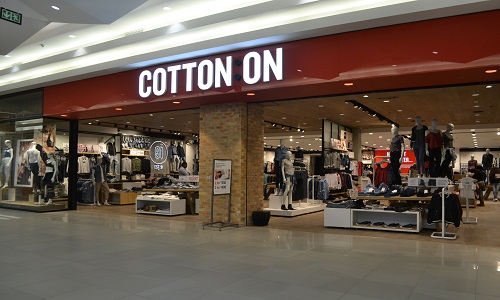 Cooper makes most samples and small volume runs in New Zealand. They employ multiple contractors throughout the Auckland region and employ 120 staff in New Zealand, many of whom make garments in-house, pattern making, cutting, machining and hand finishing. Around 54 per cent of its clothing was manufactured in China, 32 per cent in New Zealand, 11 per cent in India, 3 per cent in South Korea and 0.01 per cent in Bangladesh.
Similarly Icebreaker’s most clothing factories are located in China but it also has some in Bangladesh, Vietnam, America and Italy. Boutique fashion brand Ricochet said its garments were made in Auckland by its design and production team, with the exception of its knitwear which is produced in China. A Ricochet spokeswoman said the company bought production back to New Zealand in 2009 when it purchased the company from previous owners. Under previous ownership, production was based offshore, but after taking over the brand in 2009, it bought the production back to New Zealand. Since then, they manufacture everything in New Zealand except knitwear.
Many brands, similar opinions
Australian fashion company Cotton On’s clothing is made in Bangladesh and China since inception. Clothing sold at its other retail brands Cotton On Kids, Cotton on Body, Supré and Factorie is also made in Bangladesh and China. A spokeswoman for Karen Walker said its garments were produced in China and New Zealand. It has six ‘ready to wear’ suppliers in China, located in Shanghai, Suzhou, Wuxi and the Zhejiang province and one in Auckland. According to Karen Walker, marketing manager, Jiali Yang, the company’s suppliers are boutique-sized and have between one and 94 employees each. They deliver premium product in small runs as desired.
Yang said many brands who produced locally and used the ‘Made in New Zealand’ tags thought their systems were ethical but many did not know where their fabrics and add-ons came from. Over the past two years, they have traced all 11 fabric mills that supply fabric to them and the brand will continue to only work with fabric mills that are traceable. Its fabrics were produced in China, Italy, France, New Zealand, Japan and Korea and its suppliers were prohibited from sourcing fabric from stock markets.
Designer Annah Stretton said between 70 and 80 per cent of its clothing was made in China. The company took manufacturing to China in 2007 before that, they were a completely ‘Made in NZ’ brand. According to her, manufacturing cost in China are very similar to New Zealand, in fact they are sometimes higher given the volatility of the US dollar, so this wasn't a cost thing for her, it was an availability challenge that they had to solve.
Handbag company Deadly Ponies, which employs 42 local workers, said its accessories were designed in its Auckland workroom and around 60 per cent of its products were manufactured in New Zealand, ‘dependent on the season’, and the rest in France, India, China and Italy. Steven Boyd, MD, Deadly Ponies, stated that certain machines are not available in New Zealand and also production volume restrictions compelled them to move offshore. Boyd felt that it was fair for companies to promote themselves as local if its products were manufactured overseas.