


FW
US-China trade war fuels demand for Bangladesh denim
"Statistics from the Directorate-General of the European Commission Eurostat reveal Bangladesh denim exports to the EU, during January-August 2018, increased 4.23 per cent to reach €917.14 million compared to the same period last year. The country’s denim manufacturers saw a healthy rise in exports to the US and European Union (EU) markets, beating China as the world’s second largest economy posted only a moderate growth. As per the US Office of Textiles and Apparel (OTEXA), the country witnessed a 14.20 per cent rise in export earnings from January to September 2018. China on the other hand earned 1.3 per cent totaling up to $683 million in export earnings, while Mexico saw a 1.08 per cent increase from 2017 to $595.40 million."
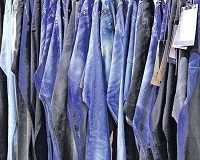 Statistics from the Directorate-General of the European Commission Eurostat reveal Bangladesh denim exports to the EU, during January-August 2018, increased 4.23 per cent to reach €917.14 million compared to the same period last year. The country’s denim manufacturers saw a healthy rise in exports to the US and European Union (EU) markets, beating China as the world’s second largest economy posted only a moderate growth.
As per the US Office of Textiles and Apparel (OTEXA), the country witnessed a 14.20 per cent rise in export earnings from January to September 2018. China on the other hand earned 1.3 per cent totaling up to $683 million in export earnings, while Mexico saw a 1.08 per cent increase from 2017 to $595.40 million. Vietnam earned 41.95 per cent more i.e. $205.43 million from $144.72 million in 2017. While the exports of Cambodia increased to 30.85 per cent to $88.34 million.
Rise in Bangladesh exports to EU
As per Eurostat Bangladesh earned 4.23 per cent higher revenue from exporting denim to EU countries between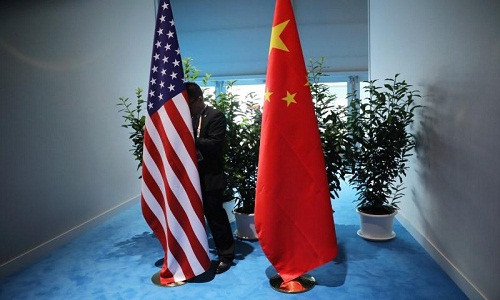 January to August 2018 compared to the corresponding period last year. Turkey recorded an 11 per cent deficit in earning to €687.28 million from €772.93 million in 2017. Pakistan saw a 4.83 per cent rise to €500.56 million, while China’s exports declined by 14.30 per cent to €304.79 million.
Improved technology, safety standards drive growth
Many factors have worked in favour of Bangladesh such as: improved technology in fabrics manufacturing; better safety standards in the apparel sector; and the ongoing trade war between China and the US. The Alliance for Bangladesh Workers, a platform of American buyers certified Bangladesh as a safe place, which boosted buyers’ confidence for sourcing products from the country.
In recent times, production costs in China and other countries have gone up due to an increase in wages. EU manufacturers are moving to Bangladesh for sourcing denim products. On the other hand, Bangladesh has increased its production capacity in both denim fabrics manufacturing and other denim products. Bangladeshi manufacturers have also moved to introduce latest technologies for improved quality of products.
Bangladesh has established state of the art denim fabrics manufacturing plants with increased production capacity. This attracted more work orders from buyers in the US and EU, as a result, manufacturers can supply orders within much shorter time compared to earlier.
Trade war boosts export earnings
The US is the single largest importer of clothing and China is the largest exporter of apparel goods in the world. The trade war between these two giants has brought in more orders for Bangladeshi manufacturers. As the trade war is a threat for the US importers over duty imposition, Bangladesh is benefitting the most from this conflict.
India wary of Chinese influx post RCEP
India has some reservations on the Regional Comprehensive Economic Partnership (RCEP). It is not prepared to let its domestic industry smothered by the deluge of cheap goods from the other members, particularly China. The impact of Chinese imports has been such that India is threatened to become a country of importers and traders with domestic factories either cutting down their production or shutting down completely.
The annual year-on-year growth in Chinese imports was about nine per cent in 2014, which soared to 20 per cent in 2018. The trade deficit with China constitutes more than 40 per cent of India’s aggregate trade deficit. In quantum terms, Chinese goods constitute about one-sixth of all imports into India.
Countries in diverse stages of development, from Australia, China, Japan and India to the ten members of Asean, are part of the RCEP, besides South Korea and New Zealand. Once wrapped up, RCEP would foster the largest regional trading bloc, making up 25 per cent of global GDP, 30 per cent of world trade and 26 per cent of cross-country foreign direct investment flows the world over.
A modern, comprehensive and mutually beneficial economic partnership agreement for an open trade and investment milieu in the Asia-Pacific region is the core objective of the Regional Comprehensive Economic Partnership.
India’s weavers prospects look bright with demand from China rising
The weaving sector of India is expected to improve in the coming months. Reason: positive signs from China, one of the leading importers of yarn from India. During October 2018, cotton yarn, fabrics and made-ups witnessed a growth of 25 per cent, while manmade fibers, textiles and apparel grew by 31 per cent, 28 per cent and 54 per cent respectively. All commodities witnessed a growth of 33 per cent during the same period. India is likely to outdo China in the textile sector.
Contributing factors are cheap labor and modernization. With quality and skilled labor and machinery, India can easily overcome Chinese competition in the textile industry as labor costs in China are very high compared to India’s. India aims at doubling the annual revenue from textiles by 2025.
Foreign direct investment is being encouraged in the textile sector, which has the potential to create millions of jobs. The textile sector in India is showing signs of recovery. The stressed advance ratio of the textile sub-sector has improved in March 2018 from the levels of September 2017.
The sector was heavily hit by demonetization, GST, rupee appreciation and high domestic cotton prices. Packages and incentives are expected to create a strong turnaround in the textile and clothing sector.
UK sourcing show Pure Origin opens on February 10
Pure Origin will be held in the UK from February 10 to 12, 2019. This is the UK’s number one destination for sourcing and manufacturing, knowledge and solutions. As a convenient and cost-effective way for buyers to meet with UK and international manufacturers, Pure Origin brings together over 200 exhibitors from 13 countries to create a wide range of business and networking opportunities, new thinking and innovation. Garment and fabric suppliers, denim and textile designers and technology brands attract buyers, sourcing, and technical personnel from the likes of Asos, White Stuff, Victoria Beckham, River Island, JD Sports, Marks & Spencer and Selfridges.
The event helps companies promote business amid global economic and political uncertainties like Brexit and the ongoing trade wars. It intends to do this by answering the market’s demand for newness, to create a platform for visitors to meet, network, discuss and hopefully find solutions to the biggest challenges facing them, and to inspire, showcase innovation and advocate best practice to enable growth and stability.
This edition of Pure Origin will focus on Italy. It will showcase some of the best of Italian fashion with leading fabric houses, manufacturers, labeling and packaging companies showcasing their collections.
Tirupur awaits cut in duty drawback
Tirupur exporters are urging the rate of duty drawback for the garment sector to be around 4.5 per cent as against the current two per cent. The industry rate of duty drawback usually announced in September/October has not been announced this year. One reason for the delay in announcement could be the rupee depreciation against the dollar.
After softening of crude oil prices, the rupee has been declining against the dollar. The trend is expected to continue. But the benefit of rupee depreciation has been short-lived and the knitwear exporters are already feeling the pinch.
In the first half of the current financial year, total knitwear exports from India fell 10.8 per cent as against the corresponding period in the previous year. For the same period knitwear exports from Tirupur fell by 11 per cent.
Exporters in Tirupur have also been awaiting their ROSL (Rebate on State Levies) refunds for three months. For the Tirupur knitwear cluster alone, the pending ROSL claims (1.7 per cent free on board worth exports) work out to be Rs 105 crores.
Tirupur exporters also want India to expedite free trade agreement with Russia, which has given Bangladesh the duty-free garment facility, and they hope India can also avail of this facility.
Karl Mayer to showcase new terry fabric machine at Heimtextil
Karl Mayer is all set to introduce new machines for terry fabrics and curtains. This will be showcased at the oncoming Heimtextil trade fair to be held from 8 to 11 January 2019 in Frankfurt, German. A new weft curtain article is captivating due to an extravagant design in the currently fashionable woven-like look. Sophisticated fancy yarn gives the warp-knitted weft curtain a completely new face. For this article, Karl Mayer has announced a new weft-insertion warp knitting machine with an extremely attractive price-performance ratio.
The machine for the terry segment can produce a revolutionary textile novelty: a double-face warp-knitted terry fabric with a soft velour layer made from microfibers on the outer face, and an absorbent surface made from cotton on the inner side. This article for bathrobes is not only functional and stylish, it also shows the advantages in terms of environmental protection compared to woven counterparts, and this is due to the machine technology used for its manufacture.
Karl Mayer is a world market leader in textile machinery. All products from Karl Mayer are of the highest quality and the result of ultra-modern production processes in application. In 2014, Karl Mayer started a comprehensive investment program with the objective to strengthen the company’s production section in order to face challenges of the future. The answer was a comprehensive reorganization of the processes, modernization of the buildings and investments in a state-of-the-art machine equipment.
Tariffs changing global denim sourcing strategy
Denim and jeans manufacturers are finding their way through the sourcing complexities created by the US-China trade war. They are shifting their sourcing strategies to counter the trade climate. But production development has never been more at the forefront to meet new consumer challenges and sustainability requirements.
What’s happened as a result of the trade war and actual and threatened tariffs is that China has lost jeans market share mostly to other Asian nations. However, a lot of Chinese fabrics are now being exported to countries like Vietnam and Cambodia to make apparel, since they don’t have a textile base.
Changes are also taking place in the market thanks to smaller companies being able to make an impact with the growth of direct-to-consumer channels. These brands are working directly with fabric mills to develop materials to meet their customers’ needs. Brands have a sustainability strategy now that is built into their raw material buying plan. They want a certain percentage of sustainable cotton. They want a percentage of recycled polyester and they want reused materials. They want an aesthetic, but it has to include a sustainable or ecological element to meet their company goals and to be able to tell a brand story.
Global sports brands thrive in China
China offers great prospects for sports brands. Adidas has more than 11,000 retail outlets across China. It is also expanding operations in China, with some 1000 new store openings a year. Adidas saw a year-on-year sales growth of 29 per cent in 2017 in China. It also saw sales grow by 26 per cent on an annual basis in the third quarter this year.
Decathlon, a France-based sporting goods and equipment retailer, had 267 stores in China by the end of 2017. The rapid growth of overseas sports brands in China has been spurred by increased spending on sporting goods, whether sportswear and active wear, fitness facilities or products like protein powers for body builders. Consumers are spending more and more on sports products as they pursue more outdoor hobbies like diving, kayaking and paragliding. They are buying outdoor gear like clothes, shoes, professional watches, socks and so forth.
Overseas sports brands are flourishing at a time when many other overseas brands are facing a tough time with Chinese consumers, due to the country’s economic downward pressure, fiercer competition from domestic brands, and tough global trade environment.
Retailers welcome delay in implementation of tariffs on Chinese imports
The news of a delay in implementation of tariffs on $200 billion worth of goods imported by China, was welcomed by retailers as a way to de-escalate the looming trade war that the industry fears that such tariffs will spark. Referring to the delay as a ‘breakthrough,’ Hun Quach, VP for international trade at the Arlington-based Retail Industry Leaders Association (RILA), believes it will keep America competitive, grow its economy and support the millions of American jobs impacted by trade. Achieving a resolution that forgoes a 25 per cent increase and any additional tariffs placed on everyday consumer items will benefit millions of American families across the country. In a recent letter to President Trump, RILA laid out retailers’ issues with the tariff increase and lack of exclusion process for List 3, encompassing thousands of everyday consumer items like apparel items and paper goods.
Apparel and footwear brands fail to address issue of forced labor
A new report by KnowTheChain, a benchmark that measures companies' efforts to address forced labor shows, clothing and footwear companies have failed to tackle the exploitation of workers in their supply chains. The analysis gives the apparel and footwear sector an average overall score of just 37 out of 100.
While the 2018 benchmark shows improvement from the sector since KnowTheChain's previous benchmark in 2016, the majority of companies scored poorly with more than two-thirds of companies scoring below 50/100. Industry-wide progress is uneven and lacking on key issues such as responsible recruitment—one of the areas with the most direct impact on vulnerable workers' lives.
Despite decades of public scrutiny over labor conditions in the industry, workers, particularly migrants and women, are often exploited through force, fraud or coercion. Many work for little or no pay, cut off from their homes or families, and with restrictions on their movement or opportunities for recourse. Compounding the issue, workers are often charged exorbitant recruitment fees that they can never repay, further trapping them in debt bondage and forced labor.











