


FW
Cambodia hopes for seven per cent growth this year
Cambodia is expected to grow by seven per cent in 2019. Growth will be driven by garment exports, tourism, construction and real estate and agriculture. However, the country faces a threat of trade sanctions from the European Union. This could lead to the suspension of Cambodia’s duty-free trading access to the EU market.
If this happens, Cambodia is contemplating steps including the cancellation of various fees and reduction of electricity tariffs to support exporters. These measures are expected to help reduce operating costs for exporters by about 200 million dollars a year.
The EU is a key trading partner for Cambodia, especially for garments and footwear. As a least developed country, Cambodia has enjoyed exports of all products, except arms and ammunition, to the EU market with zero per cent tariff since 2001.
The Southeast Asian nation exported products worth $18 billion in 2017, of which $7 billion, or nearly 40 per cent of the total amount, went to the EU market. The EU has started the 18-month process that could lead to the temporary suspension of Cambodia's duty-free trading access to the EU market due to concerns over human rights and labor rights in the kingdom.
Bangladesh earnings from sweater exports up 18 per cent
Bangladesh’s export earnings from sweaters rose by 18.57 per cent in the first seven months of the current fiscal year. This was possible due to improvements in production quality and the introduction of upgraded technology.
Shipments from November to January picked up, contributing to an additional rise in export earnings. Bangladesh offers quality products at comparatively reasonable prices. Manufacturers have also introduced new technology to improve the quality of goods, so production capacity and the standard of goods have also increased. Since Bangladesh has the capacity to execute bulk work orders, buyers are placing more orders.
Relocation of businesses from China as a fallout of the US-China trade war has also played a major role in increasing export earnings. As a spillover effect of the trade war, companies have shifted their sourcing from China to Bangladesh. China is moving towards higher-end goods and tech-based production and leaving low-cost products—which is another positive advantage for Bangladesh in attracting more buyers.
But despite the growth, the apparel sector has some serious challenges ahead as manufacturers have to implement the new wage structure, although buyers are unwilling to pay more. Additionally, Bangladesh is losing its competitive edge to the global market due to the appreciation of the currency against the dollar, while its competitors are devaluing their currencies.
Prudent investment, people and choices help brands expand horizon
"Leading fashion brands emphasise, right people, proper funding and strong brand values are the key factors that help a small start-up to grow into a booming business. Cornish fashion brand Seasalt and Kent-based kidswear retailer Childrensalon both started as single, independently-run shops but now have multi-million-pound turnovers. New companies, from fast fashion specialists In The Style and House of CB to women’s wear etailer Sosandar, seek to make this transition."
 Leading fashion brands emphasise, right people, proper funding and strong brand values are the key factors that help a small start-up to grow into a booming business. Cornish fashion brand Seasalt and Kent-based kidswear retailer Childrensalon both started as single, independently-run shops but now have multi-million-pound turnovers.
New companies, from fast fashion specialists In The Style and House of CB to women’s wear etailer Sosandar, seek to make this transition. However, there are several challenges on the way, points out Emma Jones, Founder of start-up support network Enterprise Nation and co-chair of the government’s recently formed Small Business, Scale ups and Entrepreneurs Council.
Finding and managing the right people
The first challenge is finding the right talent, managing their recruitment and motivating them. Arranging the funds required to expand operations is also a huge challenge. Thirdly, production is a key question besides managing the financial pressure and requirements of an ever-expanding team.
A five-year business plan to counter investment issues
One of the earliest and ongoing considerations for expansion is investment. Some advice against jumping into the process too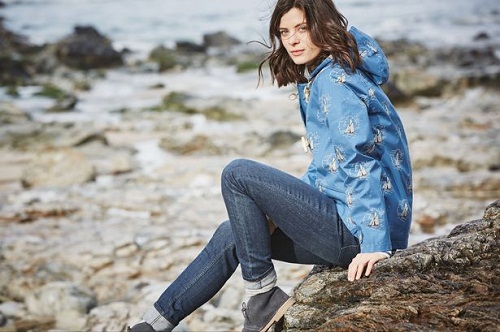 quickly, and risk becoming distracted or giving up control. Womenswear etailer Sosandar was launched in September 2016 with £2m in start-up capital from private investors. A year later, it raised £5.3m through an IPO on the London Stock Exchange’s junior market Aim. In October, it raised a further £3m through a placing arranged by Shore Capital. This week, it revealed a revenue growth of 219 per cent for the three months to December 31.
Julie Lavington, who co-founded Sosandar with her friend, Ali Hall believes brands need to have a five-year business plan as unless a business is immediately profitable, it will have to raise enough money to sustain through unpredictable conditions. Entrepreneurs also need to find the right source of investment from a range of options including crowdfunding to angel investment and venture capital.
Sufficient profit margins needed to fund growth
Patrick Dudley-Williams, Founder of men’s clothing, swimwear and accessories brand Reef Knots and Chairman of UKFT Rise, a network for fashion entrepreneurs, advises brands to factor in enough profit margin to fund their growth. According to him Cashflow is the key to keeping small businesses in the fashion space alive. Jones from Enterprise Nation advises brands to hire the right people to cover sales and business development, operations, and finance. Neil Chadwick of Seasalt argues that a fashion business needs to combine creativity with operational excellence.
Upholding company values
Independent children’s wear retailer Childrensalon has grown at a phenomenal pace in recent years. Originally founded as a shop in Tunbridge Wells in 1952, it made £76 million in sales in 2017. Its culture centers around the simple statement: People before profit. This ethos remains today. The company team speaks 32 languages, allowing the retailer to better serve its international customer base. It also provides garment measurements and personal shopping tips to make the experience easier, and, when possible, hand delivers orders if there has been a delay.
Though entrepreneurs have confidence in their own abilities and vision, they face periods of enormous self-doubt. At such times it is important to seek advice, believes Jones. In short, the most important thing for brands to avoid pitfalls is to be prepared with the right investment, team and culture.
Spinnova to collaborate with textiles expert
Spinnova, a developer of a sustainable textile fibre, has collaborated with textiles professor Nawar Kadi, of the University of Borås in Sweden. Kadi’s involvement will significantly help the development of the Spinnova fibre to suit commercial applications, the company reports.
Kadi, a professor in the field of textile technology focuses on issues such as textile recycling, fibre, yarn, textile structures and composites. Before joining Borås, Kadi worked at the faculty of Mechanical Engineering at the University of Aleppo, in Syria. Kadi has a PhD degree from the University of Metz in France. He i has agreed to assist Spinnova’s product development as a private consulting expert. The collaboration includes training and consulting in various topics around developing this novel fibre.
Spinnova will be focusing on end product development partnering brands this year. The company’s new, industrial scale pilot production line in Finland was completed in December. Production will be ramped up in the first quarter of this year, after which sufficient amounts of fibre can be produced for customer trials.
EAC recommends responsibility charge on clothing
The Environmental Audit Committee (EAC) report has called for a one penny producer responsibility charge on each item of clothing to pay for better clothing collection and recycling. The report also argues that taxation should be reformed to reward companies that offer clothing repairs and reduce the environmental footprint of their products. It calls for lessons on designing, creating, mending and repairing clothes to be in the school curriculum.
Most notably, the report makes it clear that the “voluntary approach has failed” on issues of sustainability. It warns that although some parts of the fashion industry are making progress in reducing their carbon and water consumption, these improvements have been outweighed by the increased volumes of clothing being sold. And it concludes that a voluntary approach to improving the sustainability of the fashion industry is failing with just ten fashion retailers signed up to reduce their water, waste and carbon footprints.
Pakistan yearly knit exports up 16 per cent
Pakistan’s knitwear shipments grew 16.25 per cent in January 2019 compared to the same period of the previous year. Knitwear exports grew 11.35 per cent in the first seven months of the current fiscal year compared with the corresponding period of the previous year. Total textile exports from Pakistan in the first seven months of the current fiscal year were up 1.19 per cent from the same period last year.
The aim is to enhance knitwear exports by 20 per cent a year. Pakistan’s knitwear garment sector has topped the list of the textile groups for three years and it also provides the highest employment in the textile group.
The country’s knitwear industry plays a vital role in value addition of the textile sector. There is a great potential for further development with substantial value addition in the form of knitwear apparel, sportswear, socks, gloves etc. Pakistan is diversifying knitwear products to introduce more innovations and incentives to boost exports. The sector has an export potential despite remaining under pressure from competitors mainly Bangladesh and the Far Eastern nations. But Pakistan’s textile export share in the global market is just 2.05 per cent.
India: MP apparel exports down 30 per cent
Apparel exports from Madhya Pradesh have dropped by over 30 per cent in compared to a year ago. This is because of price disadvantage exporters face abroad. While textile exporters in other countries get duty exemption and tax benefits, Indian exporters don’t, and this leads to higher costing for Indian products. A sharp drop in demand has led to huge inventories and rising liabilities of manufacturers.
Madhya Pradesh is the fourth largest cotton producing state. India has over five per cent share in global textile and apparel trade, of which garments contribute the most, 37 per cent, followed by cotton yarn and fabrics, which contribute about 23 per cent. India’s exports of cotton textiles grew 26.8 per cent from April to September 2018. The ongoing trade war between the US and China could possibly open up new opportunities for cotton textile exports from India. Alternate schemes for promoting exports are being devised which would improve competitiveness. These alternate schemes are expected to be WTO compliant. India is the second largest textile exporter in the world. Today, cotton yarn and fabric exports account for over 23 per cent of India’s total textile and apparel exports.
Netherlands to assist Bangladesh apparel industry
Netherlands will assist the growth of Bangladesh’s apparel industry. Relationships between the two countries will be strengthened to increase business and investment. The Netherlands cooperates with Bangladesh to improve living conditions of the poor, particularly in three areas: water, sexual and reproductive health and rights and food security. The other priority is labor conditions in the readymade garments sector.
Cooperation between the Netherlands and Bangladesh is reinforced by research institutes in both countries. Bangladesh has sought Dutch support under the broader framework of the Bangladesh Delta Plan 2100 to mitigate long-term flood risks and the adverse impacts of climate change. This would occur through basin-wide water management, land reclamation, river-dredging, building the capacity of Bangladesh’s River Research Institute, and developing knowledge via education and training.
During fiscal 2017-18, Bangladesh’s apparel exports to Netherlands stood at over 935 million dollars. The knitwear sector contributed 520 million dollars and 414 million dollars was received from the woven segment. For more than five decades, the Netherlands has been involved in the development of the water sector in Bangladesh. The present vision of the Netherlands cooperation is to promote the management of rivers from salinization, land reclamation and the integrated flood management, for poverty alleviation and improved socio-economic development for a sustainable environment.
JFW to operate Japan Pavilion at Intertextile Shanghai Apparel Fabrics 2019
The Japan Fashion Week (JFW) Organization, will operate the Japan Pavilion at the Intertextile Shanghai Apparel Fabrics 2019 Spring Edition. The Japan Pavilion will comprise business booths by 21companies as well as PR booth introducing the trends in Japan along with the representative textiles produced by the exhibiting companies.
The event will be held from March 12-14, 2019 by Messe Frankfurt (HK) and The Sub-Council of Textile Industry, CCPIT at the China Textile Information Centre and National Exhibition and Convention Centre in Shanghai
Fashion world mourns Karl Lagerfeld
Karl Lagerfeld, who died yesterday at 85, leaves behind an extraordinary legacy as one of the greatest designers of our time. He was also an unstoppable eclectic creative mind, artist, illustrator, publisher, interior designer, photographer and unique style icon.
In addition to being the creative director of his namesake brand, Karl Lagerfeld was the creative director of both the Chanel and Fendi houses respectively since 1983 and 1965.
Along with his prestigious creative direction of the two high-end brands, he also kept the same position at the Karl Lagerfeld brand, which conveyed his own vision and aesthetic through aspirational, accessible collections, an ethos that will continue to remain at the core of the brand.
His last appearance on social networks happened on February 5, 2019, through his own Instagram page thanking his fans after he had reached one million followers. Virginie Viard, a long-time and close co-worker of Lagerfeld, will succeed in his role at Chanel.
The designer had aroused some worries about his state of health among fans and insiders a few weeks ago when on January 22 he did not show up at the end of the Chanel show in Paris. He simply commented on his absence explaining he was feeling extremely tired.











