


FW
Premiere Vision reaffirms role as catalyst
Premiere Vision was held in France, February 12 to 14, 2019. The highlighted the strength of its leadership and influence on the global creative fashion industry. This season, the show once again fulfilled its role as a catalyst for the creative fashion sector. The event presented by 1,782 exhibitors. Highly acclaimed fashion information for spring/summer 2020 was on show. Developed by the Première Vision fashion team, the fashion forums along with the trend tasting seminars were all well attended.
This edition hosted, 53,156 visitors from 127 countries. This is a 2.3 per cent decrease in attendance caused chiefly by a net decline in the number of UK visitors. The show recorded an 8 per cent increase in the number of Asian visitors, and also a 6 per cent increase in visitors from the US, while French presence was relatively stable at +1 per cent. The number of visitors from Turkey instead declined by 6 per cent, a downturn linked to the instability of the country's political and economic situation. Despite a dip in attendance from the UK, the country remains third in number of visitors. The show’s high-tech and technical sections as well as its Wearable Lab and the forum dedicated to sportswear materials attracted a fair number of visitors. On display were innovations in materials – yarns, fibers, fabrics, leathers, textile designs, accessories – and manufacturing solutions tailored to the development of their spring/summer 2020 collection.
There was also an enthusiastic response to the Première Vision marketplace, now being adopted by industry professionals as a complementary tool to enhance their sales development and communications. The physical implementation of the marketplace deployed at the show was a resounding success. Buyers from major international brands and exhibitors clearly expressed their excitement. Launched last September with the weavers’ collections, the digital platform integrated tanners in February.
Italian fashion grows six per cent on an average
The Italian fashion sector has been having an average annual sales growth of 6.6 per cent. The sector accounts for 1.3 per cent of the economy. In the past five years, aggregate turnover and employment at the sector rose by 28.9 per cent and 19.7 per cent respectively.
Exports continue to gain in importance for the sector, accounting for 63 per cent of its turnover. Apparel is the most important segment, accounting for 40.5 per cent of total revenues, followed by leather wear (20.9 per cent) and eyewear (16.2 per cent). The fastest growing segment is jewelry, with an annual average growth rate of 13.3 per cent.
Fifteen out of the 43 European fashion giants are Italian. Luxottica and Prada stand out in particular, ranking seventh and fourteenth respectively in European rankings by total sales. The distance between the top 15 and the rest of the pack is narrowing, leading to a roughly equal distribution between leaders and followers in terms of net profits.
Leading names in Italian fashion have long made sustainable development a rallying cry. In 2016, the first guidelines for eco-toxic standards to be complied with in manufacturing were issued. Italy first addressed the issue of sustainable fashion in 2012 when a development manifesto of Italian fashion was published.
Indonesia corrects PTA by offering market access to 20 products
Indonesia has issued formal notification for correction of Indonesia-Pakistan Preferential Trade Agreement (PTA) by offering immediate market access for 20 products of Pakistan’s prime interest. The priority products include mangoes, broken rice, ethanol, tobacco, yarn and fabric, home textile, terry towel, apparel and knitwear.
A Memorandum of Understanding (MoU) to amend the PTA between the two countries was signed during the visit of President of Indonesia in January 2018. The balance of trade is highly tilted in favour of Indonesia. At the time of the signing of the PTA, total volume of bilateral trade was $ 1.6 billion, which reached to $ 2.8 billion in 2017-18. All the growth in bilateral trade was due to increase in Indonesia’s exports to Pakistan, which were at $ 1,720 million in 2013-14 and have increased to $ 2,530 million in 2017-18.
Walmart launches Myntra’s fashion brands in Canada
This way of selling apparel to shoppers in Canada will benefit Indian retailers who otherwise would not have been able to enter international commerce. Fashion portal Myntra has been seeking new markets. This collaboration expands the product reach, creating a global marketplace for Indian sellers and contributing to exports from India.
Indians in Canada do not get ethnic wear easily. Most such apparel has relatively cheap textile quality and unskilled work. Apart from being highly expensive, prominently because of the ethnic tag, size is also an issue.
Working across platforms, Walmart and Myntra will look to meet the needs of customers looking for authentic Indian wear. To start with, the American retailer is looking to rekindle the magic of Bollywood with the Indian diaspora in Canada. It is set to offer a broader assortment of Myntra products for customers, such as the All About You line from Deepika Padukone. On the anvil are other celebrity labels such as HRX by Hrithik Roshan, and the House of Pataudi by Saif Ali Khan.
The launch allows Walmart to test the global response to Myntra’s apparels, and comes close on the heels of a trial run done in October 2018, where a small range of Myntra clothing was retailed at Walmart outlets in Canada.
Australian Circular Fashion to introduce national clothing take-back scheme
The second edition of the Australian Circular Fashion will focus on introducing a national clothing take-back scheme that would avoid severe disruption to the fashion industry caused by mandatory regulations. The potential country-wide clothing and textile take-back scheme in Australia will be launched in three phases.
The two-day event, will be held from March 21-22, 2019 in Melbourne and attract speakers from around the world to give the event a distinctly international flavor. The conference will provide a new opportunity to tackle the issue of fashion and textile waste head on, with input and support from leading international and Australian brands by the likes of Mara Hoffman, Eileen Fisher, Filippa K, Australia Post and Kathmandu.
The take-back plan will not be the only topic of discussion at the event. Day one also features conversation on CSR values, best practise and end-of-life repossessing. Day two has a ‘hackathon’ challenge, which involves teams being tasked to innovate significant challenges within the circular supply chain.
Bangladesh: Fashionology Summit 2019 to consolidate its position
The 2nd Bangladesh Fashionology Summit 2019 will be held at the International Convention City Bashundhara, Dhaka on May 2, 2019. Its aimed at consolidating Bangladesh place in the $130 billion smart clothing market by 2025. Bangladesh is currently the second largest apparel exporting country in the world with exports worth $32.92 billion last year. The lion’s share of this export comprises of five basics items i.e. shirt, T-shirt, trouser, denim and sweater.
The second Bangladesh Fashionology Summit aims to inspire the apparel industry of Bangladesh to step into the future of fashion by bringing fashion tech leaders from across the world. The summit has already set the stage for the discussion through its first edition held on February 12, 2018 which focused on concepts like factory of future, virtual prototyping, fashion tech & sustainable innovation, mass customisation & on demand manufacturing. The theme of this edition is: ‘Digitalisation – The Next Destination’.
Fashion houses adopt simple logos as a part of blanding
Some of the world's most famous fashion houses are adopting similar looking logos as a part of new "blanding" trend. Iconic labels including Burberry, Balmain, Saint Laurent, Rimowa and Diane Von Furstenberg have ditched their ornately designed typography logos and replaced them with simple, clean-line lettering instead.
Burberry has changed its typography logo font for the first time in a century. While some experts view the minimalist trend as a sign that fashion brands may be losing their creative flair as they become more corporate, others see it as a sign that there has been a radical shift in what consumers expect from luxury goods.
According to Sarah Hyndman, a London designer and author of Why Fonts Matter, fancy script treatments might suggest the sophistication of a Bordeaux wine label, but in a fashion context they come across as pretentious. To many, this is seen as ‘simply trying too hard.’
Bangladesh’s Ananta Group to set up $8 million apparel factory in Ethiopia
Ananta Apparels, a concern of Ananta Group, has sought Bangladesh Bank’s approval to take $8 million to Ethiopia to set up an apparel factory in the African country. The company recently submitted its proposal with the central bank claiming it initiated the move to set up the garment factory in Ethiopia to enjoy tax benefits there along with duty-free access to the United States of America. It would invest $8 million in Ethiopia from its own fund and if any additional fund was required this would be taken from other multinational financial institutions like International Finance Corporation. Bangladesh Bank, however, has expressed its doubts that establishing apparel industry in Ethiopia would be viable.
Ananta’s is the latest among overseas investment proposals by local companies when Bangladesh itself is getting meagre foreign direct investment and the country’s unemployment rate still remains high because of quality job creation. Seven companies have so far got government approval to invest abroad including the highest approval for $20 million to Akij Jute Mills, a concern of Akij Group, for procuring two Malaysian companies — Robin Resources Malaysia SDN BHD and its subsidiary Robina Flooring SDN BHD. Among the rest six, three from the health sector, have invested $9.1 million in six countries between 2013 and March 2016.
Rise in disposal income leads to growth of luxury apparels market
"A recent Transparency Market Research (TMR) report predicts vendors of the global luxury apparels market may witness remarkable growth opportunities due to the presence of a number of companies in the market. The competitive market landscape is fragmented as various companies are offering numerous growth opportunities either in product or research and development strategies. As per the TMR report, global luxury apparel market is estimated to be worth US$60.7 billion by the end of 2024."
 A recent Transparency Market Research (TMR) report predicts vendors of the global luxury apparels market may witness remarkable growth opportunities due to the presence of a number of companies in the market. The competitive market landscape is fragmented as various companies are offering numerous growth opportunities either in product or research and development strategies.
As per the TMR report, global luxury apparel market is estimated to be worth US$60.7 billion by the end of 2024. The market is expected to expand at a CAGR of 13.2 per cent within the forecast period 2016 to 2024. The market is dominated by cotton which accounts for 35.87 per cent of the total share. In terms of geographical segmentation, Asia Pacific contributes more number of shares with a CAGR of 14.75 per cent by the end of the forecast period.
Rising incomes increases purchasing power
The global market for luxury apparels is rising due to an increase in disposable incomes of people further leading to a rise in the purchasing capacity of consumers. Moreover, the trend of luxury apparels amongst the young generation is propelling the market for luxury apparels.
Another factor boosting demand is the emergence of online shopping services. It is easier to shop online instead of going to stores and trying out various outfits. The facility of easy returns has further boosted the online market, attracting more consumers. Digital marketing too has no left stone unturned in advertising the benefits of online shopping and increasing a classy taste of fashion amongst people.
Asia Pacific to witness rapid growth
The Asia Pacific market is presumed to witness rapid growth due to rise in disposable incomes, along with the change in lifestyles of people and their improvised standard of living especially in its emerging nations of China, and India in the coming years. Europe, on the other hand, has already attained maturity because of the presence of many luxury brands that have been doing business for the past few decades.
Investment needs hamper growth
However, establishing and running a luxury apparels business requires huge investments. This hinders the overall market growth. Apart from this, major vendors are investing more in innovation and research to outstand other players. Thus, new entrants are finding it difficult to enter the market to compete with such high level set players. This is also projected to hamper the growth of the luxury apparels market in the years to come.
Demand for technical textiles increases but challenges galore
"Data from the Taiwan Technical Textiles Association (TTTA) reveals, the island’s output of technical textiles more than doubled at the beginning of the decade reaching NT$130 billion (US$4.2 billion) in 2017. It already accounts for roughly one-third of Taiwan’s total textile output.Based on their use, technical textiles can be divided into 12 sub-categories: agricultural (Agrotech), construction (Buildtech), functional apparel (Cloth-tech), civil engineering (Geotech), curtains and other domestic textiles."
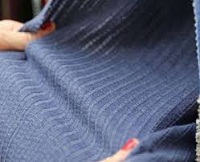 Data from the Taiwan Technical Textiles Association (TTTA) reveals, the island’s output of technical textiles more than doubled at the beginning of the decade reaching NT$130 billion (US$4.2 billion) in 2017. It already accounts for roughly one-third of Taiwan’s total textile output.Based on their use, technical textiles can be divided into 12 sub-categories: agricultural (Agrotech), construction (Buildtech), functional apparel (Cloth-tech), civil engineering (Geotech), curtains and other domestic textiles (Hometech), filters and other industrial applications (Indutech), healthcare (Medtech), transportation (Mobiltech), environmental protection (Oekotech or Ecotech), packaging materials (Pack-tech), protective textiles (Protech), and athletics (Sportech).
Growth in automobile production spurs demand
Currently, demand for Mobiltech and Buildtech is particularly increasing thanks to such factors as strong growth in automobile production in China and China’s Belt and Road infrastructure drive. Among the hot products in Mobiltech are air-bags, automotive engine oil filters and high-speed train gangways. Buildtech includes fabrics used to separate different types of cement, for example in the construction of roads, airports, and subway tubes.
As Huang Po-Hsiung, General Secretary, TTTA says, profit margins for technical textiles are higher than for functional textiles.Many Taiwanese manufacturers supply these technical textiles to international brands such as Nike, Adidas and Under Armour, as they are more specialised and involve less standardised low-value production. It further revealed Taiwan has seen steady annual output growth rates of 3-5 per cent over the last decade and growth remained robust even during the global financial crisis.
Demand for nonwovens increases
According to Huang, most Taiwanese technical-textile makers focus on nonwovens, a category of fabric for which the fibers are bonded together by chemical, mechanical,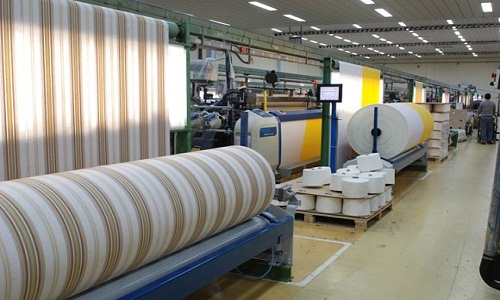 heat, or solvent treatment, as opposed to being knitted or woven. Taiwanese new investment in non-woven factories has already reached NT$6 billion, illustrating the manufacturers have been enjoying good profits. The outlook is also rosy for smart textiles, a sector where Taiwanese textile and electronics companies cooperate in the development of fabrics with embedded washable sensors.
Cars today typically use between 25 and 50 kg of technical textiles. Fabrics that can help save energy have become more sought-after with the advent of electro mobility, vehicles powered by electric drivetrains rather than fossil fuels. Tests by German carmaker Audi have shown new innovative types of fabric used to heat car seats can reduce electricity consumption for heating by 50 per cent.
Challenges the segment faces
Willy Shih, General Manager, KaeHwa Industrial, a Changhua-based maker of breathable film used in diapers, packaging, and coveralls to protect lacquerers or medical workers, points the speculative hoarding of raw materials in China has contributed to higher raw material prices. The ongoing US-China trade war is also likely to drive down global prices of intermediate products, including technical textiles.
Another difficulty derives from Taiwan’s inability to sign trade agreements with major export markets. KaeHwa in recent years has been compelled to shift some production from Taiwan to Malaysia, to avoid 15-20 per cent ASEAN import duties on Taiwan-made technical textiles. Under the China-ASEAN free-trade agreement, such imports into China from ASEAN countries are tariff-free. The company is considering opening a second factory in Malaysia to serve both the ASEAN and China markets under the preferential tariff regime.











