


FW
Global denim fabric sales to increase by 4.7 CAGR by 2023
According to global market research firm Market Insights Reports, sales of the global denim fabric market are predicted to reach 9,130.1 million metres in 2023, with a CAGR of 4.7 percent. The global denim fabric market was valued at $19.70 billion in 2018 and will reach $25.40 billion by 2025, growing at a CAGR of 3.2 percent.
Global consumption of denim fabric between 2012 and 2016 increased at a compound annual growth rate of 4.77 percent due to a significant rise in its uses, indicating a brighter future for Bangladesh. Consumption was 6,618.1 million metres in 2016 against 5,493.7 million metres in 2012. Globally the denim fabric market was mainly driven by growing demand for clothing, household items and many other fields. In 2016, the market was led by China, India, Europe and North America. At present, the major manufacturers of denim fabric are concentrated in China and India.
Currently, Bangladesh has 30 denim mills with a capacity to produce 150 million yards of fabric a month. Local suppliers can meet only 40 percent of Bangladesh’s annual demand for denim fabric and the rest is met through imports from China, India and Pakistan. Last fiscal year, Bangladesh exported denim goods worth $3 billion. Bangladeshi entrepreneurs supply denim products to major global retailers, including Levi’s, Diesel, G-Star RAW, H&M, Uniqlo, Tesco, Wrangler, s.Oliver, Hugo Boss, Walmart and Gap.
Bangladesh: Trade subsides, deeper market engagement needed to go head
As per Zaidi Sattar, Chairman, Policy Research Institute of Bangladesh (PRI), the apparel sector in Bangladesh witnessed fastest growth compared to all other labour-intensive sectors as it creates a free trade channel for exports. Sattar was speaking at a conference styled “Bangladesh-Leveraging Growth Opportunities in the Neighbourhood”. The conference was jointly organised by PRI and the World Bank. According to Sattar, Bangladesh has comparative advantage in many other labour-intensive sectors, but the sectors were weighed down by tariff and non-tariff barriers. On the other hand, the government has been giving benefits in the form of tariffs on imports and subsidies on exports to the garment sector for quite some time.
Wahiduddin Mahmud, a noted economist, recommended developing a tax system for five years, which would be of great help to entrepreneurs. He also informed that the government is developing a business-friendly environment with a view to accelerating trade and investment.
Sanjay Kathuria, lead economist of the WB’s Dhaka office advised industry leaders to have deep engagement with regional and global markets to move to higher income brackets, as it will provide access to deep and elastic markets, technology, foreign direct investment and intra-firm trade.
Hong Kong, Taiwanese firms to move production out of China
Hong Kong and Taiwan businesses are planning to pull some of their production from China after the US administration announced that roughly $200 billion worth of Chinese-manufactured goods would receive a tariff increase to 25 percent from 10 percent. The new tariff rates went into effect May 10, after President Donald Trump announced the unexpected move five days earlier on Twitter. Thousands of Chinese products will be taxed at 25 percent, including furniture, telecom equipment, plastics, seafood, and auto parts.
Many of these products are made by Hong Kong and Taiwanese companies that for a long time have had manufacturing facilities in China, because of its cheap labor. Now, these companies are relocating some production to avoid the added costs related to US tariffs. Many tech manufacturers, such as suppliers to US tech giant Apple, have already made plans to move production to Vietnam, Malaysia, the Philippines, and elsewhere, from China, after U.S. tariffs were first announced in March 2018.
Taiwanese government will speed the process of helping Taiwanese companies return to the island, while setting the goal of signing a bilateral trade agreement with the United States. Majority of exports to the United States, now with products with the label ‘Made in China’, will soon be replaced by high-quality products that are ‘Made in Taiwan.’
Taiwan’s Ministry of Economic Affairs launched a “welcome back” program in January, which provides incentives for Taiwanese companies to return home, such as free rent for the first two years, favorable bank loans, and access to tax consultation.
Bangladesh to sustain apparel exports through FDI, mechanised production
"In the last five years, Bangladesh has emerged as one of the top exporters to the US and the European Union. The country, over the years, has made a deep-rooted impact by exporting a record value of denim to both these markets. As the statistics from the European Statistical Office reveal, Bangladesh exported 11.46 per cent more denim products in 2018 than in 2017. The total value of these exports was $1.65 billion with the country holding the highest market share of 29.12 per cent in Europe."
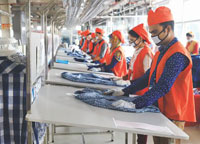 In the last five years, Bangladesh has emerged as one of the top exporters to the US and the European Union. The country, over the years, has made a deep-rooted impact by exporting a record value of denim to both these markets. As the statistics from the European Statistical Office reveal, Bangladesh exported 11.46 per cent more denim products in 2018 than in 2017. The total value of these exports was $1.65 billion with the country holding the highest market share of 29.12 per cent in Europe.
What worked in Bangladesh’s favour are timely technological upgrades, strong backward linkage, especially fabrics and branding of products. The ongoing trade war between the US and China is also fuelling growth.
Technologies and value-added products to drive growth
Bangladeshi denim manufacturers have introduced latest washing and fabric technologies to improve the quality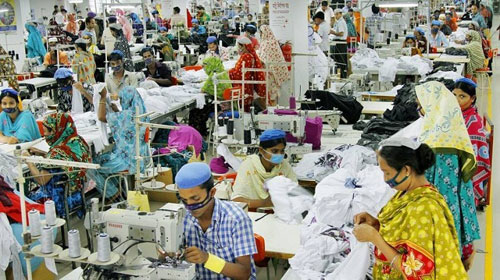 of their goods. For instance they now use laser technology to wash and design their denim instead of water and stone which increase the sustainability of their products.
Bangladesh manufacturers are offering a variety of value-added products, which along with a sense of safe workplace and sustainable act as catalyst to drive growth in the sector. Events like Bangladesh Denim Expo are also helping the country to grow and reach the desired level. Increased fabric manufacturing capacity and other backward linkage have helped the sector to grab a larger market share in the country which currently has 32 denim mills with a capacity of 450 million meters of fabrics per annum.
Diplomacy and negotiations for increasing apparel exports
The current market situation presents further opportunity to increase exports volumes. According to the Asian Development Bank estimates, Bangladesh is likely to earn an additional $200 million from apparel exports over the next two years. To achieve this, the country needs to develop apparel diplomacy and increase its negotiation capacity to improve trade facilities.
Competitive prices and a capacity to execute bulk orders are some of the major contributors to Bangladesh’s success in the export markets. However, the country may no longer benefit from low prices as its production costs have increased. To sustain growth, the country now needs to concentrate on technology-driven manufacturing. It can also attract foreign investments to acquire knowledge and create skilled workforce from the foreign companies.
The Bangladesh government should also provide subsidies in gas and electricity connections to increase its fabric production capacity. This will increase its competitiveness in the market.
EPCH opens lace center in AP
The Export Promotion Council for Handicrafts has set up a lace center in Andhra Pradesh. The center has have facilities such as exhibition halls, an auditorium, an open air theatre, meeting rooms, facilities for a craft bazaar, accommodation for buyers and designers besides an administrative set up etc. The objective is to help craftpersons, artisans, producers and exporters in the east and west Godavari region of Andhra Pradesh to develop new designs, adopt new production techniques of lace products, do marketing and exports through exhibitions and craft bazaars etc. This center will also enable the producing and exporting community to interact with foreign experts, designers and buyers with regard to product development and exports.
It is estimated that more than one lakh women artisans are involved in making lace products part time. More than 80 per cent lace exports from India originate from the east and west Godavari regions. EPCH has also taken various initiatives for enhancing the design and quality of lace and lace products by organising skill development programs in different segments such as stitching and garmenting, dyeing and capacity building and value added skills on crochet. India’s overall handicrafts exports have grown 15.46 per cent over last year.
Seams, Reshoring Initiative announce winners of first ‘Reshoring Awards’
Seams with strategic partner, the Reshoring Initiative, announced the winners for its Reshoring Awards in the three categories: Brands & Vertical Retailers, Textiles, and Cut & Sew Manufacturing.
Unionwear was presented with the Cut & Sew Manufacturers Award.Unionwear’s reshoring initiatives included re-engineering and re-designing reshored products, generating over 70 additional jobs in the U.S. and over $4 million in annual revenue.
Textile Award was presented to Contempora Fabrics. Its reshoring initiative was driven by Walmart’s commitment to purchase by 2023 an additional $250 billion in products made, sourced, or grown in the U.S. Contempora supplied the fabric used to manufacture employee vests for all Walmart U.S. stores, generating over $13 Million in sales in the U.S. over five years.
Mara Hoffman was presented the Brand Award. In 2015, the brand moved textile printing and cut & sew back to the US gaining better transparency in their supply chain and providing jobs for their community in NYC.
Rajasthan mills face dues
Textile mills in Rajasthan have been asked to pay four years’ entry tax on imports of yarn, dyes and chemicals, capital goods, spare parts, electrical goods and electronic goods. The industry says the levy of such a retrospective tax will not only hamper working capital but also break the backbone of the business.
What triggered the tax department to issue the letters to the mills is a Supreme Court order in October 2017 that upheld the validity of the entry tax. However, the judgment was only for the states of Kerala, Jharkhand, Orissa and Bihar.
Bhilwara in Rajasthan produces almost 45 per cent of the total yarn manufactured in India. The decline started with demonetization. With the Goods and Service Tax the entire system had to be computerized and prices of goods went up by 20 per cent leading to massive losses. More than 20,000 people are employed in the Rs 700 crore industry in Bhilwara, considered to be one of the textile hubs of India. Traders want minimal GST for all raw clothing categories including textiles, polyester yarn, wool and other materials. Further, textile traders have also sought tax sops for entities engaged in the business for more than 20 years.
International Congress of Textile Innovation in Peru gets a huge response
More than 400 participants attended the three-day 2019 International Congress of Textile Innovation for Sustainable Development that was held in Lima, Peru, from April 24– 26. The congress provided a good venue for networking and discussing the US Cotton Trust Protocol with trade and global industry experts. Cotton Council International (CCI) participated as an exclusive sponsor in the fiber category.
Speakers from Germany, Italy, France and the US shared latest industry development news, trends and technologies, challenging the Peruvian textile industry to think about how to compete in the global economy. Andrew Jordan, on behalf CCI, conducted a presentation addressing the US Cotton Trust Protocol and a recent micro-fiber study. The attendees received updates on improvement progress from the U.S. cotton industry, the US cotton industry’s commitment to building on its legacy of stewardship, as well as transparency and trust from the farm to the customer. CCI also shared a presentation on the Cotton USA licensing program and the participating global brands.
Representatives from leading companies such as Creditex, Nettalco, Topy Top, Tejidos San Jacinto, Peru Fashions, Textil Romosa and La Colonial attended the event. In addition, Jordan held seven face-to face meetings with US cotton fiber buyers and export manufacturers during the week in order to listen to them and ask them about concepts related to the U.S. Cotton Trust Protocol and gauge what the industry considers valuable.
US imposes additional tariffs
The United States has escalated its trade war with China. The higher tariffs will be applied to relevant US-bound goods exported from China. Tariffs on targeted exports have increased from ten per cent to 25 per cent. China has pledged to take counter measures. The tariff hikes could hit growth in both economies and drag down global growth. US importers received just five days’ notice about the sudden rise in penalties. The tariff increase is seen as inflicting significant harm on US industry, farmers and consumers, decreasing the competitiveness of American companies and reducing the efficiency of their global supply chains. A 25 per cent tariff on apparel imports is expected to increase costs for a family of four by 500 dollars a year.
The US’ decision to impose new taxes on Chinese exports comes after the United States accused China of backtracking on commitments made during recent negotiations on trade. China has been accused of unfair trade practices, particularly with regards to access to its giant market, intellectual property and technology transfers.
The dispute has hurt Chinese exporters, damaged some US companies and slowed global growth since it began last July. The risk of a complete breakdown in trade talks has increased. Global stock markets have endured a week of extreme volatility.
US textile and clothing imports up in value terms
In 2018 US textile and clothing imports rose in value terms to their second highest level on record and in volume terms to a record high. Within 2018 total, imports of fabrics, made-up textiles and apparel reached record highs in volume terms. Apparel continued to account for the biggest share of total imports. However, its share was down to its lowest level in several years. By contrast, there were significant increases in the shares of yarns, fabrics and made-up textiles. Meanwhile, the average price of US textile and clothing imports fell for the seventh year in succession to a record low—reflecting primarily a decline in the average price of imports from China.
In terms of fiber type, manmade fibers accounted for the largest share of US apparel imports for the fifth consecutive year. China remained by far the USA’s biggest textile and clothing supplier. Furthermore, its share of total US textile and clothing imports reached a record high in volume terms, although in value terms its share fell. Cambodia and Italy both increased their shares of US textile and clothing imports in value and volume terms but Honduras, Indonesia, Mexico and Pakistan suffered declines. Bangladesh, India and Vietnam, meanwhile, more or less maintained their market shares during the year.











