


FW
US fashion retailers struggle with tariffs affecting sales
US fashion retailers are suffering since the trade war with China escalated. Most of these fashion retailers work with factories in China, and investors are worried about tariffs pushing up their costs. They are struggling to retain customers in the face of intensifying competition. The sector has fared far worse than tech, chip and automaker stocks.
J. Jill, the women’s clothing and accessories retailer, saw a 3.3 per cent decline in first-quarter same-store sales. Its share price has plunged 83 per cent cumulatively over the last year. The retailer expects a two to four per cent drop in same-store sales for the full fiscal year. Gap’s same-store sales fell four per cent in the first quarter. It expects full-year same-store sales to contract further. A&F’s same-store sales rose by one per cent in the first quarter, far below the nine per cent growth in the same period of last year. Its share price has plunged by 43 per cent over the last month. Americans spent 1.3 per cent less on apparel last year. It was the only category that reported a decline among all consumer products. Millennials in America spend around 18 per cent less on clothing than those born in 1960s and 1970s.
Tintex Textiles to participate in the UN Global Compact Initiative
Tintex Textiles will participate in the upcoming United Nations Global Compact initiative - a voluntary leadership platform for the development, implementation and disclosure of responsible business practices. This forum will feature expertly controlled processing, and advanced dyeing and finishing solutions that drive material innovation to create responsible supply chains to transform fashion systems.
The Tintex Department of Sustainability optimises fashion solutions that not only provide high performance nature based textiles, but enable Tintex to arise as global leaders striving toward superior responsible fashion systems that are transparent and fully traceable throughout the supply chain. Constantly striving for a responsible change in the textile industry, Tintex concretely contributes to a more stable and inclusive global market. It aims to achieve qualitatively better and less impactful results to implement a structured strategical plan that foresees innovative approach, smart sourcing and ongoing research and development continuous experimentation, shared and interconnected internal actions and the ability to move and to react faster to the market needs.
South Africa revives apparel business
South Africa is fighting to revive its frayed clothing industry. It was once a crucial provider of jobs but a flood of cheap imports is forcing factories to lay off workers. It was once the economic lifeblood of many small regional towns, but the abundance of cheaper products from China has led to the loss of nearly two-thirds of the sector’s jobs over the past two decades. Fast fashion retailers, which largely source their products from outside South Africa, have aggressively expanded in the country, denting sales of locally-made garments. The key obstacle to this sector is an inability to develop niche markets. South Africa is not a low cost producer. The main aim of the South African textile and clothing industry is to use all the natural, human and technological resources at its disposal to make it the preferred international supplier of textiles and apparel. Although the industry is small, it is well placed to make this vision a reality.
Tariffs were one of a series of tools used to assist the industry but they don’t provide a long-term competitive advantage. South Africa is now exploring options such as technology acquisition and skill development in niche areas as a first response to industry development.
Tirupur exporters roots for MEIS
Exporters in Tirupur feel schemes like the MEIS (Merchandise Exports of India Scheme) are necessary till such time as free trade agreements, say, with the EU, are signed. They are reacting to a viewpoint that industry and export councils should stop depending on crutches of subsidies and grants and strive to be self-reliant on their own. They feel scrapping subsidies given to the readymade garment sector will lead to reduction of their competitiveness in the global market and that once buyers leave a country and settle in with a competing country it would be very difficult to bring them back.
Nearly 80 per cent of knitwear garment exporting units in Tirupur are small and medium sized units. They face higher logistics cost and increasing wages compared to competing countries are deterrent factors in enhancing their competitiveness. They feel subsidies like MEIS offset infrastructural inefficiencies and provide a level playing field.
India competes with the likes of Bangladesh, Vietnam, Cambodia, Ethiopia, Myanmar and Sri Lanka, which enjoy duty free status in the European Union. The garment sector in India provides employment to the downtrodden and 60 per cent of workers are women. The fortunes of cotton farmers are also linked to this industry.
Smart fabrics combat crimes
Designers are playing with smart fabrics. Beyond being performance efficient, smart fabrics are fashion forward in their essence. Illuminating a clean and comforting fit and look, they also incorporate ample amount of smart features that deal with more intrinsic and traditional uses of clothing. One instance of this is to keep one warm with the use of a power source and conductive components in the fabric itself. Actual smart fabrics have conductors and circuits devices that can sense a number of inputs, including touch, temperature, vibrations etc. In addition, they can interact with external devices such as smart phones using wi-fi, essentially making them devices that can be worn on the body.
Designers around the globe spend generous time and effort into curating astounding designs and creations that become the eye-catching trends for years to come. And the connotation ‘smart’ doesn’t necessary fall under technology, but components that have been in existence in the world for quite a while now, especially in sports. Ralph Lauren’s smart e-textile T-shirt for one can monitor breathing, heart rate and stress. Nor is it only about fashion. Anti-molestation and anti-rape clothing is made possible by incorporating smart fabric, thus taking a stance against sexual assault or any other crime against women.
Competition due to RCEP has Bangladesh worried
Bangladesh fears competition from the Regional Comprehensive Economic Partnership (RCEP). Participating countries, including Bangladesh’s competitors in the apparel trade such as India, China, Vietnam, Indonesia, Myanmar and Cambodia, have been gearing up local industries involving textile, yarn and garment to reap the RCEP’s benefits. While RCEP members will be able to do business with each other at zero tariff, Bangladesh will face duties on its exports.
RCEP is a proposed free trade agreement between the ten Asean states and Australia, China, India, Japan, South Korea and New Zealand. It will account for over 39 per cent of global GDP. Prospective RCEP member states account for 45 per cent of the world’s population and about 40 per cent of world trade. The RCEP deals with goods, services, trade and investment, technical and economic cooperation, e-commerce and intellectual property rights. The deal is set to witness fruition from this year’s end. The GDP of RCEP member states is likely to amount to nearly $250 trillion by 2050.
If it goes through, Bangladesh faces the prospect of becoming solely a garment stitching nation as its yarn and fabric manufacturers will lose their competitiveness. If possible, Bangladesh may join RCEP in future.
Indian companies do well in fourth quarter
The domestic market, especially for branded apparel segment, is performing well. With regard to the domestic market, double digit growth was registered and that too despite high inflation and reduced purchasing power. Not only the performance of domestic segment but also of top apparel exporters of India has been good during the fourth quarter. The story is similar for home furnishing giants too. Demand from rural area has improved. Lucrative announcements, especially for farmers, have increased purchasing power. The coming quarter is also expected to be positive.
Arvind Fashions will remain focused on driving improved profitability, along with increasing discipline around cash generation and consolidation of its unlimited business during fiscal ’20. The company also plans to focus on continuous evaluation of its brand portfolio to optimise returns and profitability in the future. Power brands and other selected lines will continue to grow on the back of increased investments in both marketing and channel expansion in Tier II and Tier III cities. To avoid the burden, cost and uncertainty of continued litigation in the United States surrounding the provenance of its premium cotton home textile products, Welspun India and its subsidiaries have entered into a settlement agreement subsequent to year-end.
Intertextile Shanghai Home Textiles to offer solutions for contract business and home sectors
"The autumn edition of Intertextile Shanghai Home Textiles will be held from August 28-31, 2019 in Shanghai. The exhibition, to be attended by over 1,000 exhibitors from 25 countries, will provide solutions for the contract business and whole-home sectors."
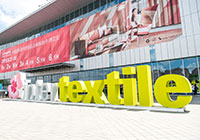 The autumn edition of Intertextile Shanghai Home Textiles will be held from August 28-31, 2019 in Shanghai. The exhibition, to be attended by over 1,000 exhibitors from 25 countries, will provide solutions for the contract business and whole-home sectors.
To be organsised by Messe Frankfurt (HK), the Sub-Council of Textile Industry, CCPIT; and the China Home Textile Association (CHTA), Intertextile Shanghai Home Textiles –Autumn Edition will offer products that satisfy all sourcing needs of its customers. These include: bed & bath, decorative, upholstery & window treatment fabrics, carpet & rugs, wall & interior decorations, editors, whole-home solutions, design studios and digital printing technology.
The finished product zone
The finished product zone will include a number of international suppliers such as:
• Denmark-based Fossflakes will offers products made of 100 per cent extended polyethylene polymers and so is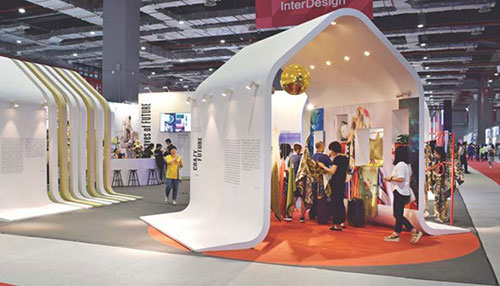 naturally hypoallergenic, which makes it a suitable filling material for allergy and asthma sufferers. These new products are easy to maintain and longer lasting than similar synthetic products.
• Japan-based Fujishinkou will focus on manufacturing down comforter. The company partners with farms in Hungary and Poland to use high quality down.
• Australian company Jaspa Herington will offers a large variety of pillows, quilts, protectors, foam & wool underlays and more. They also provide products especially designed for allergy sufferers, and therapeutic use.
• Hungary-based Naturtex specialises in wool, feather and down processing as well as bedding product manufacturing, their products are made of pure down, pure feather and different functional synthetics. They also use Actigard™ technology to ensure the products are non-allergenic.
Return of Contract Business 360o concept
Intertextile Shanghai Home Textiles will also introduce the Contract Business 360o concept with renowned contract upholstery exhibitors, editors and various information sessions, tours by industry experts and more ensuring a holistic offering for this fast-growing sector. Some of the upholstery fabrics suppliers participating this year include:
• Ateja Tritunggal PT (Indonesia): The fabrics offered by this company pass stringent tests for fire retardancy, abrasion and other technical requirements. It also provides special development teams are available for specific projects such as offices, auditoriums, hospitals, airports and hotels.
• Bestex (China): Bestex produces polyester and fiberglass screen fabrics, with Trevira screens as one of their product options. All their fabrics are flame retardant, and comply with Greenguard, Oeko-Tex and Reach Regulations.
• Culp Inc (USA): The LiveSmart fabrics of this company are produced exclusively with performance yarns that are encapsulated with a stain- and moisture-repellent finish for exceptional cleanability.
• Diaz Sunprotection NV (Belgium): Their Duette® Shades are designed to keep the heat out. The fabric is formed in a honey comb structure, which serves as an isolating layer in front of the window. During summer, this layer blocks the heat transmission from outside to inside, while during winter, this prevents warmth escaping through the glass.
• Elastron (Portugal): Elastron offers products specifically developed to satisfy demanding markets in the areas of contract, decoration and outdoor. The main features of their products include easy-to-clean, high-scratch resistance, fire-retardant and chemical solvents-free.
• Hangzhou Longshi Textile Co (China): Their blackout fabrics are fire-retardant, heat-insulative, and waterproof- and noise-reducing, and are ideal for household and hotel use.
• SIC Global Textiles (Poland): SIC Global Textiles offers a broad range of furniture and decorative fabrics for both domestic and contract sectors. Their blackout fabrics are especially useful for public places, such as hotels or restaurants.
The fair’s fringe programme will feature a number of zones and events related to these areas. This includes an IP licensing seminar for finished products, as well as a display area with IP products. And for contract business, seminars will focus on topics such as textiles for hotel, office and commercial space design. While a display area for contract business focusing on the practical utilisation of fabrics in commercial spaces has been developed in conjunction with a young local designer, Zhou You.
Mexico agrees to block emigration
United States and Mexico decide to avert a tariff war
By agreeing to take measures to stop illegal migrants entering the US, Mexico has averted a five per cent import tariff the US had threatened to impose on all Mexican goods if Mexico did not commit to do more to tighten its borders. So the tariffs scheduled to be implemented by the US against Mexico have been indefinitely suspended. Under the new deal, returned asylum seekers will spend long periods in Mexican cities such as Reynosa on the Texas border, where drug cartels frequently kidnap migrants.
In any case tariffs on the top US trade partner were seen as damaging the American economy. The plan would have left the United States fighting trade wars with two of its three largest trading partners and would have further unnerved financial markets already on edge about a global economic slowdown.
The US says migrants have overwhelmed its resources on the southern border. US border officers apprehended more than 1,32,000 people crossing from Mexico in May, the highest monthly level since 2006. Under the deal, Mexico will also increase its efforts to stop illegal migrants from Central America traveling through Mexico to the United States.
India phases out MEIS as per WTO regulations
India is considering phasing out the Merchandise Exports from India Scheme (MEIS). This is in response to the US’ having challenged India’s export subsidy programs at the World Trade Organization (WTO). So India may roll out WTO-compliant schemes that will offset both state and central levies on inputs consumed in exports. Already, a scheme for the remission of state and central levies has been implemented in garments and made-up exports; this will be expanded gradually to include all key sectors.
MEIS was announced in 2015 by merging five different schemes. Under this, exporters, especially in labor-intensive sectors, are provided duty credit scrip at two per cent to five per cent of their export turnover, depending upon products and shipment destinations. Though GST has subsumed a plethora of levies, some still remain (petroleum and electricity are still outside the GST ambit, while other levies like mandi tax, stamp duty, embedded central GST and compensation cess etc remain unrebated).
India’s logistics costs make up for as much as 16 per cent of the consignment value (against ten per cent in developed countries). India’s export growth has remained subdued at an average of just 3.2 per cent in the past six months through April.











