


FW
India promoting textile sector growth
India has taken several steps for the promotion of investment, exports and creation of new job opportunities in the textile sector. GST on manmade fiber yarns has been reduced from 18 per cent to 12 per cent. GST rates for garments and made-up articles not exceeding Rs 1000 a piece are five per cent of the sale value and 12 per cent for articles of sale value exceeding Rs 1000 a piece. Accumulated input tax credit on fabrics will be refunded. This is aimed at reducing the cost of fabrics, which are major inputs for garments.
The package offers Rebate of State Levies, labor law reforms, additional incentives under the Amended Technology Upgradation Fund Scheme and some income tax relaxation. A 40 per cent subsidy is being provided for setting up textile parks. A scheme has been launched for boosting production in knitting and knitwear clusters. The Samarth scheme will train 10 lakh youngsters for a period of three years at an estimated cost of Rs 1300 crores. Total compensation under the remission of state levies scheme and a new scheme to reimburse against embedded central taxes (even after the GST rollout) will be raised to 6.05 per cent (of freight-on-board value) for garments and 8.2 per cent for made-ups from the current 1.7 per cent and 2.2 per cent respectively.
India’s apparel exports up two per cent
India’s apparel exports have increased by two per cent from 2015 to 2018. The country faces competition from Bangladesh and Sri Lanka which have competitive manufacturing costs and enjoy duty free access to major markets like the EU. So some garment units have set up units in Ethiopia due to zero duty access for Ethiopian exports in the US and the EU and due to incentives being offered for investments there. A special package for garments and made-ups offers labor law reforms, additional incentives under the Amended Technology Upgradation Fund Scheme, enhanced duty drawback coverage and relaxation of income tax rules. Rates under the Merchandise Exports from India Scheme have been enhanced from two per cent to four per cent. The interest equalization rate for pre and post shipment credit for exports by micro, small and medium textile units has been enhanced from three per cent to five per cent. Benefits of the interest equalization scheme have been extended to merchant exporters, something that was earlier limited to manufacturer exporters.
India’s apparel exports fell by 1.2 per cent in fiscal year ’19 from fiscal ’18, which in turn was four per cent lower than the previous year. The share of apparel exports in the country’s total textile exports fell from 51 per cent in fiscal ’17 to 45 per cent in fiscal ’19.
Brands opting for sustainable denim production
The Ellen MacArthur Foundation, a nonprofit focused on the circular economy and sustainable practices, recently released a set of guidelines called the "Jeans Redesign," which strives to address waste within the denim industry by setting minimum requirements around materials, durability and more. The guidelines are based on the principles of the circular economy and will work to ensure jeans last longer, can easily be recycled, and are made in a way that is better for the environment and the health of garment workers.
Big brands are already taking note of this, as evidenced by the fact that Wrangler, Made well and Gap have already signed on to participate in the foundation's call for more sustainable denim. However, besides these well-known brands, a handful of independent brands are also opting for eco-friendly denim like the brand Boyish, who has formulated a top-to-bottom sustainability model that uses one-third the typical amount of water required for production. The brand’s dyeing process leverages reduced indigo with 80 per cent less sulphates and caustic soda than standard dye. Around 20 per cent of the brand’s products are made from deadstock or vintage fabrics that are then turned into new items.
Another denim brand Warp + Weft recently saved over 572 million gallons of water thanks to the implementation of eco-friendly production methods.
German show View Premium Selection showcases material innovations
View Premium Selection was held in Germany, July 16 to July 17, 2019. Leading international fabric, trim and denim suppliers presented more than 400 collections featuring their preview programs and current developments for the new autumn/winter 2020-21 season. The focus was on expressive, distinct velvets, vinyls, reflective surfaces, cords, transparencies, batiks, jacquards, burnouts, new camouflage and leopard prints as well as glitz and glamour in surprising color combinations and in a diverse range of techniques. A new circular holistic approach showcased bio-based or bio-engineered materials, new alternative qualities and the revitalisation of recycling and post-consumer waste.
The trade fair provided textile industry with valuable insights into current material innovations, color trends and future-oriented qualities, with which they could get a head start for planning and designing new collections.
A selection of ReSource articles was presented, enabling the early sourcing of sustainable and ecologically certified fabrics and trims. The latest material innovations were presented. There was a rethinking throughout all sectors and stages of the textile and fashion industry about sustainability, conscious consumption, resource saving processes, efficiency and quality. The topic of digitising materials promised both more sustainable and more efficient process solutions across the entire value chain, especially in design.
Cotton dominates Indian textile costs
Cotton makes up 51 per cent of the total raw material cost in the Indian textile industry. It continues to remain at a higher level, thereby pressurising domestic industry margins.
Globally, the spread between international cotton prices and domestic cotton prices has been on a declining trend owing to higher production in Brazil and China, aided by lower production in India. This decreasing price spread, along with a gradual improvement in demand, provides the much-needed respite for cotton industry players. Capital expenditure in textiles has been majorly to replace machines with new technologies.
Meanwhile, yarn production has been fluctuating over the last six months, although the production average has been maintained. Exports have risen to more than 30 per cent during March 2019. Prices of cotton yarn are co-related to raw cotton prices and thus have seen an upward movement in line with raw cotton prices. Synthetic fabrics have seen a gradual revival in demand due to decreased cost of production. Falling crude oil prices have made synthetics more competitive against increasing cotton prices. Partially-oriented yarn and texturised yarn prices declined by eight per cent and seven per cent month-over-month respectively. Overall apparel production improved by about 34 per cent year-on-year and exports improved by 18 per cent year-on-year.
Asos revenue upto June ’19 is up 12 per cent
For the four months upto June, Asos’ total revenue grew 12 per cent. UK retail sales rose 16 per cent. But in Europe and the US, sales were held back by operational issues associated with Asos’ transformational warehouse programs. EU retail sales rose just five per cent in the four months reflecting weaker stock availability than planned due to the challenge of embedding new automation software in its euro hub. Despite similar warehousing issues at its US hub, sales in the US still rose 12 per cent in the four months. US sales were helped by currency effects.
All of this added up to a nine per cent increase in international retail sales for the four month period and a ten per cent rise in the year-to-date. The multi-brand store is seeing positive momentum in customer engagement with visits up 16 per cent year-on-year. The company is making good progress in improving customer engagement, but embedding the change from the major overhaul of infrastructure and technology in its US and European warehouses has taken longer than anticipated, impacting its stock availability, sales and cost base in these regions. The move to a multi-site logistics infrastructure will enable it to offer customers across the world its market-leading proposition, facilitate its future growth as well as lead to longer-term efficiency benefits.
Burberry China sales up 15 per cent
Burberry’s Q1 sales in China grew 15 per cent from previous same year’s quarter. China is the only market that recorded double-digit growth for the brand. The importance of Burberry’s handbag and accessory category is also rising, which is very important for a luxury brand to win in the Chinese market, as consumers are very into It bags. Aside from product innovation, Burberry also devotes a significant amount of resources to communicate its transformation. In China, the brand is experimenting with the drop retail model on WeChat to stir excitement and desirability. Burberry has also relocated and renovated some retail stores in major Chinese cities to ensure its store offerings are in line with the brand’s new DNA.
Burberry is rebranding itself with a new graphic identity, logo-rich products, and heavy investments in retail distribution and marketing and communications. Burberry seems to be on the right track to having a business turnaround. But the question is whether the current upward trend can be sustained in a tough business environment in which Brexit, the trade war, and the slowing Chinese economy are adding various level of uncertainties. The cycle is becoming tougher and turnarounds have never succeeded in adverse cycles.
After US, Peru’s apparel and textiles sector looks to the EU
Peru is eyeing the European market. The country’s share of exports to Europe is growing at 13.1 per cent, much faster than exports to the US, which is at 9.4 per cent.
Peruvian clothing manufacturers specialise in the manufacture of knitwear made of alpaca wool and Pima cotton. So far they produced mainly for the US market, but now are attracting the attention of European labels.
Peru’s textile industry is one of the country’s most important manufacturing industries, employing nearly 3,00,000 people. Manufacturers do not try to compete with major textile suppliers like Bangladesh or India, but are instead positioning themselves in the higher end clothing segment with high-quality native fibers like Pima cotton and also to an increasing degree in the area of sustainability. For many years, alpacas in Peru, which have been raised for their wool for thousands of years, were subject to a ban on exports. Today, nearly 80 per cent of the total alpaca population lives in Peru and produces 25,000 kilograms of wool a year. Communities in the Andes raise the animals; their wool is then collected, selected and classified by middlemen. They sell the wool to yarn manufacturers in Peru, who supply manufacturers in the country. As a result, value creation takes place mainly within a single country.
Adidas will use only recycled plastics after 2024
Adidas has decided to use only recycled plastics in all its shoes and clothing by 2024. The goal is to get rid of virgin polyester overall. As of now about 50 per cent of the materials Adidas uses in the over 900 million items it sells are polyester. Adidas’ decision follows initial success in selling recycled plastic footwear. Its commitment has grown from one million pairs produced in 2017, to five million in 2018 and this year a projected 11 million pairs. In 2018, the brand saved more than 40 tons of plastic waste in its offices, retail stores, warehouses and distribution centers worldwide and replaced it with more sustainable solutions.
Polyester accounts for 55 per cent of the global fiber market. Every year, eight million metric tons of plastic waste enters the oceans. Sustainable fashion has primarily been relegated to niche fashion brands and to narrow product categories within the industry. It has yet to be adopted widely by the mainstream and across the full product spectrum. Until now the fashion industry as a whole has largely lagged behind consumers in responding to their growing demand for environmentally responsible, sustainable fashion. Companies in the fashion industry are now building economically-sustainable businesses through sustainability, one plastic bottle at a time.
Time reverses as vintage clothes come back in fashion
"Vintage garments are back in style. This year, garments of the 1980s and 90s are a rage with more and more people opting for distressed Levi’s, neon windbreakers, and bright colored blazers. Serving as a time machine, vintage clothing transports people to a different era. For instance, when someone wears a 1970s smock dress, they can be transported to a different time and connect with history."
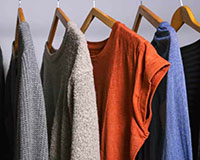 Vintage garments are back in style. This year, garments of the 1980s and 90s are a rage with more and more people opting for distressed Levi’s, neon windbreakers, and bright colored blazers. Serving as a time machine, vintage clothing transports people to a different era. For instance, when someone wears a 1970s smock dress, they can be transported to a different time and connect with history. As Reth Ni Loinsigh, owner of Om Diva vintage clothing store in Dublin says, vintage garments can be aligned with current trends. They can also be mixed with contemporary pieces and accessories to give them a modern look.
Ensuring the authenticity of their garments
Another advantage that vintage clothing offers is that these outfits cannot be copied by others as they are out of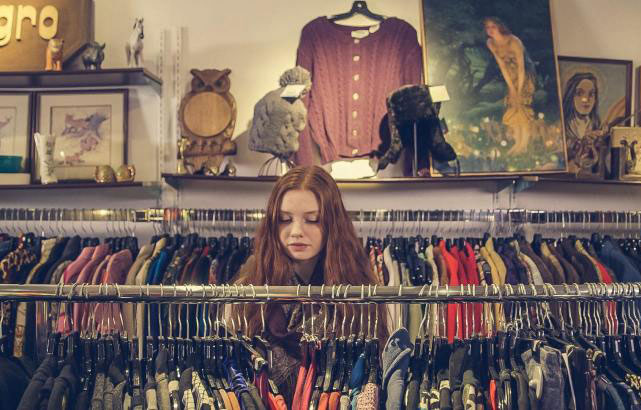 production for many years. Like Armelle Mitchell, Owner of No.38 clothing store in Dublin, who dresses up women with constrained budgets. The store offers vintage designer clothes in good condition at affordable prices. Vintage clothing also can be a great option for stout women as most previous designers focused on dressing all women and flattering their individual figures. Of all decades, the 1930s was the most sensitive to women as it accommodate women of all shapes and sizes.
Passing the sustainability test
In addition to its more inclusive fit, Vintage Clothes also pass the sustainability test as they can last for generations. These garments are made with higher quality fabrics as against the current trend of fast fashion, which focuses on making clothes with cheap fabrics in larger quantities.
Vintage clothing offers people an opportunity to be creators of new styles. It also enables them to dress in beautiful and well-made garments that blend with the current trends. Highlighting their personality, vintage clothes enables consumers to seamlessly blend their past and present worlds.











