FW
Nanamica Wukang: A strategic anchor for Japanese technical fashion in China
Japanese outdoor lifestyle pioneer Nanamica officially entered the mainland Chinese market on March 7, 2026, with the inauguration of its ‘nanamica Wukang’ flagship in Shanghai. Situated in the historic Xuhui District, the store represents a calculated move to capitalize on China's rising‘urban premium’ and ‘gorpcore’ trends. This expansion is timed to leverage a domestic outdoor apparel market that reached ¥143 billion ($19.7 billion) in 2025, driven by a post-pandemic consumer shift toward high-performance, multifunctional wardrobes. By choosing the tree-lined, culturally rich Wukang Road over a traditional high-traffic mall, Nanamica is prioritizing brand storytelling and ‘quiet luxury’ aesthetics over mass-market volume.
Material science as a competitive moat
The Shanghai flagship serves as a critical showcase for Nanamica’s expertise in technical textiles, specifically its signature integration of Gore-Tex and Alphadry technologies into neutral, everyday silhouettes. In a market where chemical and functional fibers are the fastest-growing textile segments for 2026, the brand’s ability to offer ‘utility plus sports’ garments provides a distinct advantage over domestic fast-fashion rivals. The store’s curated inventory - including the SS26 2L Nylon Gore-Tex Cruiser Coat - targets a demographic of ‘frequent flyers and urban professionals’ who prioritize durability and technical excellence. Financial analysts view this second international flagship, following its New York debut, as an essential step in diversifying revenue streams away from a maturing Japanese retail landscape.
Localized engagement and operational resilience
To foster deeper community ties, the brand hosted a pre-opening reception for Shanghai’s creative elite and introduced a ‘longevity initiative,’ offering commemorative garment brushes to encourage sustainable product care. This localized strategy aligns with H&M Group’s recent shift toward experiential retail and reflects a broader industry trend where 91 per cent of Chinese Gen Z consumers use clothing to express subcultural identity. Despite logistical headwinds in the broader Asian supply chain, Nanamica’s focused retail model - maintaining a lean, high-margin inventory of premium-priced items (averaging above ¥1,000)—ensures high operational efficiency. The brand’s symbiotic relationship with The North Face Purple Label further bolsters its credibility, positioning it as a primary beneficiary of the 15.4 per cent projected growth in the global sports technical jacket market for 2026.
Nanamica is a Tokyo-based label specializing in ‘neutral standard wear’ that blends fashion-forward design with technical outdoor functionality. Key products include Gore-Tex outerwear and high-performance chinos distributed across Japan, New York, and now Shanghai. The brand aims for steady global expansion while maintaining a strong financial outlook through premium positioning and sustainable, long-wear manufacturing principles established since its 2003 founding.
Sartocchi redefines custom tailoring with new ‘Digital Atelier’ model
As the global apparel market prepares to hit a $1.03 trillion valuation in 2026, Maison Sartocchi is disrupting the high-end segment by bridging the gap between traditional Italian craftsmanship and digital accessibility. Moving away from the ‘uniformity’ of corporate suits, the brand’s 2026 strategy focuses on ‘Tailored Ease’ - a silhouette that rejects skin-tight cuts for balanced proportions that allow for natural movement. This shift is particularly relevant as professional dressing matures beyond post-pandemic casualization toward a more intentional, structured aesthetic. By utilizing unconstructed jackets and lightweight Italian fabrics, Sartocchi is successfully targeting the modern professional who demands both sartorial authority and travel-ready comfort.
Precision engineering via virtual fitting
The brand’s operational centerpiece is its online private fitting experience, which delivers bespoke-level accuracy through a data-driven measurement protocol. This ‘Digital Atelier’ model allows clients to bypass physical showrooms while maintaining the exclusivity of limited-run textiles sourced from prestigious Italian mills. This lean retail approach provides a significant economic moat, shielding the brand from the high overheads and inventory risks currently impacting traditional luxury houses. True elegance is engineered through discipline, notes founder Aditya Pandya, emphasizing that Sartocchi’s growth is predicated on long-term value rather than seasonal fads.
Strategic market positioning and supply resilience
In a landscape where synthetic fibers dominate the mass market, Sartocchi’s commitment to natural, rare seasonal cloths positions it within the ‘Quiet Luxury’ movement. The brand is currently scaling its private fitting services globally to tap into the rising demand for customizable, high-utility fashion. To counter the 2026 logistical volatility in textile supply chains, the maison has secured strategic partnerships with heritage mills, ensuring a consistent flow of premium wool and linen blends. This vertical focus, combined with a 95% operational utilization rate, allows the brand to maintain its ‘Slow Couture’ philosophy while meeting the increasing consumer preference for transparent, artisanal production.
Luxury tailoring vanguard
Sartocchi is an ultra-premium menswear maison specializing in made-to-measure Italian tailoring and unconstructed soft jackets. Serving a global clientele of discerning professionals, the brand plans to expand into curated physical touchpoints and knitwear by late 2026. Historically rooted in the principle of sprezzatura, it maintains a strong financial outlook through a direct-to-consumer digital model.
H&M Group transitions sub-brand to high-utility performance gear
H&M Group is intensifying its challenge to specialized sportswear incumbents by transitioning its H&M Move sub-brand from general athleisure into high-utility performance gear. Unveiled at a global event in Barcelona on March 19, 2026, the new professional running collection marks a shift toward technical specialization. Unlike traditional high-intensity aesthetics, the range utilizes a sophisticated palette of dusty pinks and muted aquamarines, prioritizing a ‘minimalist but functional’ design language that targets the booming community-led running club demographic.
Technical engineering and community integration
The collection introduces several performance-driven features, such as laser-cut perforations for race-number attachment and integrated storage solutions for mobile devices and hydration. This launch coincides with a 38 per cent increase in H&M Group’s operating profit for the recent fiscal period, driven by improved inventory productivity and a refined customer offering. By organizing a large-scale 5K race in Barcelona’s La Barceloneta district alongside local running communities, H&M is moving away from passive retail toward experiential brand building. This strategy is essential for capturing a share of the global activewear market, which is projected to reach $338.97 billion by the end of 2026.
Science-based sustainability and operational resilience
A critical differentiator in the 2026 rollout is the integration of H&M Group’s newly validated science-based targets for land. The company has committed to a 3.85 per cent reduction in its absolute agricultural land footprint by 2030, specifically targeting the sourcing of cotton and wool. This environmental rigor is paired with a strategic capital allocation of SEK 9–10 billion for 2026, focused on modernizing the store portfolio and deploying new European logistics solutions. Despite global shipping disruptions causing a minor 3 per cent uptick in airfreight usage, H&M is maintaining its target of a 56 per cent absolute emission reduction by 2030, reinforcing its economic moat through sustainable industrial leadership.
Performance sportswear innovation
H&M Move is the specialized activewear division of the H&M Group, providing technical apparel for running, yoga, and training across 70+ global markets. The brand focuses on democratizing high-performance fabrics while achieving a 2040 net-zero target. Historically a fast-fashion pioneer since 1947, H&M now prioritizes circularity and science-based environmental impact reduction.
Celio transitions to lifestyle giant with historic womenswear expansion
French apparel leader Celio is executing its most significant strategic pivot in decades, evolving from a pure-play menswear specialist into a comprehensive lifestyle brand. Following the March 2026 announcement of its ‘Return to Roots’ initiative, the retailer has officially integrated a dedicated womenswear line into its global portfolio. This expansion is not merely a category addition but a deliberate move to capture a larger share of the $2 trillion global apparel market. By leveraging its ‘Be Normal’ brand philosophy - which champions authentic, everyday style over transient high-fashion trends - Celio is positioning itself as a universal wardrobe solution for a demographic increasingly fatigued by hyper-curated digital aesthetics.
Large-format retail and India strategy
Central to this expansion is the rollout of enhanced large-format stores designed to house the full ‘Men & Women’ collections under one roof. In the Indian market, which Francois Gomez, COO describes as a ‘giant with undeniable growth,’ Celio is transitioning from standard boutiques to 3,000-plus sq ft ‘Parisian Concept’ hubs. The strategy responds to a 10.5 per cent projected growth in India’s apparel sector for FY27. By securing prime real estate in Tier-I and Tier-II cities, such as the recently unveiled flagship at Phoenix Palladium, Mumbai, the brand aims to offer an immersive experience that balances international design sensibilities with local value-conscious expectations.
Operational resilience and economic moats
The diversification comes as a tactical response to the volatile global supply chain. To mitigate the 20–40 per cent growth in logistics costs caused by West Asia transit disruptions, Celio is streamlining its manufacturing partnerships, particularly with high-efficiency clusters in Bangladesh and India. This vertical alignment supports the brand’s ‘Honest Pricing’ model, intended to reduce reliance on deep discounting while maintaining a 95 per cent operational utilization rate. Financial analysts view the womenswear launch, backed by a proposed €200 million capital allocation, as a necessary engine to offset maturing growth rates in European markets and solidify its competitive stance against indirect e-commerce entrants.
Founded in 1970 as a women's boutique named ‘Cleo 3000,’ Celio pivoted to menswear in 1978, becoming a dominant force in 46 countries with over 1,100 stores. The brand is now reinvesting in large-format retail and omnichannel platforms. With 2025 revenues showing recovery post-restructuring, Celio plans to double its Indian footprint by 2027, focusing on premium casualwear and technical fabric innovations.
Canadian garment import sector restructures to combat rise in unit value
The Canadian garment import sector is undergoing a fundamental restructuring as the industry moves to counteract the ‘valuation-volume gap’ established in 2025. While the total import value reached $14.2 billion, the stagnation in unit volume has exposed a significant rise in the Average Unit Value (AUV) of landed goods. This fiscal environment is no longer hospitable to high-volume, low-cost commodity models. Instead, Canadian procurement teams are increasingly favoring specialized performance textiles and high-GSM woven fabrics that offer a higher perceived value. By focusing on durability and technical attributes, such as moisture-wicking and weather-resistance, importers are successfully passing on elevated production costs to a consumer base that is prioritizing ‘cost-per-wear’ over disposable fashion.
Diversification and the shift towards technical wovens
Strategic diversification is now the primary defense against global shipping volatility and inflationary pressures at the fiber level. Canadian brands are notably increasing their reliance on free-trade partners under the CPTPP, seeking to offset rising overheads through tariff elimination. This shift is accompanied by a transition toward ‘Material Honesty,’ where pure cotton-linen blends and GRS-certified recycled polyesters are replacing cheaper synthetic alternatives. The objective is to secure long-term margins by building inventories of ‘all-weather’ apparel that transcends seasonal markdowns. As the federal government moves toward stricter environmental disclosure mandates for 2026-27, the emphasis on traceable, sustainable sourcing has evolved from a marketing preference into a critical operational necessity for maintaining market access.
The Canadian apparel sector is a competitive retail landscape valued at nearly $28 billion. Specializing in technical outerwear and seasonal essentials, it depends on a global network of suppliers from China, Bangladesh, and Vietnam. Current growth plans prioritize sustainable fiber integration to align with 2030 federal environmental targets.
Zero-tariff paradigm drives strategic re-sourcing at Global Sourcing Expo 2026

Projected to reach a valuation of $30.3 billion this year, the Australian textile and apparel market is entering a period of rapid structural transformation. As of January 1, 2026, the full implementation of the Australia-India Economic Cooperation and Trade Agreement (ECTA) has eliminated all remaining tariffs on Indian textile exports, fundamentally altering the competitive landscape for domestic buyers. Against this backdrop, scheduled for June 16–18, 2026 at the International Convention Centre (ICC), the Global Sourcing Expo Sydney is no longer just a procurement event; it has become a critical strategic forum for navigating a zero-tariff trade environment and a $179 billion global apparel ecosystem.
Navigating post-ECTA supply chains and regional synergies
The removal of the 5 per cent duty on Indian garments and made-ups has triggered a massive recalibration of sourcing briefs across Australia’s retail sector. With over 600 companies from 15+ countries participating, the Expo provides the first major physical touchpoint for buyers to evaluate the ‘India Advantage’ against established hubs in Vietnam, Bangladesh, and Pakistan. The ability to compare these regions side-by-side allows Australian category managers to weigh the zero-tariff benefits of Indian cotton and specialized embellishments against the high-volume efficiency of Southeast Asian synthetic manufacturers. Industry data suggests that Indian exports to Australia surged by 200% leading into 2026, and the June Expo serves as the primary gateway for mid-market retailers to finalize their Spring/Summer 2027 inventories under these new fiscal terms.
Digital product passports and the transparency mandate
Beyond cost-efficiency, the 2026 sourcing narrative is being dictated by ‘Eco-Accountability’ and the looming requirement for Digital Product Passports (DPP). With 74 per cent of Australian consumers now willing to pay a premium for fully traceable garments, the Expo’s new ‘Learning Lab’ and ‘Global Sourcing Summit’ are focusing heavily on supply chain transparency.
Exhibitors are increasingly presenting GRS-certified recycled fibers and "sanded" organic cottons that meet these emerging regulatory standards. The transition toward a circular economy—driven by the fact that Australia disposes of 501 million kilograms of textiles annually- is forcing a shift from ‘business as usual’ toward partners who can provide verified data on water usage and chemical management at the fiber level.
AI-native procurement and the ‘Kidult’ aesthetic shift
The integration of Generative AI into product development has transitioned from a boardroom concept to a floor-level reality. The 2026 Expo highlights how AI is being used to shorten the sourcing cycle, with 47 per cent of Australian retailers now viewing AI as a core operational tool. This digital growth coincides with the rise of the ‘Kidult’ and ‘Casualization’ trends, where high-performance, durable woven fabrics are replacing traditional fast-fashion synthetics. As parents prioritize resale value and longevity, the demand for high-GSM percale weaves and soft-utility twills has spiked. The Expo’s seminar series targets this intersection, offering masterclasses on how modern product businesses can leverage AI to predict these shifting aesthetic demands while maintaining the "human connection" essential for brand loyalty in a price-sensitive market.
The Global Sourcing Expo is Australia’s premier trade platform connecting 600+ international manufacturers with domestic retail and wholesale professionals. It specializes in apparel, textiles, and footwear, focusing on 2026 growth through zero-tariff trade lanes and sustainable ‘Learning Lab’ initiatives. Historically a catalyst for global partnerships, it currently drives Australia's $30 billion fashion market toward higher transparency and AI-led supply chain resilience.
High-end woven market drives Shenzhen’s fashion-tech return
As Intertextile Shenzhen Apparel Fabrics prepares for its June 9–11, 2026 return at the Futian Convention & Exhibition Center, the event is capturing a critical shift in China’s high-end woven and embroidered market. Authoritative reports project this specific segment will reach RMB 385 billion (~$53.5 billion) by 2026-end, expanding at a steady Y-o-Y rate of 6.8 per cent. This growth is no longer tethered to traditional manual labor; instead, it is being fueled by a ‘Physical AI’ revolution where artificial intelligence is embedded directly into the looms and circular knitting machines of the Greater Bay Area (GBA).
The rise of ‘Innovation Studio’ and functional weaves
A primary driver of this 2026 expansion is the debut of the ‘Innovation Studio,’ a high-visibility extension of ‘The Closet’ display zone. This area marks a departure from standard seasonal catalogs, focusing instead on advanced material science such as 3D-knitted functional fibers and digital jacquards that offer superior durability and ‘easy-care’ properties. These technological advancements are essential for the region's 650+ exhibitors to maintain pricing power in a market increasingly split between premium, culturally significant hand-embroidery and high-efficiency industrial wovens. The integration of AI design tools like AiDA and automated defect detection systems like WiseEye has transitioned from experimental concepts to essential floor-level infrastructure.
Strategic decarbonization and the GBA ecosystem
The ‘Future Horizons’ forum at the fair will address the dual challenge of high-speed digital transactions and the mandatory shift toward decarbonized sourcing. With Shenzhen’s R&D intensity hitting a record 6.67 per cent of its GDP, the city is leveraging its proximity to hubs like Dongguan and Hong Kong to pilot ‘smart’ supply chains that reduce waste through real-time stock optimization. AI is optimizing the entire product cycle, helping manufacturers add value while achieving long-term cost savings, notes Derek Lai, Senior Engineer, HKRITA. As global buyers increasingly prioritize ‘Eco-Accountability,’ the GBA’s ability to provide traceable, GRS-certified recycled blends - demonstrated by a growing number of pavilions from Japan and Korea - is becoming the region’s most significant competitive advantage in the $727 billion South China textile ecosystem.
A flagship apparel fabric sourcing platform serving the Greater Bay Area, Intertextile Shenzhen specializes in high-growth segments like functional sportswear, womenswear, and premium denim. Historically the center of China’s garment production, the fair now focuses on AI-led manufacturing and sustainable ‘Innovation Studio’ solutions to drive its $727 billion regional ecosystem toward a 2030 net-zero target.
Strategic manufacturing takes center stage at Gartex Texprocess Mumbai 2026
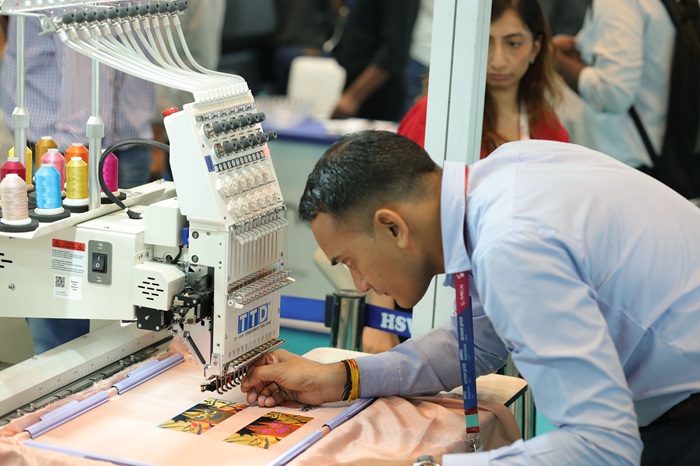
A $179 billion industrial cornerstone contributing 2 per cent to the national GDP, the Indian textile and apparel sector is currently navigating a sophisticated transition toward high-tech automation and circular production. As global sourcing patterns shift and the domestic man-made fiber ecosystem matures, scheduled for April 9–11, 2026, at the Bombay Exhibition Centre, the upcoming Gartex Texprocess India Mumbai has emerged as a critical barometer for the industry's next phase. This mobilization of the value chain arrives at a time when Indian manufacturers are under increasing pressure to balance massive scale - supporting 45 million livelihoods - with the precision required by modern international trade standards.
Technological integration and global machinery synergies
A significant shift in this year’s manufacturing narrative is the deepening integration of international technology within Indian factory floors. With over 125 companies representing elite machinery hubs - including Germany, Italy, Japan, and Taiwan—the focus has moved beyond simple assembly toward integrated ‘smart’ manufacturing. This edition marks a strategic expansion into specialized categories such as advanced knitting machinery and fusing technologies, reflecting a broader sector move toward efficiency and precision. The participation of over 300 brands, ranging from digital printing leaders like Epson and Jaysynth to automation specialists like Stampit Robotai, underscores a market-wide drive to replace legacy systems with high-speed, data-driven hardware capable of meeting the rigorous demands of global fast-fashion and technical textile cycles.
Denim innovation and the circularity mandate
Supported by the Denim Manufacturers Association, the co-located Denim Show highlights a sector-specific pivot toward resource-efficient finishing. Major domestic mills, including LNJ Denim, Siyaram’s, and Ginni International, are increasingly focusing on the ‘laundry of the future,’ where chemical and water consumption are drastically reduced through new dyeing and washing technologies. This aligns with a wider industry movement towards ‘Zero-Waste’ production, a necessity as global regulations tighten around textile waste and environmental accountability. Exhibitors are no longer presenting sustainability as a peripheral marketing tool but as a core operational requirement, showcasing machinery specifically engineered for water recycling and energy conservation to protect long-term margins against rising utility costs.
AI adoption and data-driven design logic
Beyond physical hardware, the industry is grappling with the digital transformation of the design-to-delivery pipeline. The scheduled ‘Gartex Talks’ and ‘Denim Talks’ sessions reflect a shift in leadership priorities toward Artificial Intelligence and consumer data analytics. By exploring how AI can move from simple trend prediction to active production management, the industry is attempting to solve the chronic issue of overproduction. This intellectual exchange targets the intersection of ‘Culture and Commerce,’ analyzing how global shifts in athleisure and performance fabrics are dictating the machinery requirements of tomorrow. As India aims to increase its share of the global man-made textile market, these discussions provide the strategic framework for transitioning from a traditional cotton-led economy to a diversified, tech-heavy apparel powerhouse.
A definitive trade platform
Jointly organized by Messe Frankfurt Trade Fairs India and MEX Exhibitions, Gartex Texprocess is the definitive trade platform for the garment and textile machinery industry in India. It connects fabric suppliers, trim manufacturers, and technology providers with the wider apparel production ecosystem. Historically a catalyst for sectoral modernization, the event now focuses on scaling India's $179 billion textile economy through automation, sustainable processing, and vertical integration, facilitating the country's goal of becoming a global manufacturing hub by 2030.
The Hidden Tax on Fashion: 2026’s EPR rules squeeze margins and shake supply chains

As the 2026 enforcement deadlines for California’s SB 707 and the European Union’s harmonized Waste Framework Directive loom, the global fashion industry is confronting a change in its cost model. For decades, the fast fashion economy relied on low-cost production and the externalization of environmental impact. Now, regulatory frameworks are forcing brands to internalize these hidden costs. New eco-modulated fees, essentially a carbon- and waste-based surcharge on clothing have thrust retailers into an unprecedented tension: absorbing mandatory compliance costs while maintaining price-sensitive consumer appeal. The result is a cascading effect across the global supply chain.
The rising unit cost of compliance
The immediate impact of Extended Producer Responsibility (EPR) is most visible at the unit level. Early projections of minor fee increases have been replaced by data indicating more meaningful price pressures. In markets where eco-modulation is advanced, such as the EU, a typical synthetic-blend T-shirt now carries a disruptor fee of up to 5 per cent of its landed cost. These adjustments threaten traditional margin structures and force brands to reconsider material sourcing and product design.
|
Garment Type |
Estimated EPR fee (low circularity) |
Estimated EPR fee (eco-designed) |
Retail price ompact |
|
Basic Poly-Cotton Tee |
$0.15 - $0.25 |
$0.05 - $0.08 |
+1.5% to 3.0% |
|
Performance Jacket |
$1.20 - $2.10 |
$0.40 - $0.65 |
+2.0% to 4.5% |
|
Denim (Mixed Fibers) |
$0.45 - $0.75 |
$0.15 - $0.25 |
+1.0% to 2.5% |
he table illustrates how garments with higher synthetic content face proportionally higher EPR fees. Eco-designed alternatives, such as mono-material or recycled fabrics, incur lower charges, translating into smaller price hikes at retail. Yet even modest increases can challenge consumer tolerance. According to Strategy& and McKinsey, while 74 per cent of shoppers claim a preference for traceable, sustainable fashion, only 26 per cent are willing to pay a premium above 20 per cent. Retailers, therefore, find themselves in a margin gap, increasingly pressing suppliers to absorb the cost of compliance.
Survival of the digitally transparent
The cost squeeze extends well beyond retail pricing. Manufacturers, particularly in South and Southeast Asia, are facing a dual burden: maintaining competitive shelf prices while upgrading operations to meet traceability and reporting obligations. Tier-I suppliers capable of delivering granular Digital Product Passports (DPPs) now command preferential treatment, consolidating volume from major brands seeking EPR-ready partners. For smaller factories, investment in digital traceability often tens of thousands of dollars has become a barrier to entry, potentially driving consolidation or exit.
Analysts say, the cost of compliance is becoming a competitive weapon. Larger players can leverage regulatory investment to marginalize low-cost competitors who cannot prove end-of-life material viability.
The mid-market margin shift in Europe
The stakes are starkly illustrated by a European mid-market retailer facing its first full compliance cycle in 2026. With 60 per cent of its inventory composed of synthetic-heavy blends, the company saw annual compliance fees triple under new eco-modulation rules.
Attempting to protect a 40 per cent gross margin, it raised prices by 8 per cent, triggering a 12 per cent decline in sales as consumers shifted to lower-cost alternatives. Survival required a radical redesign of core offerings: switching to 100 per cent recycled polyester, a material with a higher raw input cost (+15 per cent) but eligible for EPR circular bonuses that reduced net price increases for shoppers. This shift highlights the necessity of harmonizing material strategy with regulatory incentives. Without such alignment, retailers risk both margin erosion and volume loss.
The unseen expense
Perhaps the most consequential hidden cost lies not in the recycling fee itself but in the digital architecture needed to comply. SB 707 in California and the EU’s ESPR mandate unprecedented transparency, requiring brands to track, validate, and report material lifecycles. Compliance software, third-party audits, and ERP integration now cost between $50,000 and $250,000 annually, a burden disproportionately affecting SMEs that cannot amortize these expenses across large production volumes. Consequently, regulatory compliance inherently favors multinational corporations with scale, digital maturity, and financial flexibility.
Data as competitive currency
In this environment, success depends on data-driven product strategy. Retailers leveraging agentic shopping experiences, where AI-powered platforms highlight durability, repairability, and circularity metrics are seeing 32 per cent longer engagement from high-intent shoppers. Product pricing now embodies not only labor and material inputs but also the environmental and lifecycle footprint, making transparency a value proposition rather than merely a cost.
A model for compliance-first supply chains
Global Apparel Dynamics (GAD), a vertically integrated technical textile manufacturer, exemplifies how investment in traceability can become a strategic advantage. Specializing in circular knits for the North American and EU markets, GAD invested $12 million in automated traceability and auditing systems. This infrastructure ensures clients avoid the highest-tier EPR penalties while strengthening the manufacturer’s position as a preferred compliance-first partner. Founded in the 1990s, GAD has leveraged this approach to deliver 15 per cent revenue growth in 2025, demonstrating that early adoption of regulatory rigor can translate directly into market share and profitability.
Guess? Inc. retreats from China as American cool hits a cultural wall
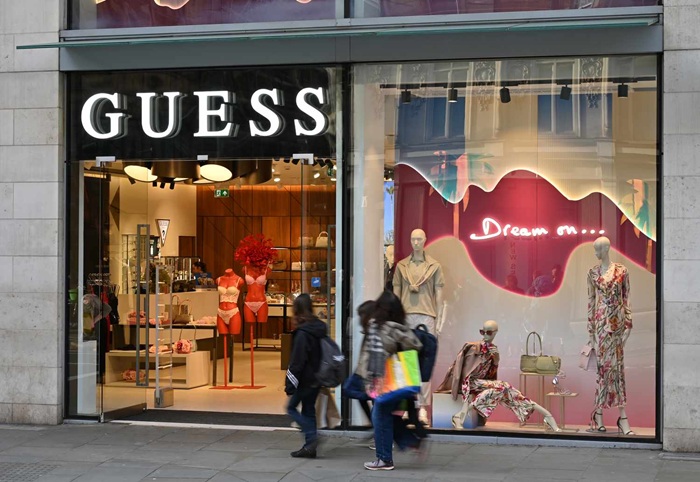
For more than two decades, Guess? Inc., the emblem of ‘accessible American cool’, maintained an ambitious footprint in China. At its peak, the brand operated over 250 stores across mainland China, including a prominent digital presence on Tmall. But by March 31, 2026, Guess? Inc. will complete a full withdrawal from direct operations, closing every physical store and digital flagship. The decision underscores a stark reality: the brand’s iconic style struggled to resonate with modern Chinese consumers, resulting in a fiscal performance that few could ignore. In the second quarter of fiscal 2026, Guess? Inc.’s Asia segment reported an operating margin of negative 6.8 per cent, reflecting the consequences of an unfavorable business mix and eroding footfalls.
The perils of middle-market positioning
Experts point to the brand’s entrapment in a middle ground a pricing and positioning conundrum that left it exposed on all sides. Guess’s sub-600 yuan price points were undercut by the rapid agility of domestic competitors, from Shein to the so-called ‘Douyin white-label army’, capable of translating global fashion trends into locally made apparel within two weeks. At the same time, Guess lacked the aspirational pull of affordable luxury peers like Sandro and Maje, whose carefully curated social media presence has turned them into lifestyle markers for urban professionals.
The following table illustrates how different market segments performed in China in 2025, emphasizing the widening gap between nimble fast-fashion disruptors, mid-market legacy brands, and the resilient affordable luxury segment:
Table: China fashion market segmentation (2026)
|
Segment |
Players |
Price range (CNY) |
Market sentiment |
|
Ultra-Fast Fashion |
Shein, Douyin White-labels |
50-250 |
Dominant (Agility-driven) |
|
Mass Market (Mid) |
Guess, UR, Peacebird |
300-800 |
Contracting (Price War) |
|
Affordable Luxury |
SANDRO, Maje, Ganni |
1,500-3,500 |
Resilient (Social Value) |
|
Hard Luxury |
LVMH, Hermès, Chanel |
10,000+ |
High Growth (VHNWIs) |
While ultra-fast fashion commands volume through speed and trend replication, mid-market players like Guess are increasingly caught in a declining zone. Affordable luxury, benefiting from social media validation and aspirational positioning, remains insulated from the price pressures that erode the margins of mass-market brands.
The rise of quiet luxury
The Guess predicament is not merely financial; it is aesthetic. Globally recognized for its overt sensuality and body-conscious silhouettes, the brand’s DNA collided with a distinctly different Chinese taste. Over the past decade, consumers have gravitated toward quiet luxury relaxed, minimalist, and functional designs that prioritize understatement over overt sex appeal. Guess’s signature denim campaigns, historically celebrated for their bold imagery, suddenly felt out of step with the evolving market.
Rebranding was a binary trap, say retail strategist. Move toward minimalism and you lose the very 'Guess-ness' that justifies the price premium. Stay sexy and you remain a niche player in a market that has moved on to understated chic. This cultural disconnect increased the operational challenges, leaving Guess exposed both in stores and online.
Privatization and the asset-light shift
The China exit coincides with Guess? Inc.’s privatization in January 2026, a $1.4 billion transaction led by Authentic Brands Group (ABG). ABG, now holding a 51 per cent stake in Guess’s intellectual property, is executing its hallmark asset-light strategy: licensing brand operations to local partners while retaining high-margin royalty streams. By offloading the high fixed costs of direct retail, the brand can preserve market presence without the operational drag of owning and managing physical locations.
ABG has deployed this model successfully before. After Forever 21’s 2019 withdrawal from China, ABG reintroduced the brand through licensing agreements that emphasized e-commerce and selective pop-ups, preserving brand equity while minimizing capital exposure. The Guess strategy mirrors this approach, signaling confidence in the brand’s intellectual property but recognition that local expertise is critical to navigate China’s digital-first retail landscape, where online channels now generate approximately 60% of apparel revenue.
Western brands and the waning edge of americana
Guess is part of a growing cohort of Western brands struggling to maintain relevance in China. Names like Old Navy, TopShop, and Gap have similarly faltered, revealing a fundamental truth: national origin no longer guarantees competitive advantage. Recent surveys suggest that 90 per cent of young Chinese consumers hold positive perceptions of domestic brands, aligning with the Guochao movement a cultural and consumer shift favoring homegrown labels. Success now hinges on product innovation, local relevance, and digital fluency rather than brand heritage or foreign mystique.
Legacy, scale, and the new global outlook
Founded in 1981 by the Marciano brothers, Guess? Inc. transformed denim into a lifestyle symbol through iconic black-and-white advertising campaigns. Today, under ABG ownership, the company generates roughly $6 billion in global retail-equivalent sales. While Europe and the Americas remain strongholds, China represents a cautionary tale. Moving forward, Guess’s international strategy emphasizes licensing over direct ownership, asset-light operations over fixed-cost exposure, and selective cultural alignment over global homogenization. In doing so, the brand hopes to preserve its global relevance without repeating the missteps of its China experiment.