


FW
Max&Co undergoes makeover
Max&Co has had an in-depth makeover. Bright colors, like the red featured in the new logo of the contemporary line by Max Mara have been added. A coral red is now found in the background of the logo’s lettering in black capitals, adding a burst of energy to Max&Co.'s packaging and labels.
Max&Co has also refreshed its style and introduced a new store concept. The brand was launched as a retail label in 1986, at a time of great dynamism and change. Its market positioning is more democratic and contemporary than that of its main brand Max Mara. The idea was to create a style suitable for contemporary women, featuring functional, everyday clothes that are easy to wear. From this starting point, the label has a clearer direction, putting more emphasis on product quality.
The collection has been streamlined, concentrating on Max&Co’s key items like tops and coats, aiming for a very specific look. The line targets women of any age and provenance, and its style is now closer to the latest fashion trends. For example, it includes a series of uber-comfortable sneaker-socks in dazzling colors like fluorescent green, pink and red. The classic woolen coat, a signature Max&Co item, is now available in different models.
India’s leather exports down four per cent
India’s exports of leather and leather products dipped four per cent in July 2019. Incentives will be provided to the leather sector with a view to boosting exports from this labor intensive segment. The entitlement rate for leather garment sector for duty-free imports of raw material may be increased from three per cent to five per cent. The move would help in increasing the availability of raw materials at affordable rates and boosting exports. Also, GST on footwear priced above Rs 1,000 may be reduced from 18 per cent to 12 per cent. This is expected to help enhance the competitiveness of the products in global markets. Similarly, GST on raw material for the leather sector may be reduced to 12 per cent from 18 per cent.
Major export destinations for Indian leather and leather products are: Europe and the US. The sector employs about 42 lakh people. The footwear sub-sector accounts for half of India’s leather exports. The leather garment sub-sector produces 16 million pieces a year and accounts for one-tenth of exports. Other products such as articles (wallets, handbags), industrial gloves, harness and saddlery account for a quarter of exports. US companies have turned to leather from India. They have been hit by tariffs on products imported from China.
India’s cotton yarn exports slump heavily from April to June
India’s exports of cotton yarn between April and June 2019 were 35 per cent lower than last year’s exports for the same period. China used to consume 40 per cent of Indian cotton but not anymore. Chinese spinners buy domestic yarn, which is cheaper than India’s. Also, India has to bear a 3.5 per cent import duty while selling to China unlike Vietnam that doesn’t have to.
Up to 50 to 60 per cent fiber that is used in producing yarn in India is cotton, and India is among the largest producers of cotton in the world. But there has been an increase in the minimum support price of cotton by 25 per cent to 28 per cent while prices have fallen sharply in the global market. So the production cost of yarn has gone up in India and Indian prices are now not viable in the international market.
One reason for the liquidity crisis was demonetization, believes Mukesh Tyagi, Senior VP of the Northern India Textile Mills’ Association, or NITMA. The cash flow in the textile market was disrupted. GST also happened. Because earlier there was no tax on fabric, many decentralised sectors in the textile industry had to adjust with the new tax regime.
Imprinted Sportswear Shows becomes Impressions Expo
Imprinted Sportswear Shows (ISS), owned and operated by Emerald Expositions, a leading operator of business-to-business trade shows in the United States, will now be known as Impressions Expo. The Impressions Expo brand reflects the ISS brand’s alignment with Impressions magazine, a leading B2B publication canvassing the decorated-apparel industry and longtime ISS sponsor. The goal is to provide attendees with authoritative, informational content, trade show interactions and award-winning conferences that are benchmarks of both prestigious brands.
The new name is meant to better reflect what the show is about and not just sportswear. Events will continue to showcase the same product categories with a name that now encompasses the entire decorated-apparel industry, from raw goods/ fabrics to the finished, packaged product. There is no change in the show or the core markets it serves. It will continue to be dedicated to the garment and non-wearable decorating professionals seen at all its events today and embrace the evolution in technology, products and services of both new and old needed by attendees as they relate to the decorating process.
This transition will start with the trade show in California, January 17 to 19, 2020. Among the product categories are screen printing, embroidery, direct-to-garment printing, blank apparel, sublimation, heat transfers, product packaging, promotional products and more.
Fund connects technologies to apparel industry
Innovation hubs Fashion for Good and The Mills Fabrica have teamed up with the C&A Foundation to launch an investment fund that will spearhead systemic change in the apparel and footwear supply chain.
Apparel supply chains are plagued by negative environmental and social impacts. Sustainable solutions exist but there is a lack of capital available to scale technologies up in the supply chain. The fund will address this gap, connecting most promising technologies to the industry. The immediate aim is to provide loans to allow suppliers in India, Bangladesh and Vietnam to invest in new technology that will deliver economic growth and good practice. This will help textile and footwear manufacturers in those countries start using safe and recyclable materials, clean and efficient energy and closed-loop manufacturing practices. It will also help them establish a fairer work environment for the people they employ. The fund demonstrates how to invest beyond sustainability towards a restorative and regenerative apparel supply chain. It addresses the need in local markets for long-term financing for manufacturers.
Small and medium manufacturers who are committed to meeting these criteria are eligible for funding. The fund will also support larger manufacturers committed to investing in highly disruptive technologies, which means ideas that can quickly bring about substantial changes in the supply chain.
Duties hit Indian apparel exports
Indian apparel exports are burdened with duties in the EU and US markets. These blunt the country’s competitive edge. Now that Vietnam has signed a free trade agreement with the EU, which enables apparel exports at zero duty, Indian exports to these markets will be impacted adversely.
Over the years, Indian apparel exports have been in distress and survived largely due to export incentives. While these incentives have proved partially useful, they have not helped Indian apparel manufacturers compete on price with their competitors. Some Indian apparel makers feel they can shift their existing manufacturing to Vietnam and Bangladesh to benefit from tariff arbitrage, labor laws, low wages, conducive business environment and, hence, better return on capital employed. Employment ratios in apparels are far more attractive than in agriculture or automobiles. The man-machine ratio in apparels is far better than farmers to cultivable land ratio, which has fallen significantly over the years. In the automobile sector, too, for every crore revenue earned a company generates 0.45 jobs, while for an apparel manufacturer, a crore earned in revenue creates 18.5 jobs.
The apparel industry is the country’s largest low technology employer after agriculture, with 45 million workers contributing two per cent to the GDP and 15 per cent to export earnings.
Kraig Biocraft CEO recognised amongst top 20 pioneering CEO’s of 2019
Kraig Biocraft Laboratories, Inc, the leading developer of spider silk based fibers, recently announced that its CEO, Kim Thompson was recognised as one of MyTechMag magazine’s top 20 pioneering CEO’s of 2019.
In selecting the top 20 pioneering CEO’s of 2019, MyTechMag selection criteria included a review of the complexity of the challenges overcome, the growth of the underlying business, and the CEO’s ability to harness their team’s potential.
Adwoa Aboah reappointed as BFC Ambassador for Positive Fashion
Adwoa Aboah has been re-appointed as the BFC Ambassador for Positive Fashion for another year. During her first year, Adwoa helped the BFC lead a successful campaign for model’s health and diversity within the industry, leading the charge on change and using fashion as a positive platform to inspire future generations.
For 2019/2020, Aboah turns her focus to education and to inspiring young people to get involved in the fashion industry by exposing them to the plethora of existing roles, other than fashion design. Her partnership with BFC will launch a mentoring programme that highlights the many different opportunities and careers in fashion and empowers young people from all backgrounds to get involved in the creative industries.
The mentoring programme will involve five key industry mentors, coupled with one mentee each, who will work together over a period of four months. The programme is open to any young people 18+ starting their careers in the fashion industry or aspiring to do so; no academic background is required.
The mentors will be paired with a mentee chosen through the BFC and Adwoa’s networks and meet for four two-hour sessions during the four-month period. The aim is to organise shadowing sessions, networking opportunities and key information sharing between mentor and mentee that will inspire and be invaluable to their future career plans.
Taiwan’s textile sector evolves with smart manufacturing, eco-friendly materials
"Over the last 60 years, Taiwan has evolved from a mass supplier to an innovator equipped with a comprehensive yet integrated value chain and developer of high value added products and functional textiles. One of the most significant sectors of the manufacturing industry, the textile industry now ranks among the top seven in the world based on export value. Fabric is the biggest item exported in 2018 with a total export value of $6.66 billion; followed by yarn with a total export value of $1.7 billion."
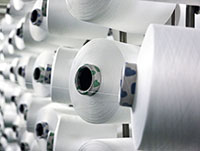 Over the last 60 years, Taiwan has evolved from a mass supplier to an innovator equipped with a comprehensive yet integrated value chain and developer of high value added products and functional textiles. One of the most significant sectors of the manufacturing industry, the textile industry now ranks among the top seven in the world based on export value. Fabric is the biggest item exported in 2018 with a total export value of $6.66 billion; followed by yarn with a total export value of $1.7 billion.
High value exports in focus
Although the value of exports has dropped in the past few years, the country now focuses more on exporting high value-added textiles for sportswear and outdoor clothing, which makes the country the seventh largest textiles exporting country. Some of value-added textiles exported by the country include:
Functional textiles: Taiwan is a major provider of functional textiles for well-known international outdoor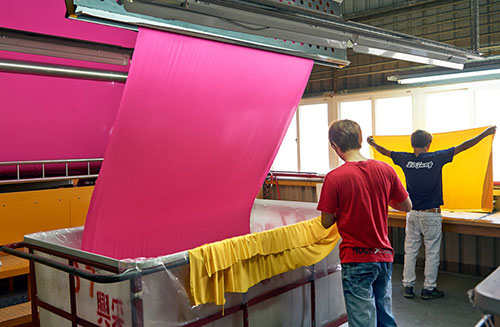 and sportswear brands. The country exports around 70 per cent of the world’s output of functional fabrics. For 2018 FIFA World Cup in Russia, the country provided around three-quarters of the players uniforms for the top 16 teams.
Innovative and eco-friendly solutions: With eco friendliness now being in the DNA of Taiwan’s textile industry, the country has become a leading supplier of recycled man-made fibers and blends. The country offers innovative solutions and environmentally sustainable products which are compliant with bluesign®, ZDHC, suitable for OEKO-TEX® Standard 100, of brands. It also constantly introduces new sustainable textile developments that combine high-tech, ecology, function with life aesthetics.
Smart textiles with electronics: Taiwan’s two globally competitive industries textiles and electronics are now working together to develop smart textiles. These textiles are combined with nanotechnology, biosensors, new materials and miniaturised electronic components to be applied to day-to-day living as well as many other areas. The country has also developed an integrated supply chain, with different companies across the country specialising in smart metallic yarns, electrotherapeutic functions for pain relief smart textiles with temperature control and warning feature, positioning functions such innovations have helped develop new ideas for healthcare, sports, safety, fashion, entertainment, military, and aviation uses.
Leading brands like Nike, The North Face, Adidas, VF Corp, Columbia, Lululemon, Under Armour, Jack Wolfskin, Vaude now depend on Taiwan for its unmatched value proposition. The country has gained reputation for its reliability, innovation and sustainability. In future, Taiwan would continue focusing on technology, eco-friendliness, smart manufacturing and supply chain integration.
Rebate scheme replaces MEIS for Indian exporters
The Merchandise Exports from India Scheme (MEIS) was introduced to benefit exporters. The intention was to offset infrastructural inefficiencies and associated costs, thereby making India’s products more competitive in the global market. Benefits available under MEIS are in the form of transferrable duty credit scrips which the exporter can use for payment of customs duties applicable on imports. Given such significant benefits, MEIS has proved to be crucial in reducing the overall cost involved in exports and has especially been popular among the country’s small and medium sector which accounts for almost half of the country’s exports.
However, the US and the international community felt the MEIS was in direct violation of World Trade Organisation guidelines. But a complete withdrawal of the MEIS in response to international pressure would have placed an additional burden on the small and medium sector which is already struggling to counter the reduction in demand due to the global economic slowdown. Keeping this in mind, the Rebate of State and Central Taxes and Levies was introduced as an interim measure in March 2019. This rebates all embedded state and central taxes for garments and apparel and is presently available for the textile industry. It offers transferable duty credit scrips to exporters in order to offset levies.











