


FW
Markdowns to expire as US fashion industry resets operations with COVID-19
 Regular promotions schedule may soon come to an end as the impact of the COVID-19 pandemic may result in a decline of off-season merchandise and an overabundance of product. Fashion brands and retailers that typically deliver their collections in April or May, are deferring them to June, July and August. This will further defer their fall sales to September and October, in step with the start of the fall season.
Downsizing collections to cut losses
To eliminate liability that comes with retailers canceling and returning orders, many fashion companies are downsizing their collections. Major department stores have stopped accepting product since March, purchase orders be damned.
Owner of fashion brands such Equipment, Joie and Current/Elliott, the Collected Group has reduced its planned summer collections by one-third. The size of one of those assortments will be divided among the three scheduled deliveries to retain regular. The company, is also skipping the resort season altogether, which typically enters stores in October, November and December. Though its fall collections, will not change in size, but will drop in six monthly shipments throughout the back half of the year.
Shifting to profit-making products
One of the solutions, Jess Brondo Davidoff, Managing Partner at crisis management firm Sprezzatura is focusing on is shifting its attention to products that drive the biggest bottom line. This also includes identifying the brand’s customers, their buying patterns and the products that bring in most profits. This is determined by factoring in the discounts and performance marketing driving their sales, their rate of returns, and their cost of shipping and warehousing.
Many brands’ are also moving to streamlined assortments, with high sell-through at full price. They are not building additional dollars into their prices, because they know it will be marked down. For instance, Collected Group doesn’t plan to deliver products that are not seasonally appropriate as it just goes to perpetuate the already existing vicious cycle of markdowns, which has been most frequent over the last 12 months.
Charting out ways for India’s textile, apparel sector to move forward post COVID-19
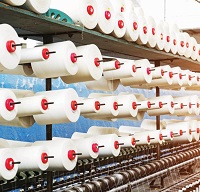 COVID-19 pandemic has infected millions of people and taken thousands of lives across the world. Indeed, the outbreak has affected the textile and apparel industry globally as well as in India. A report by Wazir Advisors ‘Impact of COVID-19 on the Indian Textiles Industry’ states, the outbreak and following three week nationwide shutdown has brought textile and apparel industry to a standstill.
India’s textile and apparel industry employs migrant workers from different states and a large workforce comes from nearby rural, semi-rural areas. Due to the current situation, majority of migrant workers have returned to their native places. It would therefore, be a challenge for the government to bring these workers back to factories once the lockdown is lifted. The study then suggests certain initiatives the government could take to kick start the textiles industry.
Government initiatives to move ahead
The pandemic has hit the Indian economy at a time when growth has slowed to the lowest in a decade,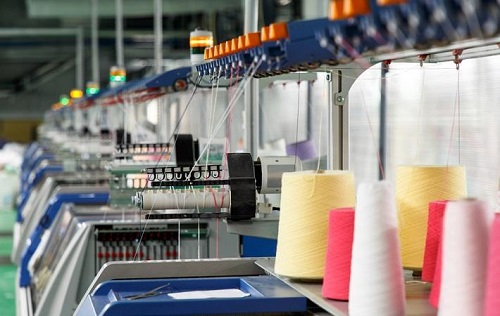 investments are shrinking and a consumption recovery is sputtering. To deal with this situation, the government can take several measures with some modifications in existing schemes.
Some of these relief measures could be:
• Clearing pending subsidies, release of dues under TUFS,
• Export subsidies (RoSCTL/MEIS), and GST refunds, on immediate basis
• Extension of soft loan equivalent to these government dues Deferment of interest charge for a period of six months on all loans
• Moratorium for repayment of principal and interest for one year Reduction in bank interest rate by 3 per cent,
• Atleast 30 per cent additional working capital at lower rates without any collateral, cllateral-free lending for loans up to Rs. 2 crore and max
• Relaxing RBI norms for declaring the defaulting unit as NPA for one year Fiscal support
• Cover all textile, garments and made-ups products under RoSCTL, IES & MEIS benefits
• Increase Interest Equalization Scheme to 5 per cent for all garments and made-ups for FY 2020-21.
• Provide 3 per cent additional ad-hoc export incentive for one year
• Exemption all raw materials, dyes & chemicals, intermediaries, spares, accessories, etc., from basic customs duty and anti-dumping duty
• Defer payment of EPF and ESI contributions for 6 months
• Extend support to the industry for payment of salaries and wages to the workers during the lockdown period.
India’s advantage
The current situation also presents an opportunity for India as it helps brands to reduce dependency on China. It also provides it with an opportunity to explore alternate options such as Bangladesh, India, Vietnam, Cambodia or any other South East Asian suppliers.
Increasing e-commerce focus
Though malls and retailers have closed their brick and mortar stores, their e-commerce channels are still operational in certain countries. These brands and retailers are now driven to incorporate digital strategy in their buying process. Online marketplaces are expected to become more popular as brands and retailers look to maximize digital options of showcasing their products and facilitating the buying and selling process.
Maximising internal capabilities
To fight the economic consequences of this pandemic, manufacturers should maximise their internal capabilities and focus on building their efficiencies. Companies should also adopt digital ways of connecting with buyers. Companies may also focus on planning for the winter or next spring summer season and target the channels of value retailing and ecommerce. Indian companies should also look out for new markets beyond US and EU like Japan, South Korea etc. and focus on diversifying both markets and products.
With depressed prices of raw materials like polyester, cotton etc. textile and apparel companies can also look at hedging raw material prices and wherever possible stock raw material which will be helpful once the market opens again. Companies could also explore emerging product categories such as medical textiles and other textile items required for healthcare facilities like hospital bedsheets, mattresses etc.
Trident textile production declines in March
Trident’s production in its textiles division declined in March 2020. Its production of bath linen tumbled 37.91 per cent to 2,745 metric ton in March 2020 over 4,421 metric ton in March 2019. The production of bed linen fell 21.3 per cent to 1.81 million metre in March 2020 as against 2.30 million metre in March 2019. Its yarn production fell by 37.41 per cent to 6,327 metric ton in March 2020 compared with 10,108 metric ton in March 2019.
In its paper & chemicals division, the production of paper slumped 29 per cent to 9,615 metric ton in March 2020 as against 13,541 metric ton in March 2019. Production of chemical fell 25 per cent to 6,291 metric ton in March 2020 over 8,367 metric ton in March 2019.
Trident's consolidated net profit fell 27.7 per cent to Rs 79.79 crore on a 12.9 per cent decline in net sales to Rs 1,135.59 crore in Q3 December 2019 over Q3 December 2018.
Tiruppur turns to PPE manufacturing
Amid the corona virus gloom, the multi-crore knitwear industry in Tiruppur has turned into a major centre for manufacturing protective medical gear like face masks, gloves and personal protective equipment (PPE).
The industry, which was suffering due to a slew of factors including tough competition from countries like Bangladesh and Vietnam in apparel export, feels manufacturing of technical apparel could be a viable option to survive in the future.
Swell Knit has bagged an order for making 20 lakh fabric masks which are reusable from Seva Bharti. The firm will supply 3 lakh masks to be sent to Meghalaya and other north-eastern states. These fabric masks are designed as two-layer masks and all of them were approved by a leading textile testing lab
Loyal Textile Mills, which has manufacturing units across the state, produces 4,000 PPE kits and 1 lakh surgical masks a day. The firm has been supplying protective medical gear to hospitals, rotary clubs and several pharmacies across the country. It follows the standards prescribed and we ensure that every rule is complied with.
Bangladesh monthly garment exports to drop 70 per cent: BGMEA
The BGMEA states, Bangladesh monthly garment exports are likely to decline by 70 percent in April to $972.95 million compared to April 2019. In April last year the earning from the apparel export was $2.53billion. The data projected shows in May it will be the same, with monthly export set to fall by 70 percent to $972 million, compared to $3.24 billion in May 2019.
The cumulative export of garment items in the three months between March and May this year will see a 56.93 percent drop from the corresponding period in 2019 to $3.70 billion compared to the same period last year, when the three months netted $8.60billion.
The loss of export in three months is set to be $4.90 billion -- a 40 percent export loss year on year will also affect the settlement of back to back LCs by $1.96 billion, the BGMEA data also said.
Factories will have to carry unsettled liabilities for the export which have been forecast to be cancelled.
Primark to cover looses of cancelled orders
Primark owned by Associated British Foods Plc will cover the wage component of clothing orders that were scheduled for shipment within 30 days after it called off all deliveries. The fund will support workers in Bangladesh, Cambodia, India, Myanmar, Sri Lanka and Vietnam.
Primark has closed all its shops across the UK, Europe and the US following the outbreak of the virus, costing it £650 million ($796 million) of lost revenue a month. After store closures, it asked all suppliers to stop production. The retailer has already paid for £1.6 billion of stock that was in stores, in depots, or in transit before it took the decision to scrap further orders. Its payments to workers will be adjusted to reflect any government support packages provided in each of the countries.
ILO-UNICEF issue new guidelines to help employers back families
The International Labour Organisation (ILO) and the United Nations Children's Fund (UNICEF) has issued new guidelines for businesses to help them support working families during the COVID-19 pandemic. The preliminary guidance urges employers to consider the impact of business decisions on workers’ families and support greater social protection wherever possible.
The extra support, particularly for those with low incomes, is essential to minimise the negative consequences of the outbreak for workers, employers, their families and children. ILO and UNICEF also called on governments to support employers and strengthen social protection, especially for vulnerable families.
Family-friendly policies and practices, including employment and income protection, flexible working arrangements, paid leave to care for family members and access to quality, emergency childcare can make a critical difference and help stabilize labour markets, families and societies.
The preliminary guidelines for employers include monitoring and following advice from local and national authorities and communicating that to the workforce; reviewing existing workplace policies to ensure those offer sufficient support to workers and their families; following sound practices when implementing policies based on social dialogue, national labour laws and international labour standards; and ensuring workplace support measures are available to all, without discrimination, and that all workers know, understand, and are comfortable with them.
COVID-19 forces Cambodia to expand export market
COVID-19’s is forcing Cambodia to refocus on expanding its highly concentrated export market. According to a spokesperson for the Ministry of Commerce, diversification has been one of the ministry’s highest priorities and the ministry understands the devastating effect COVID-19 has had on these two major trading partners.
To achieve this, the ministry has outlined an enhanced focus on free-trade agreements (FTAs) such as the Regional Comprehensive Economic Partnership (RCEP) between Asean nations and their partner states Australia, China, Japan, New Zealand and South Korea, as well as the continued FTA negotiations with China that are expected to be finalised by the end of the year. India, which is also an Asean FTA partner, opted out of RCEP in November last year.
Export diversification has been a long-term policy for the Ministry of Commerce since the ministry released its 2019-2023 Cambodia Trade Integration Strategy, with its Minister Pan Sorasak stating upon the release of the report the need for a new strategy that focuses on strengthening the country’s competitiveness to support its transition into a developed economy and to benefit from new sources of growth, particularly from the so-called Fourth Industrial Revolution, involving 5G, artificial intelligence and the internet of things.
SRTEPC demands separate relief package for MMF segment
The Synthetic and Rayon Textiles Export Promotion Council (SRTEPC) representing the Manmade Fibre (MMF) textile fraternity has requested the government for a separate relief package for MMF segment. The council urged for special export incentive of 3 per cent on fibre and yarn, 4 per cent on fabric, 5 per cent on made-ups for at least 6 months or till the impact of Coronavirus subsides and global markets stabilise.
Apart from its long-pending demand, the council also urged permission to allow the textile industry to resume functioning of the units for at least 50 per cent of the essential working staff. It also urged to include documentation/ paperwork, Certificate of Origin, Testing Reports, etc. also in the ‘Essential Services’ category and issue e-passes to the employees, CHA, officials of EPCs, Testing Agencies/organisations, etc. who are associated with paper-work and documentation such as testing reports, Certificate of Origin, etc. that are essential for export shipments.
Looking at the current scenario, it is a must that the period of export payment realisation should be increased from 270 days to 365 days and in case of delay in payments beyond the due date, no penal rate of interests should be charged by the banks. It is pertinent to mention here that the MMF segment has already been going through inverted duty structure, due to which huge amount of ITC has been accumulated which is neither refunded nor utilisable.
COVID-19 hits China’s textiles, apparel exporters hard
The Shanghai New Union Textra Import and Export Co says, Chinese textiles and apparel exporters have taken a heavy hit from COVID-19, with most international orders postponed and profits expected to slump around 50 percent. The company reported no new orders, while deliveries of some orders have been postponed. It noted that prospects for the second half are also very pessimistic. The severe situation is more apparent in Keqiao District in East China's Zhejiang Province, dubbed the international textiles capital.
The company currently holds overseas orders for 500,000 to 600,000 garments, but he faces the dilemma of whether or not to carry out the orders. It exported a 20-foot-equivalent-unit (TEU) of clothes every one to three days before the virus, but now it only exports 1 TEU every one to two weeks.
According to a report from the China Federation of Logistics & Purchasing, China's textiles industry has seen overseas orders canceled on a large-scale as the global situation deteriorates, and domestic machinery, auto and home appliance exports may also be impacted in the future.
Faced with this plight, some have supported favorable policies like a low interest rate to avoid credit risks, but many have chosen to rely on themselves. Some apparel exporters that have had no orders are idling employees and paying minimum salaries.











