FW
Global Cotton Consumption to decline by 11.8%
The May 2020 edition of Cotton This Month states that due to the global economy being paralysed and supply chains shattered, global cotton consumption is projected to decline by 11.8 per cent, reducing global trade to 8.26 million tonnes in 2019/20.
According to the report, while there is hope for a vaccine or cure, or that warmer weather in the Northern Hemisphere will minimise COVID”s impact, there can be no real economic recovery unless there is a health recovery first. Whether or not, we sink into a worldwide depression — a long recession with unemployment reaching as high as 33 per cent — will be determined by the effectiveness of government policies.
In 2020/21, global area is projected to decrease by 4 per cent to 33 million hectares, with India remaining the world leader despite plantings dropping to 12 million hectares. Production will decline by a comparable amount to 25 million tonnes. The Secretariat’s current price projection for the year-end 2019/20 average of the A Index has been revised to 71.4 U.S. cents per pound this month. The price projection for the year-end 2020/21 average of the A Index is 56.9 cents per pound this month.
Netherlands will not cancel orders to Bangladesh RMG manufacturers
In a recent meeting between Sigrid Kaag, Minister for Foreign Trade and Development Cooperation, Netherlands assured AK Abdul Momen, Foreign Minister of Bangladesh, that Dutch buyers will not cancel or suspend their orders from the Bangladeshi readymade garment (RMG) factories. He also assured the Dutch government will ensure that the RMG value chain is not disrupted.
Kaag further informed the Dutch government had set up a fund of €100 million to help countries that need support because of the COVID-19 pandemic. And countries that are interested to use the fund would need to appeal for provision. On the issue of FDI, Bangladesh foreign minister mentioned that FDI would be negatively affected by the COVID-19 pandemic, and demanded Dutch technical assistance in FDI in the areas of agriculture and fisheries.
The Netherlands has been supporting Bangladesh through providing financial and technical aid to water resources and coastal management projects in Bangladesh. It is also assisting Bangladesh in enhancing its business enabling environment. Almost 85 per cent of the exports to the Netherlands are apparel products.
Punjab-based startup Nufab develops new non-woven fabric
Nudab Technical Textiles, an Ambala-based start- has developed a unique nonwoven fabric, which will significantly reduce infection risk to frontline medical workers, who are facing heightened risk amid the Covid-19 pandemic.
The newly developed fabric is soft, comfortable, light weight, impregnable, permeable and above all breathable, which will help frontline medical workers immensely by reducing the infection risk up to 90 per cent. The value-added fabric is certified and approved by DRDO and is extremely useful in making coveralls gowns – personal protect equipment . Made without warp and weft weaving and knitting, the fabric is commonly used for making surgical mask, gowns, sanitary pads, diapers, etc. Apart from being used in hygiene products, nonwoven fabric is also used in automotive, agriculture, packaging applications, etc.
Founded by Salil along with directors Rishabh Bansal and Sanjay Modi, Nufab specialises in producing technical textiles and is rapidly augmenting its product portfolio. With joint ventures in place and gunning four foreign investments, the company leads India on the world map for technical textiles and nonwovens.
COVID 19 to alter consumer behavior: Accenture
A survey by Accenture reveals COVID-19 is likely to alter consumer behaviours permanently and cause lasting structural changes to the consumer goods and retail industries. Accenture surveyed more than 3,000 consumers in 15 countries across five continents. It spoke to consumers in Australia, Brazil, China, Canada, France, Germany, India, Italy, Japan, Mexico, South Korea, Spain, the UAE, UK and US in early April.
It found consumers have already begun shifting their purchasing priorities. For instance, overall they said they were buying more personal hygiene and cleaning products, as well as canned and fresh foods than they had been two weeks prior. But they were buying purchasing fewer fashion, beauty and consumer electronics
More importantly, the findings indicate that many of the changes in consumer behaviour are likely to continue long after the pandemic. In addition, the crisis is also causing consumers to more seriously consider the health and environmental impacts of their shopping choices”.
It found 60 per cent of respondents are spending more time on self-care and mental well-being. And 64 per cent said they’re focusing more on limiting food waste and will likely continue to do so after the crisis eases. Exactly half are shopping more health-consciously and will likely to continue to do so and 45 per cent said they’re making more sustainable choices when shopping, behaviour that should carry on as before.
The survey also found the pandemic is causing more people to shop online. It said that 32 per cent of consumers’ current purchases of all products and services have been one by necessity, but that figure is expected to rise to 37per cent going forward.
The shift is very noticeable in the area of groceries as this was one segment that had a lower rate of online penetration than other consumer goods. But the pandemic has forced people to overcome that reluctance and this should have a much wider impact on e-shopping generally.
Micro orders, supply chain consolidation to help brands reduce China dependence
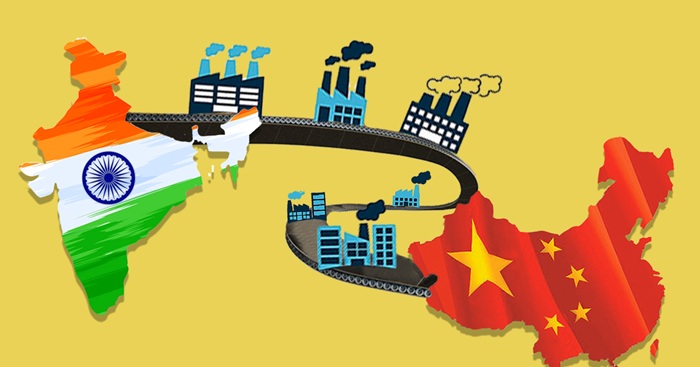
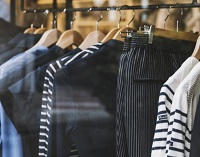 As countries across the world battle with the ongoing COVID-19 pandemic, the idea of a relying on a single market far from home is being seen by many as an untenable risk. Though the global fashion industry spent most of the past decade trying to break away from its dependence on Chinese manufacturing, little progress was made and China remains the most enticing manufacturing destination with an equally attractive supply chain.
China dominance continues
Even though garment manufacturing has shifted to many other countries around the world, fashion hasn’t been able to divert its raw material sourcing, trims, zippers and more from China, even as labour prices in the country continue to rise and US-China tariff war continue to bite. A recent report by the Business of Fashion estimates approximately 60 per cent of the world’s fashion is still produced in China as most countries still depend on components from China. India too imports its silk from China.
Disrupted supply chains a bug bear
This over dependence on China was particularly highlighted when the country first experienced the outbreak of the virus. The pandemic caused many of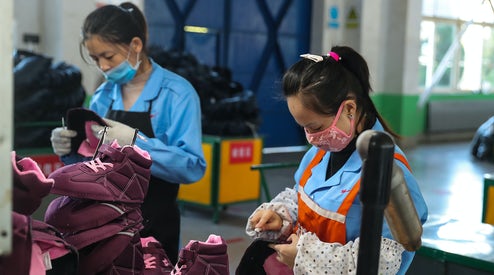 its factories to close besides causing crucial cogs in the fashion supply chain to grind to a halt.
Today, as no one is shielded from the pandemic, many fashion brands moved to lucrative markets such as Bangladesh and Vietnam. However, they soon realised that the supply in these countries was also disrupted. As BGMEA points out, though in many cases, supply-side disruption matters less than the demand disruption caused by retail closures which led to many major fashion brands cancelling orders amounting to around $6 billion in Bangladesh alone.
Even as production is halted in most places around the world, China is open for business and producing the orders that have not been cancelled. However, manufacturers here face an uncertain future as business from overseas becomes scarcer, mitigated only somewhat by demand from growing domestic fashion brands looking to move their way up the value chain.
COVID-19 pandemic highlighted the world’s dependence on China for vital supply chain links, especially for medicines and personal protective equipment, as dozens of countries concurrently grapple for both. As a result, there is growing pressure for the pharma industry in Europe and North America.
Shifting sourcing to other countries
Like the pharmaceutical, fashion companies, especially those in America are likely to feel the pressure to “decouple” from China in a year which promises to be heavy on anti-China rhetoric. Hence, fashion brands need to start planning for the post-pandemic phase of business now. As Gerhard Flatz, Managing Director, KTC, a high-end performance wear specialist says brands need to create a micro-environment by shifting their sourcing to Southeast Asia and other countries.
Yossi Nasser, Chief Executive of leading intimates manufacturing supplier, advises brands to have a diversified supply chain as this would enable them to scale up one production source and decentralise the other.
Another way for brands could be to focus on rebuilding their business, says Melanie DiSalvo, Founder of Virtue + Vice, sustainable supply chain consultancy, previously product developer for companies including Walmart, Target and Levi's. Supply chain diversification is a long-term goal that brands shouldn’t venture into right now.
Instead, they should focus on consolidating supply chain by partnering with vertical operations across different materials or product categories, opines the president of Bombyx, a manufacturer of silk fabrics. According to him, this will provide brands with an opportunity to be more flexible in their own set up because they control more of their supply chain, and have more room to spread out their production and finances.
Focus on micro orders
However, Anson Zhou, a freelance consultant in sourcing and supply chain management for clients including Macy’s, JC Penney believes the best strategy for brands could be to take up small orders first and see the reaction and make a quick decision on a re-order. For this, they need quicker speed in their supply chain management like China.
PRGMEA calls for a switch to PPE
Pakistan Readymade Garments Manufacturers and Exporters Association (PRGMEA) has advised the government to switch to PPE manufacturing to earn foreign exchange. The association says it is receiving a large number of international inquiries for masks and PPE equipment.
It advised the Pakistan government to adopt an aggressive approach to export PPE both in woven and non-woven fabric in mainly white, light blue, light green colours. The association also urged the government to allow duty-free imports of raw materials that would enable the exporting community to play an instrumental role in capturing market share.
The association revealed that over 800 exporting units of different sectors would soon start operation after a thorough inspection by the district administration in this export hub of the country. These industrial units would resume their operation with the primary objective of protecting their employees and saving people from hunger, he said. The industry was bound to follow the Standard Operating Procedure (SOPs) set by the government.
BGMEA finds safety levels in 144 Bangladesh RMG factories satisfactory
Manufacturers and Exporters Association (BGMEA) has so far found 144 factories in satisfactory levels amid concerns about COVID-19 pandemic in the country. Headed by six directors, the BGMEA’s audit inspected a total of 147 factories.
The team has suggested immediate corrective action plans for three factories to resume operations. A total of 1,061 factories out of BGMEA’s 2,274 members resumed operation in limited scale from April 26. The audit teams have been paying sudden visit to factories in Dhaka Metropolitan, Savar, Ashulia, two zones in Gazipur, and Narayanganj and Narshingdi.
The tests will be done free of cost among apparel workers for detecting coronavirus. Besides, workers of other sectors would also get access to test COVID-19 free of cost there.
APEC organises webinar on PPE manufacturing
AEPC recently organised a webinar to urge COVID-19-impacted Indian apparel exporters to diversify revenue sources by producing Personal Protective Equipment (PPE) to meet global demand. The webinar was attended by about 2,000 participants mainly apparel exporters from across the country.
AEPC chairman A Sakthivel said he expected domestic demand for PPE to be worth Rs 10,000 crore for the next one year while international demand would likely be worth $60 billion in 2025. India has done only $260 million so far last year.
Though many PPE products needed for frontline health workers are banned for exports currently, APEC expected demand to pick up once local manufacturers satisfy Indian demand.
Besides the webinar, AEPC intends to have a separate cell for PPE kits as it aims to provide sufficient kits domestically to prevent further imports.
India: Garment exporters to receive pending arrears as scrips
The Department of Revenue Communication has stated that garment and made-up exporters who have Rebate of State Levies (ROSL) Scheme arrears will receive it in the form of scrips.
The ROSL Scheme, which reimburses the State levies that garment and made-up exports incurred, was discontinued on March 7 last year and replaced with the Rebate of State and Central Taxes and Levies scheme.
In order to clear pending claims under the ROSL scheme, Rs 464.13 crore has been allocated for issue of duty credit scrips by the DGFT to exporters who have pending claims, according to the communication.
The Cotton Textiles Export Promotion Council has welcomed the move, while pointing out that exporters can use the funds for imports too
CONVID-19 threatens to sink American top department stores
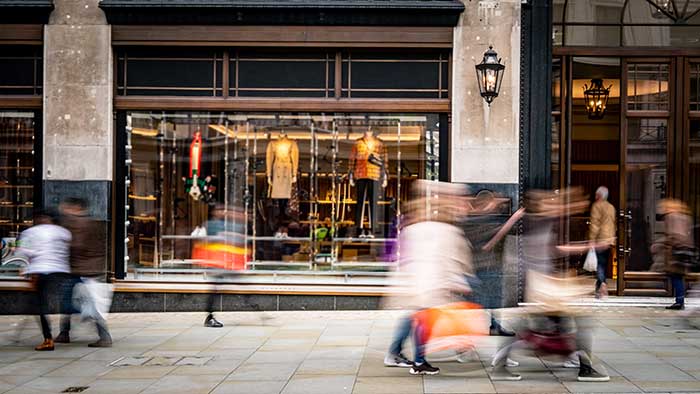
 Worst affected by the Coronavirus pandemic, the lifeboat of American department stores is fast sinking with some of the biggest names planning to file for bankruptcy. Foremost amongst these is JC Penney, the retailer which skipped a mid-April interest payment. The pandemic has sidelined many of the brand’s turnaround plans besides forcing it to close all stores.
Similarly, Macy’s, with its liquidity drying up, has tapped advisors at investment bank Lazard and law firm Kirkland & Ellis to explore options that include new financing. Nordstrom in early April raised $600 million by placing a handful of its real estate assets.
As per Mastercard Spending Pulse shoppers have been shifting away from malls. This past holiday season, department store retailers saw sales decline 1.8 per cent from November 1 through December 24. The decline happened even as overall holiday retail sales grew 4.1 per cent the National Retail Federation said.
Brands like Nike, Coach and Levi’s — that department stores have long relied on -- have taken note, opting to invest in their own stores and websites to sell directly to consumers, leaving the middlemen struggling.
Department stores face worst crisis
Coming out of a dismal 2019 holiday season, each department store operator had laid out strategies to bounce back. These included shutting underperforming stores while opening smaller location; launching new in-house apparel brands; improving merchandising; and growing sales online by offering more convenient pick-up options. Cowen & Co estimates these retailers can make it four to seven months with their stores shut, bringing in $0 in brick and mortar sales.
These companies are facing a test unlike anything they have ever been through before. Among the usual options for companies in distress are: restructuring debt directly with creditors, restructuring with court assistance in bankruptcy or liquidating entirely. The last choice could be unsavoury if stores remain closed. However, creditors would recoup less money if shops cannot hold going-out-of-business sales. Sporting goods retailer Modell’s, for example, was able to temporarily suspend bankruptcy in March, stating the pandemic outbreak had made its liquidation sales.
JC Penney defaults on payment
In the last two years, JC Penny reported profit only during its holiday quarter. The brand’s revenue too declined for eight straight quarters. To tide over this crisis, the brand withdrew $1.25 billion from its revolving credit line in March.
Beginning March 19, all 850 of its stores closed. The majority of its 85,000 employees have been furloughed. S&P Global does not expect them to repay debt. Instead, the firm expects the brand to pursue restructuring either with or without court assistance.
JC Penney has roughly $4 billion of long-term debt. Fitch Ratings reveal the brand’s $105 million bond repayment is due this June, which is also to decline its sales by over 25 per cent this year.
Macy’s to turn to real estate
The impact of COVID -19 is also being felt by Macy’s. Three weeks before the Centers for Disease Control and Prevention announced cases of COVID -19 spreading within the US, Macy’s had planned to shut 125 stores in weaker shopping malls over the next three years. Although it closed more than 100 stores since 2015, it still operates 551 of its namesake department stores, 34 Bloomingdale’s shops and 19 shops. Now the brand plans to issue new bonds backed by some of its real estate to come up with extra cash, reports Bloomberg. Its revolving credit agreement allows the company to issue $500 million additional debt backed by real estate or other non-inventory-related assets. Cowen expects Macy’s to be able to at least temporarily lift its covenants, preventing bankruptcy.
Nordstrom cuts costs, raises revenue
Despite issuing a warning that its financial situation could become distressed if its stores stayed dark for much longer because of COVID-19 on April 8, Nordstrom appears to be in a better shape The brand expects results for the quarter ended May 2 and beyond to be adversely impacted in a significant manner. The brand has already taken a number of measures to cut costs and raise additional liquidity, including furloughing the majority of its workforce, suspending its quarterly dividend payment effective in its fiscal second quarter, drawing down $800 million on its revolving credit line.
Kohl’s turns to curbside pickup
Since Kohl’s stores are typically situated along open-air strip centres, not enclosed in shopping malls, the brand is better positioned to ride out the pandemic than other department stores. Fitch expects the brand to accelerate its market share gains post the discretionary downturn. The ratings agency expects Kohl’s sales to fall about 20 per cent in 2020. Kohl’s has more than 1,100 stores. Under the leadership of its Chief Executive Michelle Gass, the brand has focused on opening in smaller locations. It has also divided some of its existing and bigger stores, to be able to lease out the extra space to gym and grocery operators. And it has been betting on its tie-up with Amazon — where it accepts Amazon returns at all of its locations — to drive traffic, and ultimately sales.
It recently secured a $1.5 billion asset-based revolving credit facility, increasing its liquidity by roughly $500 million. The company has borrowed the full $1.5 billion and used part of those proceeds to repay the $1 billion outstanding debt.
These retailers are doing what they can to move merchandise online. They are sending out a steady stream of emails and online ads tout flash sales, free shipping and buy-one-get-one offers on spring merchandise. Nordstrom is urging shoppers to create a home sanctuary and Kohl’s is telling people to make home a “happy place,” J C Penney is coaxing people to spruce up their home offices, primp for those video conference calls and get outside in the backyard for games and grilling.
They are unsure of their plans for the upcoming holiday season, which is typically a make-it-or-break-it time for sales. They expect operating incomes to decline by up to 40 per cent in 2020, the worst decline for any retail sector.