


FW
The Children’s Place aims for stronger focus on e-commerce
The Children’s Place is on a path to replace its over-reliance on traditional retail revenue with a stronger focus on e-commerce. After suspending all store operations in the US and Canada due to the pandemic, the children’s wear company started reopening stores on May 19 in 10 states and restored the majority of its remaining stores during the last two weeks of June. As of August 1, it opened 771 of its 824 stores in the US, Canada and Puerto Rico, with the majority of the stores located in California.
The retailer permanently closed 98 stores in the three months ended August 1. It ended the quarter with 824 stores and square footage of 3.9 million, a decrease of 13.2 percent compared to the prior year. As of August 1, The Children’s Place had approximately $36.1 million in cash and cash equivalents with no long-term debt and $250.8 million outstanding on its revolving credit facility. The company used approximately $42.7 million in operating cash flow in the three months. Its net sales during the second quarter ended August 1 decreased by 12.3 percent to $368.9 million while digital sales increased 118 percent.
The company reported a net loss of $46.6 million during the three months compared to net income of $1.5 million in the year-ago quarter. Its gross profit fell by 51.7 percent to $67.1 million compared to gross profit of $138.8 million in the three months ended August 3, 2019. Adjusted gross profit was $93.8 million in the quarter compared to $138.8 million in the comparable period last year.
COVID-19 impacts SP Apparels’ profitability
Adverse currency movement due to COVID-19 has impacted profitability of S P Apparels. Indian currency depreciated significantly in Q4FY20 compared to last year. This impacted the company’s hedged positions and resulted in hedging losses and loss of revenue which is expected to impact its operations in Q1 and Q2 of FY21 also.
Despite COVID-19 uncertainties, lockdown and supply chain disruptions, the garments division of the company did not witness any significant order cancellation from the export customers. All its factories and the corporate office were closed from March 21, 2020 as per directives from the government. The company resumed plant operations from May 11, 2020 onwards over different dates for different factories. As of today, all its factories are operating at around 60 per cent capacity due to social distancing norms imposed by the Government authorities.
ILO garment strategy to tap $14 billion finance from IFC, World Bank
International Labour Organisation’s (ILO) Action in the Global Garment Industry strategy hopes to tap into $14 billion in finance from the International Finance Corporation (IFC) and the World Bank to help those impacted by the pandemic. Many Indonesian textile workers’ unions and employer associations have issued the joint commitment to plan first outlined in April. It proposes to take coordinated action to protect garment workers’ income, health and employment. It also calls for more sustainable systems of social protection.
Leading brands and retailers including Primark, H&M, Inditex, C&A, Adidas and VF Corp were amongst the first to endorse the cross-industry plan to provide urgent financial relief to vulnerable garment factories and workers in response to the COVID-19 pandemic.
The Indonesian Employers’ Association (APINDO), the Indonesian Textile Association (API) and the Garment and Textile Trade Union Federation are amongst the latest cohort of industry stakeholders to align with ILO’s ambition, having taken part in an online meeting earlier this month. Aligning industry heavyweights, the ILO is supported by the International Organization of Employees (IOE), International Trade Union Confederation (ITUC), and the IndustriALL Global Union, along with NGOs and finance institutions.
Credit outlook for cotton spinners to remain negative this fiscal: Crisil
Crisil Research expects credit outlook for cotton spinners to remain negative this fiscal. The firm says, most companies may manage the situation by availing moratorium on debt servicing, additional COVID-19 related bank lines, and government measures such as the relief package to micro, small and medium enterprises.
It also noted one-time restructuring of loans announced by RBI will be a viable option amidst tightness in accruals to repayments in current fiscal. That said, the benefit of continuing soft cotton prices and liquidation of high-cost inventories from past fiscal should help cotton spinners perform better in the second half of the current fiscal, provided demand limps back.
Revenue of cotton spinners is likely to decline 30-35 per cent to a six-year low in the current financial year due to tepid domestic as well as export demand following the COVID-19 pandemic, according to Crisil Research. This revenue loss along with inventory losses and lower profitability is expected to result in moderation in credit quality of cotton spinners this fiscal.
Domestic demand for cotton yarn, which accounts for over 70 per cent of overall demand, has been impacted because of slack in end-user segments such as readymade garments (RMG) and home textiles. Similarly, cotton yarn exports have been affected because of fewer orders from China and Bangladesh, which account for over half of India's exports, Crisil report said.
Fashion Positive launches Circular Materials guidelines
The Fashion Positive initiative has launched its first ever Circular Materials Guidelines designed to help manufacturers and brands build a more resilient fashion industry. The non-profit's Circular Materials Guidelines 1.0 promotes the use of circular fibers and yarns to create clothes and footwear that are cleaner, safer and designed for the longest-lasting use.
Developed in close collaboration with industry stakeholders, these guidelines eature 'better' and 'best' recommendations to incorporate recycled or reclaimed feedstock into fibre content, and to address chemical safety, cleaner water and renewable energy. They incorporate existing globally-used standards and certifications such as Cradle to Cradle, Bluesign, ZDHC, Oeko-Tex, Higg Index and Canopy.
Through these guidelines, Fashion Positive aims to create coherence and a roadmap to drive a path toward action, innovation, and systems change. Launched in 2014, Fashion Positive is an initiative of the Cradle to Cradle Products Innovation Institute, and now comes under the wing of Textile Exchange which acts as its fiscal sponsor and serves on its advisory council.
The Partnership for Sustainable Textiles collaborates with Organic Cotton Accelerator
The Partnership for Sustainable Textiles has collaborated with Organic Cotton Accelerator to focus on practical solutions to improve the impact of organic cotton, share resources and capacity-building for its efficient and beneficial cultivation and develop supporting tools for brands and retailers to provide relevant information for sustainable sourcing.
Through this strategic cooperation, the two groups aim to mobilize the support of brands and retailers to secure organic cotton at the farm level and deliver tangible benefits to farmers. They also aim to increase their share of sustainable cotton by 2025 to 70 per cent and the proportion of organic cotton contained in it to 20 per cent.
Based in Germany, The Partnership for Sustainable Textiles is a multi-stakeholder initiative with members from the fields of business, politics and the civil society with the objective of achieving social, environmental and economic improvements all along the textile supply chain.
Eurojersey to launch ‘Back to Iconics range at Milano Unica
Eurojersey will launch its ‘Back to Iconics’ fabric range at Milano Unica from September 8-9, 2020. The range boasts of assertive graphic design, bold colors and metaphysical geometric patterns reflected in the proposals of the A/W ’21-22 ready-to-wear collection. Fabrics in the collection n boast of iconic designs and contemporary reproductions of classics, comprising contrasting dogtooth-effect prints, chevron motifs, refined tweeds and tartan prints imbued with an intentionally British flavor.
Founded in 1960, Eurojersey spA is a reference point in the sector of Italian-made warp knit fabrics, thanks to its patented range called Sensitive® Fabrics. The company has a unique vertical production plant in Europe, designed by the famous Italian architect Antonio Citterio, with a team of 187 people providing a pioneering example of efficiency and sustainable quality with an annual production capacity of 15 million meters of fabric.
Pent-up demand to take Indian yarn prices to a never-seen before levels
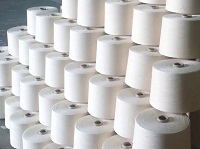 Though shortage of good quality cotton is pushing cotton and yarn prices up, low cotton fabrics prices are pulling them down. Spinning mills along with their agents and dealers are desperately trying to get better prices from customers who, on the other hand, prefer to wait for prices to drop. Demand for premium apparels is at an all-time low, impacting demand for premium yarns too. Currently, carded and combed yarns are being sold at the same price with this trend likely to continue until the next festive season.
Demand for viscose, cotton remains healthy
However, soon massive pent-up demand is likely to erupt in the yarn market taking yarn prices to a level never-seen-before. Already, demand for viscose yarn and fabrics is growing at a healthy rate though their prices are controlled as most of these yarns are imported.
Demand for cotton sheeting fabrics is growing with most wider-width looms in India being packed till October and some even till December. The growing demand from denims as well as sheeting is also boosting the prices of open end yarns in India.
Rise in cotton, polyester prices; viscose unstable
Cotton and polyester fiber prices are trending up as are viscose. As their prices were depressed across all sectors, even a small increase seems like a surge. The prices of cotton carded yarns have slowed after an abnormal rise. The price of 30s combed knitting yarn have increased from Rs 170 ex-factory to Rs 176 ex-factory. However, as soon as exporters increase yarn prices, domestic manufacturers adopt a wait and watch policy instead of rushing into sales. Hence, merchant exporters receive orders of yarn booked at Rs 170 and Rs 172 too
This month, prices of 60s compact weaving yarn increased by Rs 5 over the last month only to trickle back down later. Similarly, prices of 32s carded weaving yarns also declined to less than Rs 170 ex-factory. On the contrary, there was a spike in demand for open end yarn. The prices of 10s OE yarns increased to Rs 102 while those of 16s OE yarns rose to Rs 110 exfactory.
Currently, 30s viscose yarn is being sold at Rs 154 and its price is expected to rise to Rs 158 before falling back again. However, the prices of viscose yarns remain unstable as manufacturers expect the government to levy duties on these soon. These duties may mute yarn demand for some time; however they will ultimately restore viscose to the premium category it once belonged to.
Demand picks up in overseas market
Demand for Indian yarn in Bangladesh is picking up with buyers sending inquiries again. The country plans to buy stock for September and October. However, Chinese buyers continue to demand lower prices. Buyers from Europe and Africa are buying decent quantities of yarn from India.
Currently, 16s carded yarn is being sold at $1.92 whereas 21s carded is trading at $2.02. 21 combed knitting from Gujarat is at $2.20. Earlier, 30s cotton knitting yarn was being sold at $2.35-$2.40 levels. However, now exporters are quoting $2.45 for this yarn.
GL Events acquires Tranoi
GL Events Group, a French event and exhibition organizer and shareholder of Première Vision textile trade show, has acquired Tranoï, a player in the Paris fashion trade show scene since 1998. The deal would enable GL Events to operate across the entire value chain of the fashion sector.
The sector’s two players, Tranoï and Première Vision, are thus moving closer together with the aim to create a hub of physical and digital B2B events, services and content to meet the market’s new challenges. Further details have not been unveiled yet.
The resulting synergy between two fashion and trade-show experts will help develop ambitious transversal projects that corresponds to fashion brands and buyers expectations of today and tomorrow, states Boris Provost, managing director of Tranoï.
Tranoï shows will henceforth be operated by Tranoï Events, a 90%-owned subsidiary of GL Events Exhibitions, of which Boris Provost is the managing director and 10% shareholder.
Levi’s launches jean made with organic cotton and Circulose
Levi’s® has launched a new jean made with organic cotton and Circulose®, a breakthrough material made in part from worn-out jeans. Available through the Levi’s® Wellthread™ line in the 502 for men and High Loose for women, this jean represents more than five years of research in circular denim design.
A unique collaboration between Wellthread™ and re:newcell, the new jean marks a significant milestone in the fashion industry’s transition to circularity. By using high quality recycled denim, the brand saves on the water, chemical and CO2 footprint of its jeans.
Each part of the jean – the trims, the thread, etc. – are carefully calibrated to ensure it meets recycling specifications, allowing it to have a second life when it’s worn out.
Levi’s has teamed up with its innovation partner, re:newcell, to ensure the jeans can go back into their system and be used to make new raw materials, demonstrating that this garment is fully recyclable and truly circular.











