


FW
Kingpins Transformers ED to organize third edition digitally
Kingpins Transformers ED, a student- and consumer-facing denim education series, will present its third edition virtually via Zoom on October 14 to 16 reports Sportswear International. The digital event will be held in collaboration with Ravensbourne University London. The three day event will focus on topics such as supply chain, sustainability and design. To be hosted by denim expert Mohsin Sajid, the event will host speakers and panelists including Alberto DeConti, Rudolf Group; Jason Denham, Denham; Ebru Ozaydin, Artistic Milliners; Alberto Candiani, Candiani Denim; Sue Barrett, Denim Forum; Amy Leverton, Denim Dudes, etc.
The event will also accommodate US students. It will aim to give students a clear understanding of the opportunities and challenges in the denim industry and prepare them for a future in the fashion industry.
The response to the past Transformers ED events has been overwhelming with students from 30 universities, and fashion programs across Europe receiving an in-depth knowledge about the denim supply chain, says Andrew Olah, Founder, Transformers Foundation and Kingpins Show.
Dates for second edition of Denimandjeans virtual show announced
The organizers of Denimandjeans Virtual Show have announced the dates for the second edition of virtual show. It will be held on October 14-15, 2020 with the theme of ‘Cloud Sourcing’. The show will be launched with new features, and be more user-friendly. It would focus on the US, South American and EU customers though it would also cover US time zone with European customers getting over 8 hours of visit time to the show as show would run for a longer time.
Denimsandjeans has been always known for new initiatives in the interest of the denim industry, shows in different countries, exclusive denim data reports and the digital sourcing platform De-Brands – an online B2B marketplace. Virtual show’s first edition had 43 global denim companies including Arvind, Artistic Milliners, Raymond, Kilim Denim, Garmon, Jeanologia, Tonello, Officina+39, LNJ , Artistic Garment, Wiser Globe/Wash, Deridesen, Artistic Fabric Mills, Blue Diamond, Prosperity, etc.
The first edition ran for two days covering Asia and Europe mainly. It was attended by over 600 representatives from the 368 brand/retailing companies including Levi’s, PVH, Bestseller, 7 For all Mankind, Arvind Brands, Asmara, Esprit, VFC, Kontoor Brands and more.
H&M upbeat about future growth as sales recover
H&M is upbeat about future growth as it received a positive feedback to latest collections and recovery has been better than expected. Full-price sales, combined with strong cost control, enabled the company to turn to profit in the third quarter with profit before tax reaching SEK2 billion.
H&M’s sales decline in Q3 narrowed to 16 per cent. In Swedish currency, the brand’s sales declined 19 per cent to SEK50.870 billion. The brand closed around 900 of its 5,000 stores at the beginning of the pandemic. Though many of these stores have reopened, around 200 were still shut by quarter-end.
Hennes & Mauritz AB is a Swedish multinational clothing-retail company known for its fast-fashion clothing for men, women, teenagers and children. As of November 2019, H&M operates in 74 countries with over 5,000 stores under the various company brands, with 126,000 full-time equivalent positions. It is the second-largest global clothing retailer. The company has a significant online presence, with online shopping available in 33 countries.
Brands wake up to growing maternity activewear market
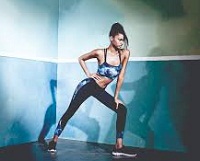 Athleisure shopping for pregnant women is a complicated exercise as it involves searching online discussion forums for recommendations and testing several products. And pointed out in ‘The Next Big Activewear Opportunity’ in the Business of Fashion, though reputed brands have been serving this segment for years, they have begun to recognize its value only now. For instance, even though Nike has been developing its maternity activewear range since 2017, the brand is yet to release its collection in the market.
Nike’s collection includes four products: a nursing sports bra made with sweat-wicking material that includes a panel for a nursing pump; wide-band leggings; a split-hem jacket for moms-to-be to wear throughout their pregnancy; and a scoop style tank top. The collection is likely to encourage Nike’s competitors Lululemon and Adidas to foray into the maternity athleisure segment and launch new collections.
Since the start of this year, the number of maternity activewear styles available online in the US has increased 58 per cent compared to five years ago, says retail market intelligence company Edited. Much of this growth has been fuelled by the growing demand for leggings and nursing bras.
The time and money factor
Despite this, maternity activewear remains a relatively untapped market, says Kayla Marchi, Market Analyst, Edited. Marchi says, maternity styles constitute about half a per cent of the total activewear market in the US with many brands focusing exclusively on maternity activewear. On the other hand, non-maternity fashion retailers like D+K, an Australian activewear brand, as well as Gap and Old Navy also offer maternity activewear.
One reason for fewer players in maternity activewear space is the time and investment needed to design maternity activewear — given the importance of functionality and comfort. Tracy Monford, Founder, Cake, a maternity brand specializing in nursing bras and pregnancy leggings, says research and development cycle for maternity athlesiure is longer and more expensive.
Encourages brand loyalty amongst consumers
Nike had to test 70 materials under extreme stretching conditions and apply data from over 150,000 body scans of women’s bodies throughout pregnancy before finalizing its offerings in maternity athleisure. The brand’s maternity athleisure was first launched at its flagship store Broadway in Manhattan.
Though offering a quality dedicated maternity activewear range is full of challenges it would ultimately help brands strengthen their relationship with consumers. It allows them to reach new customers besides building brand loyalty among existing customers, says Ayako Homma, Fashion Consultant, Euromonitor International.
L Brands partners with Next PLC
L Brands, Inc has partnered with Next PLC to acquire its Victoria’s Secret business in the United Kingdom and Ireland
This newly formed JV will operate all Victoria’s Secret stores in the U.K. and Ireland, subject to agreeing to terms with landlords. The UK digital (online) business will be merged into the JV in Spring 2021. Under the terms of the agreement, Next PLC will own 51 percent of the JV, while Victoria’s Secret will own 49 percent.
L Brands, Inc is an American fashion retailer based in Columbus, Ohio. Its flagship brands include Victoria's Secret and Bath & Body Works. L Brands posted $12.914 billion in revenue in 2019, and was listed as 248 on the 2020 Fortune 500 list of largest United States companies by revenue.
In February 2020, L Brands announced the planned sale of its Victoria Secret division to Sycamore Partners, private equity firm. Under the agreement, Sycamore Partners would gain a 55 per cent controlling stake in Victoria's Secret while L Brands would keep a 45 per cent stake, leaving Bath & Body Works to become L Brand's sole business.
US-China faceoff to benefit India’s textile exports: Ind-Ra
According to an India-Ratings report, the face-off between the US and China will benefit India’s textile exports in 2HFY21. The agency expects the Indian players to increase their already strong market share in terry towels and bed linens, led by supply chain diversification away from China.
Even though the domestic demand is moderate, Indian textile companies have significantly increased their plant capacity use in August 2020, after the lockdown was gradually lifted in the country, says the report.
The agency expects textile players to record 15-35 per cent year on year (yoy) decline in their top line and 20-50 per cent yoy drop in operating profits over FY21. The prices of textile products have recovered broadly in August 2020 from the lows of April-May 2020. The prices of international cotton (US) are recovering steadily month on month — in August 2020 it witnessed 4 per cent rise, after dipping in April 2020.
Indian cotton prices increased about 5 per cent month on month in August last week, following a partial correction in the international prices over July 2020.
Messe Frankfurt North America to introduce Pop-up Sourcing Showcase
Messe Frankfurt North America is introducing a Pop-Up Sourcing Showcase at its New York Textile shows. The organizer is introducing Texworld New York City and Apparel Sourcing New York City editions of its popular events. These virtual events will take place January 12-14, 2021, along with the Pop-Up Sourcing Showcase at the Javits Center to collectively create the largest sourcing event of the season.
The Pop-up Sourcing Showcase” will be dedicated area on the show floor that will feature a unique display of the highest quality fabrics and garments provided by mills from around the globe who cannot be present at the event. Suppliers will submit the best of their collections to be curated by New York-based trend agency, The Doneger Group. The “Pop-up Sourcing Showcase” will be streamlined and integrated with the Virtual Platform giving visitors a unique and interactive sourcing experience.
Inditex stocks to plummet as COVID-19 cases continue to soar
The stocks of Zara-owner Inditex are likely to plummet if COVID-19 cases continue to surge across Europe and result in a second set of government-imposed lockdowns.
The stock could also come under pressure if its half-year (H1) earnings fail to impress investors on Wednesday 16 September.
In its first three months of trading, most markets of the group imposed restrictions on the operations of stores, which resulted in 51 per cent decline in sales. However, the retail fashion group remains confident of positive outcome in its upcoming results.
All high street fashion retailers like Inditex, Next and Hennes & Mauritz (H&M) have struggled significantly amid the coronavirus pandemic as lockdowns have wiped out sales from physical stores. However, the prices of online-only retailers like Boohoo and ASOS continue to move higher with online fashion is set to triple this year, accounting for around 23 per cent of all European sales in 2020.
US imposes new restrictions on China imports
The Trump administration has imposed new restrictions on import of apparel, hair products and technology goods from certain Chinese companies alleging these entities use forced labor in the Xinjiang region to make their products. These restrictions allow US customs agents to detain and potentially destroy goods brought into the country that are made by the named companies or entities in Xinjiang.
The withhold release orders were announced by Customs and Border Protection They target all products made with labor from the Lop County No. 4 Vocational Skills Education and Training Center in Xinjiang, which provides prison labor to nearby manufacturing entities. The orders also restrict hair products made in the Lop County Hair Product Industrial Park, apparel produced by Yili Zhuowan Garment Manufacturing Company and Baoding LYSZD Trade and Business Company, cotton produced and processed by Xinjiang Junggar Cotton and Linen Company, and computer parts made by Hefei Bitland Information Technology Company.
Under this withhold release order, importers can bring their products into the United States if they are able to provide proof to customs that the goods were not made with forced labor.
Man-made fibers and yarn segments to recover post COVID-19: India Ratings
A new report by India Ratings says, man-made fibers and yarn segments are expected to recover due to pent-up demand and strong export order build up in all the segments. The report states, both segments will benefit from the low raw material prices in the third quarter this financial year. Their volumes have improved to 50-80 per cent of normal levels in August, led by pent-up demand and strong export order build up in all the segments. However, plant utilization of pure man-made fibers and yarn manufacturers was severely impacted due to the lockdown.
Ind-Ra expects raw material prices to remain moderate in the second half of FY21. It expects fabric and apparel prices to decline in August, led by a quick supply restoration than demand recovery. It expects demand for home textile exports to sustain in 2HFY21 at healthy levels achieved over August-September. According to Ind-Ra, Indian players are likely to increase their already strong market share in terry towels and bed linens, led by supply chain diversification away from China.











