


FW
Fast Retailing to curb price rise in 2021
As per Tadashi Yanai, Chairman and CEO, Fast Retailing, the company does not plan to raise its prices in 2021 as it may hamper sales. Yanai expects China and Southeast Asia to drive consumer spending in 2021. According to him, in and after 2021, Asia will be the center of the world. Quality of brands and products will become more important as people will economize their spending. Consumers will select reliable, truly good brands.
Yanai further said, the days of suit will come to an end as people will prefer to shop for casual clothing. People will select clothes that are comfortable to wear as working clothes as well as in their homes and that last long and can be worn in various combinations. There will be no need for clothes that are worn for a year and then are discarded.
Retail businesses with physical stores will not disappear. In the future, consumers will come to stores to check clothes while purchase them through the internet.
New Zealand, Australia bedding retailers review relationship with Silk Sensation
New Zealand and Australian bedding retailers are reviewing their relationship with a Dunedin-based importer Silk Sensation that had earlier advertised itself as selling sheets made of cotton sourced from China’s Xinjiang province. However, Ian Thomson, Director, Silk Sensation has denied the sheets are made by slave labor. He said, the cotton has been sourced from a completely different aprt of the province and not from where human rights abuses occurred.
Although only Harvey Norman stocked its cotton sheets, the company’s other products are stocked by retailers like Smith & Caugheys, Beds R Us, Sleep Gallery, Queen B, Innature, Chambers, Bedpost, NZ Nature, Whitwells Furniture, J Ballantyne & Co. and H & J Smith.s
A report published recently by the US Centre for Global Policy found coercive labor practices affect the vast majority of Xinjiang’s cotton production. Moreover, it said southern Xinjiang, where most Uighurs live, produces over three quarters of the region’s cotton. The report found at least 570,000 people in three Uighur regions were forced into cotton-picking schemes in 2018.
Many international clothing brands plan to stop sourcing cotton and garments from Xinjiang.
Industry leaders oppose anti-dumping duty on import of viscose yarn
The Directorate General of Trade Remedied’s (DGTR) recommendation for anti-dumping duty on import of viscose yarn from China, Vietnam and Indonesia has met with opposition from industry leaders. The import duty was sought by the Indian Manmade Yarn Manufacturers Association as import of viscose yarn from these countries was hurting domestic manufacturers.
However, industry leaders say though the duty would benefit domestic yarn manufacturers, it would impact weavers and garment producers as domestic viscose yarn prices were already ruling high.
M Senthil Kumar, Chairman, Palladam Hi-Tech Weaving Park said, several technical textile products are viscose-based and the duty would affect their production. It would also impact the Centre’s production-linked incentive scheme. Also, prices of viscose fabric would rise. There is also a threat of increase in import of viscose-based garments and madeups, he added.
A Sakthivel, Chairman of Apparel Export Promotion Council, said the recommended duty will affect viscose garment production for domestic and export markets.
FTAs, speedy custom clearances can boost India’s denim fabric exports
 India is one the largest exporters of denim fabric in the world. Data from Astute Consulting indicates, India’s denim fabric exports grew at 8 per cent CAGR from 2016-2020. A major part of this growth came from poly denim fabric exports which grew at phenomenal 23 per cent CAGR in these five years. On the other hand, exports of cotton denim fabric stagnated during this period.
The growing popularity of poly denim fabrics can be attributed to increasing affinity for stretch fabrics amongst consumers, superior qualities like better stretch, retraction, and lower distortion as compared to cotton denims, discomfort caused by polyester fabrics, and the inability of consumers to differentiate between poly denim and polyester fabrics.
Bangladesh, India’s largest denim importer
India exports denim fabrics to many countries including Bangladesh, Columbia, Egypt, Sri Lanka, etc. Among them Bangladesh makes up almost 50 per cent of total denim exports as Bangladesh’s FTA with the European Union gives India roughly 10 per cent duty advantage on garment FOB prices. Also, Bangladesh offers very competitive fabric to garment conversion rates due to low labor costs. Flexible labor laws enable garment factories to offer large economies of scale and lastly, India’s proximity to Bangladesh enables it to export goods by roads, thus reducing lead times.
Local denim mills and delayed custom clearances impede exports
Despite these benefits, denim fabrics export to Bangladesh has dropped over the last few years as Bangladesh is setting up fabric manufacturing capacities on a large scale. These denim fabric mills are much younger than India and more technologically advanced. They have highly productive manufacturing setups compared to the majority of Indian denim mills and produce similar quality fabrics. Also, land customs border to Bangladesh through West-Bengal is inefficient and often delays custom clearances.
To improve denim fabrics exports, the Indian government needs to sign a textile specific FTA with the EU and the US. This will improve the competitiveness of its textile exports and bring them on part with other countries like Bangladesh, Sri Lanka, Pakistan, Egypt, Colombia, etc.
Larger factories and labor laws to improve shipments
The government should ensure speedy custom clearances of export shipments through the Bengal land border. Movement of consignments through river transport should also be considered. It should encourage manufacturers to set up large factories that offer economies of scale and improve productivity and cost competitiveness of garment manufacturing in the country.
The government also needs to abolish archaic and rigid labor laws that discourage it from setting up large scale factories and set up plants similar to those built in China, Bangladesh, and Sri Lanka. The government also needs to revamp its land and labor laws and introduce a new FTA with the EU and US.
China grabs attention as luxury fashion sales boom
 China is fast becoming the new fashion destination with many luxury brands opening stores and relocating their fashion events and runway shows to the country, reports Digiday. Before the pandemic, much of China’s luxury spending happened outside the country. However, COVID-19 helped the country bring much of the spending back home, opines Joyee Yu, Market Director-China, ForwardPMX.
Burgeoning middle class fuels luxury sales
Fuelled by the growing appetite of its middle class for luxury consumption, Chinese retailers are registering a year-on-year growth in domestic sales. Backed by their newly acquired digital expertise, these retailers are seeking domestic customers and connecting with them culturally. Christina Fontana, Fashion and Luxury Director-Europe, Tmall points out, there is more demand from brands looking to connect with Chinese customers directly through digital and in-person events, rather than just looking to Tmall to facilitate a transaction. Since China reopened, the platform has been creating Chinese campaigns or popups for brands like Cartier and Michael Kors.
Market size, economy to sustain growth
Luxury brands like Dior have partnered e-commerce companies like Paklu and Tmall for launching China-specific campaigns. In October, Shanghai Fashion Week held its first post pandemic physical event which attracted more than 90 brands including Galia Lahav and Uma Wang. A major reason for this affinity of luxury brands for China is its booming luxury market. In fact Burberry recorded double digit sales in China in November, while sales in rest of the regions tanked. Though analysts expect the Chinese luxury market to decline over time, growth is expected to sustain longer due to the huge size and the dynamic economy tiers in different regions.
Upcoming trends
Not just luxury fashion the domestic market is also witnessing new fashion trends like streetwear. In July, Anglophone Tiktop published a few videos featuring Chinese streetwear styles which helped popularize Chinese influencers amongst American users. China has thus become the new toast of the global fashion world.
Blazers, suits can make Bangladesh the world’s leading RMG manufacturer
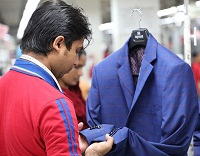 Hitherto known as a manufacturer of world-class knits and denims, Bangladesh has entered a new domain with production of suits and blazers. As per a Textile Today report, the country currently caters to 12-15 per cent of the global demand for suits, formal jackets and blazers. Fashion houses work relentlessly to compete with global brands by introducing new designs and style in blazers. Bangladesh earlier produced semi-suit style blazers in monochromatic colors. Now, there is a growing demand for stripped and checkered suits from the country. In terms for fabrics and fittings, manufacturers prefer wrinkle-free woolen cloth with slim fits for blazers. These blazers also have two back slits with a round back shape that further accentuates its attractiveness. For winters, young Bangladeshi’s prefer to wear multifunctional suits from brands like Yellow, Sailor, Smartex, Cats Eye, Infinity, Ecstasy, Aarong, etc.
Expansion of domestic blazer market
Increasing fashion consciousness, competitive prices and growing standard of living is leading to the expansion of Bangladesh’s blazers market. As per the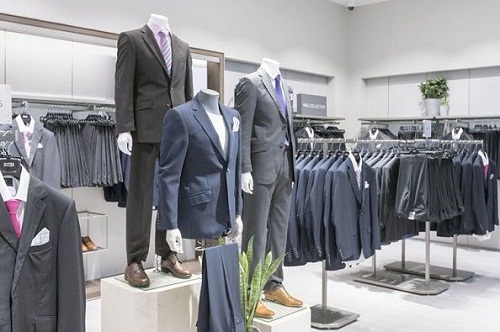 Keraniganj Garments Traders and Shop Owners’ Cooperative Association, Bangladesh currently consumes 20 lakh readymade blazers annually. Of these, 16 lakh blazers worth Tk 240 crore are supplied by the Keraniganj garments hub. Housing 500 factories, the garment hub produces specialized readymade blazers throughout the year. Although COVID halted sales for a few months, the hub expects sales to rebound during coming winter months.
Prominent players
Bangladesh blazers market is currently dominated by 10-12 manufacturers including Energypac Fashions, FCI BD, Aptech, JIC Suit, Newage Group, Ha-Meem Group, East-West, Interlink Dresses, Ananta Group, etc. Their products are mainly exported to Europe, the US, Japan and Korea. These manufacturers mainly produce blazers for brands like Kaiser, OVS, Otto, Camel Active, Calamar, Dressman, Espirit, Karstadt, Canda, Walmart, H&M, M&S, C&A, Calvin Klein, Garry Weber, Jack & Jones, Zara etc.
Bangladesh exports $200 million worth of blazers annually though currently exports have declined 40 per cent due to COVID-19. The price of each blazer is equal to the price of 3 dozen knit T-shirts or 1 dozen knit polo-shirts.
One of the prominent manufacturers of suits in Bangladesh is The New Age Group, which has 46 sewing lines for stitching suits, both blazers and trousers, along with casual jackets for women. The Group has a production capacity of 1 lakh pcs/month and plans its capacity up to 1.5 lakh pcs/month by 2021.
Industry lacks global status
Md Nazmul Huda, Team Leader (Marketing & Merchandising, Kaiser Account) of Energypac Fashions says, though Bangladesh has a specialized suit industry, it is yet to be known globally as a major producer of suits. In contrast, Cambodia and Vietnam have more say in the suit industry. One reason for this is, lack of fabrics and accessories required to manufacture blazers in the country. Bangladesh currently has to import its blazer fabrics and accessories China which further increases its lead time. Also, the country lags in the availability fine quality blazers thread required for making blazers. Manufacturers have to import these threads from either Japan or Switzerland.
Future goals
To boost the blazer industry, Bangladesh needs to develop a sound marketing strategy to grab more orders. It also needs to upgrade technologies and develop a strong R&D and design team. The Bangladesh government needs to create a strong bond license, banking system, LC making, high tax issue, poor import and export system. It also needs to introduce a proper training system for manufacturers and stop unfair competition amongst them.
If developed with due care and attention, the suit industry can make Bangladesh the world’s leading readymade garments manufacturer by 2021-end
India-Vietnam seek partnership opportunities in garment and textiles
During an online conference by the Vietnamese Trade Office in India and the Indian Importers Chambers of Commerce, Vietnamese and Indian businesses sought partnership opportunities in garment and textile sector. A. Sakthivel, Chairman. Apparel Export Promotion Council said, the garment and textile sector makes up more than 2 percent to the country’s gross domestic product (GDP).
The sector has created jobs for more than 45 million laborers and made up 15 percent of the country’s total export revenue in the 2018-2019 fiscal year, he noted, pointing out that the garment-textile market of India is estimated to worth 100 billion USD in the 2018-2019 fiscal year.
Bui Trong Thoan from the Vietnam’s Association of Foreign-Invested Enterprises said that Vietnam has been a bright spot in the gloomy global economy, and among the few countries posting positive growth in 2020 with economic expansion of 2.91 percent, total import-export revenue of 543.9 billion USD and trade surplus of 19.1 billion USD.
Pham Minh Huong, former Managing Director of the Vietnam Garment and Textile Group (Vinatex), noted that Vietnam is the current third largest garment-textile exporter in the world after China and India.
As of the end of December 2020, export revenue of the product had declined by 14 per cent to $34 billion marking the first year of reduction after decades of growth of about 10-15 percent. However, in 2021, the sector is projected to enjoy a 9-15 percent rise in export, she stated.
Indian denim mills incorporate Tencel based fibers in collections
Denim mills across India are incorporating Tencel based fibers in their collections. As noted during the latest Carved in Blue seminar, KG Fabriks is using Tencel Lyocell from Lenzing in its production of sustainable denims. The company is also developing Tencel™ Lyocell-blended denims with linen and hemp to be more natural and more sustainable.
With its eco-friendly concepts, in water usage, green energy, dyes and chemical usage and raw material conservation, KG Fabriks is known for its less chemical usage and carbon footprints. Its denim fabrics used in the garments have less EIM scores. Likewise, Nandan Denim uses Tencel™ Lyocell used in its lightweight denim fabrics. The company has been selling cotton/TENCEL™ Lyocell/spandex denim for the last one year. It has also developed samples with warp cotton/Tencel™ Lyocell blend.
JC Penney owners search for a new CEO as Jill Soltan quits
New owners of American department stores giant JC Penney Co, Simon Property Group and Brookfield Asset Management, along with strategic partner Authentic Brands Group, have begun to search for a new chief executive officer to replace Jill Soltau. Soltau, who joined the retailer around two years ago, and will leave the company now. The owners will seek to identify a leader that is focused on modern retail, the consumer experience, and the goal of creating a sustainable and enduring JC Penney.
With a successful track record of turning around retailers and brands and restoring them to profitability, JC Penney’s new ownership group will establish a temporary office of the CEO to include key member of the current leadership team.
Stanley Shashoua, Simon Property’s Chief Investment Officer, will be appointed interim CEO from January 1. J. C. Penney Company is an American department store chain with 840 locations in 49 US states and Puerto Rico. In addition to selling conventional merchandise, JCPenney offers large Fine Jewelry departments, The Salon by InStyle, and Sephora inside JCPenney.
H&M axes 100 jobs in Bangladesh
One of the largest global apparel brands, H&M has axed more than 100 jobs from Bangladesh production office to cope with the rapid changes in the retail industry amid the COVID-19 pandemic. The Swedish retailer is gradually withdrawing its businesses from tier three or silver category factories and shifting towards platinum-and gold-rated ones. The group is developing its organization to become even more efficient, fast moving and agile, said Ulrika Isaksson, Head-Communications, H&M Group.
H&M has approximately 650 employees at its production office in Bangladesh. These employees will be the group's main priority in this process, and that they will fulfill their obligations according to local labour law requirements. The retailer is and will be shifting the orders to local big platinum-and gold-rated factories as its units received work orders for more than their capacity during the pandemic.
The big factories will grab a larger share of the orders withdrawn from the H&M's silver categorized units and they might shift to other countries, especially China.











