


FW
Redress Design Award partners with VF Corp for 11th edition
Organised by environmental NGO Redress with Create Hong Kong of the Government of the Hong Kong Special Administrative Region as the Lead Sponsor, the Redress Design Award has partnered with VF Corporation and its Timberland brand for its 11th edition
The Timberland prize partnership forms part of a wider long-term strategic relationship between the Redress Design Award and VF. This is the third cycle of collaboration working to drive meaningful change among the future leaders of fashion through education, which forms the backbone of the programme, with over 50,000 individuals worldwide having benefitted from educational content and activities throughout the competition’s history. The partnership will also include a design challenge for all ten finalists later this year plus collaboration on key content around circular design in action for the Redress Design Award 2021 open access LEARN platform.
The first prize winner of the Redress Design Award 2021 will join VF Corporation’s Timberland team to collaborate on a design project, and will have the opportunity to work closely with VF’s Sustainability & Responsibility team to gain exciting insights from across the supply chain from sourcing to product development, while deepening their skills and understanding around sustainable production and marketing.
In addition to this career-boosting prize, the first prize winner will be awarded HK$50,000 (US$6,400) as development funding. The Runner-up and Hong Kong Best winners of this cycle will also each receive HK$15,000 (US$1,900) as development funding – a first in the Redress Design Award’s history – among other notable prizes.
The online application for the Redress Design Award 2021 is open until 15 March 2021 for emerging designers around the world with less than four years’ professional experience. Thirty semi-finalists will be announced on 22 April and then the ten finalists on 13 May. The finalists will show their collections in Hong Kong in early September 2021 at the livestreamed Grand Final Show, and winners will be announced.
Commonwealth Business Forum to be held in Rwanda in June 2021
Associated with Commonwealth Heads of Government Meeting (CHOGM), this year’s Commonwealth Business Forum will be held in Kigali, Rwanda from June 22-24, 2021. As per Business of Fashion, members of the Commonwealth Fashion Council such as Omoyemi Akelere, Founder, Lagos Fashion Week, Claudia Lumor, Founder, Glitz Africa Magazine and the Glitz Style Awards, and Sheena Frida from the Kenyan Fashion Council will hold panel discussions on re-thinking pan-Commonwealth cooperation.
As a part of the forum’s program on global economic recovery, which spans issues such as supply chain disruptions and digital infrastructure, one session will be dedicated to the future of the textile industries in Commonwealth economies that were severely impacted by the pandemic.
Companies focused on the fibre to fabric supply chain as well as apparel, footwear and textile manufacturers such as Hussain Mills, Ravi Spinning Mills, MAS Holdings, Brandix, Hirdaramani Group, KAD Manufacturing, Shasha Denims, Nishat Group, Ha-meem Group, DBL Group and Plexus Cotton will attend the forum from across the Commonwealth coutnries.
Rwanda is one of 19 African members of the Commonwealth. Despite a recent trade dispute with the US and a fashion manufacturing sector that is significantly smaller than some of its neighbours on the continent, Rwanda has earmarked the development of the apparel and textile sector as a priority for exports.
Pakistan to allow cotton imports from India
Pakistan may allow cotton imports from India through land route as prospects of gradual restoration of bilateral trade ties have brightened the new ceasefire agreement along the Line of Control. As per a SRTEPC report, the issue of cotton shortfall has already been brought to the notice of Prime Minister Imran Khan, who also holds the commerce ministry. Once a principled decision is taken, a formal order will be presented before the Economic Coordination Committee of the Cabinet.
India and Pakistan issued a joint statement on Thursday to strictly observe all agreements on ceasefire along the LoC and other sectors after the hotline discussions by their Director Generals of Military Operations. As per reports, the trade ties between both the countries can help minimize cost of production in Pakistan and ensure sustained food supplies.
There is a minimum shortfall of six million bales and Pakistan has so far imported roughly 688,305 metric tonne of cotton and yarn, costing $1.1 billion, according to the Pakistan Bureau of Statistics. There is still a gap of about 3.5 million bales that needs to be filled through imports.
Due to shortage of cotton and yarn, the users were compelled to import them from the United States, Brazil and Uzbekistan. However, imports from India would be far cheaper and would reach Pakistan within three to four days.
Vestiaire Collective launches new €178 million financing round
France’s Vestiaire Collective has launched a new €178 million ($ 216 million) financing round backed by Kering and US-based Tiger Global Management. Kering now has roughly 5 per cent stake in Vestiaire Collective. The group aims to seize this opportunity to enhance the value it offers customers and influence the industry towards more innovative and sustainable practices.
Besides Kering and Tiger, the latest funding includes a number of illustrious names including Max Bittner, CEO, Vestiaire Collective, Bpifrance (Large Venture), Condé Nast, the Eurazeo Group, funds managed by Fidelity International, Korelya Capital, Luxury Tech Fund via LTF & Cuir Invest and Vitruvian Partners.
Vestiaire Collective, the pre-owned fashion sector has clocked in rapid growth over the last three years with a further acceleration during the pandemic. This has been predominantly driven by younger consumers' increased focus on sustainability and a growing trend for social shopping and online communities. The company itself has enjoyed a powerful growth curve. Founded during the 2008 crisis, the model has clearly demonstrated its ability to continue to thrive during challenging conditions.
PMI declines by 1.8 per cent in January
As per the Manufacturing Institute for Supply Management’s (ISM) ‘Report on Business’, the manufacturing purchasing manager’s index (PMI) for January declined by 1.8 per cent to 58.7 percent. Of the 18 manufacturing industries, 16 reported growth in January, including apparel, leather and allied products, and textile mills. Thirteen reported growth in new orders in January and two reporting a decline in new orders, including textile mills.
The Production Index registered 60.7 per cent in January, a 4 per cent decline from the prior month but indicating growth for the eighth consecutive month. An index above 52.1 per cent, over time, is generally consistent with an increase in the Federal Reserve Board’s Industrial Production figures.
Twelve industries reported growth in production during the month, and two reported decreased production, including textile mills. The delivery performance of suppliers to manufacturing organizations was slower in January, as the Supplier Deliveries Index registered 68.2 per cent. This is 0.5 percentage point higher than the 67.7 per cent in December. A reading below 50 per cent indicates faster deliveries, while a reading above 50 per cent indicates slower deliveries.
Seventeen industries reported slower supplier deliveries in January, led by apparel, leather and allied Products and including textile mills.
The Inventories Index registered 50.8 per cent in January, 0.2 per cent lower than December. Inventories grew for a fourth consecutive month after three months of contraction. An Inventories Index greater than 44.5 per cent, over time, is generally consistent with expansion in the Bureau of Economic Analysis figures on overall manufacturing inventories.
The seven industries reporting higher inventories in January were topped by textile mills. Seven industries, including apparel and leather, reported no change in January compared to December.
China’s textile industry grows despite pandemic
At the 15th Annual Conference of the China Textile Roundtable Forum hosted by the China National Textile and Apparel Council, Gao Yong, Party Secretary and Secretary-General, China National Textile and Apparel Council, stated that despite the pandemic’s impact, Chinese textile industry grew as it benefited from online sales, intelligent manufacturing and stable supply chain.
GaoYoung said, the Chinese textile industry can develop further during the 14th Five-Year Plan period by strengthening independent innovation of cutting-edge technology, brand and fashion soft power, green development leadership, control ability of international supply chain, etc., strengthen the advantages of the manufacturing system, and solve the shortcomings of the industrial chain supply chain.
According to Shan Zhongde, Academician, Chinese Academy of Engineering and President, Nanjing University of Aeronautics and Astronautics, China needs to promote research and development of intelligent high-quality textile equipment, improve efficiency, performance and digital level, truly realize automatic perception, intelligent decision-making, and automatic execution. At the same time, actively develop service-oriented textile manufacturing and promote personalized customized production models.
As per China Textile, the country’s textile and apparel exports grew 9.6 per cent in 2020 to $291.22 billion. The total volume of textile industry declined year-on-year, but benefiting from online sales, intelligent manufacturing and stable supply chain of the industrial chain, the textile industry still has outstanding performance in the operation:
Domestic textile market recovered in the second half of last year. According to the National Bureau of Statistics, the year-on-year decline in retail sales of clothing, footwear, hats and knitted textiles of enterprises above designated size gradually narrowed from more than 30 per cent at the beginning of the year to 7.9 per cent in previous November.
7th ITMA Asia+CITME to begin from June 12
The seventh edition of ITMA Asia + CITME will be held from June 12-16, 2021, in Shanghai. It will be spread over six halls with a gross exhibition space of 170,000 sq m. It will include major Belgian exhibitors such as Picanol, Vandewiele, BMSvision, Bonas, and Hammer-IMS.
The exhibition will also display latest innovations by Symatex a company managed by Agoria, the Belgian federation of the technology industry. The Belgian machinery industry is one of the nation’s biggest investor in R&D. It invests 8 per cent of its added value in R&D and employs over 11 per cent of the total Belgian manufacturing industry research head count.
The industry accelerated its research efforts on energy efficiency in the last decade and achieved an average energy consumption reduction for its products of 18 per cent. The long term strategy directs the Belgian machinery industry towards continuous strategic and open innovation to accelerate its product development pace and to provide its customers with cutting edge technology.
BTPL expands Tarapur plant production
India's largest single-roof state-of-the-art fabric processing facility, BRFL Textiles (BTPL), has expanded production at Tarapur plant from 100,000 meters per day to now 150,000 meters per day with improved capacity utilization within two months of raising private equity funding. BTPL aims to reach its annual processing capacity of 144 million meters over due course of time. Recently, BTPL invested Rs 2.4 billion from a consortium of marquee financial investors led by JM Financial India Fund II, Think Investments and others.
BTPL’s Tarapur plant is India’s largest single roof fabric processing unit supported by captive power, effluent treatment, RO water, and other utilities enabling cost competitiveness. The state-of-the-art multi-fiber fabric processing unit also has a captive yarn dyeing unit with an annual capacity of 29 tonne per day. BTPL’s solid and yarn dyed fabric, printing, processing, and finishing techniques are a mark of excellence making every piece of fabric perfect. The plant also employs over 2000 staff at the facility.
BTPL was formed as a separate entity in August 2020 as part of a restructuring process undertaken by Bombay Rayon Fashions, in which it hived-off its Yarn Dyeing & Fabric Processing units located in Tarapur, into BTPL by way of a slump sale on a going concern basis. The Company’s brands, including Bombay Rayon, BRFL, Linen Vogue, Giza Classe, Dickens & Browne and others, were also a part of the transaction.
AP Chambers requests for Integrated Mega Textile Park in Andhra Pradesh
In a letter to Union Finance Minister, Nirmala Sitharaman, Andhra Pradesh Chambers of Commerce and Industry Federation (AP Chambers) requested for the allotment of an Integrated Mega Textile Park for Andhra Pradesh. KVS Prakash Rao, President, AP Chambers, pointed out there is very less presence in the crucial weaving, processing and garments segments leading to heavy export of yarn that results in value migration from our state to other destinations. This also mandates the import of fabric for the apparel and garment units that are located in the state, leading to an increase in the cost of raw material due to logistics and loss of productivity.
Andhra Pradesh is ranked as one of the top five textile and clothing manufacturing states by the department of industrial policy and promotion which has released the top textile and clothing manufacturing Indian states based on ease of doing business. However, the state has not achieved much progress in terms of the value-added textile activities such as weaving units, knitting units, preparatory units, processing units, technical textiles, integrated units, which have a greater potential not only in terms of promoting value addition but also in creating large scale employment. Rao said, the state needs an integrated mega textile park in order to convert the major portion of the yarn produced in the state into fabric and garments within the state, to promote the state as a destination for global textile majors.
Vietnam’s market expansion to Northern Europe, Australia can help avoid trade restrictions
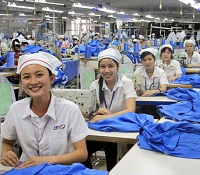 Aiming to achieve $39 billion in exports this year, the Vietnamese garment and textile industry has moved away from high-end apparels to mid-range and convenient products, says Vu Duc Giang, Chairman, Vietnam Textile and Apparel Association. Enterprises in the country are increasingly moving to making protective clothing and knitwear, adds Le Tien Truong, Chairman and Board of Directors, Vietnam National Textile and Garment Group in a Saigaon Online report.
Exporters focus on sustainability
Exporters are also focusing on sustainable apparels products that help minimize waste generation, enhance recyclability, and reduce the use of fossil energy. They are opting for chemical-free, environment-friendly fabrics that do not generate wastewater. The three development strategies being adopted include: review of ll changes in consumer demands in key markets; adopting green production technologies; developing products along with their brands. These strategies help exporters build a more sustainable market especially with the advantages Vietnam’s FTAs offer in terms of tax rates and competitiveness for garment and textile products.
It has become important for Vietnamese exporters to quickly adapt to these market changes as the pandemic had broken many raw material supply chains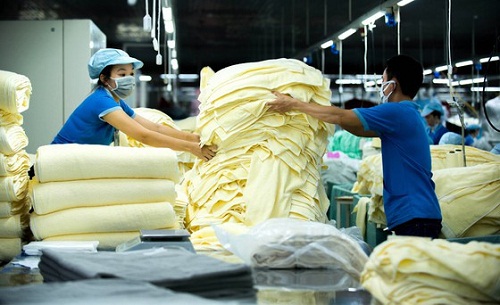 and resulted in bankruptcies to major global apparel brands. Exporters also need to reduce their production times as they may face logistic difficulties.
Avoid trade restrictions
Vietnam’s exporters also need to avoid being investigated for improper trade practices and imposed restrictions. As per the American Apparel and Footwear Association, the US government is currently investigating the possibility of imposing new punitive tariffs on imports, including garment and textile products, from Vietnam. In November last year, the US Department of Commerce (DOC) also initiated an anti-dumping investigation on polyester-textured yarn (PTY) exported from Vietnam.
As per Do Thang Hai, Deputy Minister of Industry and Trade, such trade restrictions on Vietnam’s exports are likely to affect domestic trade in international markets. Hence, domestic enterprises need to collaborate to prevent foreign enterprises from changing the origin of their products. The government needs to attract investments in domestic industries through preferential trade policies that would help it to reduce competitive pressure in the export markets.
Duc Giang also recommends enterprises to negotiate and sign strategic cooperation agreement with the US to increase export advantages in the garment and textile industry. Trade counselors also advise Vietnamese apparel and textile enterprises to expand their export market share to Northern Europe and Australia.
The import tariffs in these markets are extremely preferential as they have signed FTAs with Vietnam. Vietnam’s imports form a modest proportion of their total imports from around the world. Hence, Vietnam has an opportunity to increase its share in these markets avoid trade restrictions from being imposed on the country.











