FW
Indonesian trade imbalance with South Korea persists
Trade between Indonesia and South Korea increased 29 per cent from January 2021 to September 2021 compared to the same period last year.
Much of Indonesia’s textile exports are in the form of raw materials such as spun yarn which is later processed into cloth by the textile industry in South Korea. Finished goods processed in South Koreaare sent back to Indonesia to meet the domestic market demand and some are re-exported to the United States and Europe.
Indonesia’s textile trade balance with South Korea is expected to remain in deficit despite the Indonesia-Korea Comprehensive Economic Partnership Agreement (IK-CEPA) which comes into force next year.Under the agreement, South Korea will eliminate more than 95 per cent of its tariff lines and Indonesia will eliminate over 92 per cent and give preferential tariffs to support Korean investment. CEPA will not only impact industries such as automobiles but also technology. CEPA will also facilitate exchanges of professionals in areas such as science, technology, software and robotics, promoting cooperation in high-tech industry.
However the implementation of the IK-CEPA will not have a significant effect on boosting the export performance of Indonesia’s textile industry. The market structure created by South Korea has forced Indonesia to export raw materials.
Joulik partners with Dutch retailer
Joulik haslaunched a capsule collection in partnership with C&A.
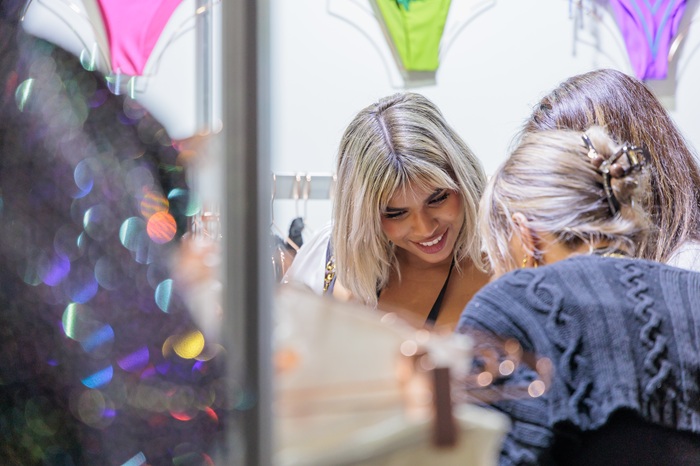
Joulik is a brand from Brazil. C&A is a Dutch retailer. The pieces include dresses, pants, blouses, accessories, and even shoes. This is the third collaboration of the brand with the Dutch retailer. The first collection in 2014 took almost two years to be launched, with Joulik closely following all stages of product development. In 2017, the second partnership came out, and now comes the third collaboration, which is already on sale in stores and in e-commerce throughout Brazil. But this collection is smaller due to the unpredictable scenario generated by Covid and when the partners started work on the collection, at the beginning of the year, they still didn’t have an idea of what the future would be like. Joulik made a hand-drawn sketch of the pieces, then passed it on to the computer and transformed them into vectors to carry out color tests. C&A has a bigger and faster production since their structure is much bigger than Joulik’s.
Founded in 2009, Joulikbegan with shirts and hand embroidery. C&A's supply chain encompasses more than one million people, employed through 788 global suppliers, across four different sourcing regions.C&A started trading in 1841 as a textile warehouse.
Lankan exports crippled by rules
Lack of foreign exchange is hampering apparel exporters in Sri Lanka from realizing their potential.
A move by the Central Bank of Sri Lanka requiring apparel exporters to use only local currency for domestically sourced inputs has caused a furore across the biggest foreign exchange earning sector.Fabric and apparel accessory manufacturers sell their products directly to apparel exporters (locally and overseas) hence their businesses are classified as deemed exporters. The entirety of industry invoicing to apparel exporters has always been in dollars, euros or sterling pounds.The raw materials they require for their produce, such as yarns (both cotton and synthetic), dyestuff, chemicals etc., including machinery and spare parts, are not available locally and have to be imported from different countries around the world. The payment for such materials and machinery needs to be settled in dollars. The overall export and deemed export industry is facing serious challenges in logistics, both in terms of cost and lead times.
The country’s apparel industry has a 3,50,000-strong workforce.In addition, apparel exporters want access to key and emerging export markets through Generalized System of Preferences (GSP) Plus trade concessions from the European Union as well as the United Kingdom.
For the first ten months of 2020, Sri Lanka’s apparel and textile exports grew by 21 per cent.
Green factories sprout in Bangladesh
Bangladesh has 152 LEED-certified Green factories.
Of these, 44 are platinum-rated, 94 gold-rated and 10 are silver-rated.
A total of 15 readymade garment factories have been privileged with the Green Factory Award in respect of their determination and contribution to saving the environment and creating occupation.
Bangladesh, the second largest readymade garment exporter in the world, has taken a leading position in sustainable green industrialisation with the world’s several top ranked green factories.Indonesia is the second largest, with 40 green factories, followed by India with 30 and Sri Lanka with ten.After independence in 1971, Bangladesh was held up as an example of a failed state. People were used to thinking of the Bangladesh readymade garment industry as a place of forced labor, child labor and small factories.In recent years a silent revolution has taken place in the garment industry of Bangladesh. In South Asia, Bangladesh has taken the lead in green initiatives. The world’s highest rated LEED platinum denim factory, knit factory, washing plant and textile mill all are situated in Bangladesh.
It’s hoped that about ten per cent of the total readymade garment sector in the next decade will use green technology.Bangladesh’s readymade garment sector is a 28 billion dollar industry.
US bans Xinjiang cotton
The US has banned imports of products made with Xinjiang cotton.
The justification is that China oppresses minorities in this province and imposes forced labor and other forms of torture. Products made with Xinjiang cotton have been illegal in the US since January 2021. But nearly a year on, goods with tainted cotton are still reaching American consumers.
Dozens of intermediary manufacturers from Indonesia, Sri Lanka, Bangladesh, Vietnam, India, Pakistan, Kenya, Ethiopia, China and Mexico purchase unfinished cotton goods from Chinese manufacturers who source Xinjiang cotton. Well-known international brands are supplied by those intermediaries and are thus at high risk of being seen as having Xinjiang cotton in their supply chains. But despite the US ban, exports of textiles and garments from Xinjiang increased by 53 per cent in the first nine months of the year 2021.
More than half of China’s exports of cotton semi-finished products are destined for countries within Asia such as Bangladesh, Vietnam, Indonesia and Cambodia. About 85 percent of cotton grown in China is produced in Xinjiang, which amounts to 22 percent of global cotton production.
China has denied the existence of Xinjiang detainment camps or forced labor transfers, describing them instead as vocational centers and poverty alleviation programs.
Fashion for Good launches polyester recycling project
Fashion for Good has launched the Full Circle Textiles Project – Polyester. The aim is to validate and scale promising technologies in polyester chemical recycling and to encourage financing and offtake commitments in the fashion industry. The project brings together a consortium of stakeholders including brands, innovators, supply chain partners and catalytic funders - a structure that has proven successful in driving and scaling disruptive innovation in the industry. To attain a clear idea of the innovations best positioned to address the challenges of recycling polyester textiles, Fashion for Good has enlisted promising innovators in polyester chemical recycling from around the world to participate in the project.
Polyester claims 52 per cent of the global fiber market. As the most common fiber in the world, it also represents a significant portion of the textiles that are landfilled or incinerated annually. A synthetic fiber derived from petroleum, polyester does not naturally break down in the environment. Chemical recycling is a key solution that promises to address the polyester textile waste challenge.
Fashion for Good, based in Amsterdam, has global accelerator programs that give promising start-up innovators the expertise and access to funding they need to grow. The platform also supports innovators through its scaling program and foundational projects, driving pilots and supply chain implementation with partner organisations.
Tirupur to host KnitProcess, DyeChem World in January
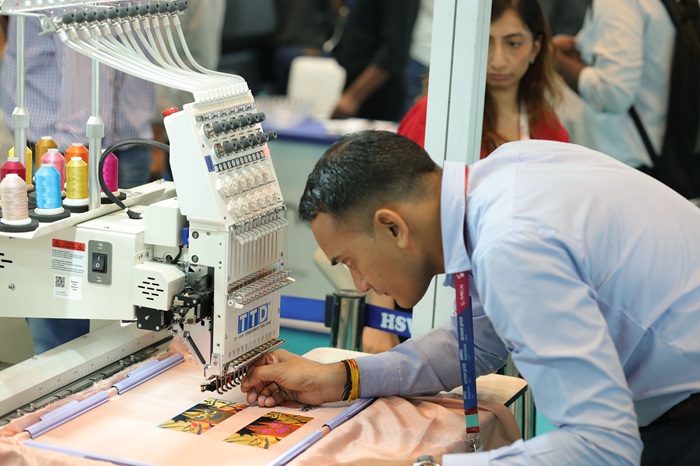
DyeChem World and KnitProcess will be held in Tirupur, January 21 to 23, 2022. These trade exhibitions are aimed at Indian textile dyes and chemicals. DyeChem will cover the entire range of textile dyes, chemicals, finishes, technologies. Being the first of its kind show in southern India, DyeChem World will create a platform for interaction and knowledge sharing between the dye and chemical and textile industries. KnitProcess will help the industry to explore and adopt the latest innovations in knitting and post processing, covering the entire value chain of knitwear processing technologies till garmenting.
The highlight of the event is the CEO Summit. Its primary aim is to have interactive and networking for business, but there would also be deliberations on core issues of sustainable practices.
Tirupur, the knitwear capital of India, accounts for 60 per cent of India’s knitting, processing and apparel capacity. By next year, Tirupur’s knitwear industry is set to cross the Rs 50,000 crore mark and in three years Tirupur is expected to double its capacity and exports from its current size. Tirupur’s knitwear sector is investing in the latest high-end knitting, wet processing and garment technologies that comply with sustainable norms. Tirupur is among the first Indian apparel clusters to have invested in environmental technologies for clean energy, chemical management and clean production practices.
Liberty Fairs postponed for now
Liberty Fairs has put its trade shows on hold. It has chosen to hit the pause button and restructure its business model to better suit the forward-thinking and heritage brands it serves. The pause is aimed at protecting the best interests of the brands and designers and Liberty Fairs will take the time to re-evaluate how it operates and implements new initiatives that will allow them to scale and add value to their offerings in an even greater way.
Like the rest of the apparel trade show industry, Liberty Fairs was forced to cancel its regular calendar of men’s wear events in 2020 and part of 2021. It partnered wholesale platform Joor on a digital trade show format to help fill in the gap before returning to physical events in brand-new locations. The pandemic allowed the company to take a step back and rethink the format and calendar it had traditionally followed. New York and Las Vegas have been the show’s go-to host cities, but new pockets of opportunity appear to be opening.
Liberty Fairs was founded in 2013 with a focus on the men’s market. Later, it expanded to cater to all genders, as well as categories like grooming and wellness. It also hosted community-driven panels and discussions on topics like inclusivity and styling.
KPR Mill’s half yearly profits up 137 per cent
For the first half of the financial year KPR Mill’s net profit grew 137 per cent. Revenue during the period grew 44.5 per cent. Earnings before interest, taxes, depreciation, and amortization (ebitda) margin also improved 730 basis point to 29 per cent from 21.7 per cent in the first half of the previous year.
KRP Mill’s garment manufacturing capacity has increased to 157 million garments a year. Strategic plans have always been driving the growth of KPR, which is one of the largest captive power generators in the textile industry and 60 per cent of its textile power requirement is met through wind power. The company has invested in a co-gen power project. With co-gen power, KPR has attained self-sufficiency in meeting its substantial power requirement throughout the year.
Since the domestic yarn segment is witnessing a strong demand, the company expects to maintain margins in the range of 22 per cent in the yarn segment. Second quarter margins were significantly higher owing to the low cost cotton inventory available with the company. KPR would start buying new cotton soon and is evaluating the market scenario and would stock up cotton in the new cotton season. Normally the company keeps a cotton stock of around four to six months and buys cotton at the start of the season.
Iranian apparel show attracts domestic businesses
International Apparel Exhibition was held in Iran from December 5 to 8, 2021. The event aimed at facilitating both domestic and international business opportunities for companies active or interested in the Iranian fashion market. The trade show saw 167 domestic exhibitors present their products, ranging from clothing and accessory retailers and manufacturers to machinery companies and yarn and textile producers. Software companies providing design and retail management solutions were also in attendance.
Over the last decade, Iran’s fashion industry has faced an increasingly unstable and unpredictable economic environment. Sanctions and the broader instability in the Iranian market led to the precipitous rise of contraband fashion imports. Western sanctions led Iranian fashion brands to source more textiles and raw materials from producers in China and Turkey. They also compelled some local fabric suppliers to produce better quality fabrics as the market increasingly demanded it. Over the course of the pandemic, Iranian consumers, like their counterparts elsewhere, flocked to buy fashion from e-commerce players and direct-to-consumer brands, accelerating the adoption of online shopping.
The Iranian fashion market is made up mainly of domestic product. The remaining 20 per cent or 30 per cent of the market is made up of either smuggled imports or goods from foreign companies produced in Iran.